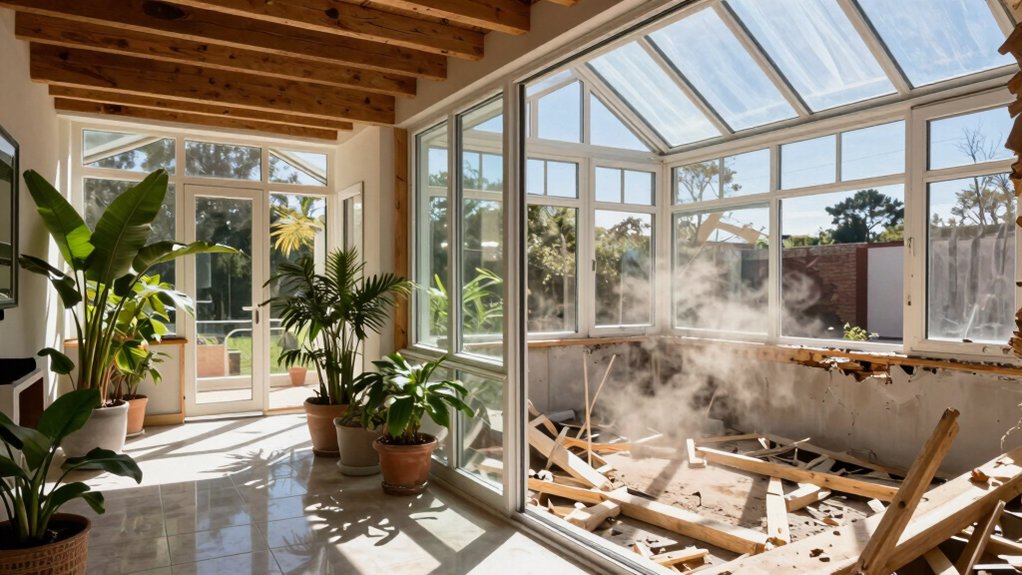
When you’re weighing a conservatory makeover against demolition, you’ll find the savings aren’t just about initial costs. A makeover typically trims materials, labor, and disruption, while gutting and rebuilding spikes permits, site prep, and waste handling. Yet, the long-term value hinges on energy upgrades, timeline, and resale appeal. You’ll want a clear budget and goals to see which path truly fits your needs, and that clarity points to a decision you won’t want to rush.
Assessing the Current Condition and Goals
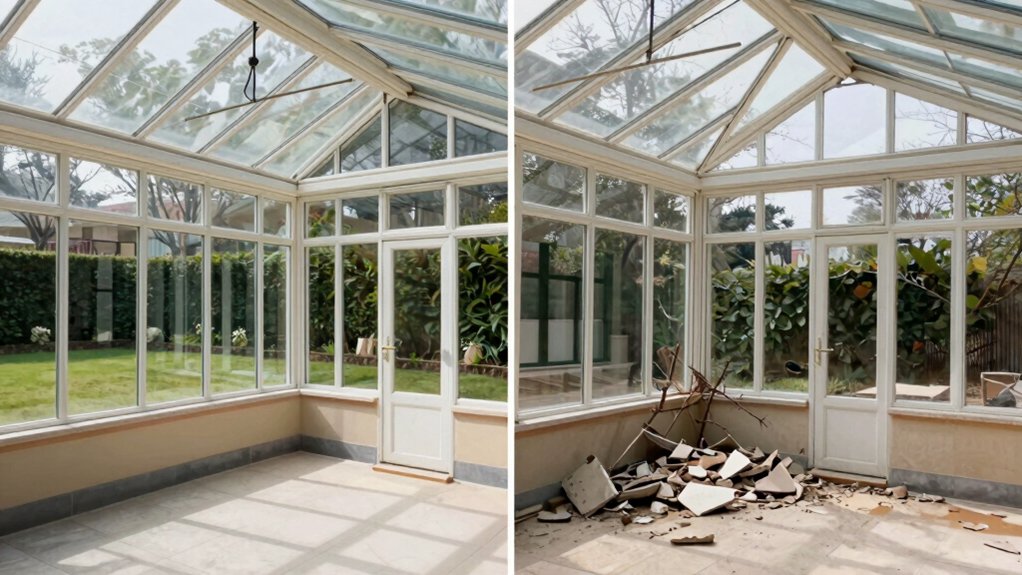
Evaluating the current condition sets the foundation for any decision. You start by documenting what exists: structure integrity, glazing status, and drainage. Inspect framing for rot, corrosion, and pest damage, noting hard-to-reach spots where issues hide.
Assess energy performance, including insulation, seals, and solar gain, since these affect future costs. Clarify goals: is light transmission essential, or is privacy your priority? Consider failure likelihood and repair feasibility within your budget, timelines, and risk tolerance.
Inventory components that can be reused or upgraded, and identify mandatory updates to comply with safety standards. Map constraints like access, permits, and nearby lived space.
Finally, translate findings into measurable criteria—thresholds for repair vs replacement—to guide objective, data‑driven choices.
Cost Breakdown: Materials, Labor, and Hidden Fees
When planning a conservatory makeover or demolition, you’ll want a clear cost map that separates materials, labor, and hidden fees. Material costs cover framing, glazing, insulation, flashing, furnishings, and finishes, with variance by quality, size, and climate needs.
Labor reflects project scope, trades involved, and regional wage rates, plus any subcontractor coordination. Hidden fees can include permits, delivery surcharges, scaffolding, site preparations, disposal, and rental equipment; add a contingency for unexpected issues.
Use unit pricing and snapshots of typical ranges to benchmark your plan. Compare alternatives by listing exact quantities and required trades, then apply a margin for error. Build a bottom-up estimate, and cross-check with a high-level budget to ensure you aren’t overlooked by non-obvious costs.
Timeline and Disruption: Makeover Vs Demolition
You’ll compare timeline length, noting that a makeover typically finishes faster than demolition.
You’ll assess disruption levels, as demolitions usually cause more noise, dust, and access changes.
You’ll also flag scheduling risks and delays, identifying how each path handles permits, weather, and sequencing to avoid overruns.
Timeline Length Differences
Timeline length differs mainly in speed and sequencing: a makeover follows a staged, phased approach that minimizes downtime, while demolition can be a rapid, single-sweep event with extended permitting and site prep.
You’ll see the makeover unfold across defined steps: design finalization, material delivery windows, sequential trades, and coordinated inspections. Each phase minimizes disruption and allows long-lead items to align with existing occupancy.
Demolition compresses activity into a shorter window, but requires upfront planning for permits, utilities, and debris handling, which can extend the timeline regardless of on-site work speed.
Consider dependencies: utility isolation, structural assessments, and waste removal. Your decision hinges on how you balance permit cadence with on-site sequencing, and how much downtime you’re willing to tolerate during progression.
Disruption Level Contrast
Disruption levels hinge on pace and sequencing: a makeover typically partitions work into phases that isolate noise, dust, and access pauses, while demolition concentrates activity into a short, intense window.
In practice, you’ll notice staged work with containment, dust barriers, and scheduled interruptions in a makeover, allowing you to continue daily use between tasks. Demolition, by contrast, compresses disruption into a finite burst, often with louder sounds, more debris, and formal shutdowns of space access.
The trade-off is duration versus intensity: longer but steadier interruptions for a makeover, or a brief but sharper upheaval with demolition. Your decision hinges on how you value predictable quiet periods versus a single, decisive phase.
Prioritize measurable daily impact, then align with project milestones and acceptable inconvenience.
Scheduling and Delays Risk
When planning either makeover or demolition, scheduling and delays risk hinge on pace, sequencing, and coordination with suppliers and trades. You’ll face weather windows, permit approvals, and delivery lead times that push timelines off track.
Makeovers demand tighter sequencing of trades to avoid idle gaps while demolition can reveal hidden constraints that stall stripped-back demolition work. Assess each step’s critical path and identify bottlenecks early, then build contingency buffers into the plan.
Rigid baselines invite disruption; flexible milestones reduce it. Communication gaps between supplier schedules and on-site crews frequently trigger cascading delays, so establish real-time updates, clear sign-offs, and prefixed buffer periods.
Finally, document change orders promptly to prevent scope creep from turning delays into cost overruns.
Energy Efficiency and Insulation Considerations
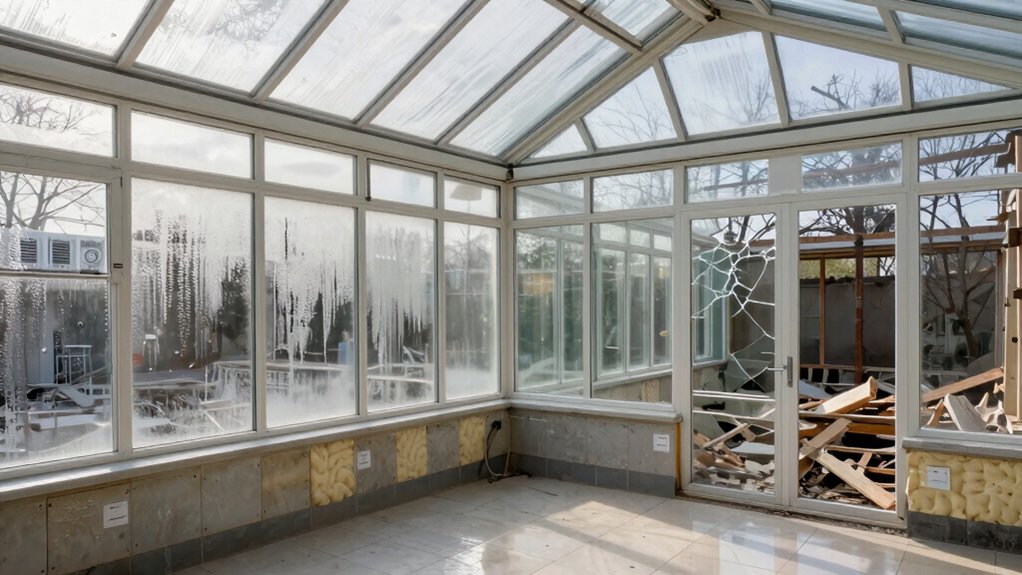
You’ll want to weigh insulation R-value gains against the cost and disruption of upgrade work.
Consider how window and seal efficiency affect heat loss and comfort, both in winter and summer.
This discussion should balance practical retrofit steps with the potential gains in energy bills and overall performance.
Insulation R-Value Gains
Insulating the conservatory can yield meaningful R-value gains that make the space more comfortable year-round, especially when the surrounding house is well sealed. You’ll see benefits when you choose appropriate insulation materials and build details that suit your climate and framing.
Focus on ensuring continuous insulation across walls, floors, and roof to reduce thermal bridges, which often dominate heat loss. Target incremental R-value improvements rather than chasing unrealistic totals, balancing cost, weight, and installation effort.
In practice, consider layered approaches: exterior or interior insulation boards, rigid foam with a breathable barrier, and reflectively insulated panels where appropriate. Don’t overlook insulation-compatible drywall or paneling that preserves usable space.
Finally, verify airtightness with a blower door test to quantify gains and guide improvements.
Window and Seal Efficiency
Window and seal efficiency directly affects comfort and operating costs; upgrade strategies should prioritize high-performance glazing, tight framing, and continuous, well-sealed interfaces to minimize thermal bridging.
You’ll evaluate glazing U-values, solar gain, and edge-of-glass performance to determine real-world gains, not just labeled figures. Opt for double- or triple-pane units with low-emissivity coatings and inert gas fills when feasible, balancing cost against monthly savings.
Seals matter as much as glazing: choose warm-edge spacers, robust gaskets, and field-verified air leakage targets to reduce drafts.
Frame materials influence long-term performance; consider aluminum with thermal breaks or vinyl with compatible corner joints.
Ensure installation accuracy, attic or wall penetrations are sealed, and flashing is integrated with drainage.
Finally, assess maintenance needs and potential for future upgrades to maximize lifecycle efficiency.
Aesthetic Impact: Style, Value, and Resale Prospects
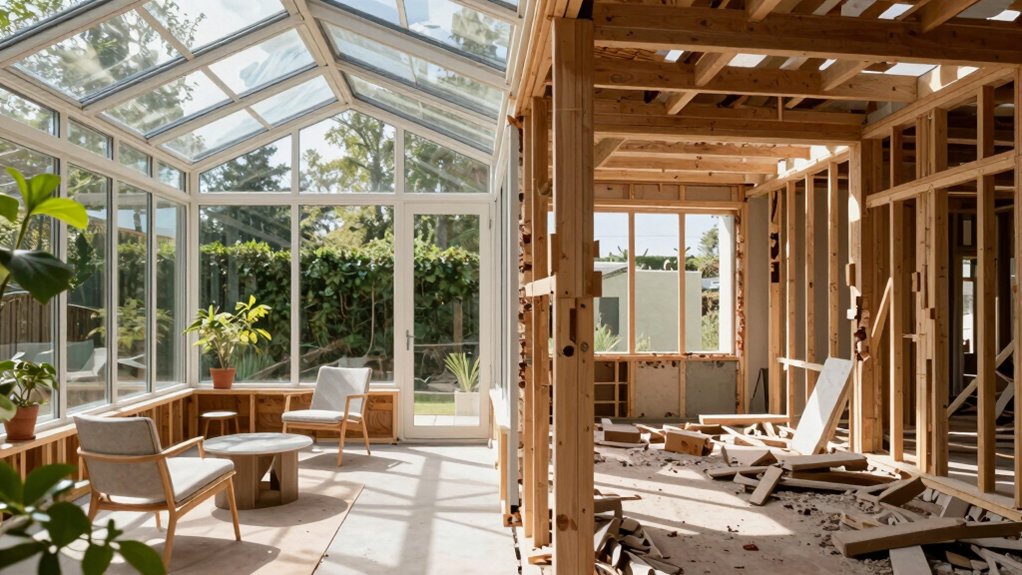
Is the aesthetic impact enough to justify cost and disruption? In short, style influences perception, but value hinges on durability and fit with your home. You’ll weigh design compatibility with existing architecture, materials, and finishes, not just trends.
A contemporary makeover can boost curb appeal and photographability, aiding resale if it aligns with buyer expectations for your neighborhood. Conversely, a mismatched look may deter buyers or cause price resistance.
Consider light, sightlines, and space quality: brighter, more open interiors often sell better, but only if the improvement feels cohesive. Resale prospects improve when the project signals a clear upgrade path rather than a radical departure.
Finally, quantify: how much extra sale price or interest does the change realistically yield versus the cost and time.
Budgeting Strategies and Contingencies
A solid budgeting plan starts with a clear scope and a realistic timeline, because clarity cuts surprises and keeps costs in check. You’ll outline every phase, from planning and permits to finish, so contingencies aren’t guesswork.
Build a baseline estimate using unit costs, labor rates, and material chooseability, then add a 10–20% contingency for unknowns. Establish a separate reserve for scope creep, design tweaks, and weather delays, and define triggers to release funds only when milestones are met.
Track costs weekly against the budget, flag variances early, and reallocate before overruns compound. Prioritize value over vanity by evaluating alternatives—DIY tasks, off-season work, or staged renovations.
Document decisions, assumptions, and approvals to avoid disputes, and finalize a transparent, accessible budget to guide your project’s financial discipline.
Case Studies: Real-World Comparisons
Case studies illuminate how choices play out in real life, contrasting conservatory makeovers with demolition regarding cost, timelines, and long-term value. In one project, you see a makeover delivering a 15–30% lower upfront cost than a full demolition, with quicker occupancy and less disruption. Material efficiency and reuse drive savings, while permitting timelines compress when you reuse existing foundations and framing.
In another instance, demolition accelerates access to modern layouts and energy-efficient systems, but you incur higher waste fees and longer scheduling gaps. Long-term value depends on climate, usability, and maintenance. You weigh aesthetic gains against resale impact and functional upgrades.
Across cases, the takeaway is clear: predictable budgets, phased milestones, and risk buffers yield steadier outcomes than unplanned delays or scope creep.
Decision Toolkit: When to Rehab or Rebuild
When deciding whether to rehab or rebuild, start with a clear decision framework: define goals, budget, and timing, then map them to concrete options.
You’ll evaluate structural integrity, insulation, and utility upgrades for rehab, vs. scope, permits, and lead times for rebuild.
Prioritize return on investment by budgeting for hidden fixes, potential code changes, and disruption costs.
Create a lightweight scoring system: assign values for durability, energy efficiency, aesthetics, and maintenance, then total these against upfront and long-term costs.
Consider risk tolerance: rehab lowers disruption but may extend timelines; rebuild offers certainty but higher upfront impact.
Test sensitivity: if material costs surge, does rehab still win?
Document assumptions, set decision thresholds, and review periodically as prices and requirements shift.
Frequently Asked Questions
What Financing Options Best Suit Long-Term Conservatory Projects?
You should consider a mix of secured loans, home equity lines, and project-specific financing, prioritizing lower interest rates and flexible repayment. Compare payment schedules, fees, and draw options, ensuring monthly costs align with long-term project milestones and budgets.
How Do Local Permits Affect Renovation Vs Demolition Timelines?
Permits can slow both paths; renovation often requires fewer approvals, while demolition triggers stricter debris handling and waste permits. You’ll face inspection timelines, possible variance reviews, and paperwork delays—plan contingencies and choose the option with smoother permitting.
Can Interim Solutions Preserve Original Architectural Value?
Interim solutions can preserve original architectural value. For example, you install temporary cladding and restore key features, buying time. You assess costs vs. demolition, prioritize structural stability, and document design intent for future decisions.
Are There Insurance Implications Differences Between Rehab and Rebuild?
Yes, insurance implications differ: rehab typically lowers premiums if structural integrity remains intact, builder’s risk may be shorter, and policy coinsurance can differ; rebuild often raises premiums due to broader coverage and higher total value, with stricter documentation.
What Hidden Structural Risks Should Trigger Demolition?
The hidden structural risks that trigger demolition include extensive rot, persistent moisture damage, hidden pest infestation, compromised framing, and unpredictable load-bearing faults. If you detect these, you should demolish to prevent collapse, fire, or costly future repairs. Proceed cautiously.