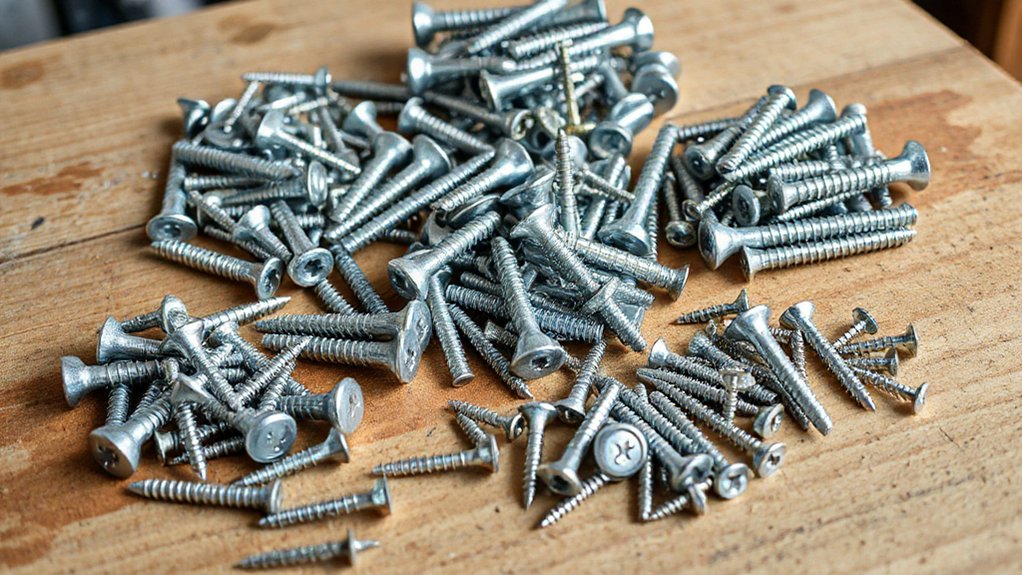
When you compare screws for home improvement, match the fastener to the substrate and load. Wood screws excel in framing and furniture with coarse threads and flush seating, while deck screws resist moisture and UV. Drywall screws offer low-profile, clean interiors, and masonry screws require drilled holes and tapping. For metal, choose anchored fasteners with appropriate coatings. Consider length, diameter, and shank style to make certain of pullout and shear strength. Coatings—stainless, zinc, ceramic—boost longevity in tougher environments. Want more specifics?
Choose the Right Screw by Substrate: Wood, Drywall, Masonry, and Metal
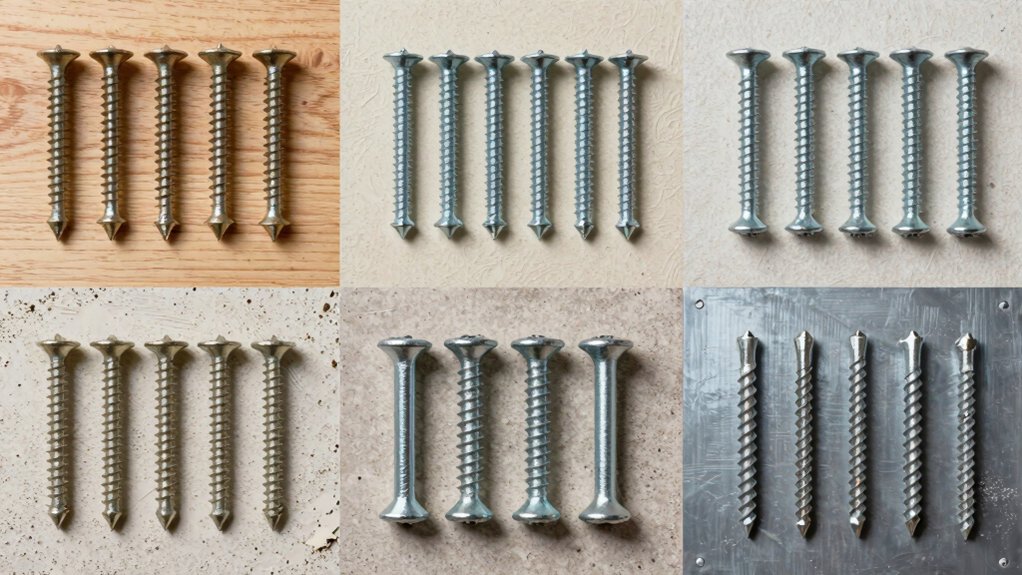
When choosing a screw for a given substrate, start by matching the fastener type to the material: wood, drywall, masonry, or metal. You assess load demands, withdrawal strength, and shear capacity to determine the most suitable fastener.
For wood, prioritize coarse-threaded screws with high shear resistance and proven fastening patterns; select screw head types that permit flush seating and torque control.
Drywall requires lightweight, low-profile fasteners with minimal tear-out, paired with appropriate countersinking.
Masonry demands hardened, corrosion-resistant screws and masonry anchors, calibrated to substrate density.
Metal projects benefit from self-tapping, high-helix designs that resist pull-out, with head types that distribute driving force evenly.
Document your choices, verify pilot hole sizes, and align with fastening patterns to maximize consistency and performance.
How Coatings Extend Screw Life in Different Environments
Coatings extend screw life by forming barriers that resist corrosion, reduce friction, and control wear across environments. You evaluate performance through quantified metrics: coating durability, environmental resistance, and high-temperature stability.
You compare zinc, epoxy, PVD, and ceramic formulations against salt spray, humidity, UV exposure, and chemical contact, recording failure thresholds and surface integrity. You measure thickness uniformity, adhesion, and impact on torque.
You expect durable coatings to maintain electrochemical isolation, minimize galling, and sustain joint preload under load cycling. You translate data into actionable design choices, selecting coatings that maximize service life for given environments.
You choose processes that optimize adhesion and coverage, balancing cost against life-cycle extension. You command predictable outcomes by aligning coating properties with real-world exposure, ensuring reliable performance.
Wood Screws vs Deck Screws: When to Use Each
Wood screws and deck screws serve distinct roles in fastening wood, and choosing between them hinges on material exposure, load requirements, and how the fastener interacts with movement and decay factors. You assess environment, wood species, and expected loading to select the most suitable thread form, length, and head type.
Wood screws provide strong, clamping joints indoors; deck screws resist corrosion and outdoor moisture, sacrificing some interior grip. Use wood screws for furniture or frame members with limited exposure; switch to deck screws where UV, rain, or ground contact governs longevity.
Pay attention to pilot holes, countersinking, and load distribution to optimize fastening techniques. Maintain screw integrity through proper storage, lubrication, and inspection.
- Material exposure guides choice
- Pilot hole and load planning
- Screw maintenance and lifecycle management
Drywall Screws and Plaster Screws: Fast, Clean Anchors
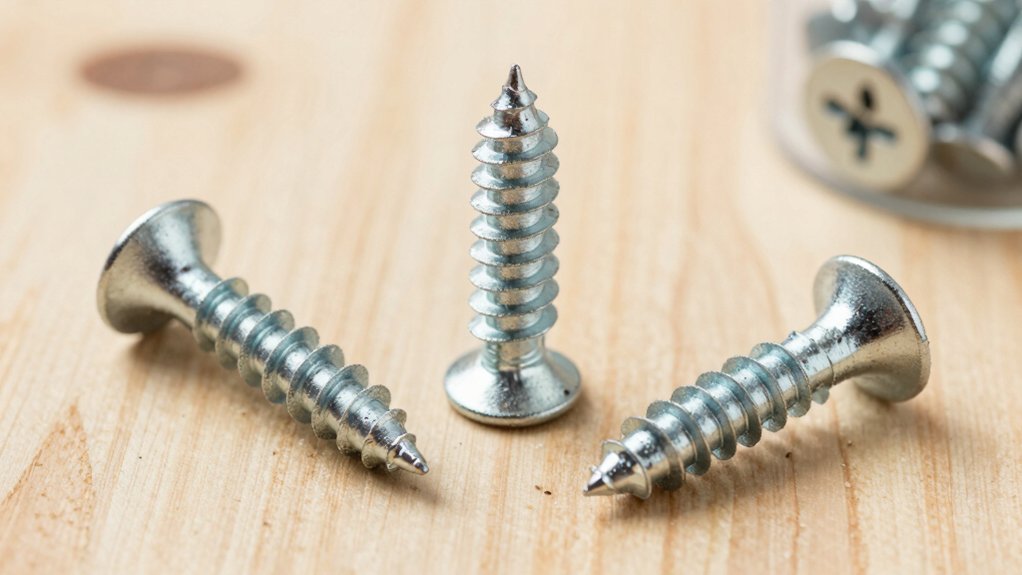
Drywall and plaster screws are designed for fast, clean anchors in interior walls. You’ll prioritize fasteners with bugle or round head types for flush profiles, minimizing surface blemishes and rework.
Screw head types determine seating depth and driver engagement, so select countersunk variants when their heads sit flush under finishes. You’ll also evaluate drive bit compatibility to avoid stripping during installation; Phillips, Pozidriv, and star drives each demand matching bits for maximum torque transfer.
Material and coating choices, such as coated steel for drywall, reduce corrosion risks in humid interiors. Thread form matters: sharp-pointed, fine threads bite quickly in gypsum, while coarse threads perform better in plaster or lath configurations.
Align screws with material density and finishing needs, then verify drive compatibility with your drill or impact driver.
Masonry Screws: Drilling, Tapping, and Holding Power
Masonry screws require precise preparation and execution to achieve reliable holding power. You’ll optimize drilling and tapping by selecting a compatible screw material that resists corrosion and concrete dust. Measure embedment carefully, then tap straight threads with steady pressure to avoid cross-threading.
Holding power hinges on clean holes and proper anchor depth; a clean, dry substrate prevents binding and maximizes pullout resistance. Choose head styles that minimize surface damage yet exert adequate bearing force.
Compare cartridge- or hammer-drill performance to maintain consistent torque, then verify strength with a controlled test load. When selecting fasteners, align material properties with your substrate and application to guarantee durability and security.
- Screw material compatibility
- Drilling and tapping sequence
- Head styles and surface impact
Self-Drilling vs Self-Tapping Screws: Which Should You Use?
Self-drilling and self-tapping screws differ in how they create threads and penetrate materials, which affects drill-threshold performance and fastening efficiency.
Consider how material type and thickness influence your choices, then compare typical drill thresholds and torque needs to identify which option minimizes rework.
We’ll map material compatibility tips to specific use cases to guide your selection with data-driven clarity.
Drill Threshold Differences
When choosing between self-drilling and self-tapping screws, you’ll evaluate the material, hole size, and required holding power to determine which type yields the strongest, most efficient join.
Drill thresholds define entry force and thread engagement, influencing installation speed and accuracy. Self-drilling options minimize pre-drilling and maximize thread control, while self-tapping variants excel when you demand precise thread matching to material compatibility and screw threading quality.
Assess drill bit integrity, pilot hole dimensions, and drive torque to avoid stripping or wandering. Quantify performance with clamping force and pull-out tests to validate the threshold where each type achieves *ideal* hold.
Choose the option that maintains structural rigidity while meeting fabrication tolerances for reliable results.
- Material compatibility and hole preparation
- Drill threshold impact on holding power
- Precision requirements and torque limits
Fastening Efficiency Variances
Choosing between self-drilling and self-tapping screws hinges on how you balance fastening speed, accuracy, and holding power. You’ll prioritize fastening efficiency by matching drive geometry to material, thread pitch, and bite depth, then quantify performance with repeatable tests.
Self-drilling fasteners excel when substrate hardness is moderate and a pilot hole isn’t feasible, delivering faster cycle times and reduced setup steps.
Self-tapping screws offer greater control in thicker, harder substrates where drilling resistance is high, preserving thread integrity and minimizing wandering.
Assess clamp load versus withdrawal resistance, and evaluate seating consistency across multiple trials.
Consider substrate compatibility, noting that aggressive drills can over-penetrate on soft materials, while timid taps may undercut on dense composites.
The goal: predictable, high-strength joints with minimal rework.
Material Compatibility Tips
While selecting between self-drilling and self-tapping screws, start with substrate hardness and material density to guide compatibility decisions. You’ll want data-backed criteria for drill tolerance, thread engagement, and potential for material failure.
Precision alignment and validated torque thresholds drive reliable assemblies and reduce rework. Evaluate material safety implications and environmental impact alongside mechanical fit to avoid unexpected corrosion or degradation over time.
Self-drilling excels in thicker metals with clean access; self-tapping suits thinner sheets or predrilled joints where control is paramount. Use measurable metrics: hardness rating, pull-out strength, and thread engagement depth.
Align choice with service life expectations and safety standards for your project, then document tolerances for reproducibility.
- Hardness-driven selection dictates drill tolerance
- Thread engagement and pull-out as success metrics
- Material safety and environmental impact considerations to log
Coarse vs Fine Threads: Picking the Right Thread Pitch
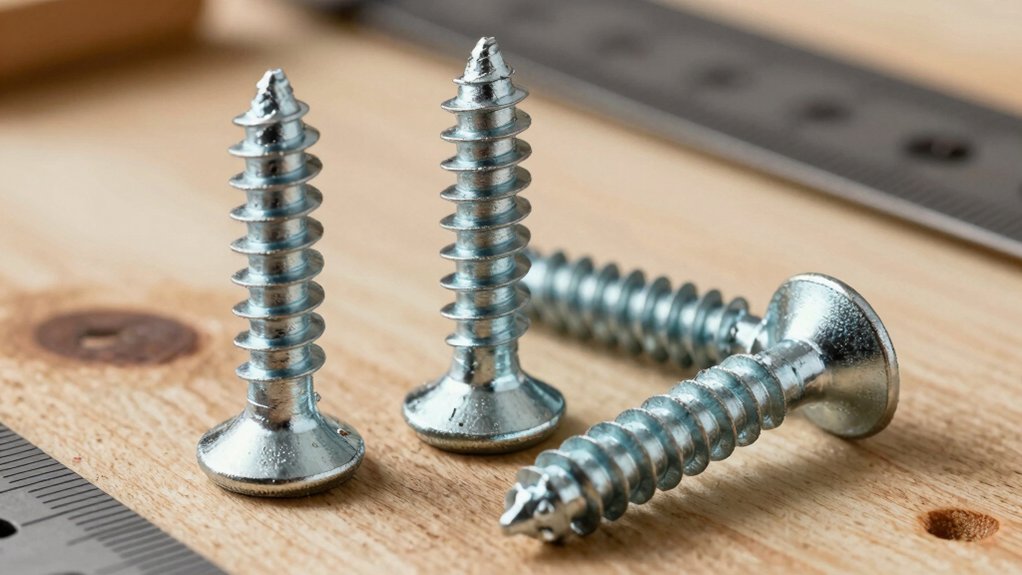
Choosing the right thread pitch matters for joint strength and assembly speed because coarse threads offer quicker engagement while fine threads provide greater shear resistance.
Consider how thread pitch affects material grip, load distribution, and vibration stability. Then compare benefits: coarse for softer substrates and rapid fastening; fine for harder materials and precision tightening.
This discussion sets up data-driven comparisons of Thread Pitch Effects and Coarse vs Fine Benefits to guide your selection.
Thread Pitch Effects
Thread pitch—coarse versus fine threads—directly affects fastener performance, load distribution, and material compatibility. You’ll quantify engagement rate, shear resistance, and withdrawal strength by pitch choice, then map outcomes to joint durability.
In screw thread design, thread pitch effects determine interference with substrate, grip length, and seating tightness, guiding selection for load paths and vibration environments. Precision means testing in identical substrates, recording torque-to-failure, and comparing insert wear across pitches.
Your decisions hinge on measurable tradeoffs between quick assembly and long-term integrity, with finer pitches offering higher clamping force per turn and coarser pitches enabling rapid seating in softer materials. Align pitch with expected loads, material hardness, and maintenance expectations to optimize performance.
- Key metrics: engagement, torque-to-failure, seating tightness
- Substrate compatibility and wear implications
- Tradeoffs between speed, strength, and durability
Coarse vs Fine Benefits
Coarse and fine threads each suit different joint demands, material conditions, and installation speeds. You weigh load distribution, material strength, and gap tolerance when selecting pitch.
Coarse threads deliver higher thread engagement quickly, resisting stripping in softer or hardwood substrates, and enabling faster assembly in dusty or mobile conditions.
Fine threads offer greater clamp force per turn, improving shear resistance and long-term stability in metals and dense composites. In vibration-prone or load-critical joints, coarse threads tolerate misalignment and provide safer initial seating, while fine threads minimize loosening with superior friction and precision.
Consider screw flexibility as a design constraint: finer pitches reduce elasticity under load, but increase torque sensitivity. Match pitch to anticipated service life, maintenance cadence, and required rigidity for predictable performance.
Screw Heads and Drives: Which Setup Makes Install Easier?
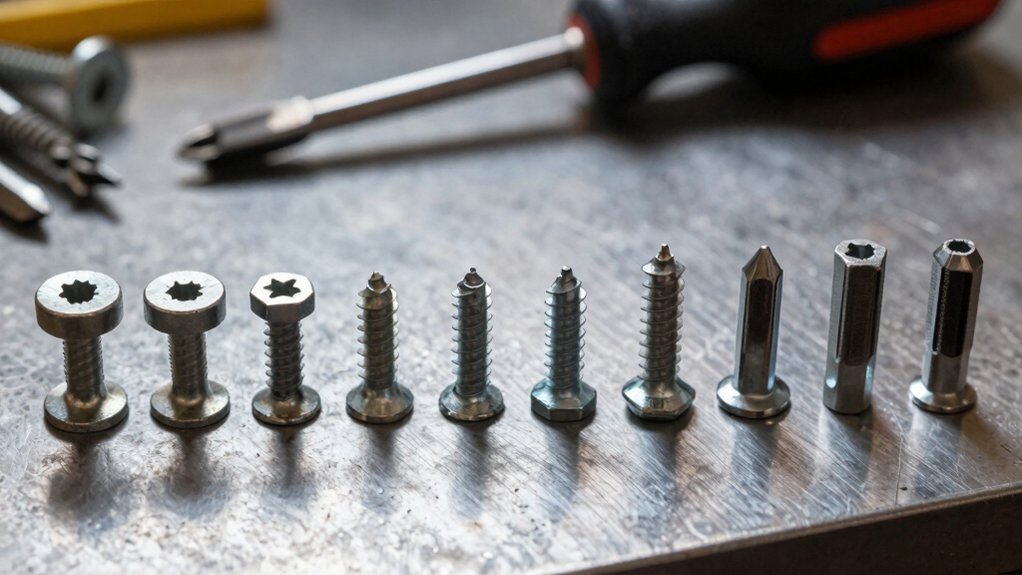
When you’re selecting screws, the head and drive type directly affect both installation speed and accuracy: a compatible head fits the driver snugly, prevents stripping, and reduces cam-out under load. You’ll optimize performance by aligning screw head design with your fastener task, choosing drives that match your tool set, and prioritizing low-resistance interfaces.
Precision-driven choices reduce rework and improve hold strength in precision assemblies. Test drive compatibility before committing, ensuring torque transfer is efficient without wobble or slippage.
Favor standardized head profiles and common drivers for interchangeable efficiency, especially when multiple fasteners appear in a project. Small deviations in drive geometry noticeably alter insertion feel and finish quality.
- Consistent head design
- Drive compatibility checks
- Driver-tool alignment
Load, Shear, and Size: How to Choose Screws for Strength
You’ll compare load capacity, shear strength, and size to predict performance under real loads.
Consider how load capacity relates to joint type and material.
How shear strength depends on screw geometry and threading.
And how size choices affect withdrawal and embedment.
Use these factors to guide a data-driven selection process for strength-focused applications.
Load Capacity Basics
Choosing the right screws hinges on three interrelated factors: load capacity, shear strength, and size. You’ll quantify load by intended weight, distribution, and fastener spacing, then verify that shear capacity aligns with dynamic forces.
Size choices—diameter, thread type, and length—determine grip and pullout resistance under load. Precision comes from matching screw head types and screw pitch options to the joint geometry, minimizing interference and maximizing contact area.
When you select, you trade off stiffness, withdrawal resistance, and installation effort to meet required safety margins. Documented test data and manufacturer charts should guide your decisions, not guesswork.
- Load-based selection framework
- Interaction of head types with joint clearance
- Pitch options and installation efficiency
Shear Strength Factors
Load, shear, and size jointly determine a screw’s shear strength, so you quantify each factor before selecting fasteners. You assess load direction, the anticipated shear plane, and joint geometry to predict performance.
Shear strength hinges on material properties, screw diameter, and thread engagement, so you compare tested values from reliable data sets and manufacturer charts. You apply shear testing results to determine allowable loads under expected service conditions, not just nominal pull data.
Precision demands you identify failure modes—shear failure versus glittering edge pull—before committing to a screw. In practice, you document tested margins, avoid overhangs, and select sizes that balance stiffness and tolerance.
This disciplined approach prevents premature failure and guides durable, high-confidence assemblies.
Size and Thread Type
When selecting screws for strength, size and thread type directly influence load capacity and shear performance. You assess diameter, pitch, and shoulder length to optimize material grip, minimize creep, and maximize fastener integrity.
Selection hinges on screw material compatibility and thread precision, ensuring threads engage firmly without stripping or loosening under load. Larger diameter and finer thread pitch can improve load distribution, but may require pilot drilling and higher installation force.
Match thread form to joint type and surface hardness, balancing withdrawal resistance with ease of insertion. Consider coatings and alloy strength in tandem with size to maintain predictable failure points under stress.
- Correct screw material and thread precision align with load needs and surface hardness
- Diameter, pitch, and length determine load distribution and shear resistance
- Coatings and alloys influence durability without adding unnecessary complexity
Pre-Drilling, Driving, and Setbacks: Starter Techniques for a Clean Fix
Pre-drilling, driving, and setbacks form the core sequence for clean, secure fastenings. You implement a precise pilot hole based on screw size, material density, and drill bit diameter, reducing binding and breakout.
Driving requires steady torque, controlled speed, and alignment to prevent cam-out; use a calibrated driver for consistent seating.
Setbacks—back-out, overdriving, or stripping—trigger corrective steps: back off, reseat, and re-torque with a slower feed.
Priority is repeatable results: measure depth with a gauge, confirm flush seating, and verify clamping without distortion.
Focus on screw thread design for predictable engagement and load transfer, selecting thread pitch and length to match substrate.
Employ ergonomic screwdriver grips to optimize control, reduce hand fatigue, and sustain high-precision performance across multiple fastenings.
Corrosion-Resistant Options: Stainless, Zinc, and Ceramic-Coated
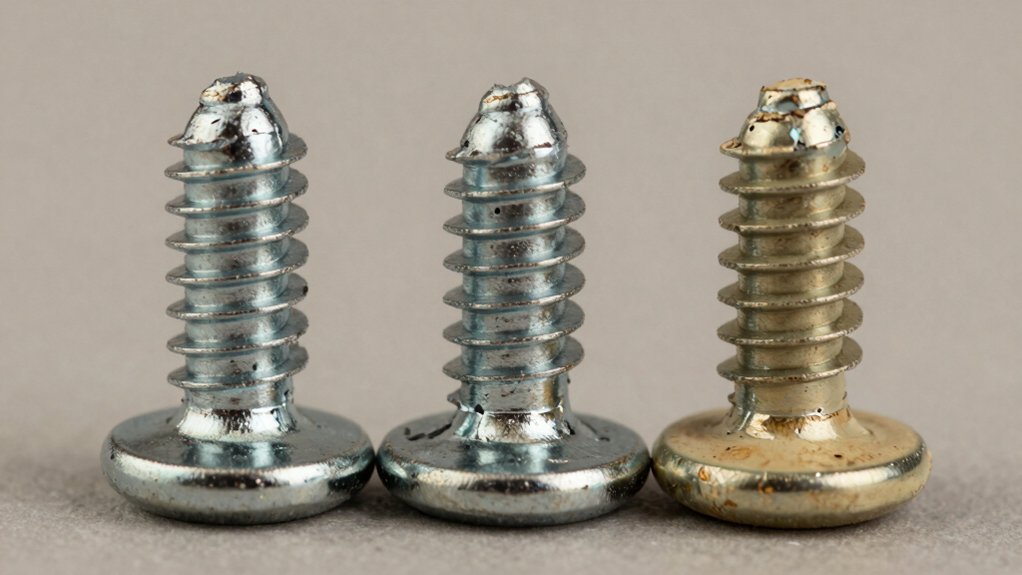
Corrosion resistance hinges on material choice and coating, with stainless steel, zinc-plated variants, and ceramic coatings delivering distinct balance between durability, cost, and application suitability.
You evaluate each option by environment, load, and exposure, pairing performance metrics with lifecycle cost.
Stainless offers high corrosion resistance and coating durability under toughest conditions, at a premium. Zinc coatings provide good protection for general use and cost efficiency, but falter in aggressive atmospheres.
Ceramic-coated screws deliver robust wear resistance and minimal galvanic risk, yet may incur higher upfront cost and limited availability.
Your decision hinges on threat level, substrate compatibility, and maintenance expectations.
- Corrosion resistance profiles by environment
- Coating durability and lifecycle costs
- Application suitability and material limits
Length, Diameter, and Shank: Getting the Right Fit
Length determines fit, load capacity, and how deeply a screw seats.
You’ll weigh length against material thickness, diameter against withdrawal resistance, and shank style to match your application.
This sets up a data-driven approach to selecting screws for strength and reliability.
Length Matters For Fit
Choosing the right screw length, diameter, and shank is essential for a secure fit: improper length can fail at the joint, while incorrect diameter or shank type can strip or split material. You measure with purpose, verify load expectations, and select fastener chemistry-backed options for consistent performance.
Shorter than required undermines shear capacity; excessive length risks intrusion or material damage. Shank design dictates whether you need a smooth or threaded grip, influencing withdrawal resistance and fixture integrity.
Precision selection reduces failure modes, supports repeatable results, and aligns with sustainable practices like screw recycling.
- Verify length against material thickness and load goals
- Match shank type to material grain and driving method
- Assess chemistry and recyclability for long-term performance and sustainability
Diameter And Strength
To choose the right diameter and strength, you must align screw gauge with material properties and load expectations established earlier. You assess critical factors: maximum shear and withdrawal forces, and the engagement depth required for reliable load transfer.
Screw diameter directly governs resistance; larger diameters increase bearing capacity but demand matching pilot holes and clearance. Screw strength depends on alloy, heat treatment, and surface finish, influencing ultimate pullout and shear performance under load.
In practice, select a diameter that achieves full thread engagement without crowding the bore. Validate strength by referencing tested load charts and material compatibility. Maintain consistent drive torque to prevent under- or over-tightening, which alters effective strength.
Precision choice reduces failures, delivering predictable performance and structural integrity for your project.
Shank Styles And Use
When selecting shank styles, consider how length, diameter, and shank type affect shear transfer, withdrawal resistance, and driver compatibility across common substrates. Precision governs fit: longer shanks increase withdrawal strength but require substrate tolerance, while thicker diameters boost shear capacity with higher driving torque.
Shank use dictates compatibility: unthreaded sleeves focus on clamping force, while toothed or grooved shanks improve torque transmission. Choose a match for substrate hardness and load path, prioritizing predictable performance over assumptions.
Documented data supports selecting shank styles that optimize withdrawal resistance without sacrificing ease of installation. Your goal is repeatable results, minimal stripping risk, and consistent embedded depth to maintain joint integrity.
Rigorously verify with test data before large-scale application.
- shank styles
- shank use
- driver compatibility
Common Installation Pitfalls and How to Avoid Them
Common installation pitfalls can undermine the performance of any screw type, but they’re predictable and preventable with a methodical approach. You’ll optimize outcomes by detailing material compatibility, substrate condition, and correct fastener size before drilling.
Validate pilot hole diameter and counterbore depth to minimize tooth shear and material deformation, then maintain consistent screw drive alignment to prevent cam-out.
Track torque limits to avoid over-stressing threads, which compromises screw durability and anchorage. Protect fasteners from corrosion exposure with appropriate coatings or stainless alternatives when moisture is present; otherwise, you invite hidden failure.
Document environmental factors, surface cleanliness, and thread engagement length to quantify reliability. By auditing these steps, you reduce installation variance, improve load transfer, and ensure long-term fastener performance across screw types, aligning with precise, data-driven expectations.
Quick-Reference Substrate Guide: Match Your Project Type to Screws
Screws perform best when matched to substrate and project type, so this quick-reference guide pairs common materials and applications with proven fastener choices. You’ll optimize performance by aligning substrate hardness, thickness, and load with a compatible screw size, thread form, and drive.
Consider fastener standards to validate compatibility, and weigh manufacturer differences that affect coating, corrosion resistance, and finish tolerances. This methodical approach reduces failure modes, improves pullout resistance, and supports predictable results across applications.
Use data-driven selections to minimize guesswork and maximize fastening efficiency, whether outdoor, high-load, or precision assemblies. Align your choice with project constraints, then verify with empirical tests or standard tests from reputable sources.
- Match substrate to screw type using fastener standards and manufacturer differences
- Evaluate coating, corrosion resistance, and finish tolerances for durability
- Confirm load, thickness, and environment before final selection
Conclusion
You stand at a crossroads of choices, like a fortress builder choosing bricks. Each screw is a trusted ally, forged for a task, with coatings guarding against fate and corrosion. Follow the substrate map, respect length and shank, and watch the holding power grow like a well-tuned engine. When in doubt, test small, measure results, and sharpen your method. With precise steps, your project stands firm, enduring weather, wear, and time—an ironclad alliance.