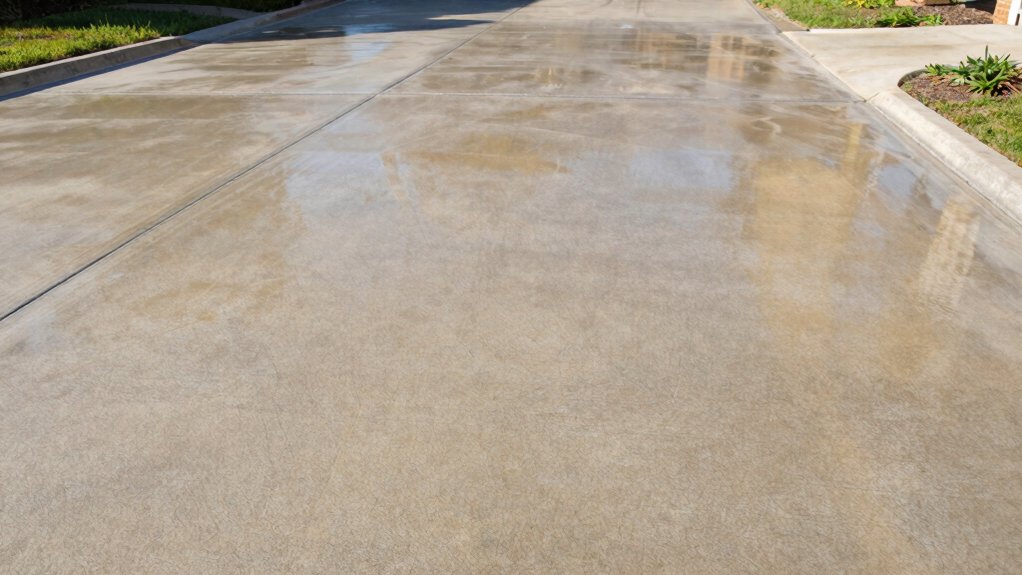
You probably don’t realize how much prep determines coating life on concrete driveways. Moisture vapor, contaminants, and microcracks can ruin adhesion before you finish the first coat. You’ll weigh options like epoxy for durability, polyurethane for UV stability, and acrylic sealers for cost efficiency, while balancing climate, cure times, and maintenance. Get the basics right now, and you’ll reduce failures and maximize longevity, so you’ll want to continue exploring proven steps, best practices, and practical tips.
Understanding Concrete Driveways and Coatings
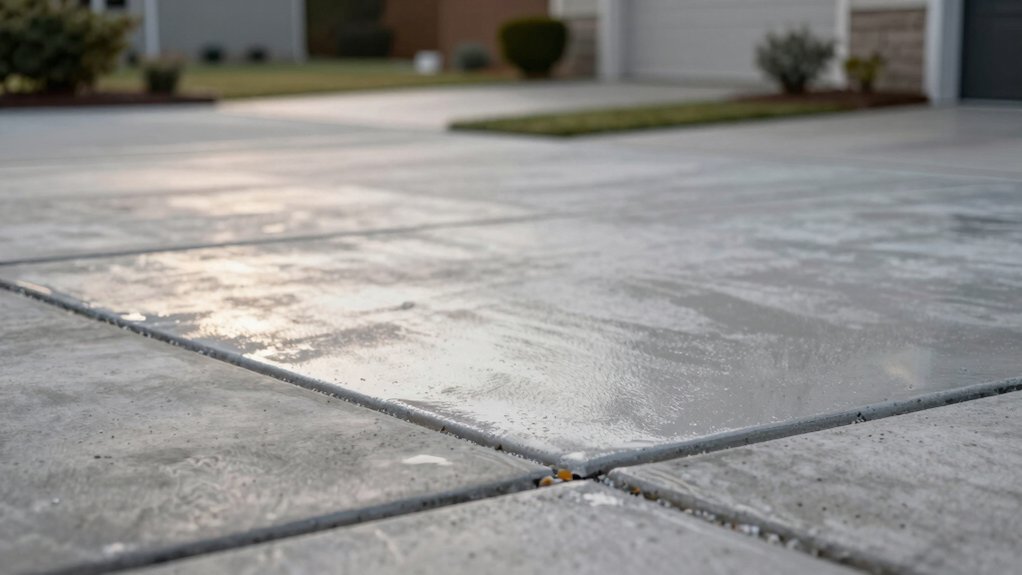
Concrete driveways consist of a hardened surface formed from Portland cement, aggregates, and water, designed to withstand traffic, weather, and chemical exposure. You approach understanding by analyzing material composition, layer structure, and performance targets.
You’ll examine cement paste, aggregates, and moisture control as essential determinants of strength, durability, and surface integrity.
Coatings interact with the substrate, so you assess substrate condition, bonding potential, and porosity before selection.
You’ll evaluate curing methods, shrinkage behavior, and flexural capacity to predict long-term behavior under loads.
Temperature and chemical exposure influence reaction kinetics and degradation risk, guiding preparation and protection strategies.
You’ll document tolerances for flatness, surface hardness, and crack control, ensuring measurements align with project specifications.
Your interpretation remains objective, precise, and aligned with engineering standards throughout the analysis.
Popular Coating Options for Driveways
You’ll review popular coating options by examining the main types—epoxy, polyurethane, acrylic, and overlay systems—and how each meets driveway demands.
Consider installation factors such as surface prep, cure times, traffic tolerance, and environmental conditions to choose the right option.
This discussion sets the stage for comparing performance, longevity, and maintenance across coatings and how they align with project goals.
Types of Coatings
There are several popular coating options for driveways, each offering distinct protection, aesthetics, and application considerations. You evaluate epoxy, polyurea, and polyurethane systems for chemical resistance, abrasion resistance, and UV stability, noting differences in cure times and moisture tolerance.
Epoxies provide hard, dense surfaces with strong adhesion but can amber with UV exposure unless protected.
Polyurea offers rapid cure, higher flexibility, and weather resilience, yet often at a higher material cost.
Polyurethane coatings deliver excellent UV protection and color retention but may exhibit softer wear characteristics than epoxies.
Acrylic sealers serve as budget-friendly, moisture-inhibiting topcoats with easy maintenance and quick cure, though provide limited longevity.
For concrete driveways, you balance traffic loads, climate, gloss level, and maintenance windows to select the appropriate coating family.
Installation Considerations
Choosing the right installation approach hinges on surface preparation, substrate condition, and the chosen coating system. You evaluate substrate porosity, moisture, and crack patterns before selecting a method.
Surface cleaning must remove oil, dust, and laitance, then you verify bond strength with a test patch.
For epoxy systems, you ensure proper mixing, pot life, and ambient conditions, avoiding moisture exposure during cure.
Polyurethane options require substrate compatibility and slip resistance, with precise broadcast of aggregates if specified.
Acrylic sealers demand clean, dry surfaces and appropriate cure time prior to traffic.
You plan joint, crack, and control-void handling using compatible fillers, followed by priming to promote adhesion.
You document ambient limits, ventilation, and safety measures, then schedule sequential coats to prevent solvent entrapment and top-coat discoloration.
Epoxy Vs Polyurethane: Which Is Right for You
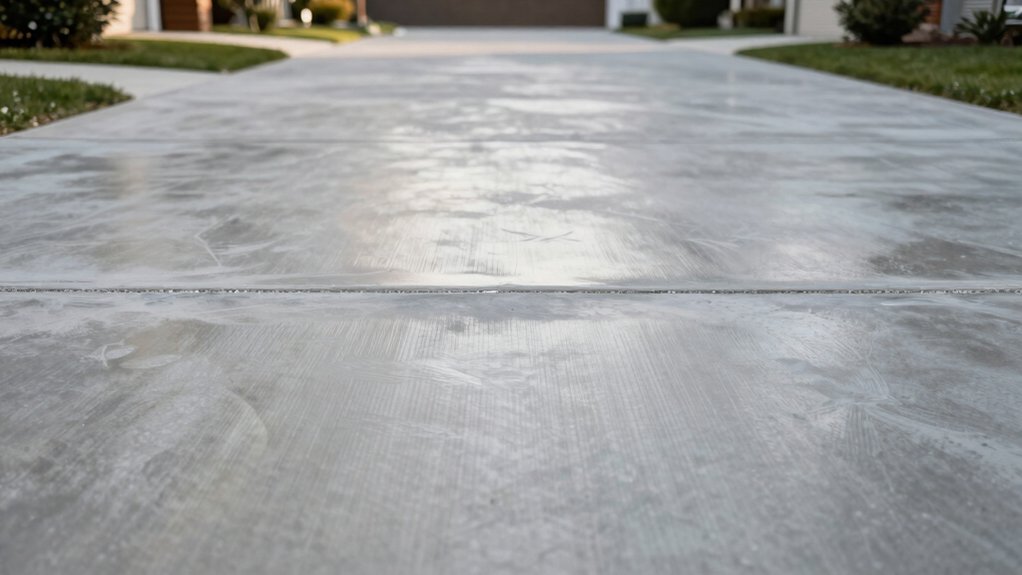
Epoxy and polyurethane coatings each have distinct performance traits for concrete driveways. Epoxy delivers exceptional hardness, high bond strength, and chemical resistance, making it suitable for bays, garages, and protected exteriors where impact and abrasion are concerns.
Polyurethane provides superior UV stability, elasticity, and thermal expansion tolerance, reducing pigment yellowing and cracking under sun exposure. If you prioritize durability against wear and chemical exposure, epoxy is typically the stronger choice, provided you can ensure proper surface preparation and substrate moisture control.
For outdoor or sun-exposed areas, polyurethane minimizes surface cracking and maintains color with greater flexibility. Consider climate, traffic patterns, and maintenance expectations.
In mixed-use environments, a carefully designed two-coat system or a hybrid approach may optimize both impact resistance and UV longevity.
Solvent-Based Vs Water-Based Coatings
Solvent-based coatings cure through evaporation of volatile organic compounds, delivering faster initial hardness and longer pot life, but they release stronger fumes and require ventilation and odor control. You’ll experience rapid film formation, with higher odor potential and stricter application room requirements.
In contrast, water-based coatings emit minimal VOCs, offering safer handling, simpler cleanup, and lower odor during and after application. Drying times are generally slower, though improvements in modern formulations reduce waiting periods between coats.
You gain easier compatibility with certain concrete substrates and reduced risk of blush or solvent migration. Durability and UV resistance vary by resin system; solvent-based options often yield excellent hardness, whereas water-based systems emphasize elastic performance and film flexibility.
Consider exposure, ventilation, and long-term maintenance when selecting the coating type.
Surface Prep Essentials for Best Adhesion
Surface prep is critical for bond strength and long-term performance; properly cleaned, Profiled, and primed concrete guarantees adhesion and minimizes coating failures. You must remove contaminants that impede bonding, including oil, grease, previous coatings, and efflorescence, using proven degreasers and mechanical abrasion.
Don’t overlook moisture; test for RH and potential vapor transmission, and ensure substrate moisture is within coating specifications before application.
Create a defined profile with compliant methods—mechanical profiling to SSPC or manufacturer standards, or chemical etching when approved—to achieve adequate surface roughness without over-roughening.
Dust, grit, and debris must be thoroughly swept and vacuumed.
Mask edges and control joints, and apply a compatible primer per product data.
Verify surface cleanliness, profile, and moisture after prep prior to coating.
Durability, Maintenance, and Longevity
Durability hinges on wear-resistant benefits that protect the surface under traffic and weather exposure.
You’ll reduce upkeep with low-maintenance tactics, like selecting coatings that resist staining, cracking, and chemical attack.
Longevity factors—proper cure, substrate prep, and timely reapplication—keep the driveway serviceable longer and support predictable performance.
Wear-Resistant Benefits
Wear-resistant coatings dramatically extend concrete driveway life by resisting abrasion, impact, and chemical exposure. You gain durable surface integrity as the coating forms a hard, cohesive layer that distributes loads and mitigates micro-cracking.
The improved abrasion resistance slows wear from tire contact, dirt, and grit, reducing material loss over time. Impact resistance helps absorb tool and vehicle impacts without spalling, preserving substrate geometry and reducing repair frequency.
Chemical resistance protects against deicers, fuels, oils, and weathering agents, lowering chemical attack risks that degrade concrete porosity. Maintenance intervals shorten when surface porosity stays lower and cleaning remains straightforward.
Longevity benefits come from sustained compactness, reduced porosity changes, and minimized maintenance-induced damage, yielding lower life-cycle costs and consistent performance under varying climates and traffic patterns.
Low-Maintenance Tactics
To keep coatings performing with minimal upkeep, implement a few targeted, next-step tactics that emphasize durability, simple maintenance, and extended longevity.
Choose a high-solid, chemically resistant sealant appropriate for vehicle traffic and freeze–thaw cycles. Apply in strict accordance with manufacturer guidelines, maintaining proper surface temperature and curing windows to minimize micro-cracking risk.
Schedule periodic inspections to identify hairline cracks, delamination, or coating degradation; address defects before moisture ingress expands.
Favor concrete-compatible primers when substrate porosity is high, ensuring an even film and uniform cure.
Use moisture-guarded cleaning methods—non-abrasive cleaners, soft brushes, and low-pressure water—avoiding solvent overuse that can compromise film integrity.
Document coat dates, product batches, and environmental conditions to track performance trends and plan timely reapplications.
Longevity Factors
Aging and performance of concrete coatings hinge on how well you manage durability, maintenance, and overall longevity. You select a coating with suitable hardness, adhesion, and elongation to resist abrasion, chemicals, and UV exposure.
Surface prep matters: ensure clean, laitance-free substrate, proper profile, and moisture balance to maximize bond strength and crack-bridging capability. Application timing, temperature, and cure conditions control film formation and cure-induced stresses, affecting long-term wear.
Regular maintenance, including prompt stain and sealant reapplication, prevents sealant depletion and substrate moisture ingress. Inspect joints, cracks, and delaminations annually; address defects before they propagate.
Choose compatible primers and topcoats to reduce differential movement. Document service life indicators and retest adhesion periodically. Prioritize a cohesive system approach over disparate products to extend durability and minimize lifecycle costs.
Color, Texture, and Aesthetic Choices
Color, texture, and overall aesthetics greatly influence both curb appeal and practical performance of concrete driveways. You evaluate color options for visibility, heat absorption, and fading resistance, noting pigment systems, integral vs. surface stains, and UV stability.
Texture choices, including broom, stamped, or smooth finishes, affect traction, wear patterns, and cleaning ease; you assess slip resistance metrics and concrete surface preparation requirements.
Pattern consistency matters for long-term appearance; you plan alignment with control joints and existing landscaping.
Finishes interact with sealers, curing agents, and weather exposure, impacting gloss level, stain migration, and maintenance cycles.
When selecting, balance aesthetics with functional considerations such as weathering, maintenance intervals, and compatibility with adjacent materials.
Document specifications, verify manufacturer warranties, and calibrate expectations for color uniformity across batches.
DIY Application Vs Professional Installation
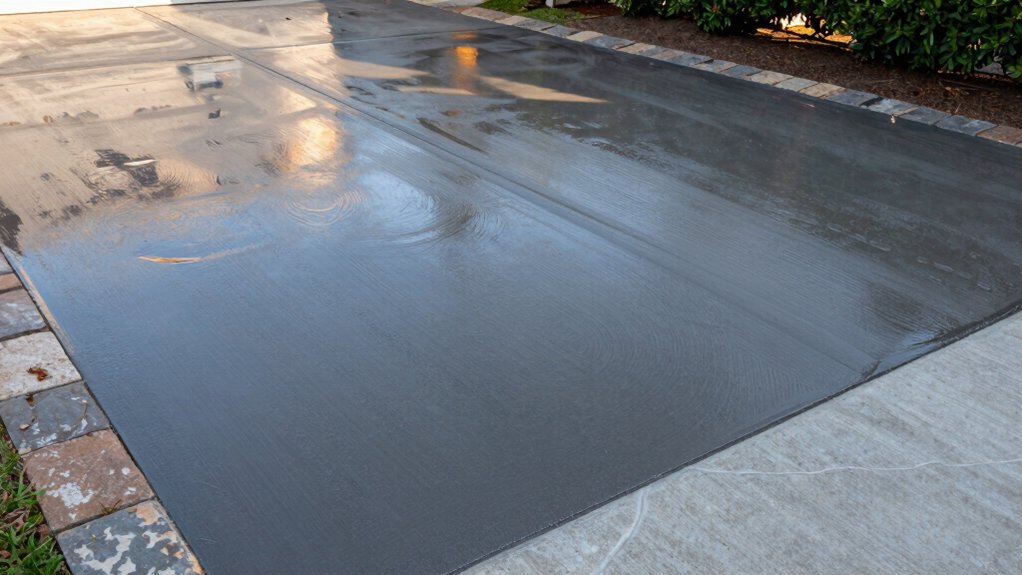
Choosing between DIY application and professional installation hinges on accuracy, long-term performance, and your available time. Your decision affects surface preparation rigor, coating thickness control, and cure monitoring.
DIY methods require meticulous cleaning, crack repair, profile verification, and precise mixing ratios; deviations can reduce adhesion and durability. You’ll gain cost savings, flexible scheduling, and hands-on understanding of finish uniformity, but risk inconsistent film thickness, trapped moisture, and variable edge adhesion if guidelines aren’t followed.
Professional installation typically provides accredited surface prep, dust-free environments, controlled application temperature, and certified curing, yielding uniform coverage and predictable warranties.
Consider coating type, dry- and wet-say conditions tolerance, and your tolerance for iterative touch-ups. If you prioritize repeatable results, shorter downtime, and formal guarantees, a pro installation is warranted.
Climate Considerations and Timing
Climate and timing conditions directly influence coating performance on concrete driveways. You determine application windows by monitoring ambient temperature, surface temperature, and humidity, then align with product specifications.
Low temperatures slow cure and may prevent proper adhesion, while excessive heat accelerates volatilization, potentially causing premature film formation and defects. You should avoid application if dew point proximity invites condensation or if surface moisture exceeds substrate limits.
Relative humidity governs cure kinetics and final film thickness, so you track dew point to prevent blistering or clouding. Confirm surface temperature is within the coating’s recommended range, typically above a minimum and well below a maximum threshold.
Allow extended curing in cooler seasons and shorter recoat intervals in warm periods, adhering to manufacturer guidelines for ideal bond, hardness, and color stability.
Budgeting and Warranty Considerations
Budgeting for coatings on concrete driveways requires clear cost attribution and realistic life-cycle planning. You should itemize materials, labor, surface prep, and warranty terms, then map these against expected service life.
Consider total cost of ownership, including downtime, reapplication intervals, and potential repair of substrate damage. When evaluating warranties, verify coverage scope, exclusions, and claim procedures, noting transferability and duration.
Demand manufacturer and contractor documentation for product performance, cure times, and environmental limits, ensuring you can quantify performance guarantees.
Build a contingency allowance for contingencies such as moisture, surface profiling, or unexpected substrate repairs.
Favor coatings with proven adhesion, UV resistance, and compliance with applicable standards.
Document acceptance criteria, inspection schedules, and milestone payments to minimize disputes and align expectations with performance milestones.
Conclusion
You’ve weighed epoxy’s impact resistance against polyurethane’s UV stability, weighed solvent versus water-based, and planned meticulous surface prep. The choices you make now—temperature, humidity, crack repair, sealant timing—will determine durability and curb appeal for years. Yet the driveway’s true test lies ahead: how well the coating ages under daily use and weather. Stay vigilant, monitor wear, and reseal when needed. The next coating could outlast your expectations—or reveal the cost of hesitation. The outcome hides just beyond the cure.