Like a well-placed chord in a modern score, your living room should feel deliberate and calm. You want durable materials, timeless color, and clean proportions that stand up to daily life. Start with a layout that flows, furniture that hides clutter, and smart tech tucked away. Layer lighting for mood and tasks, and choose finishes built to last. Ready to shape a space that ages gracefully and adapts as you do? Let’s map out the essentials.
What Counts as Modern Living Room Design for a New Build
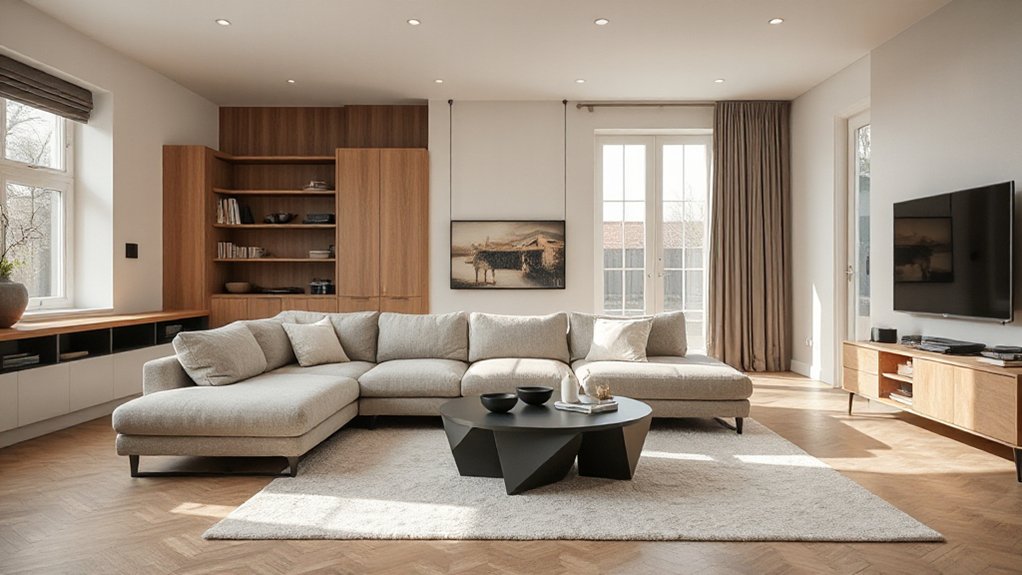
Modern living room design for a new build centers on clean lines, flexible layouts, and materials that feel both timeless and fresh. You aim for a cohesive backdrop that lets furniture float without crowding, while keeping sightlines open for easy movement.
Focus on scale, proportion, and a restrained palette that supports changing accents. Vintage accents pull character without shouting, so integrate a few select pieces—think a sculptural lamp, a retro chair, or a weathered console—sparingly.
Eclectic styles work when you balance contrast with harmony, pairing modern silhouettes with tactile textures, like linen, wool, or leather.
Prioritize natural light, smart storage, and hidden wiring for a clutter-free core. The goal is calm, versatile spaces that adapt as you evolve, not trends that fade.
Set Your Criteria: Durable Materials, Timeless Color, and Proportions
Set your criteria around durable materials, timeless color palettes, and clean proportions, so every choice reads as intentional.
You’ll prioritize textures that age well, hues that stay current, and a layout that feels balanced from seating to storage.
Ready to translate those guiding rules into concrete options that endure and look sharp, room after room.
Durable Material Choices
When you pick durable materials, you’re investing in longevity and effortless style that stays fresh year after year. Prioritize substrates that resist wear without shouting for attention: solid surfaces, dense hardwoods, and quality composites offer lasting resilience.
Choose finishes that seal and protect while aging gracefully, favoring low-maintenance options. For sustainability, lean on sustainable materials and responsibly sourced options that don’t compromise look or feel. Eco friendly finishes protect surfaces without toxic additives, keeping indoor air cleaner.
Balance is essential: pair hardwearing elements with practical textiles like high-performance fabrics and leather that resist stains. Consider maintenance cycles and warranties upfront, so protection aligns with real living.
Finally, track environmental impact, opting for materials with transparent supply chains and durable, timeless appeal.
Timeless Color Palettes
Color choice should feel timeless, not trendy, so start with a restrained palette built on durable materials: warm neutrals, cool charcoals, and quiet earthy tones that age gracefully.
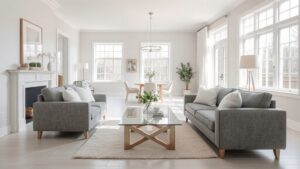
You’ll anchor rooms with steady contrast: a light wall, a deeper sofa, and restrained wood or stone accents.
Ground colors work best when paired with textures that read as durable and refined, avoiding loud finishes that scream “fad.”
Color psychology guides restraint; you’ll favor mood-lifting neutrals for calm, accent with subdued blues or greens to foster focus, and reserve high-contrast corners for visual punch.
Informed by trend forecasting, you’ll refresh accessories seasonally rather than repainting.
The result: an enduring scheme that feels current yet calm, sophisticated, and adaptable to evolving furnishings and lighting needs.
Proportional Design Rules
To nail proportional design, define clear criteria up front: durable materials, timeless color, and well-balanced proportions.
You’ll balance scale by matching furniture silhouettes to room dimensions, ensuring no single piece overwhelms the space.
Prioritize durable materials that wear well, like solid wood, metal, or engineered surfaces, so longevity supports clean lines.
Choose a timeless color baseline and let texture provide variation rather than color fatigue.
Proportions hinge on visual weight: lighter pieces near windows, heavier anchors against walls, and a clear focal point anchored by a sofa or media console.
Consider color psychology to evoke calm and cohesion, pairing warm neutrals with cool accents for contrast.
Factor furniture ergonomics into layout: sightlines, seating depth, and reach zones for effortless use and comfort.
Optimize Layout for Everyday Comfort and Clear Flow
Start by defining a clear zoning plan that centers everyday use: traffic should flow smoothly from the entry to seating, media, and power outlets without forcing shortcuts or clutter.
You map zones for conversation, display, and work, then position seating to face the focal wall without crowding pathways.
Let natural light guide legwork; avoid glare by thoughtful placement of screens and lamps.
Keep cables tucked, outlets accessible, and surfaces uncluttered to preserve calm.
Introduce artistic accents to create focal points without visual overload, and layer cultural influences through textures, colors, and craft details that feel intentionally curated.
Pair scale and proportion so every zone feels grounded, not crowded, enabling easy moves between TV, coffee, and reading nooks.
This layout prioritizes comfort, flow, and stylish restraint.
Choose Furniture That Hides Clutter and Fits Your Space
Why fight clutter when the right furniture can hide it? You choose pieces that streamline sight lines and serve multiple tasks. Opt for low-profile sofas with recessed legs to create an airy feel, and select coffee tables with storage to reclaim surface real estate.
Think modular configurations that adapt to room shape, not against it. Use color contrast to cue depth: a dark sofa against light walls reads organized, while lighter cushions punch focal points without piling up noise.
Position furniture with deliberate furniture placement, keeping walkways clear and corners open. Favor pieces with hidden compartments or soft-close lids to conceal cables and remotes.
Finally, measure, sketch, and test scale against your space to avoid overcrowding.
Maximize Storage Without Sacrificing Style
Hidden storage tricks, multi-functional furniture, and wall-m linked shelving can transform a compact living room without cluttering its lines. You’ll prioritize pieces that conceal essentials while doubling as conversation starters, from ottomans with hidden compartments to settee storage.
Let’s start by pairing sleek, wall-mounted shelves with modular storage that fits your exact space and style.
Hidden Storage Tricks
Effortless storage isn’t an afterthought in a new-build living room—it’s built in. You’ll access smart solutions that stay cleanly minimalist while adding practical depth. Hidden compartments blend into cabinetry, walls, and seating, so you gain space without visual clutter.
Concealed drawers tuck away odds and ends, keeping surfaces pristine and ready for daily use. Choose cabinetry with shallow, pull-out racks for remotes, chargers, and cables, so you never hunt again.
Recessed shelving beneath window seats or steps creates discreet nooks for books and decor. Lift-up coffee tables reveal hidden storage without sacrificing style, while built-in media niches keep cords out of sight.
Plan channels for airflow and accessibility, ensuring your hidden storage enhances function as much as form.
Multi-Functional Furniture
Multifunctional furniture is your secret weapon for a lean, luxe living room. You’ll maximize storage without clutter by choosing pieces that perform double duty.
Start with convertible sofas that tuck away blankets, pillows, and remotes, transforming from seating to sleeping without bulk. Opt for modular units you can rearrange as needs shift, keeping open sightlines while amplifying storage with built‑in cabinets and hidden drawers.
Choose coffee tables that conceal compartments or lift to reveal tech hubs, charging zones, or secure safes for valuables. High‑contrast finishes, slim profiles, and legless bases create the sense of airiness you crave.
Prioritize durability, easy maintenance, and a cohesive aesthetic so each piece serves function and style. Your room stays calm, organized, and endlessly adaptable.
Wall-Mlinked Shelving Solutions
Wall-mounted shelving is where form meets function, giving you serious storage without stealing floor space. You’ll maximize wall real estate with sleek, floating panels that blend into the room’s lines. Start with a clean grid, then layer depths to create visual interest without clutter.
Floating consoles—thin, long surfaces that hover above the lower units—offer landing spots for media gear, plants, or books, while preserving open sightlines. Use decorative brackets sparingly to anchor statement sections or to emphasize architectural detail; choose minimalist metal or wood that matches your hardware.
Keep cables hidden by running ducts behind shelves or through discreet channels. Finish with a unified color or material to unify disparate items, ensuring the shelving reads as a cohesive design feature rather than a storage afterthought.
Layer Lighting for Mood, Tasks, and Ambience
Layering lighting in a new-build living room means balancing mood, task work, and ambience without clutter. You’ll combine ceiling, floor, and table options to create zones that adapt to how you live.
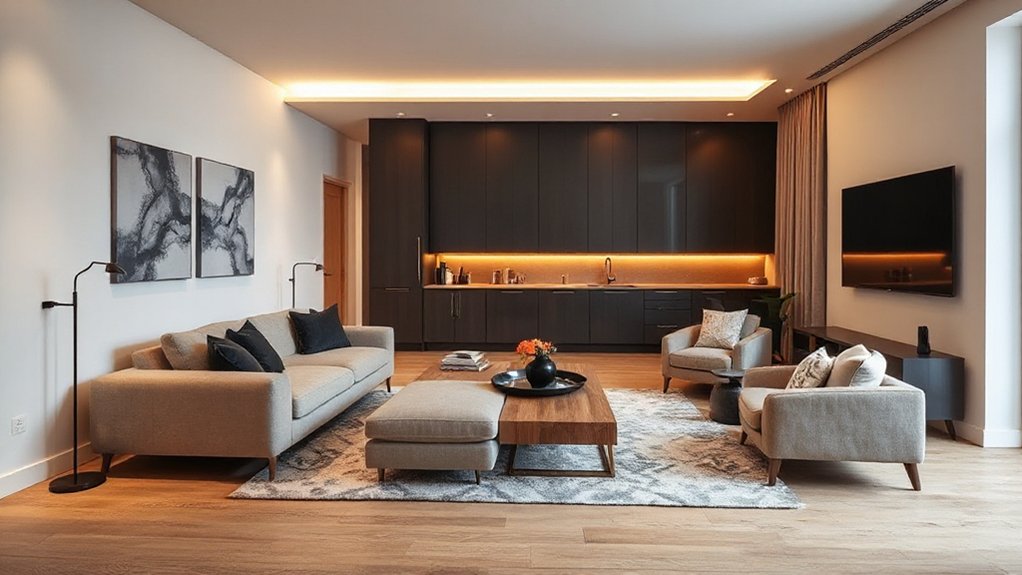
Start with ambient light that’s soft but steady, then add task lighting for reading or crafts, and finish with accent lighting to highlight art or architectural features. Use dimmers to shift scenes from bright daytime to cozy evening without flicker.
Choose fixtures with a cohesive finish to maintain a polished look. Consider wall-mounted sconces for framing textures, a floor lamp for flexible focal points, and recessed downlights for clean overhead balance.
Accent lighting, mood enhancement, and strategic placement deliver depth without visual noise. This approach keeps space functional, stylish, and welcoming.
Integrate Seamless Smart Tech for Daily Life
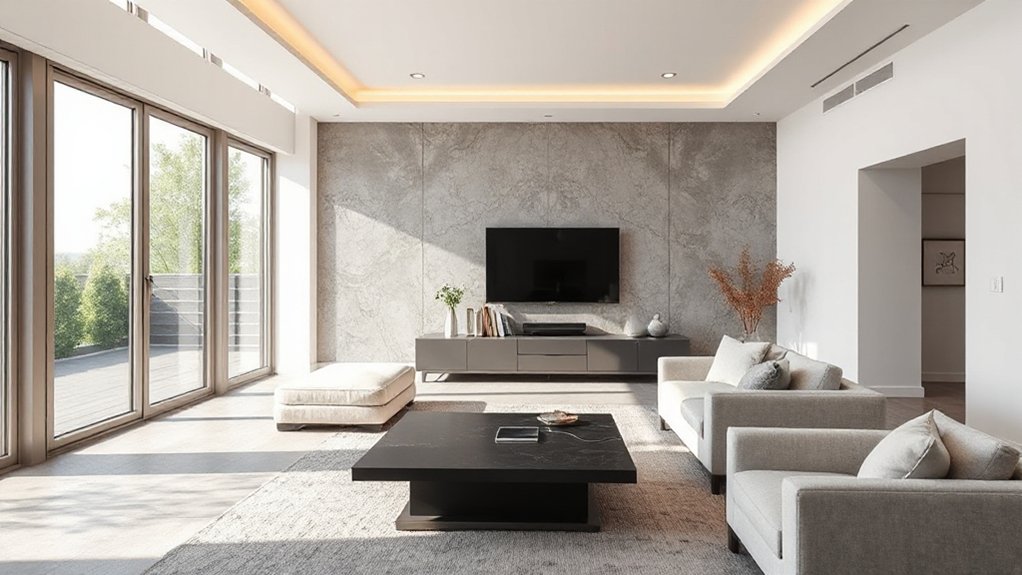
Seamless smart tech should blur into daily life, not call attention to itself; when you integrate devices thoughtfully, you’ll streamline routines and elevate comfort without adding clutter.
You’ll set scenes with voice control for lighting, climate, and media, avoiding fiddly remotes and app juggling. Pair hubs with automation routines that respond to time, occupancy, and preferences, so progressions feel invisible rather than flashy.
Incorporate automated blinds to optimize daylight and privacy with a simple command or schedule, keeping sightlines clean and energy use steady.
Prioritize interoperability, so new gadgets slot into a single, reliable ecosystem. Keep cable paths hidden and hides in furniture; thoughtfully placed outlets prevent clutter.
The result is a polished, efficient livability that respects space and time.
Design With Longevity: Materials and Finishes Built to Last
If you want a living room that lasts, start with materials and finishes chosen for durability and timeless appeal. Prioritize solid core surfaces, high-density woods, and low-VOC finishes to minimize replanning later.
Opt for sustainably sourced materials and timeless textures that age gracefully, not trend-driven veneers. Choose flooring with abrasion resistance and easy maintenance, like engineered hardwood or polished concrete, and pair it with durable textiles in tight weaves or leather that patina beautifully.
Favor eco-friendly materials and finishes that reduce indoor pollutants while enhancing longevity. Implement modular systems and timeless hardware to future-proof as needs shift.
Go long-term with neutral palettes accented by purposeful, enduring details. This approach keeps your space coherent, resilient, and effortlessly stylish for years to come.
Frequently Asked Questions
How Can I Future-Proof My Living Room With Flexible Furniture?
You can future-proof by choosing modular furniture and multi functional designs that adapt to needs, room sizes, and tech. You’ll swap layouts easily, stay stylish, and keep spaces flexible for work, play, or guest stays.
What Are the Best Low-Maintenance Finishes for High-Traffic Areas?
Durable materials and stain resistant fabrics top the list, offering low maintenance for high-traffic spaces. You’ll enjoy chic, durable surfaces that resist wear, wipe clean easily, and stay stylish with minimal effort, keeping your living area pristine and timeless.
Which Window Treatments Balance Light and Privacy Effectively?
Smart blinds balance light and privacy beautifully; pair them with layered curtains for versatility. You’ll enjoy daytime privacy and ample glow at night, with effortless control that keeps your living room chic, functional, and precisely styled.
How Can I Create Acoustic Comfort Without Sacrificing Style?
You can achieve acoustic comfort by pairing soundproofing options like insulated panels with decorative wall panels for texture; place rug layers, soft furnishings, and art to dampen echoes while keeping a sleek, stylish, and precise look.
What Budget-Friendly Upgrades Deliver the Most Impact?
You’ll snag the most impact with smart lighting and statement artwork, all on a tight budget. Start with layered, dimmable cues and bold pieces, then watch your space transform—sleek ambiance whispering sophistication, without blowing your wallet.
Conclusion
You’ve set the bar high for a modern, lasting living room. As you choose durable materials, timeless colors, and smart storage, you’re building a space that ages gracefully—like a well-tailored suit that fits you now and later. Think of a single cable-cluttered corner transformed by hidden storage as your “before” story; the “after” is silence, clarity, and ease. When you layer lighting and tech, you curate atmosphere as effortlessly as you curate life.