
The best strategies for increasing long-term rental returns start with clear targets for occupancy, cash flow, and appreciation, then use data-driven pricing to stabilize income. Prioritize proactive maintenance to cut vacancy and optimize curb appeal and tenant retention. Balance cash flow with smart financing and tax planning, using depreciation and reserves to manage risk. Expand or prune portfolios based on risk, liquidity, and market signals. If you keep pursuing these steps, you’ll uncover more precise levers and tactics.
Defining Your Long-Term Rental Return Challenge

Market trends inform demand shifts, price trajectories, and entry barriers, so you’ll monitor vacancy rates, rent growth, and seasonality to calibrate projections.
Zoning regulations shape allowable uses, density, and renovation limits, influencing site selection and capex horizons. You’ll assess financing costs, maintenance backlogs, and regulatory compliance as guardrails that affect cash flow timelines.
Set the Target: Occupancy, Cash Flow, and Appreciation
Set clear targets for occupancy, cash flow, and appreciation to anchor your strategy. You’ll define measurable benchmarks for each element and track them quarterly, not yearly, to stay responsive.
Begin with occupancy: set a practical cap on vacancy days and a target occupancy rate aligned with market seasonality, using historical data to validate assumptions.
For cash flow, project net operating income after expected rents, vacancies, and maintenance, then stress-test against rate shifts and capex needs.
Appreciation targets should reflect local trends, price cycles, and hold period assumptions, avoiding overreliance on rapid gains.
Throughout, prioritize property aesthetics and tenant communication to support steady demand and retention, while documenting risks and contingencies.
This disciplined framing guides decisions without assuming guaranteed returns.
Price Smarter for Consistent Occupancy
Pricing strategically isn’t just about attracting renters—it’s about stabilizing occupancy over time. You’ll rely on dynamic pricing to respond to demand shifts, seasonality, and local events, not guesswork.
Use a disciplined process: gather market data, track occupancy trends, and test small rate changes to observe impact.
Your Market analysis should compare comparable properties, timing, and performance metrics, then translate findings into incremental adjustments rather than sweeping overhauls.
Set clear guardrails—minimum occupancy targets, max price floors, and review cadences—to avoid price erosion or vacancy spikes.
Leverage elasticity signals to identify when price increases yield marginal gains versus when discounts preserve longer tenancies.
Document outcomes, isolate external influences, and refine your model quarterly.
This disciplined approach aligns pricing with long‑term occupancy stability and income predictability.
Proactive Maintenance to Cut Vacancy Costs
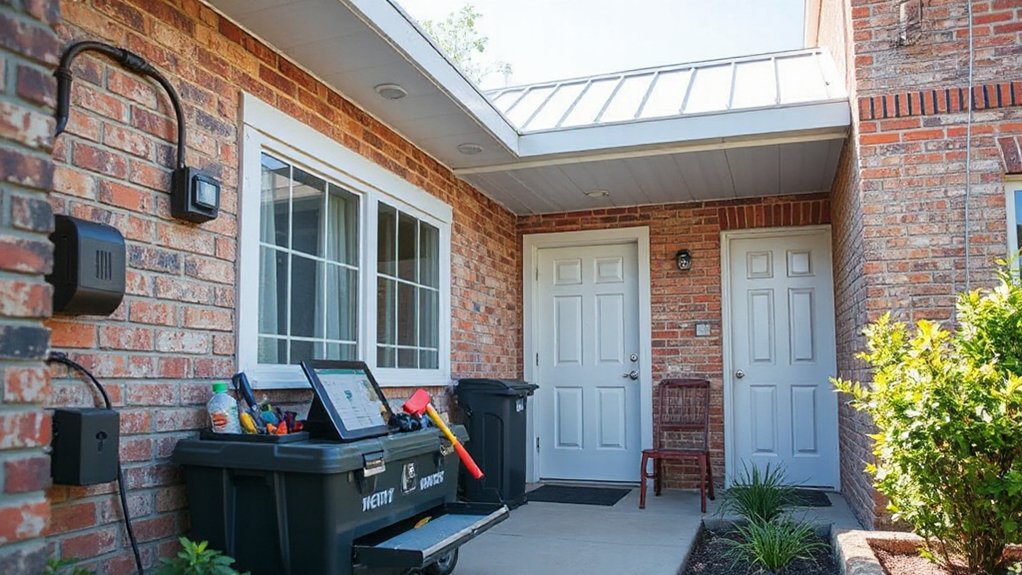
Proactive maintenance directly cuts vacancy costs by preserving appeal and minimizing unplanned downtime between tenants. You should view upkeep as an investment with measurable payoff: shorter vacancy periods, higher shown interest, and steadier rent flow.
Use data to prioritize fixes that most strongly impact turnover: roofing, HVAC efficiency, and cosmetic updates in high-traffic areas. Establish a routine schedule, track time-to-occupancy after repairs, and benchmark against your property type and market.
Landlord tips emphasize preventative checklists, standardized responses, and rapid issue resolution to reduce vacancy duration. Integrate tenant screening with maintenance plans by presenting a well-maintained unit as a factor in reliability, not just price.
Be cautious with escalating costs; balance proactive work against expected vacancy risk, and document outcomes for continual refinement.
Screen for Stability and Longevity
To assess stability, you should verify tenant reliability and track record before approval.
Look for indicators like consistent income, previous tenancy duration, and timely payments, supported by documented history.
Use these data points to project longevity and tailor screening thresholds accordingly.
Verify Tenant Stability
Verifying tenant stability is essential to safeguard long-term returns, as stability correlates with lower vacancy risk and predictable cash flow. You should approach tenant verification with a structured, evidence-based process that prioritizes objective data over impression.
Collect consistent indicators such as employment history, income-to-rent ratios, and prior payment records to gauge reliability. Lease stability matters: analyze past tenancy durations, frequency of relocations, and any rent delinquencies to anticipate future behavior.
Cross-check references and public records for consistency, while respecting privacy and local regulations. Weigh qualitative signals—responsiveness, communication, and dispute resolution tendencies—against quantifiable metrics.
Document criteria, thresholds, and decision rationales to minimize bias. This disciplined approach helps you select tenants who support durable occupancy and steady cash flow.
Assess Longevity Indicators
Building on the tenant-stability framework, you assess longevity indicators by examining patterns that predict durable occupancy. You ground your evaluation in verifiable data, comparing tenant tenure distributions, renewal rates, and vacancy durations across time.
Market trends inform demand cycles, helping you differentiate temporary fluctuations from persistent signals. You scrutinize landlord-tenant mix, unit attributes, and neighborhood variables to identify resilience factors that correlate with long occupancy.
Use statistical heuristics to weight indicators—lease age, rent-uplift continuity, and maintenance responsiveness—so your screening isn’t swayed by outliers.
Consider Investment timing, aligning timing with structural demand shifts rather than episodic spikes.
Document methodology, set confidence thresholds, and continuously revalidate as new vacancy and rent data emerge. This disciplined approach reduces ambiguity and improves projection accuracy for stable, extended occupancy.
Lease Structuring That Shields Your Bottom Line
Have you considered how lease structuring can directly protect your bottom line? You weigh lease terms against predictability, balancing rent cadence with vacancy risk. Data suggests shorter terms increase turnover costs, while longer terms can stabilize cash flow if renewal rates stay high.
Structure incentives carefully: minimal free rent, graduated rent escalators tied to market indices, and performance-based renewals that reward sustained occupancy. Security deposits anchor upfront risk, yet excessive deposits can deter quality tenants and delay payouts; set clear, compliant refund policies to prevent disputes.
Lease optimization also includes clear maintenance responsibilities and timely enforcement of late fees, reducing arrears. Documented capex responsibilities clarify who pays for wear and tear versus capital upgrades, preserving margins without alienating residents. Rigor and clarity minimize disputes and vacancy drag.
Value-Add Upgrades With Fast Payback
Value-add upgrades demand a careful balance between cost and payoff, delivering tangible rent or occupancy gains within a short window. You should quantify upfront: project cost, expected monthly uplift, and any maintenance savings.
Prioritize improvements with proven quick payback—modern fixtures, efficient appliances, and improved curb appeal that resonate with tenants who value reliability and low operating costs.
Landlord psychology suggests decisions that frame upgrades as value rather than vanity resonate more with residents and minimize pushback.
Communicate clearly about timelines, tradeoffs, and anticipated disruption to maintain trust.
Track response metrics—rent comparisons, vacancy rates, and renewal likelihood—to validate ROI within 12 months.
Maintain rigorous cost controls and avoid over-improvement relative to market comps.
Tenant communication should be factual, transparent, and focused on tangible benefits.
Turnover Efficiency: Rehab Between Tenants

Turnover efficiency hinges on minimizing vacancy duration while maximizing quality within a tight rehab window. You should quantify turnover steps, set clear milestones, and track time-to-complete by phase to reveal bottlenecks.
Prioritize a standardized process: pre-inspection, quick repairs, decisive procurement, and rapid staging. Data-driven decision making matters—compare vendor lead times, material costs, and QA checklists to curb delays.
Maintain open Tenant communication to align expectations, schedule access, and document damages without duplicating work. Invest in a repeatable workflow that reduces rework and ensures consistency across units, supporting stronger Property branding through reliable, turnkey experiences.
Evaluate post-occupancy feedback to refine scoping and timelines, but avoid overhauls that inflate rehab duration. Balance speed with quality to protect rent readiness and occupancy gains.
Trim Operating Costs: Utilities and Opex
You can start by auditing utility bills and operating expenses to identify clear saving opportunities.
We’ll weigh the cost-benefit of energy efficiency upgrades and Opex-reduction tactics using measured data rather than assumptions.
If you implement targeted controls and rate-shopping, you’ll see how incremental changes translate into long-term returns.
Utility Cost Management
What’s the most cost-effective way to trim utility and operating expenses without compromising tenant comfort or compliance? You evaluate usage patterns, benchmark against peers, and map costs to responsible departments.
Begin with Utility budgeting: forecast monthly and seasonal needs, then align tariffs, subsidies, and rate structures to actual consumption. Track metered data to identify spikes, and verify invoices for errors before approvals.
Prioritize energy-efficient upgrades with clear ROI, and stage improvements to minimize disruption. Maintain cost transparency with tenants by sharing usage insights and billing methodologies, reducing disputes and promoting consented conservation.
Implement automatic controls where feasible, and document every decision with testable metrics. Approach conservatively, avoiding overreliance on aggressive assumptions while you monitor outcomes and refine projections over time.
Opex Reduction Tactics
To start trimming operating costs, focus on a data-driven plan that follows the utilities groundwork you’ve laid. You’ll map current spend, identify outliers, and quantify variability across units and seasons.
Compare per-square-foot and per-occupant costs, then test conservative targets before committing to changes.
Prioritize ongoing monitoring of variable utility usage, bill structure, and service contracts, so you can spot inefficiencies without overreacting to short-term swings.
Use market research to benchmark peer practices and validate your assumptions about tenant sensitivity and acceptable trade-offs.
Consider landlord psychology when communicating changes, framing savings as value rather than cuts.
Document results transparently, update forecasts regularly, and avoid sunk-cost bias by pausing initiatives if data deteriorates.
Consistency and prudent experimentation sustain long-term returns.
Energy Efficiency Upgrades
Prioritize measures with short payback and clear reliability, such as programmable thermostats, ENERGY STAR appliances, and high-efficiency HVAC components. Quantify maintenance implications, not just upfront costs, to avoid overstating benefits.
Consider enclosure airtightness, solar water heating, and heat recovery where applicable, and benchmark results against peer properties. Track key metrics like site energy use intensity and carbon intensity to verify impact.
Emphasize energy conservation with calibrated targets and ongoing monitoring. Where feasible, pursue renewable sources to decouple savings from fluctuating utility prices and enhance long-term value.
Financing Levers: Mortgages, Rates, and Cash Flow
Financing levers—mortgages, interest rates, and resulting cash flow—drive the core economics of long-term rentals. You’ll assess how debt costs shape net yield, balancing loan terms, down payments, and time horizons against consistent occupancy.
In dynamic markets, small rate shifts reverberate through monthly cash flow, so you should model sensitivity to rate paths and refinancing options. Creative financing can release higher returns when used alongside prudent underwriting and reserves.
Watch for market fluctuations that affect cap rates and refinance opportunities, not just headline rates. This disciplined approach reduces surprise costs and strengthens long-run performance.
- Compare fixed vs. adjustable structures with stress tests on duration and cap exposure
- Evaluate seller financing, portfolio loans, and private lenders for diversification
- Model scenarios including rate upside, down payment variance, and prepayment effects
Tax Tactics for Rental Property Returns

You’ll want to start by quantifying how tax benefits, depreciation, and expense deductions interact with your cash flow.
The data suggests optimizing depreciation methods and timing deductions can noticeably shift after-tax returns, but benefits depend on your property type and filing status.
We’ll examine each tactic—potential gains, limits, and risks—to guide cautious, data-backed decisions.
Tax Benefits Maximization
Tax benefits matter because they directly affect net cash flow and long-term returns. You’ll optimize after-tax performance by aligning income, deductions, and credits with current law, while planning for future changes. Focus on credible data to estimate impact, not hype.
- Tax strategies: maximize eligible deductions, credits, and timing to smooth cash flow across the year.
- Legal considerations: stay compliant with occupancy, depreciation, and reporting rules to avoid penalties.
- Risk-aware planning: model scenarios with sensitivity to rate changes and policy shifts, and document assumptions.
Balance aggressiveness with governance; pursue verifiable benefits rather than speculative gains. Track performance quarterly, update projections with new tax codes, and consult qualified advisors for personalized guidance to protect long-run returns.
Depreciation Strategies
Depreciation strategies can meaningfully lift after‑tax returns by front-loading non-cash deductions that align with property use and cost trajectories. You’ll evaluate cost segregation options, componentized depreciation, and recovery periods to match asset lifecycles with your cash flow assumptions.
Data suggests front-loaded depreciation can smooth tax timing, but you should couple it with a conservative cap on salvage estimates and practical review intervals. The analytical goal is to align depreciation pace with occupancy patterns, maintenance cycles, and capital expenditure plans, avoiding overestimation that could trigger audits.
Consider how lease negotiations influence usable life assumptions and how property branding decisions affect market value, not just rents. Documented methodology and periodic reconciliation help sustain predictable after‑tax outcomes while preserving flexibility for future strategy shifts.
Expense Deductions Tactics
Expense deductions can materially affect net returns by aligning allowable write-offs with actual operating patterns and cash flow timelines. You should map expenses to predictable windows, verify eligibility, and track changes in tax law to preserve value.
Data indicates that maximizing legitimate deductions often improves after-tax yields without increasing cash risk, but missteps can trigger audits or penalties. Prioritize routine maintenance versus capital improvements, review lump-sum costs, and document support for each deduction to sustain legal compliance.
Tax incentives can amplify returns when timing and classification are precise, yet sensitivity to policy shifts requires ongoing monitoring. Maintain meticulous records, consult reputable guidance, and adjust strategies as occupancy and expenses fluctuate.
- Align deductions with cash flow and timelines
- Distinguish maintenance from capital improvements
- Track tax law changes and maintain documentation for legal compliance
Positioning Your Portfolio to Meet Demand
Analyze neighborhood demographics, school quality, commute times, and amenity access to forecast demand shifts. Prioritize asset types and configurations that match identified gaps, balancing short-term rentability with long-term resilience.
Use scenario planning to stress-test rent versus vacancy risk under various growth rates and regulatory changes. Implement a disciplined acquisition and disposition framework guided by data, not wishful thinking.
For marketing, employ creative marketing and tenant engagement to attract and retain quality tenants, while maintaining price discipline and transparent communication about value. This disciplined positioning informs risk-adjusted returns.
Metrics That Signal Performance and Health
You’ll start by identifying your Key Performance Indicators to quantify performance and health, then track how occupancy and tenancy trends influence cash flow.
Use data-driven benchmarks to assess stability in rent rolls, renewal rates, and churn, and watch for shifts that foreshadow risk or opportunity.
This approach keeps you focused on cash flow stability metrics and the health signals they emit from your portfolio.
Key Performance Indicators
- Revenue per unit and gross margin trends
- Operating expense ratio and maintenance cycle
- Occupancy stability vs. turnover cost
Occupancy And Tenancy Trends
Occupancy metrics and tenancy trends shape the health of long-term rental returns just as revenue and margins do, but they require a forward-looking, data-backed lens. You’ll assess occupancy rates, turnover speed, and lease-renewal patterns across properties to gauge utilization risk and recovery potential.
Track vacancy duration, seasonal fluctuations, and regional demand shifts to identify where diversification reduces concentration risk. Evaluate tenancy mix, noting changes in tenant demographics and their impact on payment reliability and demand consistency.
Consider property diversification as a strategy to smooth occupancy and cushion cycles, rather than relying on a single asset class. Use historical occupancy trajectories alongside forward projections to stress-test assumptions and refine pricing, incentives, and renewal pipelines for resilient, repeatable returns.
Cash Flow Stability Metrics
- NOI volatility and downside risk
- Occupancy-derived cash flow consistency amid market fluctuations
- Sensitivity to tenant demographic shifts and expense pressure
Use these metrics to guide capital allocation, reserve planning, and rent prerogatives, ensuring you maintain a stable income stream even when external conditions tighten.
Regularly update benchmarks to reflect evolving market dynamics.
Insurance and Legal Safeguards for Risk Management

Insurance and legal safeguards are essential to protect long-term rental returns, and they should be embedded in your risk-management plan from day one. You assess risk by quantifying potential losses from property damage, liability, and vacancy, then map these to appropriate controls.
Insurance policies should align with asset type, occupancy, and zoning, while ensuring prompt claim processes and sufficient coverage limits.
Legal compliance requires staying current on landlord-tenant laws, fair housing rules, and local ordinances, with documented procedures for disclosures, notices, and habitability standards.
A disciplined review cycle flags policy gaps, exposure concentrations, and premium trends, enabling cost-benefit optimization.
Balance cost with resilience, and avoid underinsuring.
Data-driven monitoring reduces surprises, supporting stable cash flow and sustainable long-term returns.
Retention Tactics to Build Tenant Loyalty
To protect long-term returns, you should focus on retention tactics that build tenant loyalty, drawing on the risk-management framework from the prior topic. You’ll quantify signals like vacancy duration, time-to-renewal, and complaint resolution latency to identify leverage points for Tenant communication and Lease renewal.
Data-informed adjustments reduce churn and stabilize cash flow, while clear expectations lower dispute risk. Maintain consistency in response quality, documenting interactions to strengthen trust and show reliability. Track renewal rates by unit type and tenant segment to target proactive outreach.
- Proactive renewal reminders tied to lease expiration dates with transparent terms
- Structured communication cadence that validates issues and documents resolutions
- Post-move-in onboarding and periodic check-ins to reinforce value and responsiveness
Smart Tech That Cuts Operating Costs
Smart technology can meaningfully cut operating costs when you deploy it where it matters most: energy management, preventive maintenance, and tenant services.
In practice, you should measure baseline energy use, then quantify savings from targeted interventions like Smart locks and automated thermostats. Smart locks reduce vacancy-related access costs and lease violations, while automated thermostats lower heating and cooling waste during off-peak hours.
The critical question is reliability: select systems with proven uptime and straightforward maintenance to avoid hidden labor costs. Pair devices with clear policies and tenant onboarding to maximize utilization.
Data dashboards help you track real-time consumption, detect anomalies, and justify ROI through month-to-month comparisons.
Consider scalability, vendor support, and data privacy to guarantee durable cost reductions over multiple leases.
Depreciation vs. Appreciation: Balancing the Wealth Equation
You weigh depreciation benefits against appreciation growth levers to gauge how tax shields and book value interact with market gains.
The data suggest depreciation provides front-loaded tax relief, while appreciation offers compounding equity over time.
Balancing them requires projecting cash flows, cap rates, and asset cycles.
We’ll consider conservative assumptions and sensitivity tests to clarify how each factor shifts long-term returns.
Depreciation Benefits Balance
Depreciation offers a tax shield that can boost after-tax cash flow, but it’s not a free lunch; its true value depends on how it’s balanced against appreciation. You measure value by net present impact, not just cash flow timing, and you test scenarios with conservative assumptions.
The key is aligning tax benefits with capital gains expectations, ensuring depreciation doesn’t distort risk signals. Consider how property depreciation interacts with cost basis, depreciation recapture, and your overall tax posture.
Use data to estimate incremental cash flow, then compare to potential appreciation. This balance informs buy-hold decisions, financing choices, and risk budgeting.
- Evaluate depreciation schedules vs. projected market trends
- Track tax benefits against recapture risk
- Integrate depreciation with long-term wealth goals
Appreciation Growth Levers
Appreciation growth and depreciation interact as two levers that shape long-run wealth in rental real estate. You’ll balance these forces by examining market cycles, cap rates, and growth drivers rather than chasing one outcome.
Historical data show appreciation modestly accelerates in dense, high-demand markets, yet it remains highly cyclical and location-dependent. You should frame expectations with sensitivity analyses that compare price appreciation to inflation-adjusted rents, recognizing compounding effects over decades.
Depreciation provides annual tax shields but is finite and subject to policy shifts; rely on conservative forecasts and scenario planning.
To support value creation, integrate property staging and rental marketing strategies that elevate occupancy and rent comp, then test outcomes with incremental changes. Treat enhancements as leverage rather than guarantees, monitoring results quarterly to refine the wealth equation.
When to Expand or Consolidate Your Portfolio
Determining when to expand or consolidate your rental portfolio hinges on a clear appraisal of risk, liquidity, and return benchmarks. You weigh current performance, debt capacity, and macro signals to decide whether to broaden exposure or streamline holdings.
Rather than chasing every trend, you anchor decisions in data on occupancy, cap rates, and maintenance costs, aligning with your long-term targets.
- Portfolio diversification: balance asset classes and markets to reduce idiosyncratic risk.
- Market timing: use objective thresholds for entry/exit, not emotions or hype.
- Capital discipline: preserve liquidity cushions and evaluate financing terms before scale adjustments.
This approach emphasizes disciplined growth that enhances stability, data credibility, and measurable, repeatable outcomes.
Preparing for Rent Market Cycles
Rely on defensible data sources and back-test assumptions against past cycles to gauge risk exposure. You’ll assess how market fluctuations could affect vacancy risk, pricing power, and renewal likelihood, adjusting exposure accordingly.
Consider tenant preferences as a leading variable: shifts in amenities, unit sizes, and lease structures often precede broader demand changes.
Maintain buffers for cash flow and capex, and re-evaluate portfolio sensitivity annually. By staying proactive, you reduce crisis-driven moves and preserve long-term returns through measured, evidence-based adjustments.
Real-World Wins: Case Study and 90-Day Action Plan
Real-world wins come from translating disciplined market insight into concrete bets. You’ll study a real-case scenario, extract the drivers, and map them to a tight 90-day plan that’s testable and measurable.
Expect cautious progress: validate hypotheses with small pilots, monitor outcomes, and pivot only when data supports it.
Key levers include Remote monitoring to catch anomalies early and optimize maintenance, and tenant engagement to sustain occupancy and timely payments.
Your plan prioritizes low-risk bets, clear milestones, and traceable metrics so results are attributable.
- Implement a 14-day remote-monitoring pilot and track maintenance alerts vs. cost savings
- Launch a structured tenant-engagement program with weekly feedback loops and response-time targets
- Establish a dashboard linking occupancy, NOI, and cap rate changes to quarterly decisions
Frequently Asked Questions
How Quickly Can Occupancy Stabilize After a Market Shift?
Occupancy stabilizes within 3–6 months if market recovery appears supported by strong demand and pricing data; tenant adaptation accelerates shifts, while vacancies dip as listings align with price ceilings and economic indicators improve.
Which Metric Best Predicts Long-Term Rental Profitability?
You should track net operating income per dollar invested, a robust predictor of profitability. Market trends and property appreciation inform that metric, but stay cautious: model sensitivity, cap rates, and vacancy risk, avoiding overreliance on any single figure.
What Eviction Risks Impact Cash Flow the Most?
Beware of eviction risks driving cash flow volatility; lease enforcement gaps and poor tenant screening sharply elevate losses, so you should quantify eviction timelines and cure rates, compare enforcement costs, and model scenario outcomes before acting.
How Should I Handle Rent Increases Without Tenant Turnover?
You should pursue rent escalation carefully, avoiding abrupt moves that trigger turnover; use data-driven lease negotiations, modeling occupancy risk and vacancy costs to set incremental increases while offering concessions or term tweaks to preserve long-term stability.
What Financing Mix Minimizes Leverage Risk Long Term?
You minimize leverage risk by balancing fixed-rate debt with longer loan terms, locking in favorable interest rates, and diversifying maturities; you optimize cash flow, hedge rate volatility, and maintain buffers for rate shocks, terms, and resilience.
Conclusion
You’ll see that long-term rental returns don’t bloom overnight; they mature like a careful harvest. Ground your targets in data—occupancy trends, cash flow margins, cap rates—and prune assumptions with reality checks. Budget for turnover, maintenance, and market cycles, then monitor performance quarterly. Balance depreciation with appreciation and adjust positions as markets shift. You’re building a resilient portfolio, not chasing vanity metrics—steady, disciplined growth that weathers storms and compounds toward durable wealth.