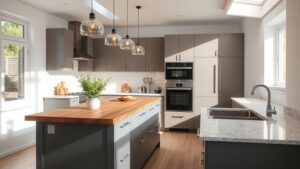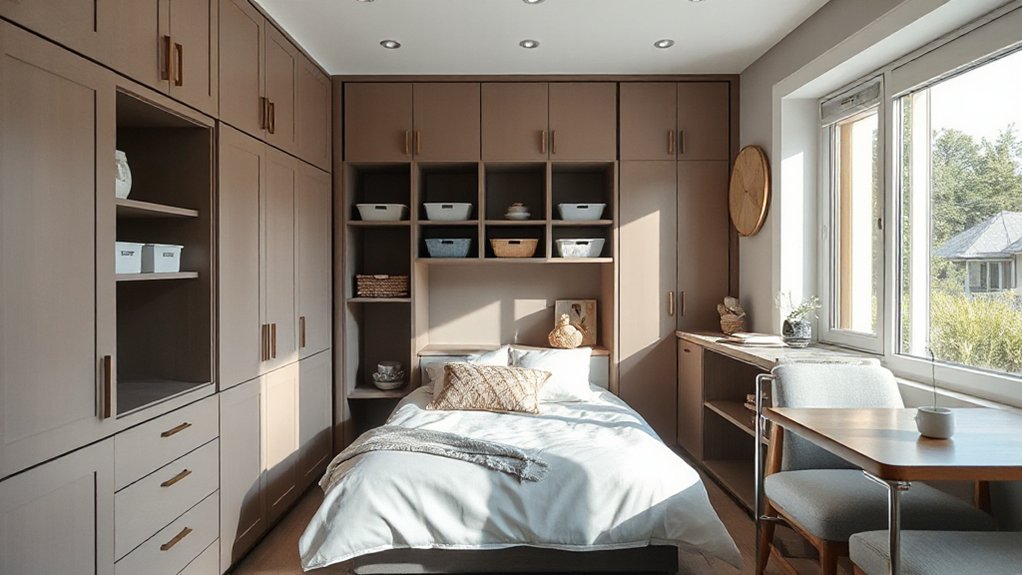
You assess space, you prioritize vertical storage, you hide clutter, you choose multipurpose pieces. You map your needs, you measure every wall, you pick modular components that grow with you. You combine built‑ins, recessed niches, and wall mounts to keep surfaces clean. You balance durability with style, you label clearly, you select sustainable materials. You’ll see how small changes compound, and you’ll gain momentum to optimize now, while planning for what comes next.
Tackling Cramped Spaces: Core Principles for Compact-New-Build Storage
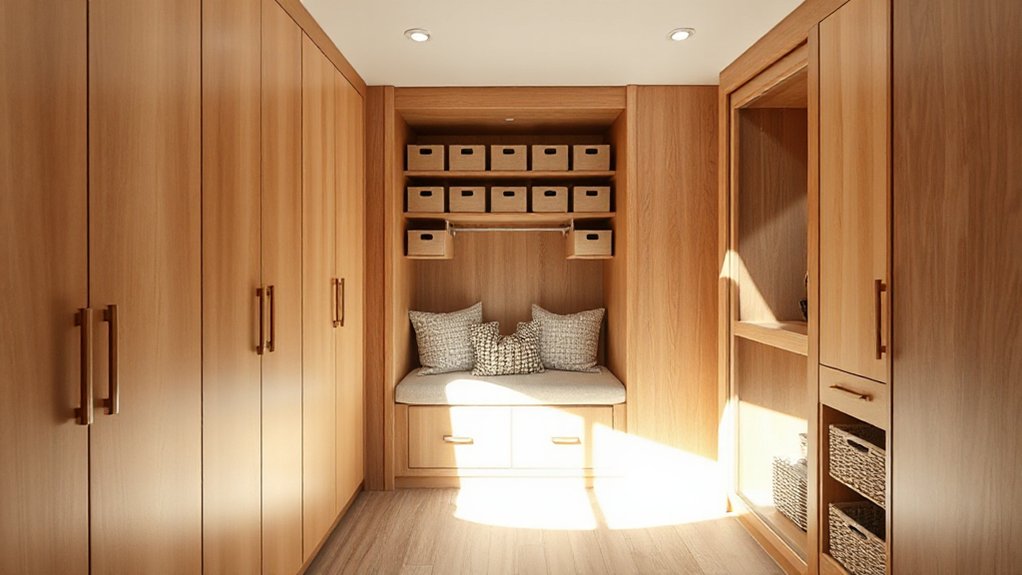
Maximizing storage in tight-new-build homes starts with smart planning. You’ll map every square foot for function, not clutter, prioritizing vertical and hidden gains.
Begin by structuring zones: entry, living, kitchen, and bedroom, designating built-in nooks that reduce motion waste.
Choose multi purpose furniture to collapse clutter without sacrificing usability, like ottomans with hidden compartments or sofa beds with integrated storage.
Under stair storage becomes a practical backbone—pull-out bins, shelving, or drawers tucked into the risers transform dead space into reachable, organized volume.
Keep corridors clear and align cabinetry with door swing to avoid obstruction.
Install adjustable shelves to adapt as your needs shift, and plan for proportional scale so storage feels sufficient, not overwhelming.
Consistency in hinges, pulls, and finish supports long-term practicality.
Assessing Storage Needs for a Compact Home
How much storage do you actually need in a compact home, and where will it go? Begin by mapping every daily activity to a dedicated zone, then convert that flow into built-in solutions. Prioritize vertical space, wall hooks, and shallow-cull cabinets that don’t protrude.
Assess seasonal needs separately from daily essentials, and use a scalable approach—modular shelves, labeled bins, and under-stair nooks—to avoid future excess. Consider outdoor storage for seasonal items, tools, and outdoor gear, tallying what truly belongs outside versus inside.
Schedule regular storage maintenance to prevent creep and misplacement: quarterly audits, clear labeling, and a single-entry storage plan. Keep a simple inventory for quick decisions.
Ensure entryways remain clear and access remains unhindered as you refine your layout.
Space-Saving Furniture That Hides Clutter
Hidden clutter is easiest to manage when furniture doubles as storage. You’ll prioritize pieces that pull double duty, keeping rooms open without sacrificing function. Look for sofas with hidden compartments under cushions, beds with lift-up bases, and coffee tables that tuck away magazines, remotes, and chargers.
Multifunctional furniture should feel seamless, not bulky, so measure clearances first and choose low-profile silhouettes for tight spaces. Use ottomans that open for blankets, benches with built-in storage, and wall-mounted desks that fold away to free floor space.
Concealed compartments reduce visible clutter while preserving everyday usability. Label interiors or use uniform baskets to curb misplacements. Aim for consistent finishes and easy access to essentials, ensuring storage supports daily routines rather than complicates them.
Built-In Niches and Recessed Storage Ideas
Built-in niches and recessed storage maximize walls without stealing floor space, giving you smart spots for essentials exactly where you need them. You’ll find built-in niches work best in living areas, hallways, and bathrooms, creating organized nooks without bulky furniture.
Plan recessed shelving within cabinetry edges or shower alcoves to keep essentials tucked away yet accessible. Use adjustable shelves to adapt to varying items like cleaning supplies, books, or toiletries, and choose moisture-resistant materials for bathrooms or kitchens.
Prioritize shallow depths in tight corridors to avoid crowding. Trim openings with slim frames or reveal shelving to keep lines clean and cohesive.
Built-in niches and recessed shelving deliver storage that feels integrated, not added.
Vertical Shelving and Wall-Mounted Solutions
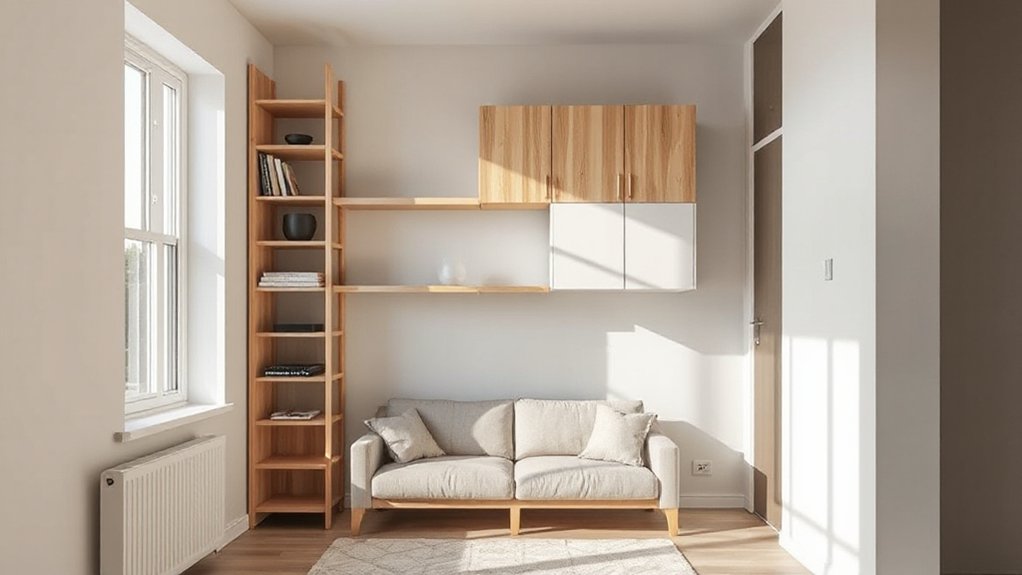
Vertical shelving and wall-mounted solutions maximize storage without consuming floor space, letting you flexibly reconfigure as your needs change. You’ll gain versatility with ceiling mounted racks and staggered uprights that adapt to varying items.
Use floating shelves to create slim layers for books, decor, or pantry extras without bulk. Install wall-mounted cabinets at eye level for quick access, keeping seldom-used items higher or lower to optimize flow.
Choose modular systems that lock together for future reorganization, and run rails or track systems along corridors to store tools, cleaning supplies, or small electronics.
Mind weight limits and wall material; use studs or appropriate anchors. Leave air gaps behind slotted backs for cables and ventilation.
Finish with a cohesive color to visually enlarge tight areas.
Kitchen Storage Tricks for Tiny Layouts
Hidden Drawer Dividers keep small utensil sets organized without stealing counter space, while Vertical Cabinet Optimizers maximize every shelf by using adjustable dividers and pull-out racks.
You’ll pair these solutions to prevent clutter and make daily prep faster in tight layouts.
Ready to test these tricks, you’ll notice smarter use of depth and more accessible corners right away.
Hidden Drawer Dividers
Drawer dividers can transform compact kitchen storage by turning shallow drawers into organized zones for utensils, lids, and small gadgets. You’ll install hidden drawer dividers to create discreet compartments that you can access without visual clutter.
Use adjustable or modular options to accommodate varying utensil widths and lid sizes, ensuring each item has a designated slot. For deeper drawers, include staggered tiers or hinged lids that stay upright when opened.
Choose concealed compartment options with non-slip bases to prevent shifting during use. Material choices matter: lightweight plastic or wood inserts blend with cabinetry and wipe clean easily.
Measure precisely, then test with your most-used items to confirm spacing. Regularly reconfigure as your collection grows, keeping essentials reachable and the surface clear.
Vertical Cabinet Optimizers
Careful organization in tight kitchens means you can double your usable cabinet space with smart vertical space. Vertical cabinet optimizers transform empty height into reliable storage, so you reach what you need without rooting through piles.
Install pull‑out shelving, slim rollouts, and adjustable dividers to create defined zones for cans, spices, and lids. Use vertical access by stacking trays and tiered organizers behind doors to maximize every inch.
Choose shallow, full‑height baskets for awkward items and add a slim, magnetic strip for knives or metal tools. Label shelves at eye level to reduce rummaging and improve cabinet organization.
Install compatible hinges and soft‑close runners to maintain every drawer’s precision, preventing jams and wear in compact layouts.
Maximizing Gaps in Bedrooms and Living Areas
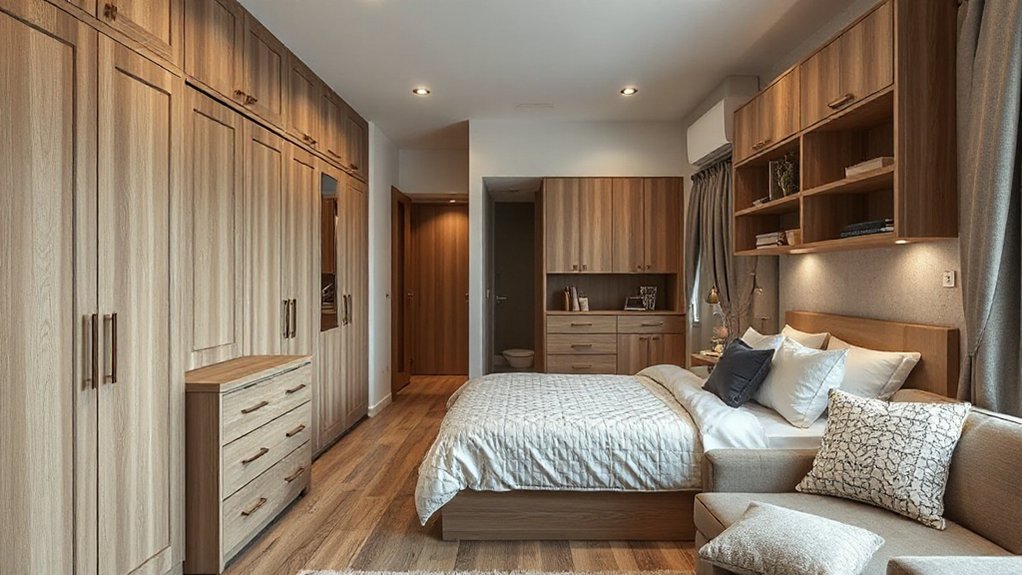
In compact new-builds, smartly maximizing gaps in bedrooms and living areas starts with deliberate layout decisions that create usable, clutter-free space. You’ll prioritize clear sightlines and avoid oversized furniture, letting walkways stay open while still fitting essential storage.
Use corners and alcoves for recessed shelving, and place beds and sofas to create intimate zones without crowding. Hidden storage keeps surfaces clean: under-bed drawers, lift-top storage ottomans, and slim wall niches for daily essentials.
Multipurpose furniture reduces bulk by combining functions—a storage ottoman that doubles as a coffee table, a sofa bed with built‑in compartments, or a wall desk that folds away when not in use.
Schedule regular decluttering, assign single-use zones, and align openings with natural light to enhance perceived space.
Designing Modular, Scalable Storage for Growth
Designing modular, scalable storage for growth means planning now for what you’ll need later, then choosing pieces that adapt without overhauling rooms. Start with a flexible framework: modular units that snap together, drawers that slide smoothly, and vertical storage that leverages wall space.
Prioritize adjustable shelves, fold-out desks, and stackable bins to minimize wasted space while maximizing capacity. Use clear labeling and color coding to keep systems intuitive as your needs change.
Favor durable, lightweight components that install without special tools, and opt for concealed storage to reduce visual clutter. Innovative material choices, like recycled composites or cork board surfaces, can reduce weight and noise.
Align designs with sustainable design principles: low-emission finishes, long‑lasting hardware, and responsible manufacturing. Regular audits prevent redundancy, supporting growth without compromising efficiency.
Frequently Asked Questions
How Do You Budget for Storage in a New-Build Home?
You should budget by estimating storage needs early, then set a flexible allowance for furniture organization and space optimization. Track priorities, measure rooms, compare built-ins, integrate multifunctional pieces, and reserve contingency for inevitable additions or changes.
Can Storage Needs Change With Family Growth or Relocation?
Did you know 60% of homes repurpose spaces as families grow? Yes—storage needs change with family expansion and relocation adjustments. You’ll adapt closets and under-stair nooks, plan modular systems, and reassess every 12–24 months.
What Are Low-Cost, High-Impact Storage Upgrades for Builders’ Homes?
You’ll implement low-cost, high-impact upgrades by adding modular furniture and vertical shelving, letting you reconfigure spaces as needs shift. Choose modular units for living areas and tall, secure vertical shelves in hallways or utility nooks.
How Do You Measure Hidden Storage Capacity Accurately?
A simple truth: you measure hidden compartments with careful, measured steps. You map every cavity, account for door clears, and test usability. Hidden compartments reveal space optimization, ensuring accurate capacity without guessing.
Are There Zoning or Permits for Major Built-In Storage Changes?
Yes, you may need zoning regulations and permit requirements for major built-in storage changes; check your municipality’s setback and ceiling-height rules, submit plans, and obtain approvals before work to avoid fines or removals.
Conclusion
In the end, think of your home as a growing tree. The trunk—rigid storage core—supports every branch of life. Let vertical shelves be the height that fuels growth, hidden compartments the roots that keep things fed, and modular furniture the flexible limbs that bend with seasons. Label like rings, so every task finds its mark. When space breathes in balance, your compact house becomes a living habitat that’ll stretch with you, not against you.