
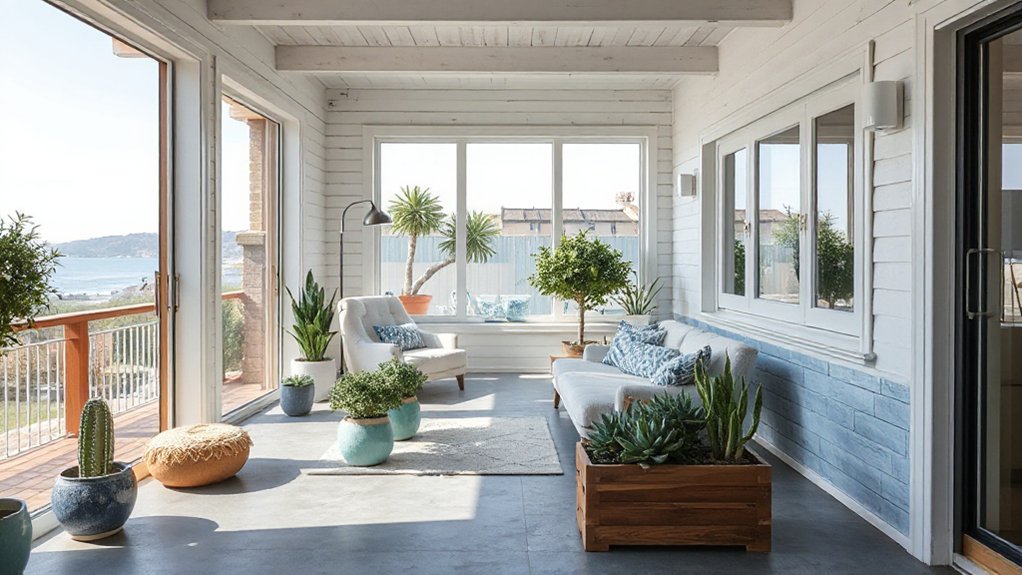
Consider a coastal Brighton home that floods in heavy storms yet remains stylish with fiber cement siding and raised entrances. You’ll want to start with a weather-ready exterior, selecting corrosion-resistant materials and robust cladding. Think through drainage, impact-rated windows, and elevated thresholds so you’re protected when seas rise. The goal isn’t just durable, but energy-smart and comfortable year-round, with moisture management guiding every choice. Ready to map out a plan that stays dependable as the shoreline shifts?
Coastal Brighton: What Makes Homes Unique
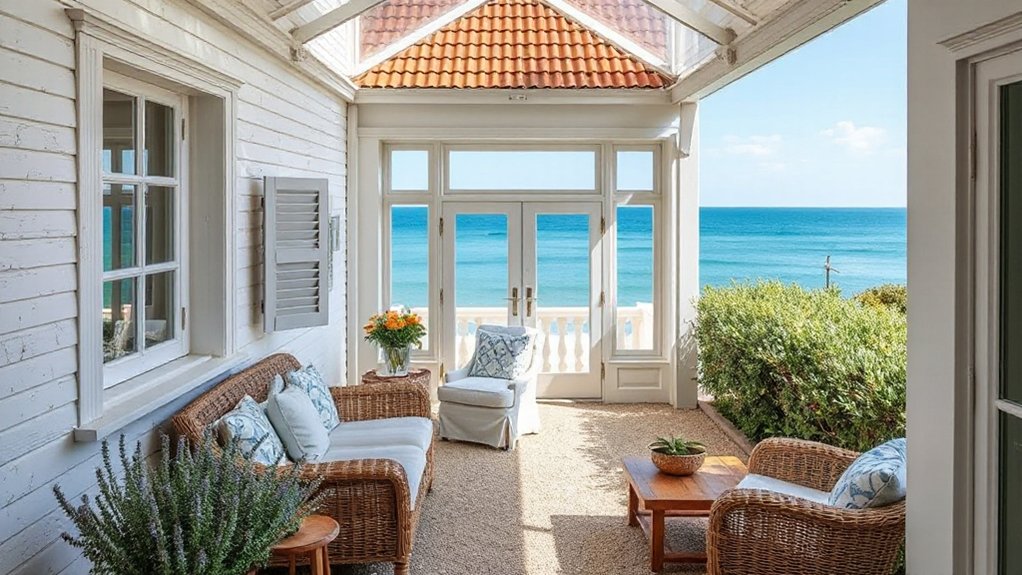
Coastal Brighton homes stand out from inland properties thanks to their exposure to sea air, salt spray, and shifting tides. You sense this in the way plaster dries faster, salt stains linger on railings, and windows frame horizons over the flats.
Seaside charm isn’t just aesthetics; it labels how humidity cycles through spaces, how salt-resistant materials stay stable, and how weather patterns dictate maintenance timing.
You’ll notice Coastal architecture favors low, continuous lines, narrow lanes, and practical elevations to manage damp and wind. Construction prioritizes moisture barriers, corrosion-resistant fasteners, and robust cladding.
You plan around sea spray reach, routine exterior checks, and durable paints. In short, you recognize resilient design that preserves character while supporting long-term performance.
Plan a Weather-Ready Exterior First
Start by choosing weather-resilient materials that stand up to salt air, wind, and humidity. Then plan drainage so rainwater moves away from foundations and decks.
Pair those choices with wind-guard exterior features like reinforced corners, impact-rated windows, and snugly sealed joints to reduce wind-driven damage.
Keep your layout and detailing site-aware, prioritizing practical installation steps and clear maintenance checks to keep the exterior durable over time.
Weather-Resilient Materials
Selecting weather-resilient materials is essential before any exterior work begins, because the right choices reduce maintenance, prevent costly repairs, and extend the life of your coastal home.
You’ll prioritize materials that withstand salt spray, humidity, and wind-driven rain, while keeping upkeep practical. Choose low-maintenance sidings like fiber cement or vinyl with capped edges, and sealants rated for coastal climates.
Roofing should be metal or coated composites, with corrosion-resistant fasteners and proper ventilation to prevent mold.
For finishes, opt for UV-stable paints and elastomeric coatings that flex against sea air.
Windows and doors need corrosion-resistant hardware and laminated glass for impact protection.
Integrate Seaside landscaping and Coastal plantings to stabilize soils, reduce heat load, and minimize erosion adjacent to the home.
Use durable, locally sourced crew and schedule installations for calm, dry windows.
Coastal Drainage Solutions
With the right drainage plan in place, you’ll protect a weather-ready exterior by directing coastal moisture away from walls, foundations, and entries. Start with a site survey that maps slope, soil type, and high-water marks, then tailor a drainage system design that targets predictable runoff paths.
Prioritize gravity-fed gutters and swales that move water away from foundations, with overflow routes that redirect stormwater to safe discharge zones. Elevate crawlspaces and low entrances, and install perforated pipes beneath driveways to minimize splash-back.
Seal joints and use water-resistant barriers behind siding to reduce infiltration. Integrate surface grading that slopes away from structures at a minimum of 2 percent.
Pair these steps with maintenance reminders so stormwater management remains effective through changing tides and seasons.
Wind-Guard Exterior Features
Ever wonder how to build a wind-ready exterior that stands up to coastal gusts? Start with a solid plan for wind-guard features that protect the home without sacrificing function. Position storm resistant windows high above flood zones, use impact-rated glass, and guarantee frames are properly sealed against salt spray.
Choose exterior doors with reinforced hinges and weatherstripping to minimize leakage during pressure swings. Build wind blocking fences along property lines to disrupt lateral loading and reduce debris paths toward the house; design gates to stay secure under strain.
Ramp up roof edge details with continuous eave protection, secure fasteners, and corrosion-resistant hardware. Tie all elements into a unified drainage and grounding strategy to maintain performance in storms, not just calm days.
Durable Materials for Salty, Windy Climates
Coastal homes face salt spray, humidity, and strong winds, so choose materials that resist corrosion and maintain structural integrity over time. You’ll prioritize metals with protective coatings, weatherboard choices, and concrete blends designed for sea air.
Harsh weather demands low-maintenance finishes that resist blistering and peeling, while Salt damage guides you toward corrosion-resistant fasteners and sealants. Opt for powder-coated steel, stainless options, or treated timber with durable sealants, and avoid unfinished metals that corrode quickly.
For cladding, choose fiber cement or high-grade vinyl designed for coastal climates.
Roofing should feature asphalt shingles with mineral-surfaced granules or metal panels that shed salt spray.
Foundations benefit from reinforced concrete and proper drainage, plus barrier membranes to slow moisture ingress.
Regular inspections catch corrosion early, ensuring lasting performance.
Energy Efficiency: Moisture-Aware Upgrades That Work
To boost energy efficiency in coastal homes, focus on moisture-aware upgrades that keep interior moisture levels stable and reduce heat loss. You’ll align ventilation with humidity controls, sealing drafts without trapping damp air, and pair them with robust moisture barriers in vulnerable spots.
Use solar panels to offset demand, but plan around roof exposure, salt spray, and wind-driven debris. Insulation upgrades should target continuous, climate-appropriate layers—think airtight sheathing, high-density batts, and vapor-permeable barriers that manage moisture migration.
Prioritize crawlspace and attic treatments to prevent condensation cycles that erode insulation performance. Monitor humidity with a simple, reliable gauge and calibrate systems seasonally.
Select materials rated for coastal environments, ensuring UV, salt, and corrosion resistance while maintaining easy maintenance and durable, long-term comfort.
Light-Rich Interiors: Strategies for Brighter Rooms
To boost brightness in coastal interiors, start with strategic placement of mirrors to bounce natural light from windows into shaded corners.
Pair bright, reflective surfaces with light-colored finishes to amplify daylight without glare.
Keep the layout practical and weather-ready by choosing corrosion-resistant frames and materials that withstand coastal humidity.
Brighten With Mirrors
Mirrors are a practical, high-impact way to brighten rooms in coastal homes, especially where natural light is limited by layout or storms. You’ll optimize what you have with deliberate mirror placement, targeting reflective surfaces opposite windows or light-colored walls to bounce daylight deeper into living spaces.
In tight-entry foyers or sunless kitchens, a tall, slim mirror can visually extend the corridor and cue brightness without crowding.
Keep scale in mind: choose frames that suit the room’s style and avoid overpowering small spaces. Position mirrors to catch outdoor views when possible, or to reflect interior light from lamps and sconces.
Use reflective decor sparingly, balancing surfaces with matte textures to prevent glare while sustaining a cohesive, airy feel.
Reflective Surfaces Lighting
Reflective surfaces can powerfully boost brightness in light-rich interiors, especially when coastal light is abundant but uneven. You’ll maximize this by pairing glossy finishes with strategic lighting fixtures and careful placement.
Place a large, well-sealed mirror opposite a window to bounce morning sun toward the room’s core. Then soften glare with a frosted or lightly tinted panel.
Use ceramic or polished stone in high-traffic zones to reflect ambient light without showing fingerprints.
Choose lighting fixtures that complement the reflectivity: brass, chrome, or brushed nickel finishes mirror metallic surfaces and distribute light evenly.
Mount wall sconces beside art or along cornices to reduce shadows, and install dimmable ceiling fixtures for adaptable brightness.
Keep trim minimal to preserve surface reflectivity and maintain a cohesive coastal aesthetic.
Salt-Tolerant Storage and Organization
In coastal homes, you’ll want storage solutions that stand up to salt air and humidity, so start with materials that resist corrosion—stainless steel, glass, polycarbonate, and rot-resistant wood—paired with sealants and gaskets to slow salt creep.
You’ll group moist items near vents and away from heat, using open shelving for airflow and airtight bins for salt-prone goods. Label zones for Salt storage and general pantry items to minimize cross-contamination.
Use moisture management techniques: dehumidifiers in closets, silica gels inside bins, and moisture-resistant liners on shelves.
Install sliding or bi-fold doors to reduce door-slam exposure to salty drafts. Choose gasketed cabinet backs and water-resistant dashboards for easy wipe-downs.
Consistency in organization saves time and protects contents.
Budget-Smart Renovations With Big Curb Appeal
Smart curb appeal doesn’t have to gut your budget; you can achieve dramatic impact with careful material choices, smart layout tweaks, and targeted upgrades. You’ll focus on durable, coastal-ready finishes and simple, repeatable accents that read premium without overspending.
Start with a low-cost fascia refresh or repaint in a coastal-safe hue, then pair with high-contrast trim for definition. Affordable upgrades include masonry planters, compact lighting that highlights sightlines, and a front-door refresh with weatherproof hardware.
To maximize curb appeal enhancements, opt for modular fencing and gravel or paver pathways that reduce maintenance. Choose renewable, scrub-friendly siding where feasible, and keep rooflines clear of clutter.
Plan for consistent maintenance—clean, seal, and inspect seasonally—to preserve value and reduce long-term costs.
Moisture-Resilient Finishes for Kitchens and Baths
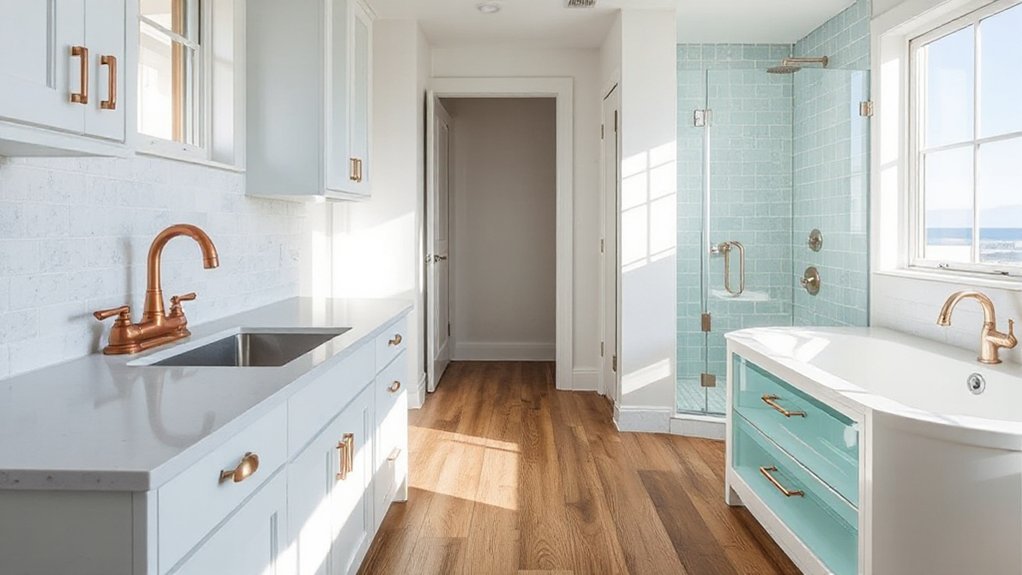
Moisture is a constant concern in coastal kitchens and baths, so choose finishes that resist mold, warping, and staining from humidity and sea air. You’ll prioritize marine grade finishes for countertops and panels where moisture exposure is frequent, ensuring long-term dimensional stability.
Pair these with moisture resistant cabinetry, featuring sealed, non-porous substrates and full-coverage edge banding to deter humidity intrusion. Select doors and drawers with tight gaps and dampers to minimize swelling from humidity swings.
Use backsplash materials that tolerate spray zones, such as porcelain, glass, or glass-inflective composites, and seal seams thoroughly. Opt for low-maintenance finishes, easy-to-clean surfaces, and color schemes that hide mineral deposits.
Regular maintenance checks prevent early deterioration and protect your investment in coastal durability.
Outdoor Living That Withstands Coastal Conditions
Outdoor living in coastal towns demands furniture, decks, and shade structures that resist salt spray, humidity swings, and strong winds, so plan for durable materials and smart detailing from the start. You’ll choose corrosion-resistant metals, powder-coated aluminum, and rot-resistant woods like teak or sustainably sourced timber, sealed with UV-stable finishes.
Ground surfaces should be slip-resistant, raised slightly to shed moisture, and easy to sweep.
Hardware gets stainless steel or brass, embedded fasteners, and hidden fixings to cut wind resistance.
Seaside gardening guides plant choices to endure salt exposure, while coastal privacy screens deter glare and prying eyes without blocking airflow.
Design lighting for high humidity, and store cushions in weatherproof containers.
Prioritize modular, scalable layouts to adapt with storms and seasons.
Frequently Asked Questions
How to Protect Foundations From Coastal Groundwater Intrusion?
You protect foundations from coastal groundwater intrusion by improving foundation drainage and managing ground moisture; install sump pumps, exterior trench drains, and vapor barriers, seal cracks, slope landscaping away, and maintain drainage systems to prevent moisture buildup around the foundation.
Which Paint Finishes Resist Salt Spray Most Effectively?
Salt resistant coatings are best; they withstand spray, salt corrosion, and peeling. You’ll want moisture resistant finishes, too, for damp air. Choose epoxy or polyurethane topcoats with UV protection to keep surfaces durable and maintenance light.
What Are Cost-Effective Pest-Proofing Options for Coastal Homes?
You’ll reduce pests cost-effectively by deploying pest barriers around foundations and entry points, plus routine maintenance. Use Indoor plants away from vents, prune, and seal gaps. Inspect moisture zones weekly, and replace damaged screens to reinforce defenses.
How Often Should Gutters and Bracing Be Inspected Near the Shore?
You should inspect gutters and bracing twice a year near the shore. An estimated 20% of storm damage cases stem from neglected supports; stay vigilant to improve wind resistance and prevent costly surprises. Regular checks save coastal homeowners time and frustration.
Which Local Regulations Affect Seaside Home Renovations?
You should check local building permits and zoning restrictions that govern seaside renovations. You’ll need permits, follow setback rules, and respect coastal buffers; confirm floodplain requirements, erosion controls, and historical or neighborhood overlays before starting any project.
Conclusion
You stand at the shoreline where your home reflects the sea’s rhythm. Let durability be the harbor and style the sail, each choice a token of care against salt, wind, and time. Plan, choose, and install with purpose: corrosion-resistant bones, moisture-smart layers, and sunlit, clutter-free nooks. When storms come, your upgrades become the lighthouse—steady, visible, guiding you home. In resilience, you find beauty; in foresight, you discover peace.