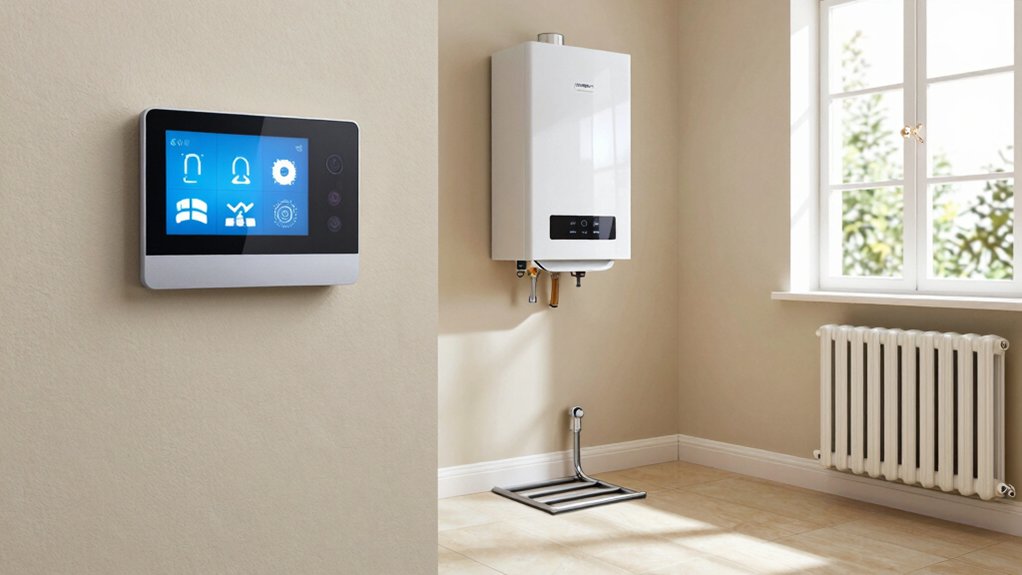
Across UK homes, the smartest upgrades mix high-efficiency boilers, heat pumps, and advanced controls with solid insulation, aiming to cut both carbon and running costs. You’ll want properly sized equipment, reliable maintenance, and potential grant support to keep costs predictable. Each option fits different property types and budgets, but the key is a system that minimizes heat losses and maximizes controllability. Curious how to tailor this for your home and savings?
What Is the Most Energy-Efficient Boiler Option for UK Homes?
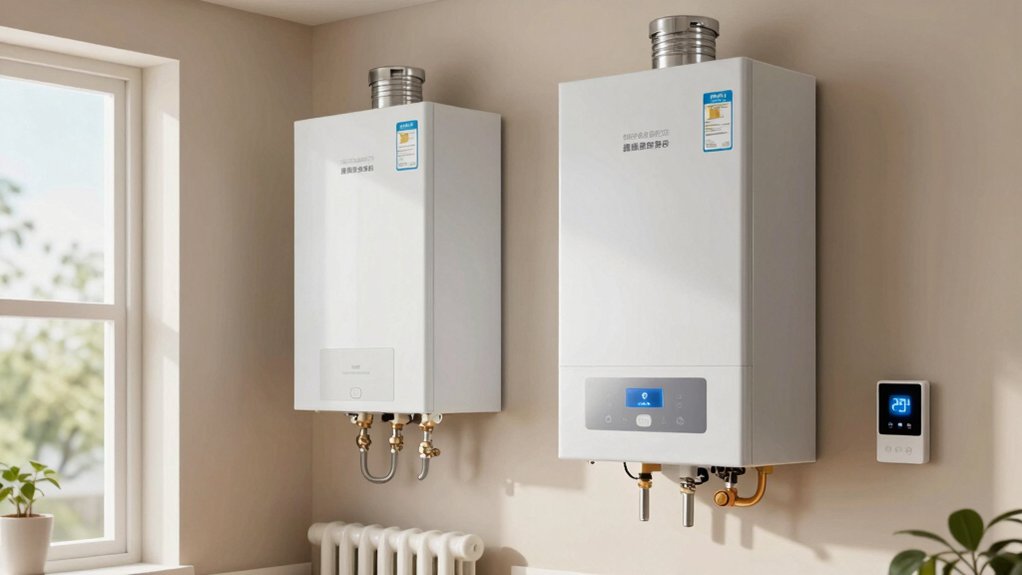
When selecting the most energy-efficient boiler option for UK homes, your best choice depends on a few factors: heating demand, house size, and existing heating system.
In practical terms, you assess seasonal efficiency, fuel availability, and maintenance needs to determine overall lifecycle costs.
Geothermal heating offers high efficiency with minimal operating costs in suitable sites, though initial install is specialized.
Biomass boilers provide near-constant output and low fuel costs where sustainable sources exist, yet require storage and emissions controls.
For many homes, modern condensing gas boilers deliver strong performance with familiar fuel logistics, especially if combined with smart controls.
Evaluate boiler sizing, modulation range, and installer credentials.
Your priority is aligning system performance with comfort targets, energy consumption, and long-term reliability.
How Heat Pumps Can Lower Your Heating Bills in the UK
Heat pumps can slash your UK heating bills by delivering warmth more efficiently than traditional boilers, especially when installed correctly for your home. You’ll see lower operating costs as heat pumps extract ambient heat from outside sources and transfer it indoors with high COP ratings.
Your yearly expenditure depends on system size, insulation, and running hours, but a properly commissioned heat pump installation typically reduces gas consumption and peak demand.
Pairing with underfloor or radiator circuits tuned to lower water temperatures improves efficiency, reducing heat losses.
Consider renewable heating incentives and grant availability to offset upfront costs, and make certain professional design for your property’s heat load.
Ongoing maintenance preserves performance, reliability, and long-term savings.
Smart Thermostats and Controls for Better Energy Management
Smart thermostats streamline scheduling by prioritizing efficiency, so you’ll set precise heating patterns that match your daily routine.
With remote control, you can adjust settings on the fly and verify outcomes without being onsite.
You’ll also gain actionable energy usage insights that highlight where you save and where you can optimize further.
Smart Scheduling Efficiency
Do you want to maximize comfort while cutting energy use? Smart scheduling efficiency aligns your heating with actual needs, not guesses. With smart thermostats and advanced controls, you’ll set precise time blocks that reflect your生活 patterns and occupancy.
Emissions drop as boiler runs only when necessary, while indoor stability remains constant. Key benefits include improved time management and reduced peak demand, since schedules adapt to whether spaces are occupied, via adaptive learning and occupancy sensing.
Use scheduling software to model routines, holidays, and weather adjustments, then deploy automatic shifts for mornings, evenings, and nighttime setbacks. This approach minimizes waste without sacrificing comfort, delivering measurable energy savings.
Precision programming, reliable data feedback, and scalable multi-zone control keep systems responsive and user-friendly.
Remote Control Convenience
From here, you’ll gain hands-on control with remote-enabled thermostats and intelligent controls that put energy management in your hands without sacrificing comfort. You’ll experience precise setpoints, adaptive scheduling, and quick responses to temperature shifts, all delivered through a single interface.
Remote control capabilities let you adjust heating from any room or location, reducing waste and maintaining comfort where needed. The convenience extends to a mobile app that updates in real time, shows current consumption, and prompts maintenance reminders to keep systems efficient.
This approach supports centralized management of multiple zones, ensuring consistent temperatures and rapid cooldown/heat adjustments when conditions change. With robust appliance compatibility and secure connectivity, you’ll optimize energy use without compromising reliability or ease of use.
Energy Usage Insights
How can energy usage insights transform your heating efficiency? You’ll gain precise visibility into consumption patterns with smart thermostats and controls. Real-time data shows when and where energy drives cost, enabling targeted adjustments rather than broad sweeps.
Setpoint optimization, adaptive scheduling, and zoning let you align heat delivery with occupancy, weather, and load profiles, reducing unnecessary output. Monitor equipment performance to catch inefficiencies early, extending system life and stabilizing comfort.
By aligning controls with renewable sources, you maximize low-carbon contributions while maintaining reliability. Data-driven insights empower proactive maintenance, lessening downtime and energy waste.
You’ll lower your carbon footprint through smarter, insulated decisions, and quantify savings over time, supporting budgeting and sustainability goals without sacrificing comfort or convenience.
The Role of Insulation and Draught-Proofing in Cutting Heat Loss
Good insulation reduces heat loss by limiting where warm air escapes and cold air sneaks in, so you’ll feel steadier temperatures with less boiler run time.
Draught-proofing directly tackles gaps around doors, windows, and vents, improving overall thermal performance without major retrofit costs.
Insulation Effectiveness
Insulation and draught-proofing are the quickest, most cost-effective ways to cut heat loss in UK homes. You’ll assess insulation effectiveness by isolating heat pathways and quantifying conduction, convection, and radiation losses.
Focus on materials, installation quality, and continuity to minimize thermal bridges. Roof insulation and wall cavity details determine overall performance, so verify thickness, density, and UK building standards compliance.
In practice, you’ll compare U-values for roof and walls, ensuring consistent coverage and airtight interfaces. Prioritize retrofit options with proven moisture control and long-term dimensional stability to sustain performance.
Document test results, installation notes, and maintenance needs to support ongoing efficiency. By prioritizing correct specification and disciplined workmanship, you reduce heat demand, enhance comfort, and lower running costs without compromising structural integrity.
Draft-Proofing Impact
Draft-proofing directly complements insulation by targeting the air pathways that drive heat loss. You’ll see measurable gains when gaps around doors, windows, pipes, and chimneys are sealed, reducing airflow without increasing energy use.
In practice, draft-proofing benefits include lower heating demand, steadier interior temperatures, and enhanced comfort during peak winter. You should expect a rapid return on investment as reduced air leakage lowers boiler cycling and thermostat drift, improving system efficiency.
Focused sealing works alongside insulation to create a continuous envelope, minimizing convective heat transfer that bypasses insulation layers. Use careful, site-specific assessment to identify persistent drafts and select appropriate sealing methods.
Air leakage reductions correlate with tangible energy savings, occupant comfort, and long-term durability of your UK home.
Solar Thermal and Hybrid Heating Systems for UK Households
Solar thermal and hybrid heating systems offer UK homeowners a practical path to lower fuel costs and reduced carbon emissions by capturing sun heat for hot water and space heating. You’ll assess site conditions, roof orientation, and shading to determine collector types, storage sizing, and integration with existing boilers.
Solar energy systems can considerably cut daytime energy use, while hybrid systems intelligently switch between solar input and conventional heat as demand rises, preserving comfort without oversizing equipment. Pay attention to system efficiency, panel material, and controls that optimize heat transfer and storage discharge.
A well-designed installation reduces gas or oil dependence, lowers utility bills, and provides reliable hot water even on cloudy days. Engage installers who specify performance metrics, warranty terms, and maintenance schedules.
Radiant and Underfloor Heating: Comfort With Efficiency
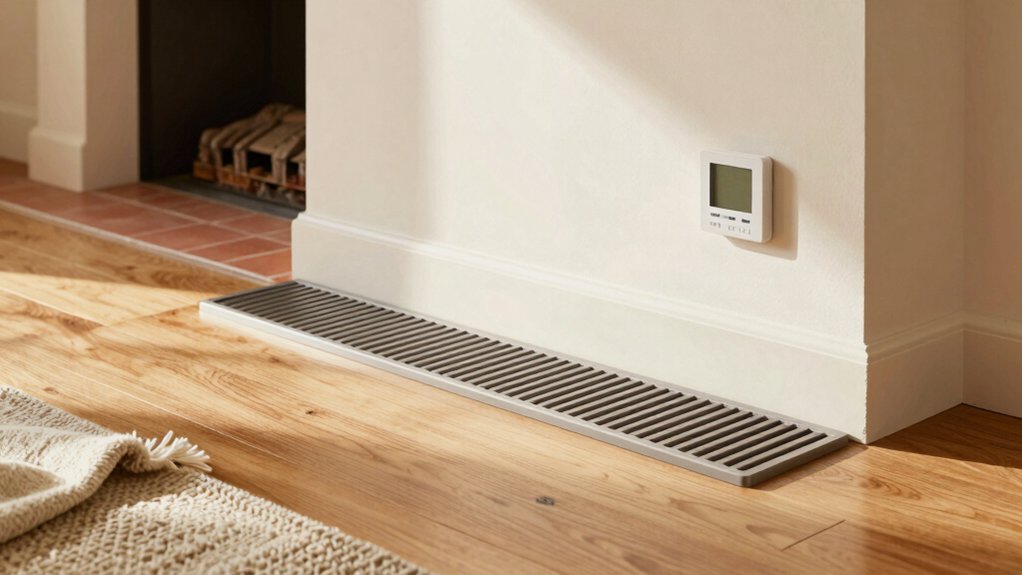
Radiant and underfloor heating deliver precise comfort with high efficiency by circulating warm water through embedded pipes or mats. This creates even heat distribution that reduces temperature stratification and hot spots. You benefit from consistent ambient warmth at lower surface temperatures, improving perceived comfort and energy use.
Design considerations include selecting appropriate floor coverings, ensuring room-by-room zoning, and coordinating with existing plumbing and heat sources.
Installation challenges involve conserving ceiling heights, avoiding structural voids, and preserving floor finish integrity during retrofits. You’ll need careful insulation strategy to minimize heat loss and accurate manifold layout for balanced flow.
System response is gradual but stable, enabling tight control with modern thermostats and smart controls. With proper planning, radiant or underfloor solutions deliver long-term efficiency without compromising comfort.
Heating System Maintenance and Reliability Tips
Regular maintenance keeps your heating system reliable and efficient, reducing the risk of unexpected outages when you need heat most and extending system life. You’ll schedule seasonal inspections to verify venting integrity, gas connections, and electrical safety, ensuring full compliance with UK standards.
Focus on ventilation systems to prevent condensate and carbon buildup, improving combustion efficiency and indoor air quality. Clean or replace filters according to manufacturer guidance, and verify thermostat calibration for accurate control.
Monitor boiler lifespan indicators, such as burner stability, ignition reliability, and pressure consistency, addressing faults before they escalate. Drain and flush the system as recommended to minimize sludge and corrosion.
Keep documentation up to date for warranties and servicing history, and partner with a qualified technician to sustain performance year round.
Costs, Savings, and Funding Options for Heating Upgrades
Upfront costs for heating upgrades can seem intimidating, but understanding total lifetime savings and available funding helps you make an informed decision.
In this section, you’ll perform a precise cost analysis that compares equipment, installation, and system integration. Assess energy savings, maintenance needs, and potential performance improvements to quantify payback periods and total cost of ownership.
Consider unit economics, including discount rates and energy price projections, to forecast long-term value. Funding options vary by program and region, from grants and subsidies to loans with favorable terms or incentives tied to performance milestones.
Document eligibility, required documentation, and application timelines to streamline approval. Prioritize transparent budgeting, risk assessment, and measurable outcomes to validate the financial case for upgrading.
Choosing the Right Heating Upgrade for Your Property Type
Choosing the right heating upgrade depends on your property type, occupancy patterns, and existing infrastructure, because each combination affects comfort, efficiency, and cost-effectiveness.
To select the best option, assess your space layout, insulation levels, and heat load before deciding between heat pumps, on-demand boilers, or hybrid systems.
Consider property insulation as a baseline; improving envelope performance often reduces system capacity needs and operating costs.
Evaluate localized heating zones to match usage patterns, minimizing energy waste.
Also, account for heating system noise, as quieter models improve daily living and compliance with open-plan rooms.
For retrofit projects, ensure compatibility with existing controls, vents, and electrical capacity.
Finally, obtain a reliable energy assessment and detailed quotes to compare long-term total cost of ownership.
Frequently Asked Questions
How Long Does a Typical Heating Upgrade Project Take?
A typical heating upgrade project takes about 2–5 days, depending on system type and complexity. You’ll follow a detailed project timeline, with milestones for assessment, installation, testing, and handover, ensuring your heating system operates safely and efficiently.
Will Upgrading Reduce My Council Tax or Energy Bills Quickly?
Upgrading can cut energy bills over time, but it won’t instantly slash council tax. You’ll see energy savings gradually as efficiency improves; quantify with annualized estimates, then compare against upfront costs to determine payback and long-term value.
Are There Any Hidden Costs After Installation?
Yes, there can be hidden fees and maintenance costs after installation. You’ll want to review warranties, schedule regular servicing, and confirm any ongoing utility or system-monitoring charges to avoid unexpected expenses and maintain ideal performance.
How Do I Compare Boiler Guarantees and Service Plans?
Warranty comparisons and service plan features matter. You compare boiler guarantees by coverage, duration, exclusions, and response times, then weigh renewal terms. You look for transparent pricing, clear limits, and proactive maintenance. You’ll trust plans that protect your comfort.
Can Upgrades Affect Home Resale Value?
Yes, upgrades can boost resale value and home equity when properly chosen. You’ll improve efficiency, appeal, and reliability, potentially raising appraisal figures; prioritize proven systems, warranties, and compatibility to maximize return without over-investing.
Conclusion
You want warmth that’s reliable and bills you less, but you value comfort and control. Juxtapose high-efficiency boilers with silent heat pumps, and you’ll feel the contrast: precision meets gentleness. Traditional radiators stay solid, while smart controls tighten your grip on spend. Insulation blocks drafts; solar and hybrid options offer clean momentum. Maintenance keeps the system honest. The right upgrade blends performance with practicality, delivering predictable comfort and long-term savings for your property.