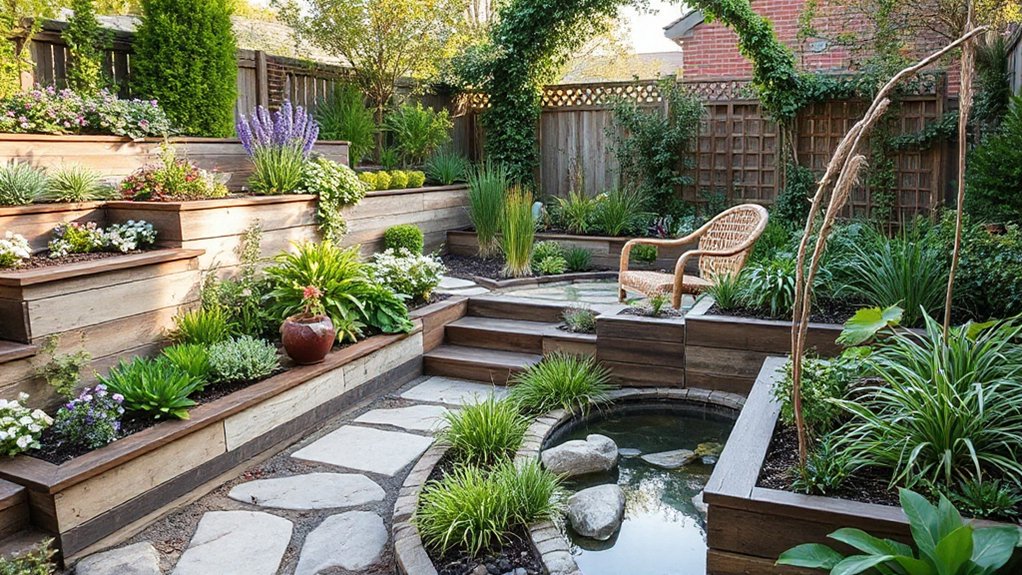
A practical example: a terraced row with a 1.5 m wide plan, horizontal shelves, and a narrow seating alcove stages vertical planting to maximize privacy. You’ll balance raised beds, modular containers, and built-in storage along the stairs, creating defined zones that don’t crowd the path. Layered planting and smart lighting extend usability after dark. If you want to optimize microclimates and maintenance, you’ll need to weigh plant pairings and compact species—and that’s where the layout choices start to matter.
Design a Compact Terraced Garden: The Essentials You Need
Designing a compact terraced garden starts with a precise assessment of available space and light. You map sun paths, shade pockets, and drainage, then prioritize high-impact zones for quick gains.
Layouts should be modular, with tiered planting beds aligned to sightlines and accessibility. Choose compact, drought-tolerant species and scalable seating that doubles as storage.
For efficiency, container systems let you test microclimates without heavy excavation. Install garden lighting to extend usability after dark, focusing on safety, atmosphere, and energy efficiency.
Plan outdoor art as focal points that anchor each terrace, using weather-resistant materials and height variation to avoid visual clutter.
Keep circulation clear: narrow paths, step-free passage where possible, and easy weed management.
Regularly reassess plant performance and adjust as you refine the space.
Layered Planting for Privacy and Perceived Space
Layered planting creates immediate privacy and the perception of greater space by stacking foliage vertically and distributing sightlines. You implement this by combining tall, structural plants with mid-height shrubs and groundcovers in defined layers, anchored to durable planters.
Choose species with complementary growth rates to maintain year-round cover and minimize gaps. Use vertical gardening systems—trellises, wall-mounted planters, and freestanding screens—to extend foliage upward without widening footprints.
Schedule regular pruning to preserve sightline control and airflow, preventing overcrowding. Select sustainable materials for containers and supports, such as FSC-certified wood, recycled aluminum, or recycled plastic composites, to maximize longevity and minimize life-cycle impact.
This approach yields layered privacy, improved microclimate, and a sense of spaciousness without sacrificing accessibility or maintenance efficiency.
Zone a Narrow Garden: Practical Areas That Feel Bigger
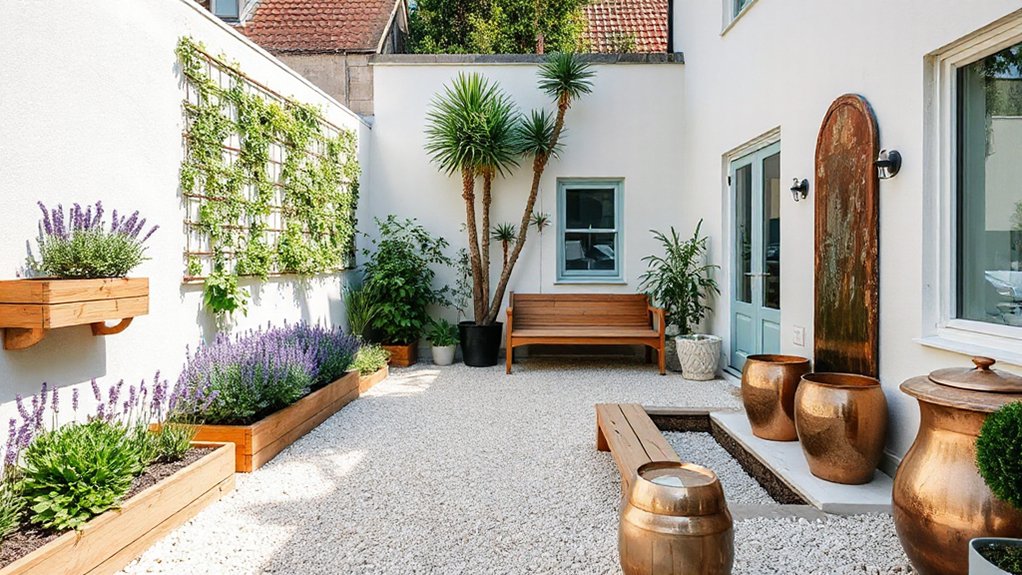
In a narrow garden, every square foot must earn its keep, and practical zones help you feel more space without widening the footprint. You’ll segment by function, not mass, using clear sightlines and modular tools to minimize clutter.
Start with a compact seating area adjacent to the house, bordered by a narrow path that guides flow without eroding green space. Introduce a narrow, low-maintenance border to delineate zones while preserving openness.
Prioritize verticals—trellises, wall-mounted planters, and pergolas—over horizontal spreads. Select garden lighting that doubles as safety and ambience, highlighting edges and key features without overpowering the scene.
Use outdoor accessories sparingly: weather-resistant containers, compact storage, and foldaway furniture. Keep routine maintenance brief by choosing durable, multi-use elements with simple access for care.
Built-Ins That Wow: Stairs, Walls, Seating, Storage
Built-ins can transform terraced spaces by integrating form and function: stairs that double as seating, walls that host planters, and storage that stays out of sight yet within reach. You’ll design modular steps with integrated drawers or cubbies, enabling rapid access without visual clutter.
Walls become vertical gardens or display surfaces, optimized for weathering and easy cleaning, while planters or trellises hinge into the structure for stability. Seating should hinge on weight-bearing cores and weatherproof cushions, offering flexible configurations for gatherings.
Storage must be accessible yet recessed, minimizing footprint while preserving sightlines. Use Creative lighting to emphasize height differentials and contour pathways, and consider Artistic sculptures as focal anchors to reduce perceived density.
Maintain clean junctions, eliminate protrusions, and prioritize durable, low-maintenance finishes.
Plant Pairings and Maintenance for Year-Round Appeal
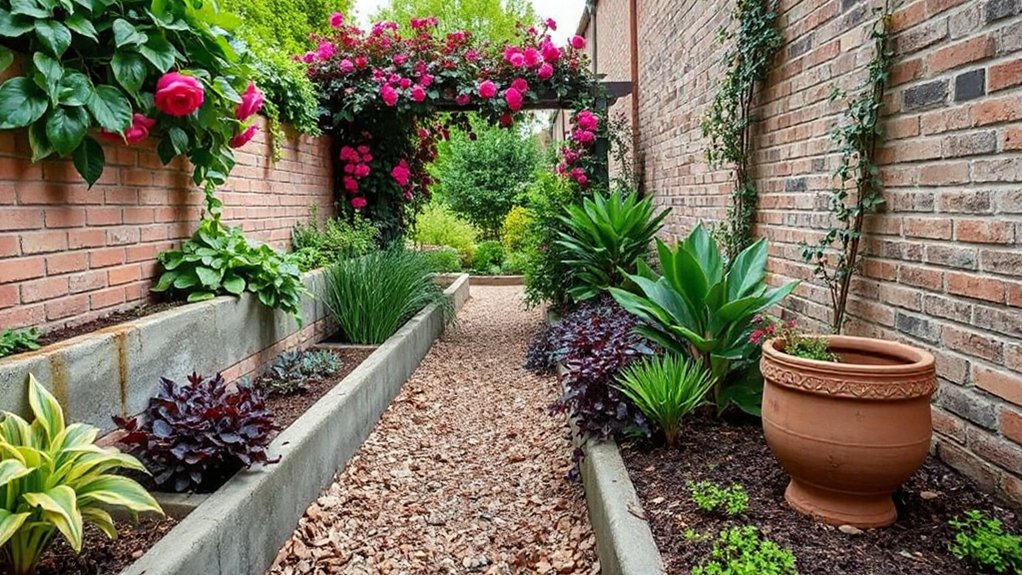
Careful plant pairings and regular maintenance guarantee year-round appeal in terraced gardens. You optimize microclimates by grouping compatible species, matching sun exposure, soil moisture, and growth habit.
Favor compact, vertical varieties in containers to maximize space and simplify upkeep. Implement seasonal rotation—spring bloomers with summer foliage, autumn fruiting perennials—to maintain visual interest and continuous nectar sources.
Use drip irrigation and mulch to conserve water and suppress weeds, reducing maintenance time. Choose drought-tolerant staples for sunlit tiers and shaded understory plants for north-facing walls.
Prune selectively to maintain structure and air circulation, minimizing disease risk. Integrate container gardening for flexible color and height adjustments, and plant wildlife attracting species to support pollinators.
Schedule annual soil tests and fertilization to sustain nutrient balance and overall vigor.
Frequently Asked Questions
How to Maximize Natural Light in a Narrow Terraced Garden?
Increase natural light by aligning seating along reflective surfaces, use light-colored walls, and install slim, mirrored panels. You should place garden furniture to avoid blocking windows, and add outdoor lighting that enhances ambient brightness without glare.
What Are Cost-Effective Irrigation Options for Tiny Spaces?
Install drip irrigation or compact sprinkler systems; they’re cost-effective for tiny spaces. Like a gardener’s old coin purse, drip wins—precise, low water, minimal waste—while sprinkler options cover larger spots. You’ll save water, time, and upkeep costs.
Which Decking Materials Suit High-Traffic Terrace Areas?
You should choose composite or tropical hardwood decking for high-traffic terraces. Decking durability matters for wear and moisture, while Material aesthetics guarantee you still enjoy visuals. Consider aluminum or steel subframes for longevity and easier maintenance overall.
How to Choose Low-Maintenance Plants for Year-Round Color?
Start with choosing succulent varieties and evergreen shrubs for year-round color; in my case study, you’ll note low maintenance goals met by drought-tolerant succulents plus hardy evergreens. You’ll prune lightly, water deeply, and enjoy consistent seasonal structure.
Can Vertical Gardens Grow Edible Crops Effectively?
Vertical farming can grow Edible plants effectively in compact spaces. You’ll optimize light, irrigation, and support, using modular vertical systems. This approach emphasizes steady yields, pest management, and scalability, making edible crops practical for limited terrace areas.
Conclusion
You’ll see success sprout by sequencing space-smart schemes: stacked shelves, slender planters, and smart stairs shape. Layer lighting, lift with lattice, and link zones with low walls. Pair performance plants with practical maintenance, pruning paths, and prompt, predictable care. Think modular, weather-ready storage, and windward planting pockets for year-round vigor. Sleek seating, storage, and soil-saving systems keep spaces serene. Stay strategic, sturdy, and swiftly scalable: spare squares become sensational, sustainable sanctuaries, showcasing superb, space-saving stewardship.