Like a tight puzzle waiting for the right piece, your small yard can still feel expansive. You map sun, set up verticals, and stack pots to multiply growing room without clutter. You’ll choose compact furniture, subtle lighting, and a focal point to draw the eye. With native, low-maintenance plants and smart watering, you’ll create a lush, inviting space—as long as you keep the flow clean and the edges intentional, there’s more to uncover beyond the plan.
Map Your Micro Plot and Sun Exposure
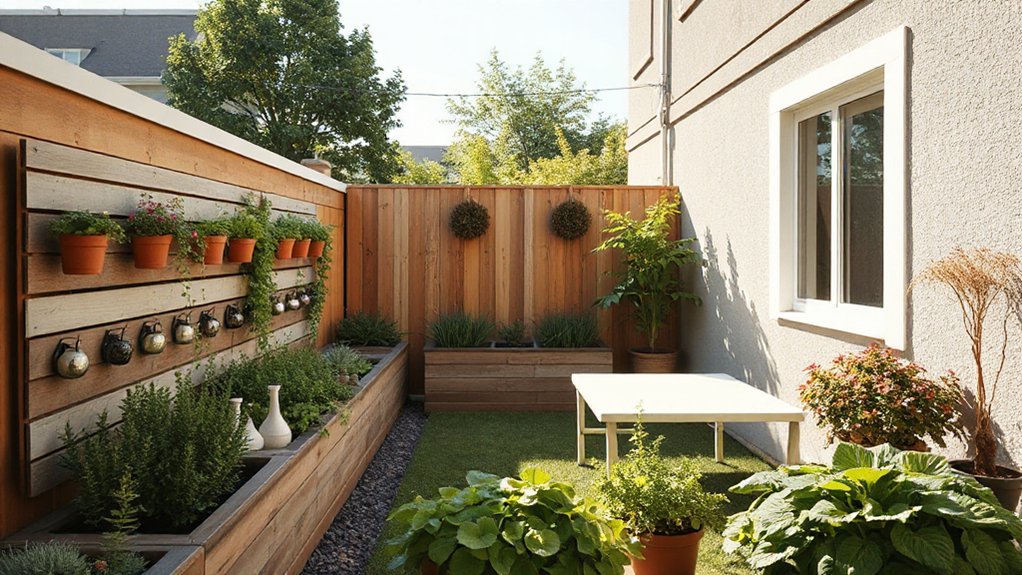
Start by mapping your micro plot and tracking sun exposure across the day. You’ll note shade pockets, light hours, and wind patterns to shape placement. Use a simple grid or compass to mark corners, then sketch plant zones aligned with microclimate considerations.
Match thin, tall borders to southern light and shallow-rooted herbs to bushier shade areas. Keep paths minimal to maximize growing beds, and store tools nearby for quick actions.
When planning, integrate soil preparation techniques that suit each zone: compost-rich beds where sun is strongest, loamy mixes in transitional light, and raised segments where drainage improves.
Document results in a compact notebook or app, updating as conditions shift. Precise mapping minimizes waste, elevates efficiency, and supports balanced, space-efficient harvests.
Vertical Planting Ways to Multiply Your Space
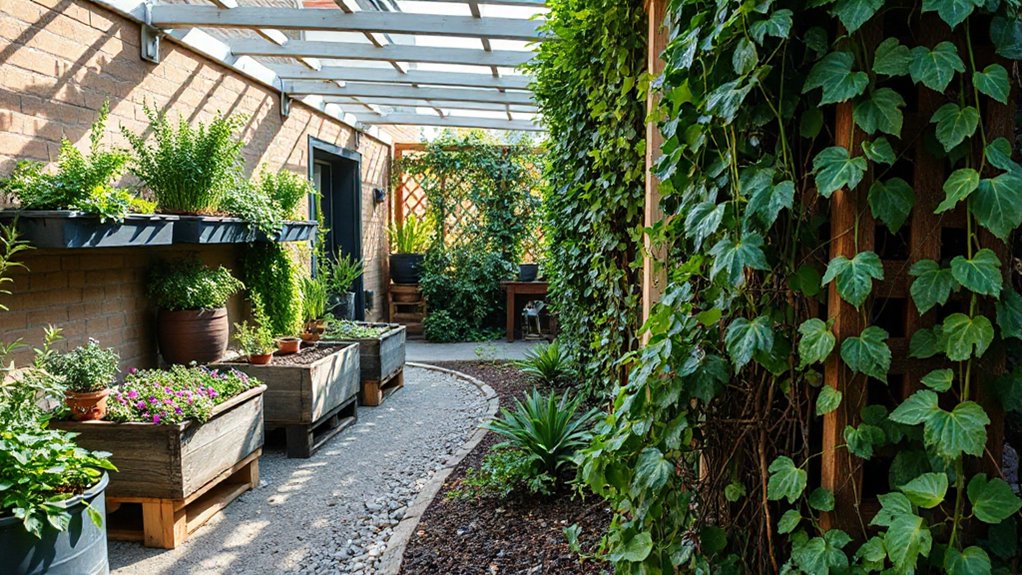
Vertical planting is a smart way to multiply your space without expanding your footprint, letting you grow more in less area by stacking plants upward. You’ll use wall-mounted planters, trellises, and railing boxes to keep growth organized and accessible.
Choose compact varieties and stagger planting heights to maintain airflow and reduce shade on lower crops. Pair vertical beds with smart irrigation to minimize water waste and keep maintenance simple.
Integrate garden furniture nearby for seating without crowding pathways, turning vertical greenery into a relaxing feature rather than just foliage.
For pest control, use physical barriers and healthy companion plants to deter common invaders. Regularly inspect leaves, prune as needed, and rotate crops seasonally to sustain productivity and aesthetic balance.
Container Setups for Higher Yield in Small Areas
Start with Stackable Pot Strategies to maximize each container’s footprint. Then add Vertical Holder Tips to keep plants accessible and tidy without crowding.
Pair these with simple Drip Irrigation Plans to conserve water and reduce maintenance in tight spaces.
Together, these ideas balance practicality, aesthetics, and space efficiency for higher yields in small areas.
Stackable Pot Strategies
Stackable pots are a smart way to multiply harvest per square foot without clutter. You’ll maximize yield by layering shallow-root herbs with compact ornamentals above and compact vegetables below.
Choose sturdy containers with durable support, and arrange them so each level gets direct light. For stability, place a weighty base or wall-mounted rack to prevent tipping.
Stackable pot durability depends on load tolerance, drainage, and UV resistance—look for thick walls, reinforced corners, and a weatherproof finish. Material selection matters: lightweight, breathable plastics work well in hot climates, while fiber-cement and ceramic offer longevity in cool, dry spots.
Guarantee each pot has drainage; use a concise watering plan to prevent root rot. Finally, rotate plant families seasonally to sustain soil balance and visual appeal.
Vertical Holder Tips
If you want higher yields in tight spaces, consider vertical holders that pair sturdy frames with modular pockets or shelves. This setup maximizes sunlight exposure and airflow, keeping plants healthy without crowding your patio.
Place heavy herbs or root veggies in lower tiers for stability, then reserve the top for compact greens.
When selecting modules, balance material durability with aesthetic harmony so your wall looks intentional, not cluttered.
Use hanging baskets to tuck trailing herbs along the sides, creating a lush canopy without stealing floor space.
Wall mounted planters offer clean lines and easy access, ideal for frequent harvests.
Keep irrigation simple with evenly spaced pockets, ensuring moisture reaches every plant.
Your compact garden stays organized, productive, and visually balanced.
Drip Irrigation Plans
Drip irrigation fits neatly into compact container setups, delivering precise moisture where it matters and reducing waste. You’ll design simple networks that run through saucers and self-watering pots, so plant roots stay consistently hydrated without soggy trays.
Choose emitter spacing by plant type, spacing drip lines to reach root zones without overwatering foliage. Use a timer for Smart watering routines—daily checks adjust for weather shifts, keeping rhythms steady and predictable.
Mount tubing along trellises, balcony rails, or stacked shelves to maximize vertical appeal while concealing lines. Mulch lightly around containers to minimize evaporation, and filter debris to sustain clog-free flow.
Prioritize water conservation by testing soil moisture before each cycle and refining flow rates as your containers mature. Efficiency, aesthetics, and yield reinforce your compact garden’s harmony.
Compact Hardscaping That Feels Spacious
Slim, purposeful hardscape elements can transform a tiny yard into a cohesive outdoor room. You’ll maximize space with narrow, continuous pathways and seating nooks that don’t overpower the area. Choose compact pavers or deck boards in a cohesive color to create visual flow, avoiding clutter.
Elevate perception with a single focal point—perhaps a sculptural planter or a water feature—that draws the eye without crowding the footprint. Integrate garden furniture that folds or stacks, so you can reclaim space when not in use.
Use privacy screens strategically to define zones while keeping sightlines open. Materials with subtle texture and a restrained palette foster calm, ordered aesthetics.
Finish with subtle lighting and clean edges to enhance spaciousness after dark.
Low-Maintenance Lawn Alternatives That Look Lush
A lush, low-maintenance lawn alternative can give you that expansive look without demanding daily upkeep. You’ll achieve this with resilient groundcovers, ornamental grasses, and clover blends that tolerate foot traffic yet stay tidy. Choose a varied mix of textures and greens to create depth, not chaos, and keep edges crisp for a polished appearance.
Plan for efficient mowing or none at all by selecting long-rooted and low-growing species that shade weeds. Use mulch beds to reduce watering needs and define zones that feel larger than they are.
Gardening tools streamline maintenance, while organic fertilizers feed soil life without harsh chemicals. Prioritize native plants for drought tolerance and seasonal interest, ensuring a lush, inviting landscape that stays vibrant year-round.
Light, Care, and Plant Picks for Limited Sun
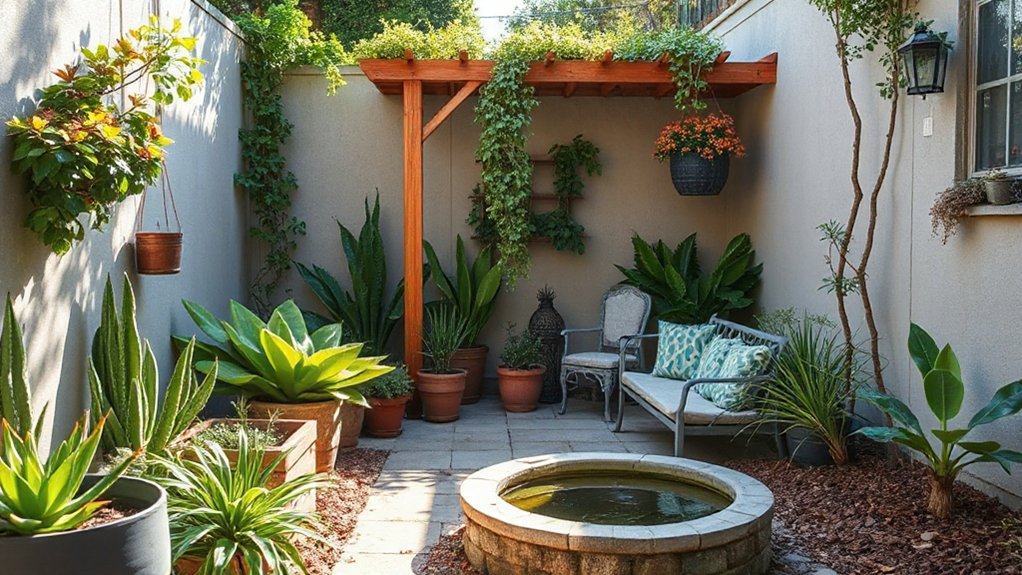
If your space gets limited sun, start by mapping the light you truly have and plan paths where plants won’t crowd each other.
I’ll suggest care-driven picks that thrive in partial shade or bright indirect light, and practical tips to keep them healthy with minimal fuss.
Consider compact varieties and smart containers to balance height and texture while you optimize every inch of light.
Light Availability Tips
Why does your garden thrive with limited sun? You’ll maximize output by smart framing, vertical layers, and reflective surfaces. Position key planters where they catch every stray ray, and use light-colored walls or grids to bounce artificial sunlight into shady corners.
For indoor-compatible glow, rely on indoor lighting that mimics spectrum peaks, then blend it with outdoor strategies to extend perceived brightness.
Prioritize compact, sun-tolerant or shade-loving varieties in a tiered bed to create depth without crowding. Keep paths clear to reduce shadows from furniture, and install compact mirrors or white mulch near plants to amplify light.
With deliberate spacing and consistent, efficient lighting, you’ll keep color, form, and texture vibrant in limited sun.
Care-Driven Plant Picks
When space is tight and sun is scarce, choose care-driven plant picks that maximize performance with minimal fuss. You’ll prioritize compact forms, sturdy stems, and low-maintenance habits that thrive in partial shade.
Focus on plant health by selecting species with strong disease resistance and reliable growth patterns, so your container garden stays vibrant with little intervention.
Pair these picks with efficient watering routines: use drip lines or self-watering pots to prevent overwatering and to maintain steady moisture.
Group plants with similar light needs to simplify care and reduce clutter.
Opt for foliage-forward varieties that deliver color with minimal sun.
Finally, label your arrangements and establish a simple routine—check weekly, water as needed, and enjoy consistent, tidy results.
Frequently Asked Questions
How Can I Maximize Privacy in a Tiny Yard?
You can maximize privacy in a tiny yard by layering urban fencing and privacy screens, creating vertical interest while blocking sightlines; use trellises with climbers, compact evergreens, and narrow plantings to balance aesthetics, space, and practical, unobtrusive seclusion.
What Are Budget-Friendly Irrigation Options for Small Spaces?
Drip irrigation and soaker hoses offer budget-friendly options, delivering steady nourishment like quiet rain. You’ll save water, time, and space while keeping plants thriving; sketching efficiency your garden becomes a well-timed mural of green and order.
Which Crops Yield Best in Shade-Heavy Micro Plots?
You’ll thrive with shade tolerant crops like lettuce, spinach, kale, and ferns, plus microgreen varieties that flourish indoors or under canopies; optimize space by vertical shelving and compact containers, keeping aesthetics balanced while you harvest consistently.
How Do I Protect Potted Plants From Extreme Temps?
To protect potted plants from extreme temps, wrap roots with Seasonal coverings and apply Insulation techniques like bubble wrap or moving blankets, plus wind shielding. You’ll stabilize temps, conserve moisture, and maintain aesthetics and space efficiently.
Can Hobby Green Walls Support Edible Plants?
Yes—your hobby green walls can support edible plants with careful planning. You’ll maximize vertical planting, secure irrigation, and choose edible foliage that thrives in limited space, maintaining balance, practicality, and aesthetic while optimizing every square inch.
Conclusion
You can transform a tiny yard into a lush, livable space with smart layouts and vertical planning. Map your sun, stack planters, and choose compact, native plants that thrive on little water. If you think you’ll run out of space, add wall planters and trellises to multiply growing area without clutter. It’s all about practical, balanced design: create cozy outdoor rooms, use focal features, and keep maintenance low for a beautiful, inviting habitat you’ll actually use.