
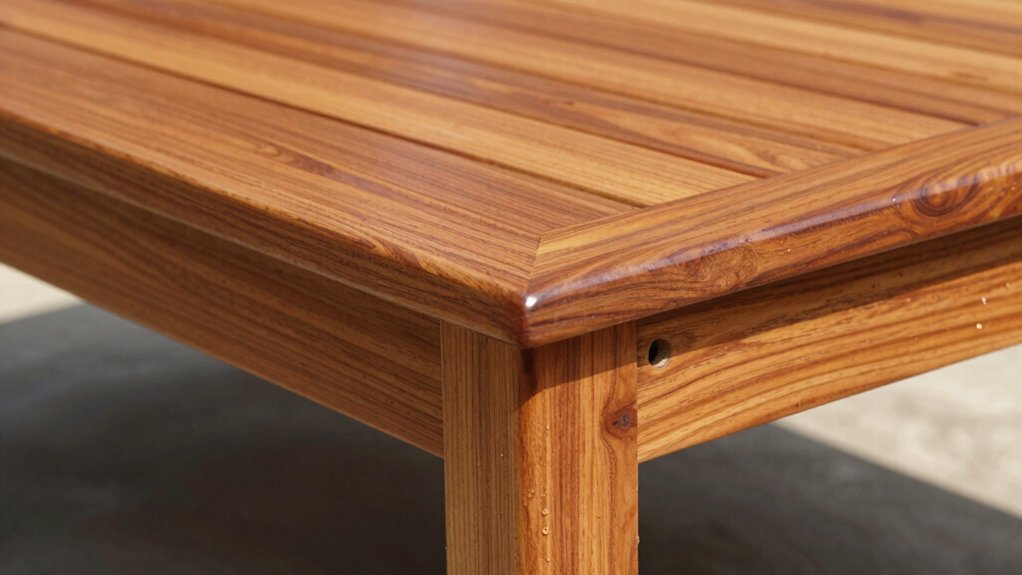
For outdoor teak, choose a durable, UV-resistant finish that protects moisture and weather while letting the grain show. Film-forming sealants like marine varnish or spar urethane offer strong UV defense and flexibility for expansion, while penetrating oils preserve a natural look and breathability. In coastal or humid climates, favor finishes with mold resistance; in sun-drenched areas, prioritize toughness and color retention. For best results, apply thin coats after cleaning and inspect before the next recoat—more details await.
Why Finish Teak: Protecting Natural Beauty
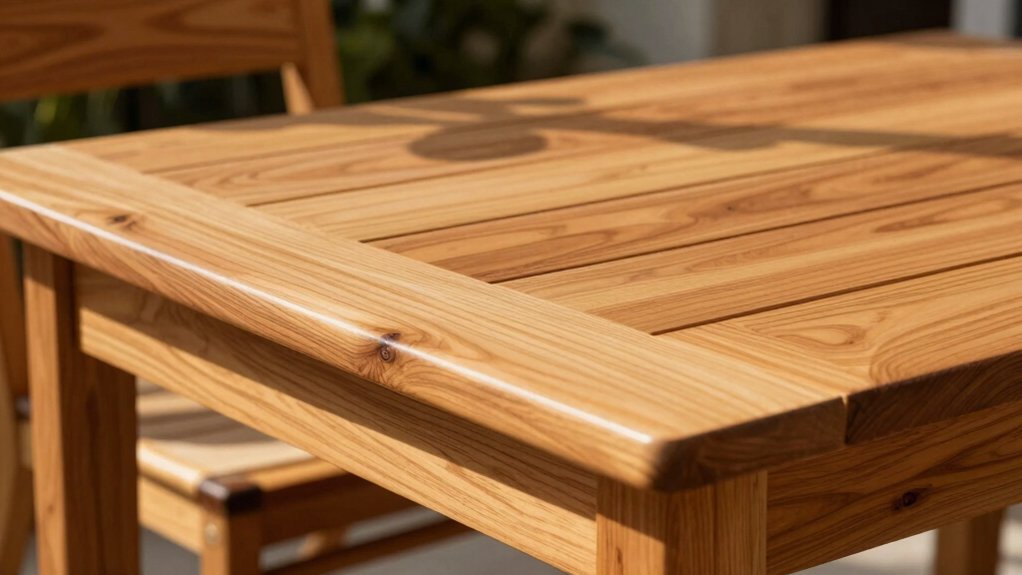
Finishing teak protects its natural beauty by creating a durable barrier against moisture, UV rays, and staining. You pursue this to preserve wood structure and color consistency over time. The finish slows weathering, reduces surface checking, and stabilizes the teak grain, helping you maintain a uniform appearance.
Focus on compatibility with teak’s natural oils; select products labeled for outdoor teak and apply per manufacturer guidance. Teak grain visibility matters: a suitable finish should accentuate the grain without overly darkening the wood. For color enhancement, use a formulation that preserves subtle warm tones while providing protection from accelerated aging.
Apply evenly in thin coats, avoid pooling, and allow proper curing between passes. Reapply on schedule to sustain protection and preserve the furniture’s timeless, practical appeal.
Tung Oil vs. Danish Oil: What Starts the Finish Journey
You’ll compare tung oil and Danish oil by focusing on their basic chemistry, cure rates, and resistance traits, to set the finish journey baseline.
We’ll contrast tung oil basics with Danish oil differences, highlighting how each behaves on teak and what that means for long-term protection.
Start points for application matter: from preparation and primer compatibility to initial coats and recommended number of passes, so you can choose the right path for your outdoor teak.
Tung Oil Basics
Tung oil forms a polymer film when it polymerizes and cures, creating a durable, water-resistant finish for outdoor teak. You apply it in thin coats, allowing each layer to cure fully before the next, which minimizes tackiness and uneven grain highlight. The resulting film offers moderate water repellency and a warm, amber tone that deepens with age.
Be aware that pure tung oil penetrates wood fibers rather than building a hard shell; this yields good flexibility but can reduce finish durability in high-UV climates if layers aren’t maintained. Teak aging influences appearance; natural oxidation lightens the wood over time, while the oil can slow surface graying.
For lasting results, recoat on a schedule and monitor surface wear, correcting with clean, thin applications as needed.
Danish Oil Differences
Danish oil differs from pure tung oil mainly in composition and performance: it’s a blend designed to penetrate deeply while building a finish, offering slightly more film hardness and quicker cure times.
You’re evaluating it for teak staining and outdoor durability, so consider how the varnish-like film forms with ambient humidity and temperature swings. Danish oil combines oil and a small amount of resin or varnish, producing a balanced finish that enhances grain contrast without excessive gloss.
It can improve water resistance compared to pure tung oil, yet remains spot-treatable and easier maintenance-wise. Expect moderate durability under weather cycling; recoat intervals are shorter than with true marine finishes.
For longevity, pair Danish oil with proper surface prep and periodic cleaning to maintain finish durability.
Application Start Points
Before you apply anything, recognize that tung oil and Danish oil start the finish journey differently: tung oil relies on multiple coats to build up a robust, flexible film, while Danish oil forms a quicker-curing, resin-enhanced layer that aims for balanced protection with less buildup.
Start points matter: with tung oil, prepare, then apply thin, even coats, allowing full cure between passes to maximize color enhancement and flexibility. With Danish oil, fewer, faster applications can achieve quicker protection, so you’ll monitor wipe-off times and surface feel to avoid sheen hotspots.
Consider eco friendly options and label guidance to align finish choice with environmental goals.
In outdoor teak, plan maintenance windows around dry weather and intended color outcomes, resizing expectations for longevity and performance.
Marine Varnish and Spar Urethane: For Harsh Outdoor Suns
Marine varnish and spar urethane provide UV resistance and flexible protection for outdoor teak, so you’ll get extended life in harsh sun and salt spray.
You’ll apply a thin, even coat after proper sanding and cleaning, then allow full curing per product specs. These finishes form a hard, elastic film that resists cracking as the wood expands and contracts with temperature and humidity.
For best UV protection, choose a product labeled for exterior use and recoat within the recommended window to maintain clarity and color stability.
Color enhancement is achievable by applying a lightly tinted varnish or using a transparent sealer with subtle warmth, but avoid dark tints that may yellow under sun.
Follow manufacturer guidance, maintain recoat intervals, and monitor for gloss loss or peeling. UV protection remains central to durability.
Penetrating Oils: Breathable Protection That Builds Patina
Penetrating oils breathe into teak to feed the wood from within, delivering protection that remains flexible as boards expand and contract. You apply thin coats that soak into the capillary network, sealing the surface while preserving natural texture.
The result is enhanced color depth—subtle color enhancement without creating a thick film that hides grain. Because these oils cure below the surface, you get deeper weather resistance than surface finishes alone, yet you maintain breathability to prevent peeling and cracking.
Reapplication hinges on usage and climate; you’ll notice sheen fade and a matte-to-satin look as patina develops. Maintain by removing dust between coats and ensuring even penetration. Choose a product with compatible resin bases and monitor for uneven appearance, re-oiling as needed to sustain tone and protection.
Water-Based Sealants: Clean, Low-Gloss Defense
Water-based sealants offer a clean, low-gloss defense that preserves teak’s natural texture while providing a protective shield against moisture and UV exposure. You apply thin, even coats to maintain wood grain visibility, avoiding puddling in joints and grain lines. These coatings dry quickly, reduce surface tack, and resist yellowing, helping color enhancement stay true over time.
Choose products labeled for exterior/teak use, and follow recoat intervals precisely to prevent buildup. You’ll notice improved resistance to staining from spills and environmental contaminants without sacrificing tactile feel. Clean tools with water after use, and store containers upright to prevent sealant separation.
If you seek a subtle finish, a single coat may suffice; for stronger defense, two light coats are ideal while maintaining readability of the wood grain.
Maintenance Routines: Cleaning, Recoats, and Patina Management
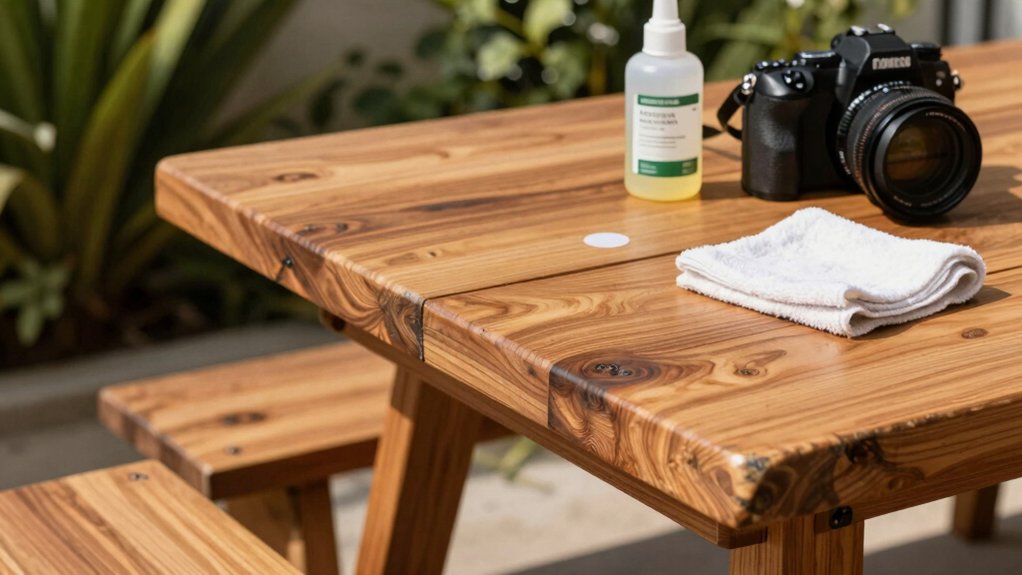
To keep teak finishes consistent, start with a clear Cleaning Schedule Basics that fits your climate and usage. Then, track when recoats are needed.
Use the Recoats Timing Guide to align sanding, cleaning, and sealant steps so coatings cure properly without buildup.
For Patina Management Tips, adjust maintenance pace to preserve natural aging while preventing mildew and surface wear.
Cleaning Schedule Basics
A regular cleaning schedule keeps outdoor teak looking its best and extends its life. You establish routine intervals, select approved cleaners, and apply mechanical steps that minimize finish wear.
Begin with light dust and debris removal, then inspect for surface texture changes that indicate grain raising. Use a soft nylon brush and mild detergent to lift embedded grime without abrading wood. Rinse thoroughly and air-dry before evaluating color enhancement opportunities; avoid harsh chemicals that can alter wood tone.
Record observations, including soil residues and any persistent stains. Schedule deeper cleanings after heavy use seasons, ensuring surface remains free of standing water.
Consistency preserves wood grain appearance and helps predict maintenance needs, while maintaining a stable baseline for future recoats and patina control.
Recoats Timing Guide
Recoats should align with wear indicators observed after cleaning and seasonal use. You’ll schedule refinishing when the surface shows light to moderate fade, raised grain, or minor finish wear in high-traffic areas.
Use a clean, dry surface and inspect for peeling, cracks, or whitening, which signal moisture intrusion or coating breakdown.
For teak furniture, plan recoat intervals based on exposure: sun, rain, and salt accelerate aging; indoor-like conditions extend durability.
Choose a compatible finish and apply in thin, even coats following the product’s dry times, then let it cure fully before light handling.
Maintain outdoor durability by avoiding oversaturation and applying only as needed, not in hot sun.
Document intervals to track performance and adjust future schedules for long-term protection.
Patina Management Tips
Patina is the natural, gradual change that adds character while protecting teak; manage it by balancing cleaning, controlled recoat intervals, and mindful wear.
You’ll optimize patina by sequencing maintenance: clean to remove surface contaminants, recoat only when finish wear affects protection, and avoid over-application that hides wood grain.
Use a low-abrasive cleaner and soft brushes to preserve texture; never scour aggressively.
After cleaning, inspect for color shifts and uneven luster, then decide on a targeted recoat to restore uniform color enhancement without obscuring natural variation.
Document timing based on exposure, climate, and usage, not just calendar dates.
Track wear patterns to anticipate future touch-ups, and maintain sheen consistent with your desired look.
This disciplined approach keeps wood grain clear and patina purposeful.
Choosing the Right Finish for Climate and Aesthetic
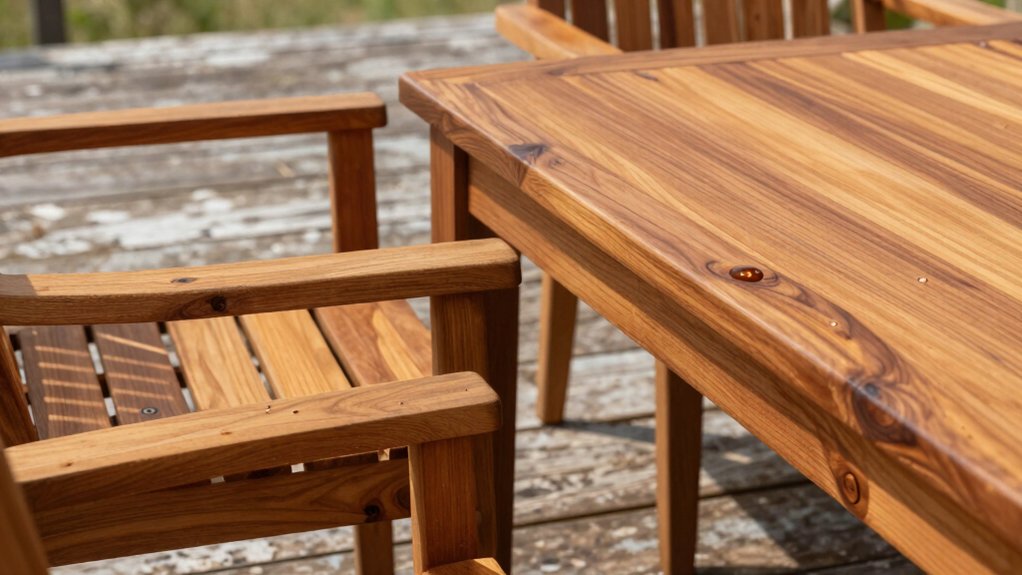
Choosing the right finish hinges on climate realities and the look you want, because the finish must protect teak while enhancing its grain. You select a finish based on humidity, temperature swings, and UV exposure, then pair it with your desired aesthetic.
For high-UV environments, choose a film-forming sealant with strong weather resistance to limit graying and surface checking. If you prefer a more natural look, opt for penetrating oils that emphasize grain without forming a bulky film, though they require more frequent reapplication in sun-drenched zones.
In coastal or humid locales, prioritize water resistance and mold resistance, using finishes with fungicides or proven mildew control. Balance maintenance intervals with appearance goals to achieve reliable weather performance and consistent aesthetic enhancement over time.
Frequently Asked Questions
How Long Does Each Finish Last Outdoors on Teak Furniture?
A finish lasts about 1–3 years outdoors on teak, depending on exposure. With wood stain, recoat every season or two; protective coating may extend to 2–5 years. You’ll maintain color and UV protection with regular inspections.
Can Finishes Affect Teak’s Natural Aging Patina?
Finish applications can alter teak’s aging patina by slightly toning color and sealing grain; teak color enhancement occurs with cautious finish application techniques that protect surface while preserving natural aging cues you expect to see.
Are There Eco-Friendly Finishes Suitable for Teak?
Yes, you can use eco friendly options like low-VOC finishes, and natural sealants to protect teak. You’ll seal the wood responsibly, minimize fumes, and maintain color and breathability with practical, technical application steps.
Do Finishes Require Sanding Between Coats for Teak?
Yes, you should sand between coats to guarantee finish adhesion. Start with a fine grit, maintain a consistent sanding process, then wipe clean—coatings love a smooth surface, and the coincidence of prep and adhesion boosts durability.
Which Finish Resists UV Fading Best on Teak?
You’ll want a finish with strong UV protection and water resistance, like a high-quality penetrating oil or a polyurethane with UV blockers. It resists fading best when you maintain reapplications and keep surfaces clean and dry.