Think of renovation risk as a widening fault line beneath your project. You’re exposed not just to fires or theft, but to soft costs, gaps in cover for temporary structures, and contractor delays that standard buildings insurance often misses. If you’re counting on buildings cover alone, you could be leaving vital financial cushions on the table. So, how do you lift the lid on your policy and decide what extra protection you actually need? Let’s discuss.
Understanding Renovation Insurance: What It Covers
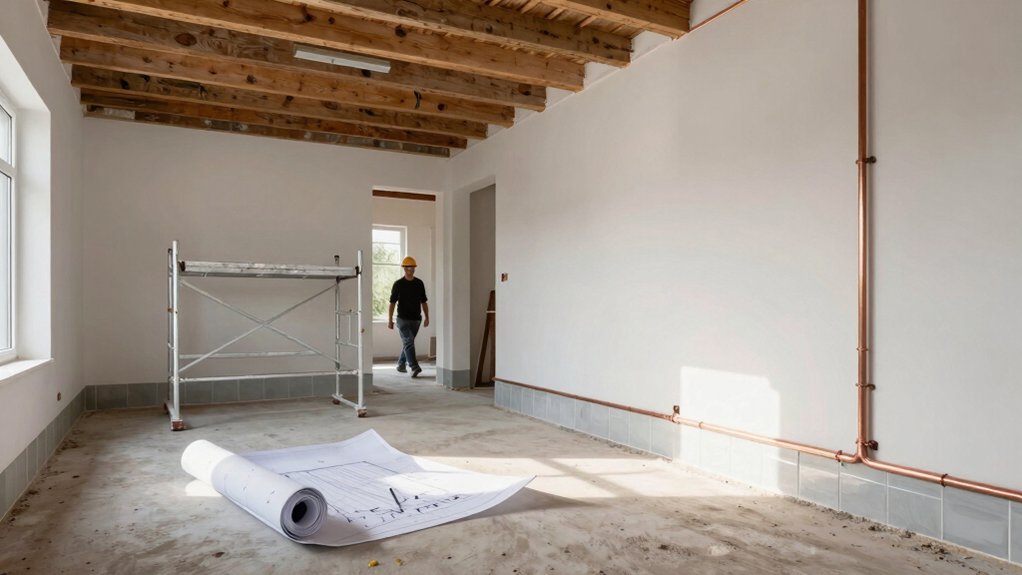
Renovation insurance protects you from financial exposure when remodeling projects go off plan. You’ll gain clarity on coverages that specifically address project risks, not generic property protections.
You’ll see that most policies bundle essential elements: builder’s risk for materials and structure, public liability for third-party claims, and employers’ liability if you supervise workers. You’ll also encounter extensions for subsidence, theft during construction, and accidental damage to undamaged adjacent property.
The policy defines limits per event and aggregate annual caps, with deductibles that influence cost-effectiveness. You’ll want data on incident rates, average repair costs, and failure-to-complete penalties to evaluate resilience.
You’ll compare exclusions—soil instability, preexisting defects, and design errors—against your risk profile to avoid gaps that could spike out-of-pocket expenses.
How Renovation Insurance Differs From Standard Buildings Cover
Unlike standard buildings cover, renovation insurance is purpose-built for project-specific risks, not just property protection. You’re managing a temporary, evolving site, so your policy must capture delays, design changes, and contractor gaps that standard cover misses.
Renovation policies include builder’s risk elements, soft costs, and time-related extensions that reflect project timetables and potential stoppages, rather than only replacement value. You’ll see more granular triggers, like escalation clauses, supply-chain disruption, and on-site safety incidents, which standard policies often fail to quantify.
Data shows higher claim frequency for change orders and material shortages during renovations, with accompanying financial drag if not covered. By focusing on these risk profiles, renovation insurance reduces exposure to incremental costs and preserves project viability when unexpected events occur.
Common Gaps in Coverage During Renovations
Hidden gaps in coverage during renovations can quietly derail a project, especially when delays, design changes, and contractor gaps aren’t priced in upfront. You’ll encounter policy blind spots that leave you exposed to project delays, material substitutions, and supervisor errors.
Standard buildings cover often excludes temporary structures, demolition debris, and unpermitted work, yet these occur routinely in renovations. You may assume coverage for equipment breakdown applies to specialized tools, but not to rented gear or leased modules on site.
Salvage rights, debris removal limits, and valuation disputes crop up when project scope expands. Also, perimeters around builder’s risk endorsements can cap geographical or time-bound protections, masking ongoing exposure.
A data-driven review reveals unforecasted subcontractor changes consistently drive cost overruns without explicit coverage.
When to Consider Additional Insurance for Your Project
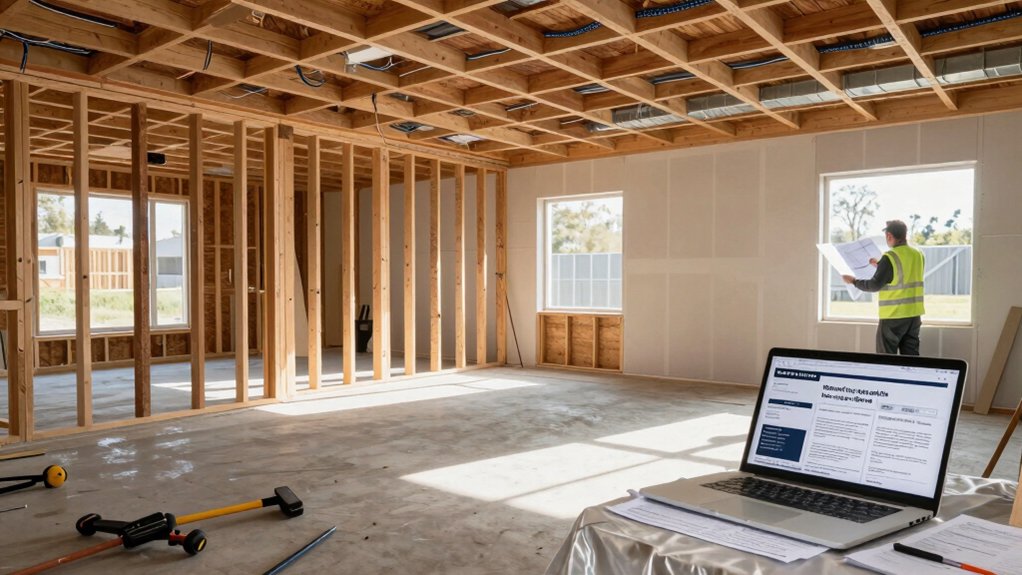
There comes a point when the risk landscape shifts enough to justify extra coverage: as project scope expands, delays accumulate, or subcontractor changes outpace your initial estimates. You’ll want to consider additional insurance when exposure rises beyond standard limits, when value at risk grows, or when critical milestones involve third-party dependencies.
Data suggests incremental risk escalates nonlinearly as trades overlap and site density increases, making single-policy shield insufficient. If you’re using high-value materials, complex structural work, or temporary works, add layers like builders’ risk or umbrella cover to close gaps in financial protection.
Evaluate loss scenarios—fire, theft, weather, and liability—and quantify potential gaps. Your decision should balance marginal premium costs against the probability and magnitude of covered losses. Plan for contingencies before they materialize.
Practical Steps to Evaluate Your Policy Needs
To determine your policy needs, start with a clear inventory of project risks and financial exposure. You’ll map potential loss scenarios, quantify cost impacts, and identify gaps in current coverage. Gather data on construction timelines, subcontractor reliability, material value, and environmental hazards; translate each factor into a deductible, limit, or endorsement decision.
Assess historical claims, near-misses, and incident frequencies to calibrate risk thresholds you won’t exceed. Compare insurer definitions of “peril” and “cause of loss” against your project specifics, and test worst-case outcomes with sensitivity analysis.
Prioritize policies that address uncovered gaps, sublimits, and aggregate limits across phases. Document rationales for each recommended adjustment, and secure written confirmations from your insurer about endorsements, exclusions, and trigger conditions before finalizing the policy mix.
Frequently Asked Questions
Do Existing Builders’ Risk Policies Cover Subcontractor Mistakes?
Yes, they generally cover subcontractor mistakes if named or added as insureds, but limits and exclusions vary; verify subcontractor risk endorsements, coverage triggers, and rescue costs, and require contractor-supplier warranties to ensure extensive protection and minimize exposure.
How Does Renovation Liability Differ From Homeowner Liability?
You’re exposed to different risks: renovation liability targets project-specific damages, while homeowner liability covers personal property and premises. You’ll need tighter limits for renovations, because construction sites magnify exposure, subcontractors increase risk, and uninsured gaps hurt your finances.
Are Temporary Structures and Storage On-Site Insured?
Temporary structures and on-site storage aren’t automatically insured; verify coverage limits, exclusions, and deductibles. You should confirm with your insurer, document contents, and implement security; otherwise, a loss could exceed policy scope, risking substantial out-of-pocket costs.
Will Renovations Affect My Existing Home Insurance Premiums?
Renovations can raise premiums because insurers see higher risk from construction, liability, and theft. You’ll likely face rate increases, possible coverage gaps, and stricter policy terms; compare quotes, disclose project details, and implement protections to minimize cost impact.
Should I Insure Workmanship, Design Defects, or Both?
You should insure both workmanship and design defects, since defects can arise from either phase. Data shows joint coverage lowers out-of-pocket costs, reduces gaps, and better protects you against contractor shortfalls or faulty plans, insurance gaps, and third-party claims.