You’ll notice a coincidence: the same fence you choose for privacy may also define maintenance costs, but the path to long life isn’t the same for every option. In this discussion, you’ll weigh cost per metre across timber, metal, vinyl and PVC, and composite as you consider durability. Each choice trades upfront price for longevity differently, so you’ll want clear comparisons. Stay with us as we outline what lasts longest and why the total cost matters.
Cost Per Metre: Timber Fencing
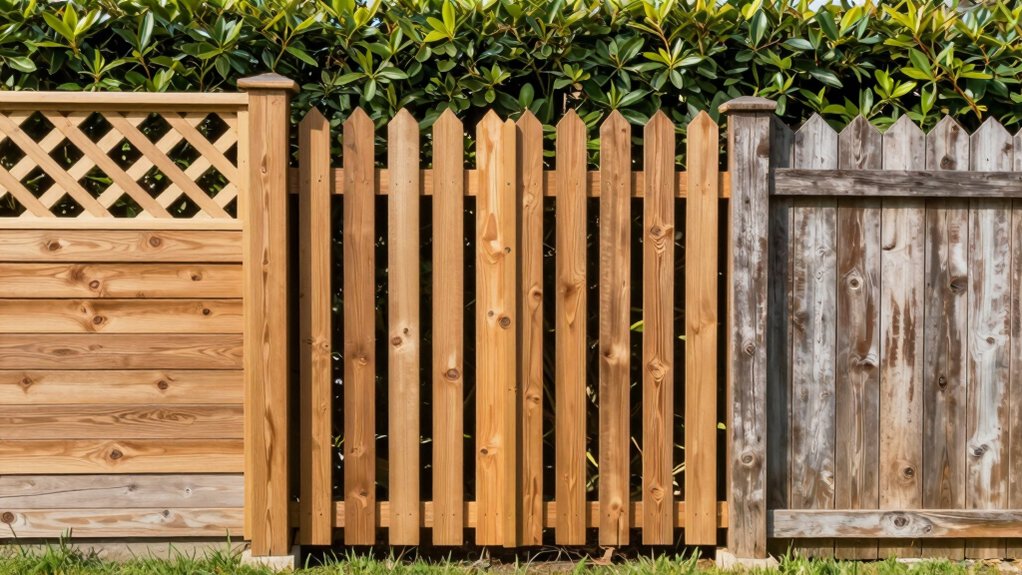
Estimating the cost per metre for timber fencing involves considering material grade, rail count, and treatment. You assess grade to determine board density, defect tolerance, and finish quality, which directly affects price.
Rail count dictates structural support; more rails raise material and fastening costs while increasing rigidity.
Treatment choices—pressure treatment, kiln-drying, or naturally durable species—modify longevity and maintenance cycles, influencing long-term expenditure.
Width and gate provisions alter linear metre cost through waste, sizing, and hardware needs.
Fastening and posts contribute additional, discrete costs, including concrete or compacted ballast.
You’ll encounter trade-offs between lower upfront price and higher maintenance over time.
Calculate with current timber prices, factoring seasonal variation and supplier margins.
Use standardized measurements, avoid wood waste, and document assumptions for transparent budgeting.
Cost Per Metre: Metal Fencing
What’s the typical cost per metre for metal fencing, and what factors drive it? Metal fencing costs hinge on material type, gauge or thickness, and finish, plus installation specifics.
Steel panels or wrought iron provide strength and longevity but incur higher upfront prices, while aluminum offers lighter weight and corrosion resistance at a moderate premium.
Finishes—galvanized, powder-coated, or protective coatings—alter maintenance needs and long‑term cost.
Panel height, gap size, and decorative elements add to labour and material quantities.
Substructure requirements, such as concrete footings or soil conditions, influence installation complexity and timing.
Access for machinery, security features, and local permit fees also affect the per‑metre rate.
Cost Per Metre: Vinyl and PVC Fencing
Vinyl and PVC fencing costs per metre are typically driven by material formulation, profile thickness, panel height, and finishing options. You’ll see price variation reflect PVC resin quality, UV stabilizers, and color or texture treatments, which influence long-term performance and maintenance needs.
Profile thickness contributes to structural rigidity and impact resistance, directly affecting per‑metre cost. Panel height determines material area and reinforcement requirements, with taller panels incurring higher material and fabrication expenses.
Finishing options, such as embossed textures, wood-grain finishes, or extra coatings, add upfront cost but can reduce maintenance bills over time. Installation complexity, including post spacing and grip‑cap or rail designs, also shifts price per metre.
Cost Per Metre: Composite and Mix Materials
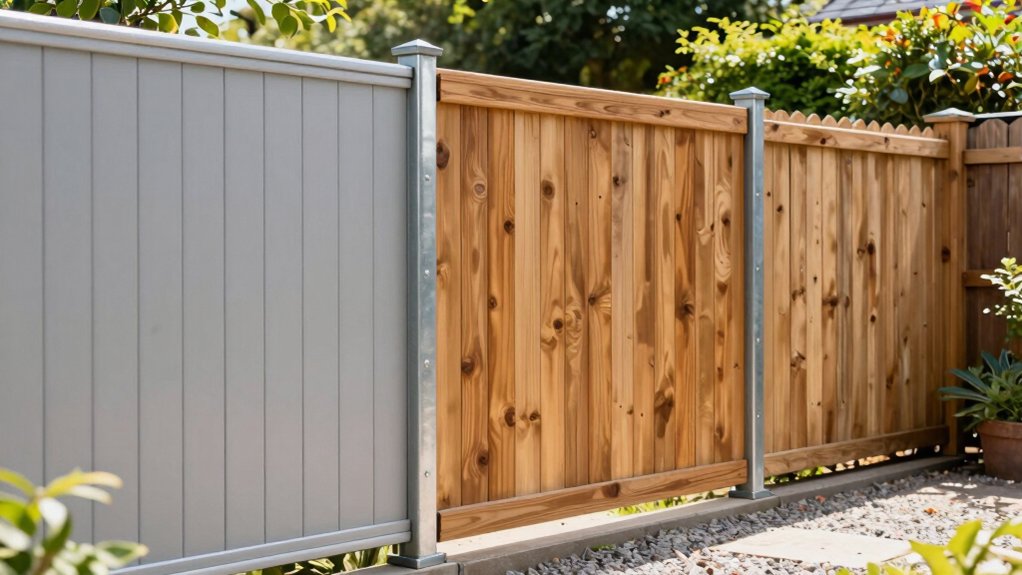
Composite and mix-material fencing, by design, blends wood fibers, plastics, and sometimes metal reinforcements to achieve balanced strength, durability, and aesthetic options. Per‑metre cost reflects the resin type, fiber content, blend ratio, and added weatherproofing treated surfaces.
You’ll encounter variability from formulation: higher polymer content generally increases cost but improves moisture resistance and dimensional stability. Material stiffness, surface finish, and color options also influence price, with textured or embossed finishes commanding premiums.
Processing methods—extrusion versus compression molding—alter production efficiency and waste, impacting unit cost. Additives such as UV stabilizers and anti-rot agents raise base expense but extend service life.
Installation hardware, post spacing, and insulation features can shift overall per‑metre pricing. When budgeting, compare manufacturers’ warranty terms and recyclability to assess long‑term value.
Durability and Longevity: Which Fences Last the Longest
Durability and longevity hinge on material resistance to moisture, temperature fluctuations, and mechanical wear, as well as fencing system design. You evaluate how different fences respond to rain, sun, and freeze-thaw cycles, then consider joinery, fasteners, and panel connections.
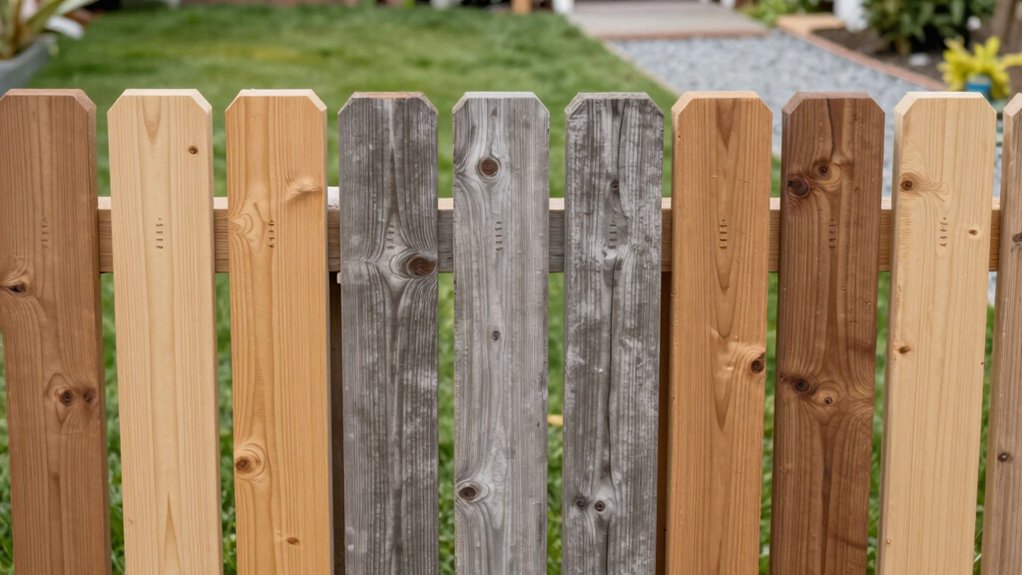
Timber fences, if untreated, absorb moisture and may warp; treated or hardwood varieties resist decay better but can suffer from checking or surface wear. Vinyl systems resist moisture and UV degradation but may crack under impact or poor foundation. Metal fences offer high rigidity but risk corrosion without protective coatings; powder-coated steel or aluminum perform well with low maintenance.
Composite options balance moisture resistance with reduced expansion. Correct installation—proper footings, drainage, and bracing—prolongs service life. Choose based on environmental exposure, load demands, and maintenance tolerance.
Frequently Asked Questions
How Do Installation Costs Vary by Region?
Regional installation costs vary by labor rates, permits, and travel; you’ll see higher prices in urban areas and lower ones in rural zones, with material delivery fees and project complexity sometimes widening gaps between regions.
What Maintenance Is Required Yearly for Each Fence Type?
You’ll need yearly maintenance based on fence type: wood requires sealing, staining, and rot checks; vinyl needs cleaning and joint inspections; metal fences demand rust prevention, coating touch-ups, and hinge/latch lubrication; composites combine minimal upkeep with periodic cleaning.
Are There Eco-Friendly Fencing Options Available?
Eco-friendly fencing options exist: recycled plastic, FSC-certified timber, bamboo, and metal alloys with recycled content. You can select low-emission coatings, renewable-wood finishes, and longevity-focused designs to minimize environmental impact while maintaining durability and function.
Do Fence Choices Impact Property Resale Value?
Yes, fence choices impact resale value; you’ll boost appeal with durable materials, cohesive design, and maintained standards, while avoiding mismatched styles or poor installation, which can depreciate perceived quality and deter potential buyers.
How Do Warranty Lengths Differ by Material?
Warranty lengths differ by material: metal often 20–25 years, vinyl 20–40 years, wood 10–15 years, composite 25–30 years, and treated timber around 15–20 years. You’ll want longer coverage for metals and composites.