There’s a theory that dye and stain yield the same final look on concrete, but evidence suggests they behave differently under finishing conditions. You’ll find dye penetrates for a uniform, flat tone, while stain reacts with the cement matrix to create depth and variegation. The choice affects durability, maintenance, and how you control texture, so you’ll want to weigh the trade-offs before you commit to either path. The next detail could change your approach entirely.
How Dye and Stain Work on Concrete
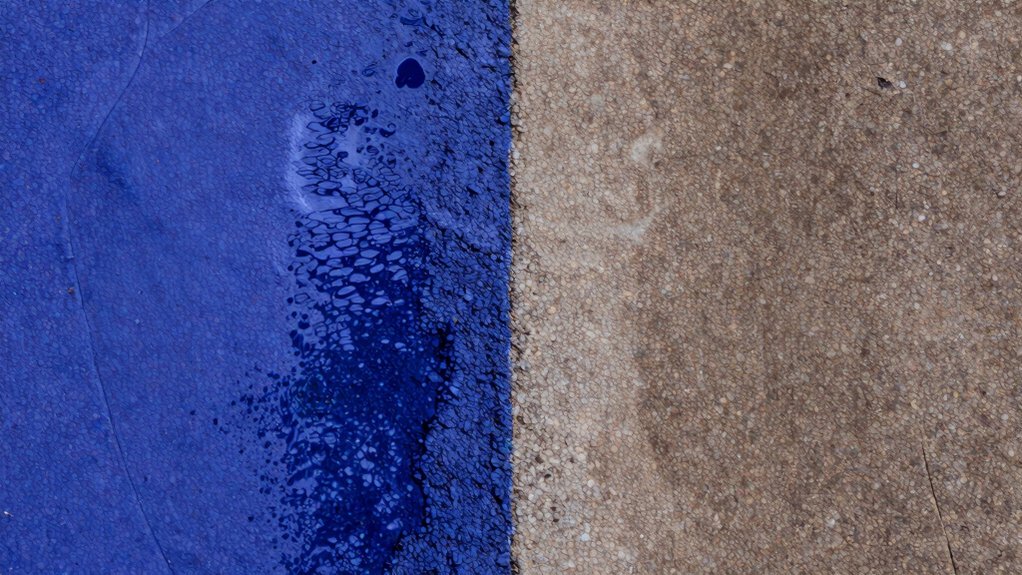
Concrete dye and stain interact with concrete differently, yielding distinct visual and structural effects. You apply dye to porous surfaces, where color particles penetrate capillaries and bind with mineral substrates. This creates uniform tone across the matrix, with shallow saturation and minimal surface alteration.
Stain relies on chemical reactions that alter the concrete’s color pigments, often via water-based or solvent carriers, producing color depth through resistance to wiping and leaching. You’ll notice dye offers rapid, even coloration but limited depth, whereas stain yields variable hues tied to porosity and texture.
Control is achieved by surface preparation, moisture management, and carrier selection. You must monitor cure state, penetration rate, and sealer compatibility to guarantee color stability, adhesion, and long-term performance.
Visual Differences: Uniform Color Vs Depth and Texture
Dye provides a uniform color that saturates the surface evenly, while stain reveals depth and variation tied to the concrete’s porosity and texture. You observe dye’s flat, consistent appearance across irregularities, producing a homogeneous field without visible grain.
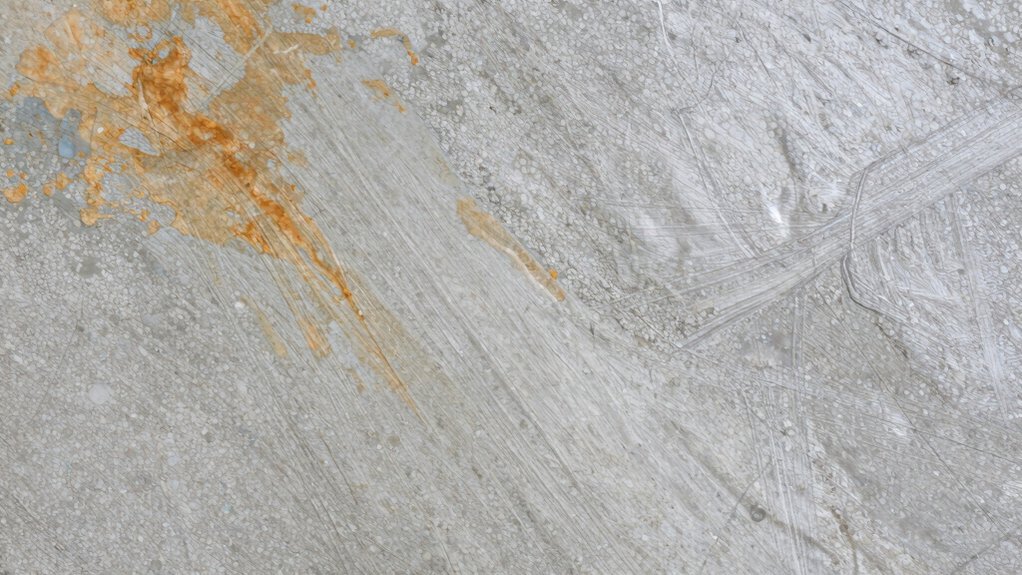
Staining, by contrast, accents microstructure; color depth increases where pores and capillaries are more receptive, creating varied tonal shifts and inherent directional patterns. The result for dye is predictability: a single hue with minimal pedestrian variation, suitable for corporate or tiled aesthetics.
Stain offers nuance: color density follows surface topology, yielding a richer, more tactile impression that suggests slip-resistant texture and natural aging. When evaluating visuals, consider whether a uniform, controlled finish or a responsive, textured appearance aligns with your project goals and lighting conditions.
Durability and Maintenance Compared
Durability and maintenance hinges on how each treatment interacts with wear, stains, and cleaning routines. You’ll evaluate abrasion resistance, chemical tolerance, and color stability to project long-term performance.
Concrete dye generally provides color through surface penetration with limited film formation, so it often offers decent UV and sweep wear resistance but can be less forgiving with heavy churning traffic or aggressive cleaners.
Concrete stain tends to rely on pigment or bound color within a sealer layer, yielding improved resilience to staining and easier touch-ups. Yet, potential sealer degradation can influence longevity.
Maintenance requires you to follow manufacturer guidelines for cleaning agents, pH, and frequency.
In practice, ductile sealing cycles, periodic resealing, and timely stain or dye reapplication determine sustained appearance and protection.
Best Applications for Dye
Although dye delivers color primarily through surface penetration with limited film formation, it excels in applications demanding uniform, subtle coloration over large areas where surface texture must remain tactile.
You should consider dyes for floors and exterior slabs with minor surface irregularities, where uniform shade is prioritized over high contrast. They perform best on dense, non-porous or semi-porous substrates after proper preparation, including cleaning and moisture assessment.
Use dye when you require fast color development with minimal modification to texture, such as office lobbies, retail aisles, or light industrial bays. Apply evenly in controlled coats to prevent banding, and seal promptly to stabilize color and enhance resilience.
Avoid heavy foot traffic or chemical exposure during cure, and document color consistency across batches.
Best Applications for Stain
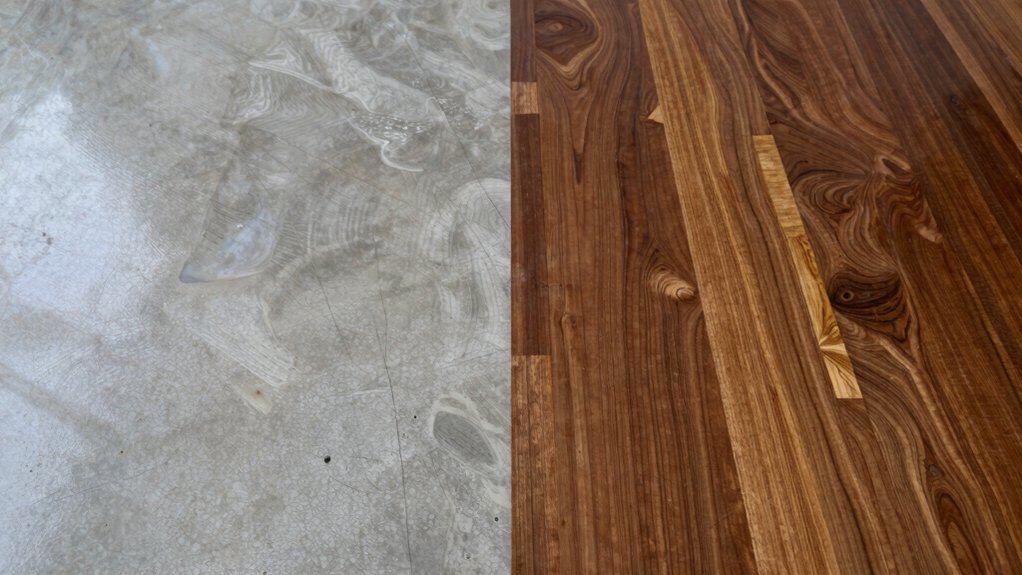
Stain is best suited for penetrating color with variable depth, delivering richer, more textured tones that highlight surface patterns and imperfections. You select stain when you want natural, variegated color with subtle shifts that mimic aged concrete.
It performs well on porous substrates, including masonry, and tolerates surface irregularities without masking them. Use stain to accentuate sawcuts, aggregate, or decorative textures, as the color follows the concrete’s microstructure for depth.
Expect slower, pigment-based penetration that reveals grain-like variation rather than uniform coating. For exterior applications, choose U.V.-stable formulations and allow adequate curing before sealing.
Compatibility with existing finishes matters; test adhesion on small areas first. Stain excels in controlled, architectural color goals where honesty of material comes through.
Practical Tips for Application and Longevity
When applying stain, follow a methodical process to maximize color uniformity and longevity. Begin with a clean, properly prepared surface—remove dust, oil, and sealers, and ensure pores are open with a light sanding.
Pre-wet porous concrete to minimize suction differences, but avoid pooling. Choose compatible products; confirm stain compatibility with your substrate and existing sealer.
Apply in controlled, consistent coats using a timed back-roll or squeegee method to maintain even coverage, avoiding lap marks. Work in small, manageable sections; maintain a wet edge to prevent streaking.
Allow sufficient curing time between coats; adhere to manufacturer guidelines for temperature, humidity, and ventilation. After final cure, seal with a compatible topcoat to enhance color longevity and dirt resistance.
Monitor wear areas and recoat as needed.
Conclusion
So, you’ve weighed dye’s uniform, controlled color against stain’s depth-born variation, and you’re ready to choose. Dye delivers consistent hue with minimal surface alteration, while stain reveals texture through chemical reactions for a rich, variegated finish. Durability hinges on proper sealing and maintenance; preparation matters as much as the pigment. Which approach best matches your project’s environment and desired character, and can you commit to the necessary sealing regimen for lasting impact? Your concrete’s future starts with this choice.