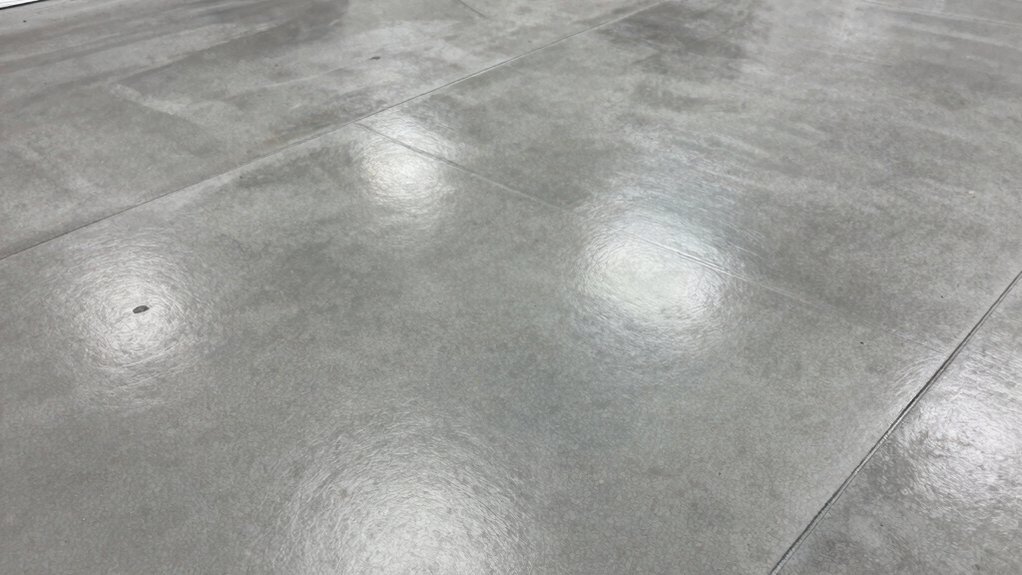
Concrete coatings offer a precise path to durability and appearance, from epoxies to cementitious blends. You’ll evaluate adhesion, chemical resistance, and exposure to UV or abrasion, then match systems to load, climate, and maintenance needs. Surface prep and proper curing govern performance, so the selection isn’t just about color or texture. As you weigh solutions, consider installation timing, long-term upkeep, and how a coating can redefine service life—a decision with concrete implications.
Types of Concrete Coatings
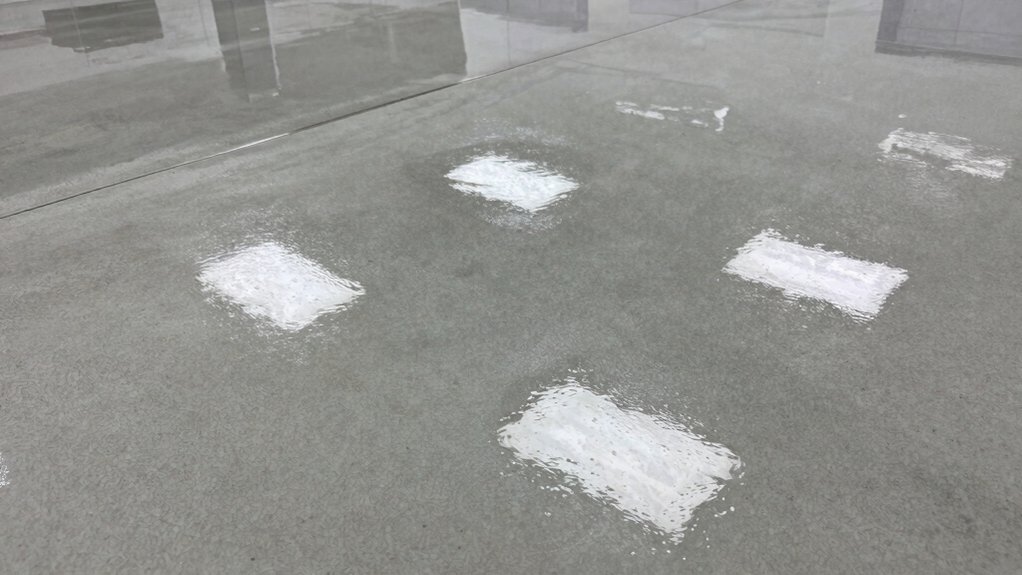
Concrete coatings come in several distinct families, each designed for specific performance goals and environments. You’ll encounter epoxy, polyurethane, acrylic, cementitious, and metallic systems, selected by substrate compatibility, chemical exposure, and floor traffic.
Epoxies deliver high bond strength, excellent chemical resistance, and rigid film formation, but can yellow under UV and may be brittle in cold conditions.
Polyurethanes offer UV stability and flexibility, reducing crack transmission, yet they can be more sensitive to moisture during cure.
Acrylics provide rapid cure and UV resistance for decorative or temporary uses, with moderate chemical tolerance.
Cementitious coatings fuse with concrete, offering seamless durability and breathability, though installation demands surface preparation.
Metallic coatings, including decorative tungsten and aluminum blends, yield unique aesthetics with specialized maintenance requirements.
Choose by performance envelope, maintenance expectations, and service life.
How Epoxy Coatings Work
Epoxy systems rely on resin and hardener chemistry that react to form a crosslinked network. This process starts with the resin’s functional groups and the hardener’s curing agents.
You’ll see bonding mechanisms at the substrate, filler interactions, and surface energy considerations that influence adhesion and cohesion.
Curing is shaped by temperature, mix ratios, and environmental conditions, which together control the kinetics and final mechanical properties.
Epoxy Chemistry Basics
Epoxy coatings form a robust, two-part system where a resin and a hardener react to create a cross-linked polymer network that bonds to concrete surfaces. In this chemistry, resin components (typically epoxide functional groups) undergo nucleophilic opening when the hardener’s amine or anhydride groups are present, forming a durable, three-dimensional matrix.
The reaction progresses through controlled curing stages: an initial rapid cross-linking phase followed by slower network tightening, which defines mechanical properties and chemical resistance. Curing is temperature-dependent and sensitive to moisture; air entrainment and volatile byproducts influence film integrity.
Thorough mixing guarantees uniform stoichiometry, minimizes voids, and prevents phase separation. The resulting network provides adhesion, hardness, and barrier performance, while residuals or incomplete curing can compromise durability.
Bonding Mechanisms
Bonding mechanisms in epoxy coatings result from a combination of chemical adhesion and physical adhesion to the concrete substrate. You analyze how chemical bonds form between resin functional groups and reactive sites on the substrate, creating durable molecular connections that resist shear and peel.
You also evaluate physical adhesion, where surface roughness, micro-roughness, and capillary action promote mechanical interlock and wetting, enhancing layer stability. You consider the role of surface energy, moisture levels, and substrate cleanliness in optimizing wetting and early film formation.
You recognize that interphase chemistry governs long-term performance, while topography influences initial bonding strength. You quantify adhesion through standardized tests, compare substrate conditions, and identify factors that minimize debonding risk without invoking curing process factors.
Curing Process Factors
Curing process factors considerably influence how epoxy coatings develop their final properties, governing network formation, crosslink density, and early mechanical performance. You evaluate temperature, humidity, and ambient conditions as they set reaction kinetics and viscosity.
Elevated temperatures accelerate cure, reduce gel time, and promote denser crosslinking, but they can induce shrinkage stresses if temperatures exceed substrate tolerance. Humidity influences moisture ingress, potentially creating air-voids and compromising adhesion during early stages. Resin-to-hardener ratio accuracy controls stoichiometry, affecting network uniformity and cohesive strength.
Pot life and pot life management determine mixing stability and placement windows, while substrate surface energy dictates wetting and bonding initiation. You monitor curing progression through differential scanning and tack measurements, correlating cure state with hardness, modulus, and barrier performance to ensure long-term durability.
Benefits of Polyaspartic Coatings
Polyaspartic coatings offer several advantages that translate into longer service life and lower total cost of ownership. You’ll experience rapid cures at room temperatures, enabling faster project turnover and reduced downtime.
The system delivers high early strength, minimizing joint movement and slip hazards during installation. You’ll benefit from exceptional abrasion and chemical resistance, preserving surface integrity under constant traffic and exposure to cleaners or solvents.
Color stability and UV resistance help maintain appearance and performance in outdoor or exposed environments. The coating’s thin profile minimizes substrate weight load while maintaining protective thickness, enabling compatibility with existing floor systems.
You’ll find low odor and solvent content reduce safety concerns and ventilation requirements. Long-term maintenance averages lower, thanks to extended interval intervals between recoats and fewer restoration cycles.
Decorative Overlays and Aesthetic Options
Decorative overlays and aesthetic options build on the durable performance of polyaspartic systems by adding tailored visuals and textures without compromising wear resistance. You select patterns, colors, and textures to align with functional requirements and branding, then apply consistent film thickness to preserve protective properties.
You evaluate aggregate size, decorative pigments, and gloss, balancing slip resistance with traction under foot traffic and equipment movement. You optimize cure times and cure temperatures to minimize color shifts and ensure adhesion to existing substrates.
You review UV stability and chemical resistance to uphold appearance in exposure conditions while maintaining cleanability. You document maintenance intervals, cleaning agents, and recoating schedules to sustain aesthetic integrity without degrading protective performance.
Surface Preparation and Installation Basics
You’ll begin with rigorous surface cleaning to remove contaminants that hinder adhesion, selecting methods suited to substrate type and condition.
Bonding prep techniques must be tailored to material compatibility, residual moisture, and surface profile to guarantee consistent interlayer bonding.
Apply best practices with controlled conditions, documenting procedure parameters and verification criteria to guide subsequent coatings and performance outcomes.
Surface Cleaning Methods
Surface cleaning is the essential first step in surface preparation and installation, guaranteeing all contaminants are removed before coating application; this minimizes adhesion failures and prolongs life.
You evaluate substrate type, contamination level, and tooling compatibility to select methods that preserve substrate integrity.
Mechanical methods, like shot blasting or scarifying, expose a clean surface profile while controlling dust and debris.
Chemical cleaners target oils, greases, and efflorescence without altering substrate chemistry; assure rinsing compatibility and complete removal of residues.
Pressure washing combines mechanical force with hot or chemical assist to remove stubborn soils, followed by thorough drying to prevent trapping moisture.
Moisture meters verify dryness before coating; if damp, delay application or implement dehumidification.
Document process parameters, verify surface cleanliness post-cleaning, and maintain containment to minimize environmental impact.
Bonding Prep Techniques
Bonding prep techniques combine surface readiness with substrate compatibility to guarantee adhesive performance and long-term coating integrity. You assess substrate porosity, chemistry, and moisture history to determine the appropriate profile and cleaners before adhesive selection.
You verify surface cleanliness through targeted tests, ensuring there’s no residual dust, oils, or contaminants that could hinder bonding.
You control moisture at the interface by performing moisture vapor transmission checks and, if needed, implement drying or sealing steps to achieve a stable substrate surface.
You select compatible primers or bonding agents, applying them per manufacturer guidelines to establish a uniform, defect-free bond line.
You document substrate conditions, prep methods, and cure windows, enabling traceability and repeatable results.
You avoid proceeding with installation until static and dynamic requirements align with system specifications.
Application Best Practices
With a prepared substrate in mind, you now implement the chosen surface-treatment and bonding plan, verifying that prep cleanliness, moisture control, and primer application align with system specifications before any installation proceeds.
You perform final surface checks: pull-off tests, edge porosity assessment, and uniformity of the prepared profile.
Maintain ambient and substrate temperatures within the specified range to guarantee optimal cure kinetics, and confirm that humidity remains below the product limits to prevent bond compromise.
Apply resin or coating in accordance with manufacturer guidelines, controlling mix ratios, pot life, and application rate to achieve the designed thickness and coverage.
Use appropriate tooling and protection for joints and transitions, then inspect for pinholes, overlap consistency, and cure progression, documenting deviations and corrective actions for traceability.
Maintenance and Longevity Tips
To maximize longevity, establish a proactive maintenance schedule that targets the concrete coating’s protective layers and substrate. You should document coating thickness, cure history, and ambient conditions during installation, then align inspections accordingly.
Regular surface cleaning with low-pressure water and nonharsh detergents prevents residue buildup that can impede adhesion or trap contaminants. Avoid abrasive tools that could scratch the film; instead, use soft brushes or pads and inspect for microcracking, delamination, or gloss loss.
Monitor humidity and temperature to prevent curing stress and ensure timely repairs. Schedule re-coating or touch-ups when substrate porosity shifts or coating cohesion declines.
Record all maintenance actions, material batches, and failure modes to refine formulations and application methods, minimizing downtime and extending service life through data-driven decisions.
Applications for Different Spaces
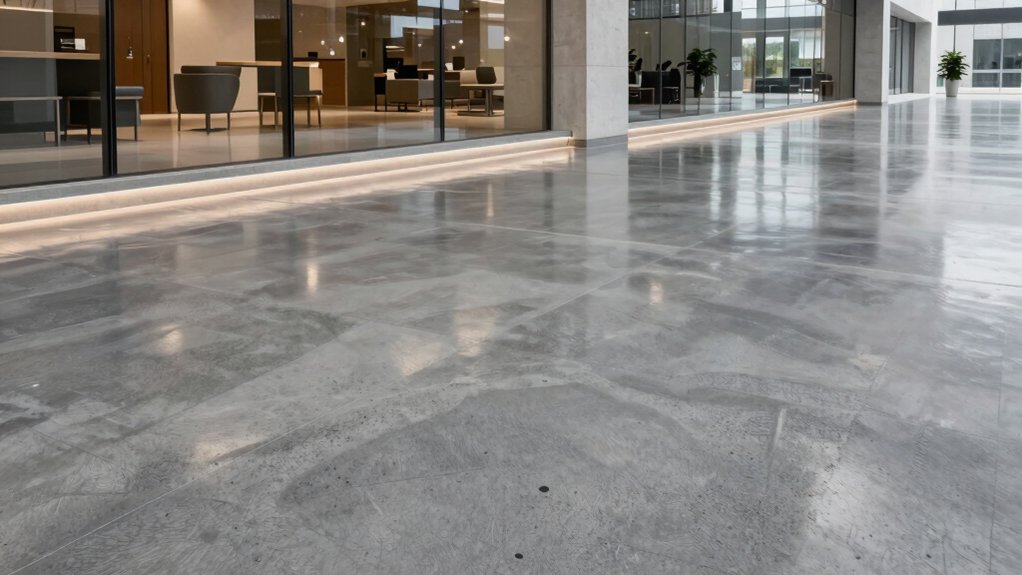
Concrete coatings must be matched to functional demands and environmental conditions across spaces, as performance varies with foot traffic, chemical exposure, and moisture levels. In this section, you assess how traffic profiles shape surface choice, wear resistance, and maintenance schedules.
For industrial floors, you prioritize abrasion resistance, chemical compatibility, and slip resistance to minimize downtime. In commercial foyers or retail zones, you weigh aesthetic flexibility against durable long-term appearance, selecting seamless systems with low porosity and easy cleaning.
Healthcare and food-service environments demand hygienic surfaces, elevated cleanability, and resistance to cleaners, with validated sanitization compatibility.
Parking decks require moisture management, UV stability, and crack-bridging capabilities to accommodate temperature swings.
Home, garage, and workshop applications favor practicality, cure speed, and cost-effectiveness without compromising safety.
Choosing the Right System for Your Project
Selecting the most suitable coating system begins with a focused needs assessment: determine the floor’s functional demands, environmental exposure, and maintenance expectations. You then categorize service conditions by traffic, chemical exposure, temperature range, and moisture management.
Next, evaluate substrate integrity, cure requirements, and remediation needs, as poor preparation compromises longevity. Match system heritage to performance targets: adhesion, abrasion resistance, chemical resistance, and containment of VOCs and odor.
Choose a polymer class—epoxy, polyurethane, vinyl ester, or polyaspartic—based on cure time, finish, and slip resistance, ensuring compatibility with primers, broadcast textures, and topcoats. Consider installation logistics: ambient conditions, cure windows, and downtime.
Finally, verify long-term maintenance implications, warranty coverage, and lifecycle costs to ensure predictable performance and minimal disruption.
Conclusion
Concrete coatings protect, perform, and endure when you choose the right system and prep properly. Think of it like building a shielded highway: a well-graded base, proper adhesion, and the right coating ensure smooth, durable traffic under varying loads. For instance, a facility that adopted fusion-bonded epoxy followed by a polyurethane topcoat saw 30% fewer maintenance calls in a year. Precision in selection, prep, and application yields long-term reliability and cost savings.