
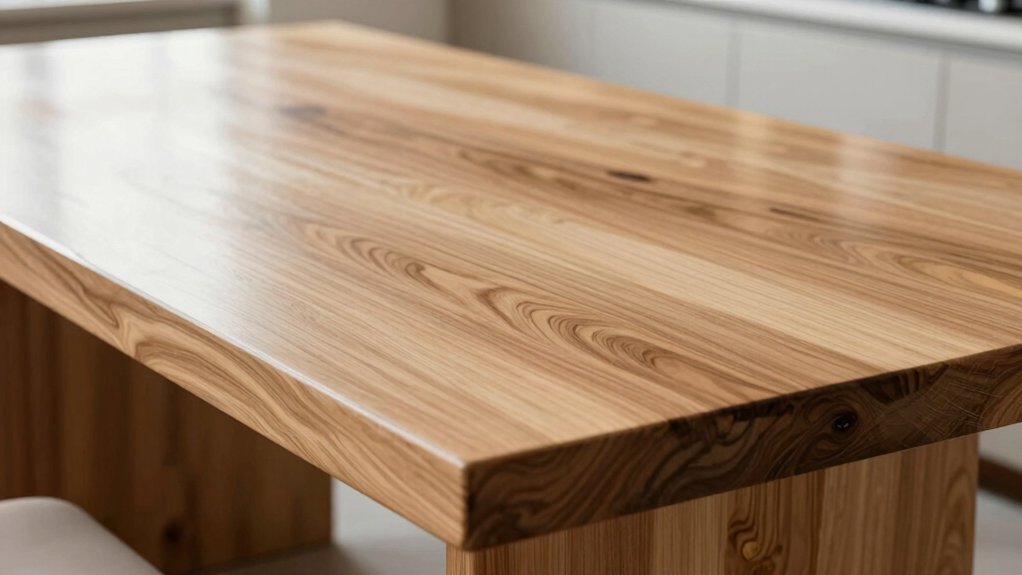
For a kitchen table, you want a finish that’s durable, easy to clean, and resistant to heat, spills, and utensil wear while showing your wood’s character. Polyurethane delivers strong protection against moisture and scratches, oil gives a natural look but needs more upkeep, and wax adds warmth with lighter protection. Match the sheen to your style, test samples, and apply thin coats with the grain. Regular maintenance and timely reapplication keep it looking pristine, and you’ll uncover more tips ahead.
Factors to Consider When Choosing a Kitchen Table Finish
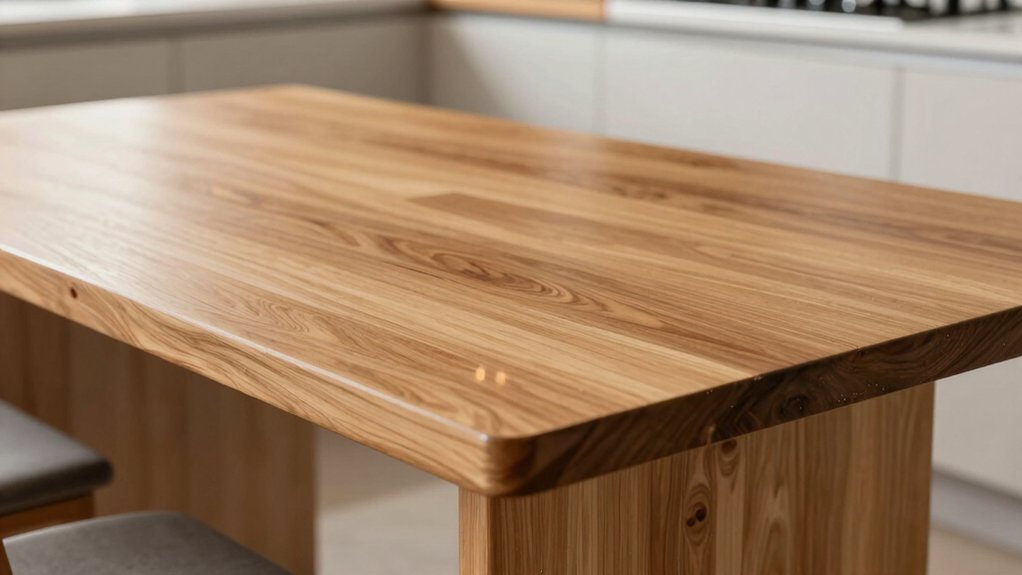
Choosing a kitchen table finish isn’t just about looks; it’s about durability, maintenance, and how the finish stands up to daily use. When you choose, assess how the table edge will interact with spills and knives, and whether the edge profile demands extra protection.
Consider color enhancement, since a finish can deepen or mute wood tone, affecting overall harmony with your cabinets and countertop. Ask about wear patterns in your space: high traffic, kids, and frequent wiping require a resilient film and ease of reapplication.
Check drying time, touch-up options, and whether the finish resists staining. Balance aesthetics with practicality: gloss can reveal scratches, while satin hides them. Prioritize a finish that tolerates heat, moisture, and cleaning agents without altering color or texture.
Water-Resistance and Durability: Which Finish Stands Up to a Busy Kitchen?
If your kitchen sees spills, splashes, and steam, you need a finish that resists water and daily wear. Durability hinges on how well the finish seals the surface and tolerates heat, moisture, and abrasion from utensils. Look for hard-wearing, film-forming options that cure to a tough, water-resistant layer and resist staining.
In practice, you’ll favor finishes with higher solids and scientifically proven durability, applied in clean, even coats. Eco-friendly options exist, but balance environmental impact with performance and cost. Consider maintenance: easier repairability and periodic reapplication extend life in a busy kitchen.
Cost considerations matter; upfront price vs. long-term replacement costs should factor into your choice. Prioritize a finish that stays intact under regular cleaning and daily use.
Popular Finish Options: Polyurethane, Oil, and Wax
Polyurethane offers standout durability, so you’ll see long-lasting protection that’s easy to wipe down in a busy kitchen.
Oil finishes bring a natural look and feel, but you’ll want to weigh their maintenance needs against durability and wear.
Wax adds a soft luster and extra protection, yet it’s best for light-use areas or as a maintenance topper on top of another finish.
Polyurethane Durability Pros
Polyurethane stands out for durability, resisting scratches and moisture better than most finishes, which makes it a solid choice for high-traffic kitchens. You’ll appreciate its strong protective layer, especially over frequent prep and family use.
This durability comes from a hard, clear film that resists chips and water rings, reducing touch-ups. You’ll also find ease of maintenance: wipe spills promptly, and minor scuffs blend with the finish rather than showing prominently.
Polyurethane sheen options let you tailor gloss to your table’s vibe, from low-sheen for a muted look to high-gloss for a brighter, more modern feel. Finish color options are limited by base tone, but stains or tinted topcoats can achieve a warm or cool undertone without sacrificing protection.
Oil Finish Pros/Cons
Oil finishes offer a warm, natural look and easy touch-ups, but they require more maintenance than polyurethane to resist moisture and stains. This section weighs pros against cons so you can decide if oil is right for you.
Pros include rich color enhancement that deepens wood tone and a softer, hand-rubbed feel that many prefer for tables used daily. The finish cures gradually, so you gain a natural patina over time.
Cons center on maintenance: you must reapply and buff more often to maintain protection, and moisture or heat can threaten durability if you don’t maintain a proper seal.
Ease of repair is a key benefit—scratches thin out, not deeply mar, and you can spot-repair without full refinishing.
Consider environment, usage, and how much upkeep you’ll tolerate.
Wax Protective Qualities
Wax finishes bring a lightweight, natural protective layer that sits neatly atop other coatings. You’ll notice a subtle warm glow and a tactile feel that’s less slippery than polyurethane, yet durable enough for daily use.
A wax finish acts as a protective coating, resisting minor spills and fingerprint marks while allowing easy maintenance. Reapplication is straightforward—buff with a soft cloth to renew the sheen and reinforce the shield.
It’s best on prepared, clean surfaces and benefits from periodic waxing to sustain water resistance. Be aware that wax isn’t highly water-resistant over time, so use a barrier if you expect heavy liquid exposure.
For someone prioritizing touch and ease, wax finish offers simple, dependable protection without complicated upkeep.
How to Match Finish to Your Table Material and Aesthetic
Think about how your table material guides finish choices, pairing smooth woods with clear coats for warmth or using matte stains to highlight grain.
Consider the aesthetic you want—bright and contemporary or rich and traditional—and pick finishes that complement rather than compete with that look.
Start with practical pairings: light woods with low-luster poly or oil for subtle glow, darker woods with oil or wax for depth, and speak to the texture and upkeep you’re willing to manage.
Material Pairing Tips
When choosing finishes, start by pairing the table material with a finish that enhances its inherent character. You’ll look for color coordination that respects the material’s natural hue and grain, avoiding jarring contrasts.
For hardwoods, a clear or lightly tinted finish preserves warmth; for softwoods, consider a slightly darker stain to prevent a washed-out look.
You’ll also weigh texture contrast: smooth, satin surfaces read modern, while matte or hand-scraped textures echo rustic charm.
If your tabletop has a busy grain, keep the finish restrained to prevent visual overwhelm. Conversely, a plain surface can benefit from a subtle sheen or texture to add interest.
Always test samples on scrap edges, evaluating under typical lighting before committing.
Aesthetic Finish Ideas
Choosing the right finish starts with your table material and the look you want. To match aesthetics, pick a finish sheen that complements your wood grain or color, not overwhelms it. For light woods, consider a low to mid-sheen to keep warmth without glare. For darker woods, a satin or matte sheen enhances depth without looking heavy.
If your room uses bold color accents, aim for color coordination by choosing a neutral finish that lets hardware, textiles, and artwork pop. For rustic textures, a subtle, creamy wax or polyurethane can protect while preserving character.
If you prefer modern polish, a high-gloss top layer can create a sleek, reflective surface, but balance with subdued surroundings. Test samples under lighting to gauge true color and finish.
Application Tips: Preparing, Applying, and Curing
To start prepping, gather all materials and read the product label carefully, then follow the manufacturer’s surface prep steps before you mix and apply. You’ll work in a well-ventilated area and wear protective gear. Sand the surface smoothly, wipe away dust, and confirm the table is dry.
Stir stain color thoroughly to avoid color variations, and pour into a compatible tray. Use application tools suited to your finish—high-quality brushes for edges, a lint-free pad for flat areas, and a foam brush for even coats.
Apply thin, even coats with the grain, and avoid overlapping heavy patches. Allow each coat to cure as directed, then inspect for tackiness before applying a final, protective topcoat.
Maintain a consistent technique to prevent lap marks and uneven sheen.
Maintenance and Reapplication: Keeping Your Finish Like New
Maintenance and reapplication are essential to keep your finish looking new and performing well. Regular maintenance reduces wear and preserves depth, so you’ll enjoy a long‑lasting surface.
Start with simple Cleaning routines: wipe with a soft, damp cloth, then dry to prevent water spots. Use mild, nonabrasive cleaners and avoid harsh solvents that can loosen sealants.
When you notice micro scratches or dullness, apply targeted Restorative techniques, such as re‑buffing with a compatible polish or applying a thin layer of finish to restore luster.
Protect high‑traffic areas with felt pads and avoid extreme heat or moisture.
Reapplication intervals depend on use and finish type, but inspect quarterly and recoat when sheen fades or scratches accumulate.
Document the process for consistency and easier future touchups.
Frequently Asked Questions
How Long Does a Kitchen Table Finish Typically Last Before Reapplication?
A finish lasts about 2–5 years with regular care. Like a bicycle chain, you oil and polish it; table maintenance extends finish durability. You’ll recoat sooner with heavy use, spills, and heat, otherwise you’re cruising smoothly.
Can Finishes Be Repaired if They Chip or Scratch Easily?
Yes, finishes can be repaired if chipped or scratched. You can use touch up techniques and repair kits, following manufacturer directions precisely for color and protection, then recoat lightly to blend. Practice first on a hidden area, then apply.
Are There Eco-Friendly Finishes Suitable for Kitchen Tables?
Yes, you can use eco friendly coatings or natural oils for kitchen tables. They’re durable, food-safe, and easy to-refresh. Apply thin coats, maintain regularly, and avoid harsh solvents to keep surfaces resilient and clean.
Do Finishes Affect the Table’s Color or Grain Visibility?
Does your finish affect color or grain? Yes—table gloss can deepen hue and subtly mute grain, while finish durability preserves both color and texture over time. You’ll control look and protection with precise application and drying cues.
Which Finish Is Safest for Homes With Children and Food?
Child-safe coatings and food-grade finishes are best for homes with kids and meals; choose certified products, guarantee proper curing, and follow manufacturers’ safety guidelines to minimize toxins and keep surfaces durable and easy to clean.