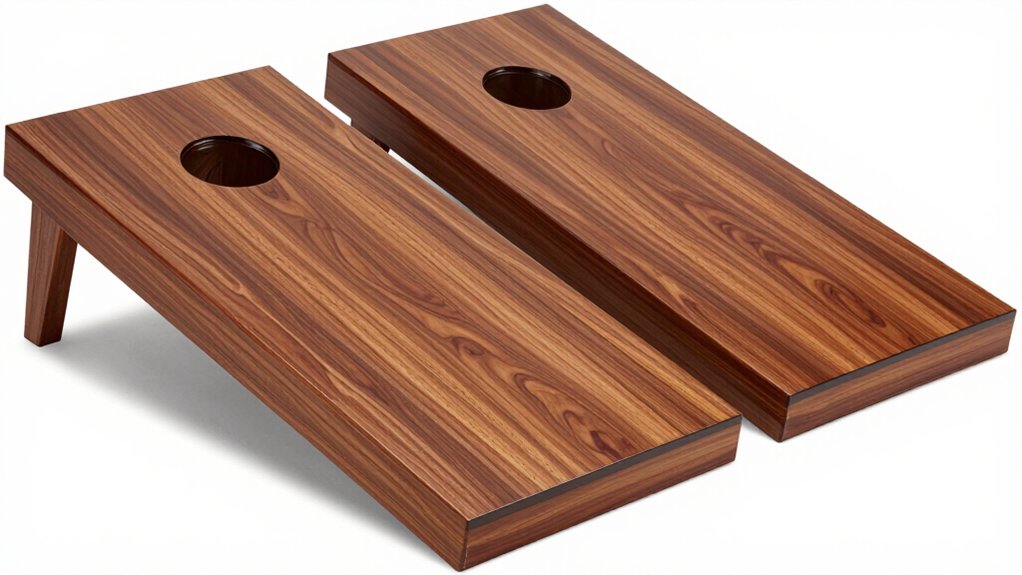
For cornhole boards, you want durability, moisture resistance, and a smooth finish that won’t haze or crack. Polyurethane offers quick hardening and good wear but may yellow with UV; epoxy gives a glassy, tough coat but can trap moisture if misapplied. Outdoor use benefits from marine varnish or UV-protected coatings, while indoors more stable poly or varnish works well. Balance aesthetic needs with maintenance—and if you keep exploring, you’ll uncover practical steps and exact layering tips.
Polyurethane vs. Epoxy: Which Finish Holds Up Best?
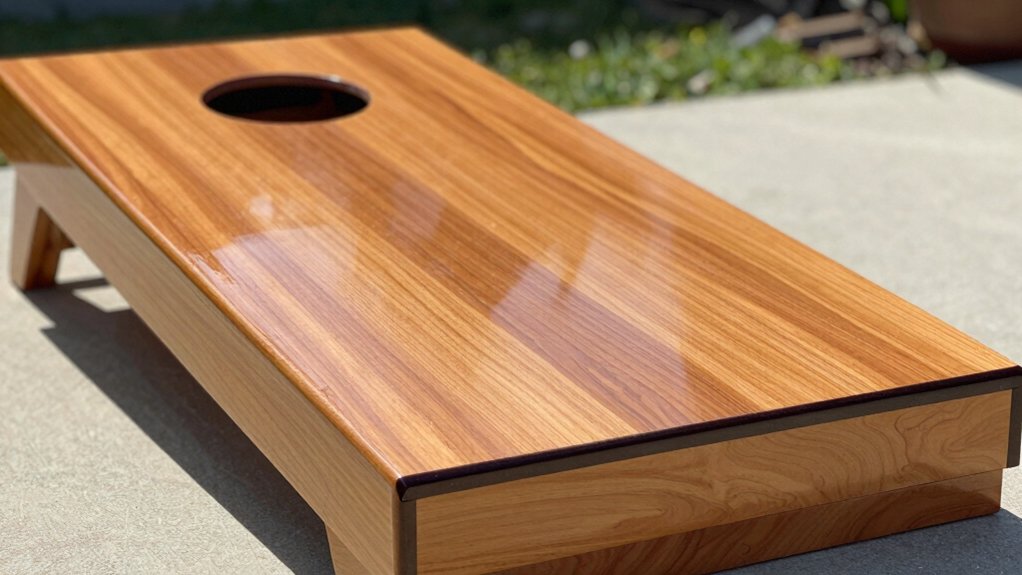
Polyurethane and epoxy are both common finishes for cornhole boards, but they behave differently under use. You weigh finish durability against practical needs, and your choice affects aesthetics and long-term performance.
Polyurethane cures faster, builds surface hardness, and resists scuffs, yet it can yellow with UV exposure and show micro-scratches after repeated impacts.
Epoxy yields exceptional durability, excellent moisture resistance, and a smoother, glass-like finish, but it’s more sensitive to moisture during cure and can develop a tacky feel if contaminated.
For outdoor play, epoxy-type coatings may require UV protection; indoors, polyurethane often provides adequate wear resistance with consistent color.
Your goal is balanced finish durability with aesthetic enhancement, selecting the option that matches playing conditions and maintenance expectations.
Marine Varnish and UV Protection for Outdoor Play
Marine varnish brings outdoor durability and UV resistance into sharper focus after weighing finish options. You’ll rely on it to shield boards from sun, rain, and temperature swings, preserving color and finish integrity over time. Apply in thin, even coats; sand between sessions; cure fully for max hardness. UV absorbers help slow fading, while varnish layers create a tough, flexible surface that resists cracking with seasonal movement.
For custom graphics, guarantee primers and compatibility with the varnish system so graphics stay sharp. While marine varnish excels outdoors, consider indoor use only if you’re moving boards between protected spaces, as heavy wear indoors is less common but coating quality remains critical.
Maintain by reapplying every 1–3 years based on exposure, maintenance, and performance.
Stains, Sealants, and Color: Aesthetic vs. Performance
Stains, sealants, and color choices balance aesthetics with protection, so you’ll weigh how a finish looks against how it holds up under sun, moisture, and wear. You evaluate board designs for visual impact and durability, then compare finish systems by practical criteria: UV resistance, hardness, and cleaning ease.
Choose stains to highlight grain or paint options for solid color runs; both should form a uniform film that resists peeling. Sealants must cure fully and resist moisture ingress without cracking. Test consistency across surfaces and edges, ensuring even coverage and color depth.
Consider maintenance: recoating intervals, compatible primers, and whether a gloss degree suits your playing environment. Your goal is a stable, repeatable look that stays true through seasons and play.
Preventing Warping and Moisture: Surface Prep and Maintenance
To prevent warping and moisture damage, start with thorough surface prep and disciplined maintenance. You inspect the board surface for straightness and plan to keep it flat over time.
Sand with a consistent, fine grit to reveal clean wood grain and uniform surface texture, then wipe away dust.
Apply a breathable, moisture-resistant sealer that blocks water ingress without sealing moisture trapped inside.
Maintain stable humidity in your workshop and store boards flat, off the ground.
Reinspect joints and edges annually, touching up any micro-cracks or raised fibers that can trap moisture.
When cleaning, use mild cleaners and dry promptly; avoid saturating the wood.
This disciplined routine preserves dimensional stability and keeps the finish durable against seasonal changes and incidental spills.
Application Tips for a Long-Lasting Cornhole Surface
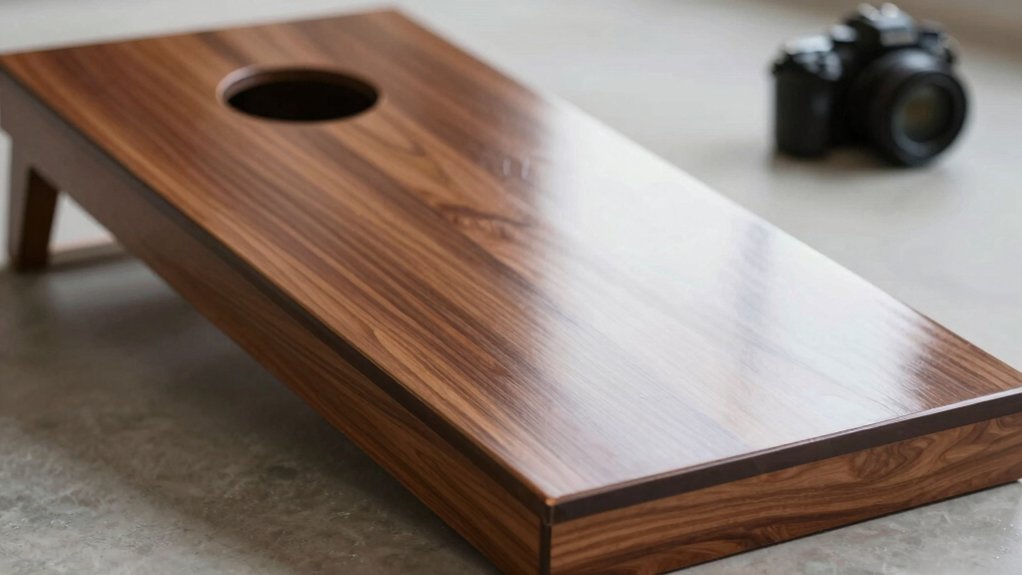
With the prep groundwork in place, apply coatings that protect the surface while preserving playability and moisture resistance. You’ll want a finish that bonds well to the board, resists impact, and remains level over time.
Begin by confirming surface preparation: sand to a smooth, even texture, repair any dents, and wipe away dust. Apply thin, even coats rather than one heavy layer, allowing adequate dry time between passes. Use a compatible brush or roller, followed by a light sand between coats if recommended by the product.
Maintain consistent humidity and temperature during application to avoid pinholes or runs. Finish with a final, flawless seal coat.
Board durability improves when you respect cure times; surface preparation and controlled layering ensure lasting performance.
Frequently Asked Questions
How Long Does a Finish Last Under Heavy Play?
Under heavy play, you’ll see finish last months to years depending on finish types and maintenance, board durability improving with proper care. You’ll notice smoother shots as wear reveals character; recoat as needed to preserve durability and function.
Is Heat or Humidity a Concern for Board Finishes?
Yes, heat and humidity matter. You should choose weather-resistant finishes that maintain surface durability, resist warping, and dry evenly. You’ll protect the board by sealing joints, preventing moisture ingress, and regularly inspecting for cracks and wear.
Can Finishes Affect Puck Bounce or Throw Glide?
Yes, finishes can affect puck bounce and throw glide. You’ll notice smootherthrows on properly sealed surfaces, while rough or uneven layers create drag and erratic bounces, disrupting your rhythm. Choose durable coats, cure fully, test glide consistently.
Are DIY Finishes Safer Than Commercial Options?
Yes, DIY finishes can be safer if you use low-VOC wood stain and a compatible clear sealant, following proper ventilation and curing times; always read labels, test compatibility, and apply thin coats for durable, consistent protection.
How Should You Strip and Refinish Old Boards?
You strip old boards with a chemical or heat method, then sand smooth before refinishing. You’ll apply wood staining evenly, choose sealant types wisely, and cure properly to guarantee a durable, professional-looking surface that lasts. Keep safety goggles handy. Soon durable.