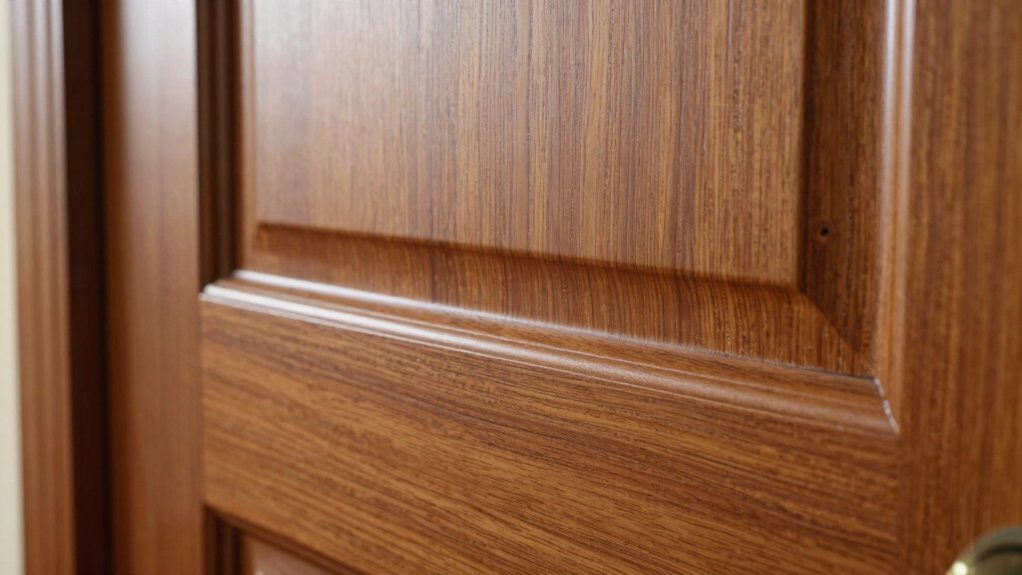
Hybrid and SV coatings offer the best balance of durability, feel, and grain clarity for interior doors. They resist scuffs, fingerprints, and moisture while keeping the wood’s natural texture visible. For high-traffic or sunlit rooms, these multi-layer finishes perform well and stay stable with temperature changes. If you prefer a more natural look, opt for clear, non-yellowing water- or oil-based finishes and apply thin coats. Want practical steps and tips that boost long-term durability? Keep going.
Understanding Wood Finishes: What Each Option Does to Color and Grain
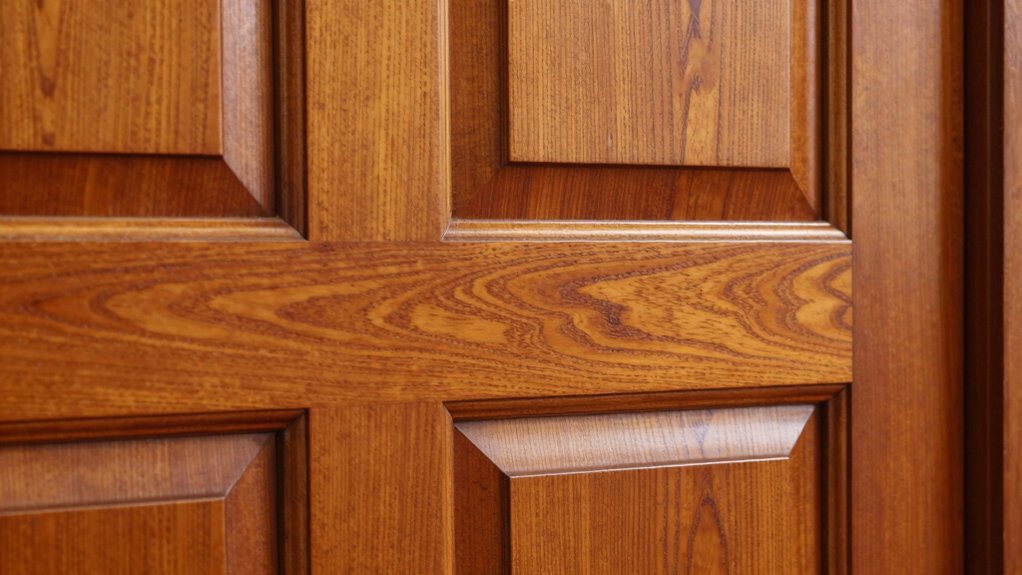
Wood finishes change color and reveal or mute grain, so you’ll choose based on how you want the door to look under light and with age. Different finishes interact with wood differently, so you’ll notice distinct effects on color enhancement and wood grain.
Clear finishes preserve natural tone, adding subtle depth without masking pores. Gel stains deepen color while maintaining the grain’s texture, ideal for contrast. Oil-based and water-based polyurethanes build durability; oil gives warmth and richer grain, while water-based dries faster and remains lighter.
Shellac provides quick, amber-toned warmth but wears with heavy use. Penetrating oils highlight grain, offering a matte to satin look that ages gracefully. Test samples on scrap to gauge color shifts, then decide based on required gloss, durability, and how you want the wood to evolve.
Stain vs. Paint: Choosing the Right Look for Interior Doors
Stains highlight the wood grain and give a natural, warm look, while paint creates solid color and hides grain for a bold, uniform finish.
Consider finish durability: stains often require resealing over time, whereas paints resist wear in high-traffic areas.
Your choice shapes the look and maintenance, so balance aesthetic goals with how much upkeep you’re willing to do.
Stain Vs Paint Pros
Choosing between stain and paint for interior doors comes down to look, maintenance, and how much you value grain visibility. With stain, you preserve natural wood grain, speeding up application and touch-ups, and you often gain depth with fewer coats. Paint hides grain, offers uniform color, and can simplify maintenance, especially in high-traffic areas.
The stain path favors a more traditional vibe and easier matching to other millwork, while paint supports bold color palettes and sleeker profiles. Pros for stain include easier patch repairs and richer translucency; pros for paint include broader durability options and stronger hides.
Consider hardware finishes as a factor—metal tones can shift the perceived color. Also account for decorative techniques, like glazing or faux aging, which can influence long-term satisfaction.
Finish Durability & Look
When you weigh durability and appearance, your choice between stain and paint shifts from aesthetics to maintenance reality.
For interior doors, stain highlights grain while offering modest protection; color enhancement depends on the base wood and the sealer you apply. Paint delivers uniform color, better scuff resistance, and easier touching up, but it can hide grain visibility unless you choose a translucent or semi-transparent topcoat.
If you want a classic, natural look with clearer wood texture, opt for stain with a durable varnish or poly to boost longevity. If your priority is a bold color and wipeable surface, paint excels, though you’ll sacrifice some grain texture.
Consider traffic, humidity, and future refinishing ease when selecting the finish. Choose accordingly to balance look and durability.
Traditional Oil Finishes: Penetrating Oils for Depth and Warmth
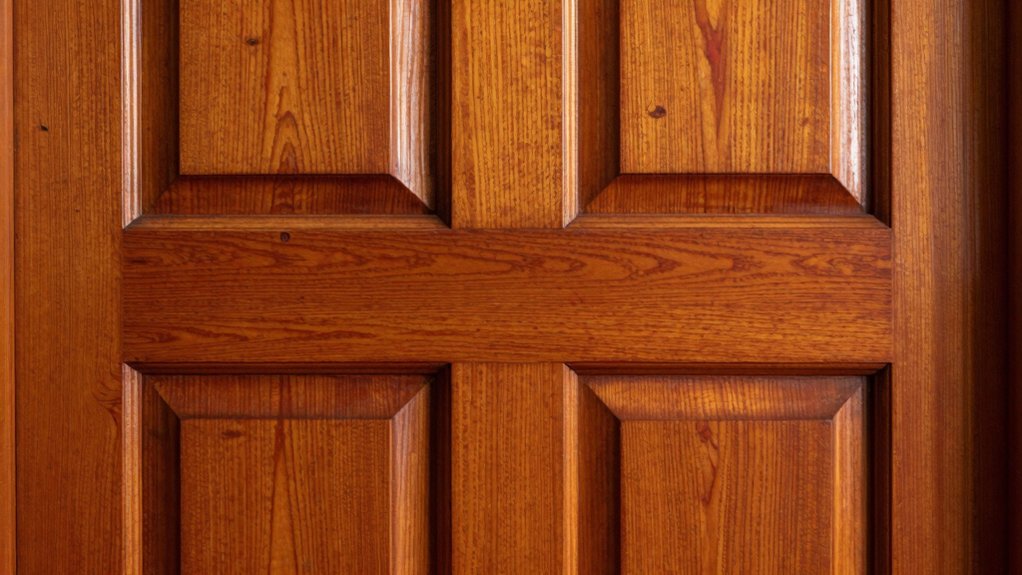
Traditional oil finishes rely on penetrating oils to soak into the wood, building depth without a thick film. You’ll notice warmth in the grain and a richer tone as color and texture reveal themselves.
This approach emphasizes penetration depth, enhancing natural character while protecting against everyday wear.
Penetration Depth
Penetration depth determines how deeply a traditional oil finish soaks into wood, delivering color and warmth without forming a hard film on the surface. You control depth with oil type, preparation, and application technique, not with layers. Thinner formulations soak more readily, while thicker ones stay higher on the surface and may look uneven.
For even penetration, sand to a smooth surface and remove dust before applying, then wipe excess promptly. Temperature and ambient humidity affect absorption, so work in consistent conditions. Allow time for the oil to penetrate, then wipe again to prevent surface-ride.
Expect subtle color enhancement as the wood grain reveals itself, with depth appearing where fibers drink up oil. Reapply sparingly to build a uniform tone without clogging pores or altering texture.
Warmth and Tone
Warmth and tone from penetrating oils come from how the wood interacts with the oil, not from a visible film. With traditional oil finishes, you gain depth as the oil soaks and cures, highlighting grain without masking it.
You control warmth by selecting wood species, application depth, and subsequent wipe technique; less wipe yields richer, amber hues, more wipe preserves lighter tones. Penetrating oils emphasize natural color, creating a cohesive look across doors and trim.
For color coordination, pair doors with nearby surfaces using similar undertones, avoiding stark contrasts that clash with the interior design.
Apply in thin, even coats, allow full penetration, and buff lightly to refine sheen. This approach preserves wood character while delivering durable, easy-to-maintain beauty for interior doors.
Water-Based Polyurethanes: Easy Maintenance and Clean Modernity
Water-based polyurethanes offer a low-odor, fast-drying finish that protects interior wood doors without masking grain or color. You’ll keep the natural beauty intact while gaining durable protection against scuffs and moisture.
Application is straightforward: thin coats, light sanding between layers, and proper ventilation. Clean-up is simple with water, reducing chemical exposure. Drying times let you complete projects quickly, minimizing downtime for doors.
You’ll notice minimal ambering, preserving the wood’s original hue and highlights. For routine maintenance, a quick wipe-down keeps surfaces looking refreshed without reapplying finish.
When selecting products, consider eco-friendly options that meet low VOC standards and claim wood grain enhancement without sacrificing performance. Choose reputable brands to ensure compatibility with existing stains or dyes.
SV Coatings and Hybrid Finishes: Durability With a Smooth Feel
SV coatings and hybrid finishes offer standout durability, so you’ll notice lasting protection against wear and moisture. We’ll assess their long-term performance, including scratch resistance and ease of maintenance, to determine how they hold up in real-world use.
You’ll also evaluate the smooth, tack-free feel they leave on interior wood doors and how that balance of durability and touch affects finish choices.
Durability of SV Coatings
Durability is the core strength of SV coatings and hybrid finishes, delivering long-lasting protection for interior wood doors. You’ll benefit from a tough film that resists wear, scuffing, and cleaning cycles without losing clarity or color.
SV formulations form dense, flexible layers that resist cracking from temperature shifts and moisture exposure common in interior spaces. You’ll see consistent performance across door components, including panels, stiles, and rails, with minimal color shift over time.
Application rules out excessive build, reducing apply-and-recoat times while maintaining film integrity. The coatings clean easily and tolerate routine hardware finishes and decorative glazing without compromising adhesion.
For high-traffic areas, SV finishes offer reliable longevity, ease of maintenance, and a smooth, durable feel that still preserves the wood’s natural aesthetic.
Hybrid Finish Performance
Hybrid finishes combine SV coatings with a flexible resin system to deliver durable protection that still feels smooth to the touch. You’ll notice improved resistance to wear, moisture, and UV exposure without sacrificing ease of use.
When you apply these finishes, you get consistent film formation that highlights wood grain and preserves natural texture. The resin system adapts to substrate movement, reducing cracking and chipping on high-traffic doors.
In practice, expect uniform color enhancement across panels, with minimal brush or wipe marks. Recoat windows are predictable, and cleanup remains straightforward, helping you maintain a neat worksite.
For performance, these hybrids balance durability with a refined, smooth feel, making them a practical choice where wood grain visibility and color enhancement are priorities.
Smooth Feel Assessment
Smooth feel matters because you can’t judge durability by look alone; you’ll notice how a finish responds to touch as much as to wear. In SV coatings and hybrid finishes, the smoothness comes from how well the system resists micro-scratches while preserving a natural wood grain feel.
You’ll assess evenness across panels, ensuring there are no tacky spots or gritty textures that betray thin films. Pay attention to how finish sheen shifts with light and use; a stable sheen signals balanced hard-dominant protection without dulling under use.
Consider the tactile result after cure and climate exposure, confirming that the surface remains glassy yet wipe-friendly. For interior doors, a consistent, refined smooth feel enhances both appearance and wear performance.
Clear Finishes for Natural Grain: How to Keep Wood Visible
Clear finishes let the wood’s natural grain shine through, but choosing the right product matters. You’ll protect grain while preserving vibrancy with a compatible sealer, stain, and topcoat combo.
For natural grain preservation, start with a non-yellowing water- or oil-based polyurethane or varnish that’s rated for interior doors. Apply thin, even coats and sand lightly between them to minimize lap marks. Use a matte or satin sheen to keep texture visible without glare.
If you’re staining, pick a lightly tinted, water-based formula that’s designed for wood grain preservation, then seal with a clear topcoat. Avoid heavy saturation that can cloud grain.
Maintain even climate conditions during curing, and re-coat as needed. This approach yields durable, natural finish enhancement and keeps wood looking authentic.
High-Traffic Doors: Hard-Wearing Options That Last
What makes a door stand up to high use? For high-traffic areas, choose solid-core construction with a tight seal to minimize wear. Look for durable finishes that resist scuffs, fingerprints, and moisture, and opt for multi-point or heavy-duty hinges that prevent sagging. You’ll want smooth operation, so prioritize doors with reinforced edges and abrasion-resistant coatings.
Hardware options matter: choose corrosion-resistant metal, rust-proof finishes, and sprung hinges that reduce impact damage. Consider color matching across hardware and door surface to keep a cohesive look as wear occurs. If you expect frequent cleaning, pick finishes that wipe clean without dulling.
Finally, ensure installation aligns with door weight and frame strength, so long-term durability isn’t compromised by improper mounting.
Sunlit Spaces: Finishes That Resist Yellowing and Fading
Sunlit spaces demand finishes that resist yellowing and fading, so choose formulas designed for UV stability and long-lasting color. In sunlit halls, you’ll want clear guidance on how to preserve natural grain without shifting hue.
Opt for finishes with UV absorbers or stabilizers that slow color changes, and favor products labeled for “color retention” or “fade resistance.” Apply thin, even coats and let risers cure fully before opening doors to daylight.
For best color enhancement, select formulas that emphasize clarity while protecting the wood’s character, then test on a hidden sample panel first. Consider a satin or low-luster sheen to minimize glare while maintaining aesthetic appeal.
Regular maintenance, not overcoating, preserves tone and depth over time.
Humidity and Doors: Finishes That Stand Up to Moisture
Moisture is a door’s nemesis, so choose finishes with proven moisture resistance and tight grain sealing. You’ll want products that form a durable barrier against humidity swings and visible water marks. Look for finishes labeled as waterborne or with blocked water penetration, since they tend to resist swelling and a fuzzy surface.
Wood grain details should remain defined after exposure, not blurred by high swelling. For interior doors, prioritize low VOC options that still deliver hardness and pliability. Finish sheen matters: a satin or semi-gloss reduce water fingerprints while resisting moisture better than flat sheens.
Apply coats evenly to maintain a uniform, protective film across panels and edges. Regular maintenance factors, like humidity control, help these finishes perform longer.
Step-by-Step Application: From Prep to Topcoat for a Professional Look
Having chosen finishes that resist moisture, you’re ready to lay down a step-by-step method that yields a professional, durable appearance.
Begin with prep: wipe, sand, and remove dust. Use a tack cloth to assure a clean surface, then apply a pore-filler if needed.
Choose an appropriate primer and let it cure fully before sanding lightly again.
For color matching, test on a scrap or hidden area, adjusting shade with a compatible stain or tint.
Apply thin coats of your finish, following manufacturer guidelines, and avoid runs by maintaining even pressure and a steady motion.
Sand lightly between coats to remove imperfections, then recoat.
Use proper application techniques—brushing, rolling, or spraying—as suits your door and environment.
Finish with a final topcoat for durability, clarity, and uniform color.
Frequently Asked Questions
How Do Finishes Affect Grain Clarity on Oak Doors?
Finish transparency varies; a warmer, thinner finish preserves grain clarity, while thick or glossy coats can soften it. You’ll notice grain enhancement with satin sheens, but heavy coatings reduce contrast and obscure oak’s natural character.
Which Finish Dries the Fastest for Interior Doors?
You’ll want quick-drying options like water-based polyurethanes; they dry fastest for interior doors. You’ll balance paint durability with gloss levels, choosing a low-to-mid gloss for a durable, smooth finish that resists marks and fingerprints.
Can I Apply Stain Over a Painted Door Safely?
Yes, you can: sand, clean, and prime the door first, ensuring flawless door prep, then test stain compatibility on a hidden area. If compatible, apply stain; otherwise, strip first and proceed.
Do Tinted Finishes Help Hide Wood Defects Effectively?
A tinted finish does help masking flaws, so you’ll see fewer wood defects. You’ll gain depth and even tone, but note it won’t fix deep flaws. Consider prep, match shade, and test samples to confirm tinted finish benefits.
Is It Safe to Refinish Doors Without Removing Them?
Yes, you can refinish doors without removing them. Start with door removal? No—leave them in place and use proper sanding techniques. Protect hardware, mask edges, and work gradually, then apply finish with even, smooth strokes.