You’ll want to start by diagnosing why your windows condense: cold surfaces meet warm, humid air. You’ll lower humidity, boost ventilation, and seal leaks before upgrading glazing. Use exhaust fans during cooking or showers, keep indoor temps steady, and aim for under 50% RH. If moisture persists, you’ll consider better insulation with double or triple glazing and airtight seals. The balance between moisture control and insulation sets the path forward, and you’ll find why one step often reveals the next.
Understanding Why Windows Condense
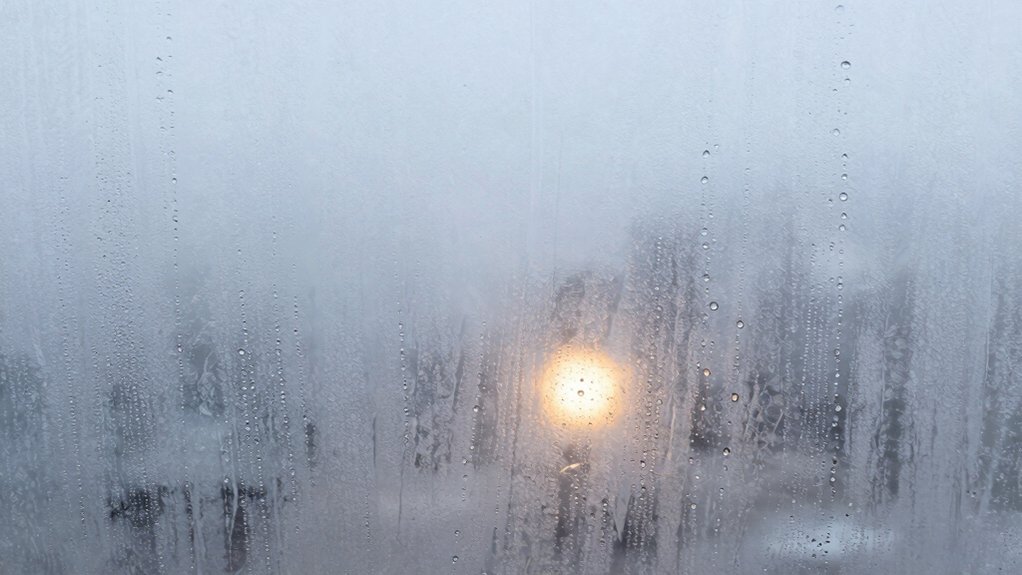
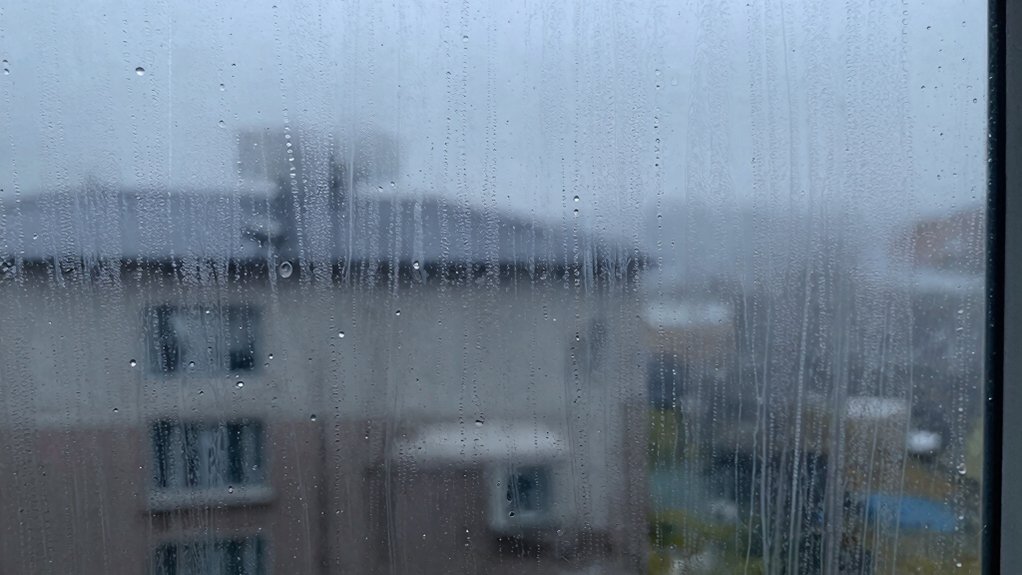
Condensation happens when warm, moist air meets a cool window surface, causing water vapor to condense into liquid on the glass. You’ll notice droplets forming as heat transfer lowers surface temperature below dew point.
Humidity level, indoor activities, and outside air temperature drive vapor availability near panes. When you trap moist air indoors, the relative humidity rises, increasing condensation risk on cold edges and double panes.
Windows act as heat sinks; glass conducts heat away from the room, creating a surface colder than surrounding air. Air leakage, inadequate insulation, and poor ventilation amplify the effect by delivering more moisture or reducing exchange.
Infiltration brings outdoor humidity inside, while filtration or gaps reduce the air’s ability to hold moisture. Understanding these factors helps you target mitigation.
Quick Fixes to Reduce Condensation Daily
To cut condensation quickly, focus on reducing indoor humidity, increasing ventilation, and limiting moisture sources. Start with a quick audit of daily moisture: showers, kettle use, and cooking release peak amounts.
Use exhaust fans or range hoods during these activities, and run them for 10–15 minutes after finishing. Dry towels thoroughly and wipe surfaces to remove standing water.
Trap steam at the source by lids on pots and by using continuous drainage on humidifiers. Manage indoor plants and avoid overwatering; relocate potted greens away from windows.
In living areas, balance humidity with a dehumidifier set to 40–50% relative humidity during humid days. Maintain consistent indoor temperatures, prevent cold spots, and seal obvious air leaks near windows.
Regularly monitor condensation patterns to verify improvements.
Improving Ventilation and Airflow
Improving ventilation and airflow starts with a clear plan to move humid air out and bring fresh air in. You assess where heat and moisture accumulate, then map routes for exchange. Identify stagnant zones near windows, baths, and kitchens, and target them first.
Use mechanically driven options like exhaust fans, whole-house ventilation, or balanced systems to control intake and exhaust rates. Guarantee ducts are clean, leaks are sealed, and intakes aren’t blocked by vegetation or debris.
Balance airflow to prevent drafts while maintaining comfort. Schedule continuous operation during high-moisture periods, and couple short-term boosts with kitchen and bathroom activities.
Monitor indoor humidity, and adjust fan speeds to maintain stable 40–60% relative humidity for clarity and comfort. Prioritize reliable, maintainable solutions.
Dehumidification and Humidity Control
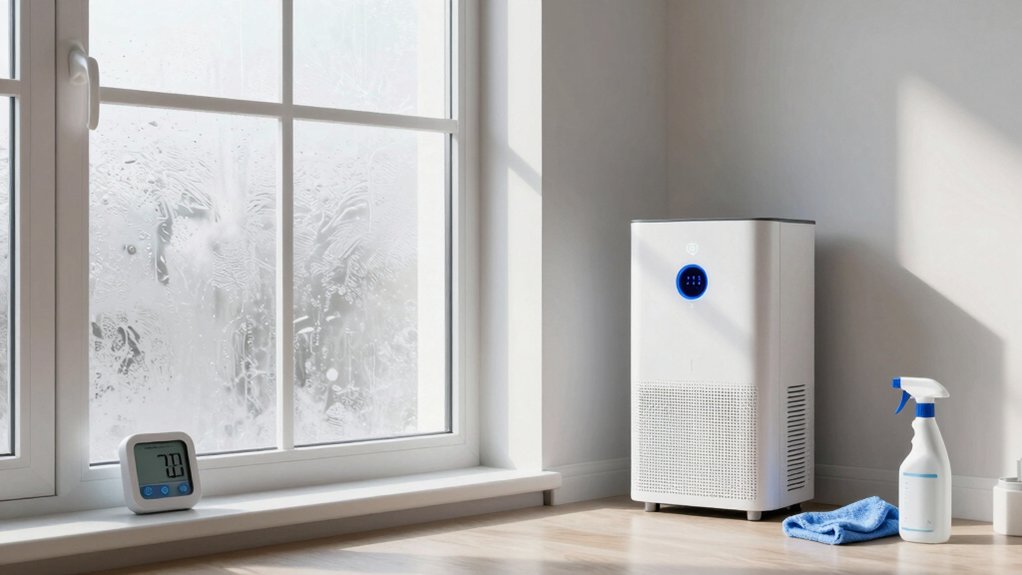
Dehumidification and humidity control focus on steady moisture management to prevent condensation. You measure indoor humidity with a reliable hygrometer, targeting a relative humidity around 30–50 percent. When readings rise above 60 percent, you activate dehumidification or adjust ventilation to remove excess moisture.
Choose a unit sized for the space and insulation level; oversized systems waste energy, while undersized units fail to stabilize humidity. Maintain consistent drainage by clearing condensate lines and using gravity-fed or pumped discharge.
Monitor seasonal shifts; during winter, ventilation may be restricted, so dehumidifiers should compensate without over-drying. Use sensible targets rather than absolute moisture removal. Avoid rapid humidity swings by gradual adjustments, and reseal leaks that continually introduce moisture.
Long-Term Solutions: Windows, Glazing, and Home Upgrades
Upgrading windows, glazing, and the home envelope offers durable, long-term mitigation for condensation by reducing cold surfaces and limiting interior moisture intrusion. Begin with high-performance, double- or triple-glazed units, low-emissivity coatings, and proper gas fills to minimize heat transfer.
Install airtight frames and continuous flashing to prevent drafts and moisture intrusion at edges. Pair new glazing with well-sealed, insulated walls and appropriate ventilation strategies to maintain interior humidity at neutral levels.
Consider exterior shading and low-conductivity frames to reduce solar-driven temperature swings. For the home envelope, upgrade insulation, air barriers, and vapor controls where needed, focusing on continuity and dew-point management.
Finally, verify installation quality, room-by-room, ensuring gaps are addressed and performance targets are met. Regular maintenance sustains long-term effectiveness.
Conclusion
Condensation is a signal flag you’re not managing humidity well enough. Think of your home as a chest, condensation its fog that reveals the gaps. Close the leaks, seal the panes, and lock in warmth like a lid on a simmering pot. Use fans and dehumidifiers as breath steadies, and let airflow be your metronome. When you balance moisture, temperature, and ventilation, the fog clears, leaving a steady, clear pane and a steadier structure.