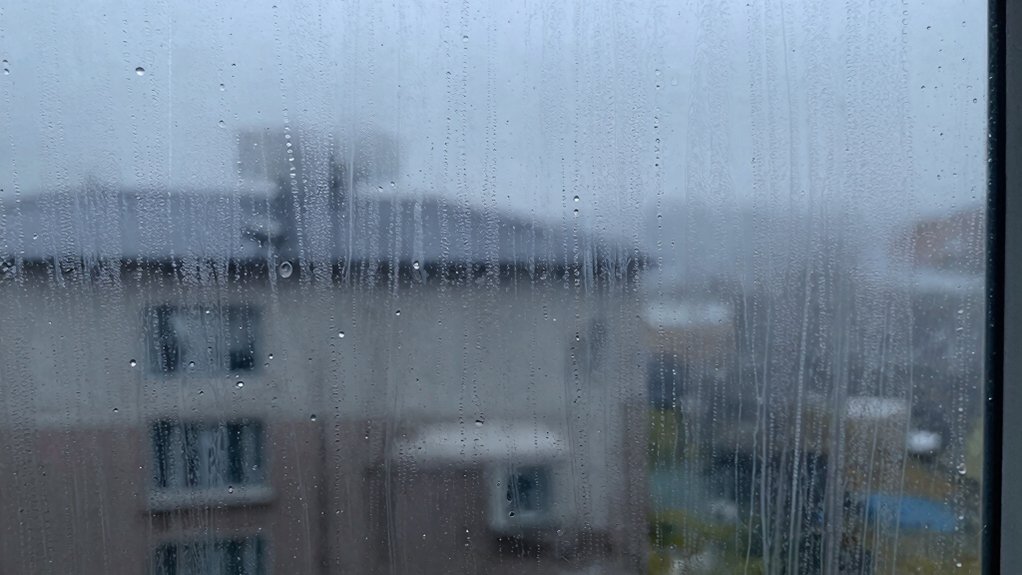
Does condensation reliably cause mold, or is it a symptom of underlying moisture issues? When warm, humid air meets cool surfaces, you get water droplets that can linger on walls, windows, or fabrics. If this moisture stays, mold can germinate on porous materials. You’ll want to contemplate how often you see condensation, where it occurs, and the material involved. There’s more to unpack about humidity control and ventilation that could change the outcome.
What Is Condensation and How It Forms

Condensation occurs when water vapor in the air cools and loses enough energy to change into a liquid. You observe this when humidity meets a cooler surface, forming droplets. The process hinges on saturation: air holds a maximum amount of water at a given temperature, and cooling lowers that capacity, causing vapor to condense.
Key drivers include temperature differentials, relative humidity, surface emissivity, and air movement. In practical terms, you’ll see droplets on windows, pipes, or walls where heat transfer is insufficient to maintain vapor as vapor.
Condensation marks a phase change, not a chemical reaction, and it can occur indoors or outdoors under appropriate conditions. Accurate assessment requires measuring surface temperatures, ambient humidity, and airflow to distinguish it from other moisture phenomena.
Evidence supports that higher indoor humidity elevates condensation risk when temperatures drop.
The Difference Between Condensation and Leaks
Distinguishing condensation from leaks hinges on the source and behavior of moisture. Condensation arises when warm, moist air contacts cooler surfaces, forming droplets that reflect ambient humidity and temperature. These droplets are typically uniform and surface-bound.
Leaks, by contrast, involve an external or hidden water ingress from plumbing, roofing, or structural faults. They create continuous or irregular moisture paths that can travel behind walls or under floors.
Evidence matters: condensation yields transient patterns tied to HVAC use, humidity, and surface temperature. Leaks produce persistent moisture traces, staining, mold risk, and water intrusion indicators such as discoloration or musty odors.
Diagnostic steps differ: monitor humidity and surface temps for condensation, perform leak tests or infrared scans for leaks. Correctly identifying moisture source guides effective mitigation and prevents misattribution.
Common Places Condensation Occurs in Homes
You’ll see condensation cluster in common spots like windows, bathrooms, and kitchens where warm, moist air meets cool surfaces.
Hidden moisture behind walls, under sinks, and in basements often goes unnoticed but fuels mold risk.
Everyday habits—showering with the door open, drying clothes indoors, and running humidifiers without ventilation—can elevate these moisture hotspots.
Common Condensation Spots
Common condensation tends to appear where warm indoor air meets cool surfaces for extended periods. In typical homes, you’ll often find it on windows, cold-water pipes, and exterior walls near poorly insulated areas.
Windows, especially double-glazed units with seals degraded by humidity, accumulate droplets as temperature differentials drive moisture deposition. Pipes under sinks or in basements stay cold enough to condense moist air, particularly when ventilation is insufficient.
Exterior walls in kitchens and bathrooms can develop moisture films where insulation lags, or where vapor barriers are compromised. Attics and crawl spaces with limited airflow also exhibit condensation on sheathing or ductwork.
High humidity combined with inadequate air exchange elevates risk, making targeted remediation—ventilation, sealing, and insulation improvements—essential for preventing further moisture-related issues.
Moisture Hiding Areas
Moisture tends to hide in locations where warm indoor air repeatedly comes into contact with cooler surfaces, creating persistent microclimates that foster condensation. You’ll find hidden moisture where airflow is limited and surfaces are cooler than surrounding air, allowing tiny droplets to persist.
In kitchens and bathrooms, appliance vents may divert air, leaving corners damp and surfaces wet after use. Basements and crawl spaces often harbor hidden humidity due to insulation gaps or poor vapor barriers, encouraging sustained condensation on walls and joists.
Behind furniture or inside cabinetry, reduced circulation traps moisture against walls, promoting micro-surface dampness. Laundry rooms and utility closets can accumulate vapors near hot-water lines, lighting fixtures, or exhaust paths, creating recurring cold spots.
Recognizing these hiding zones helps target mitigation strategies effectively.
Everyday Habit Triggers
Many everyday habits directly contribute to condensation as warm, moist indoor air meets cooler surfaces during routine activities like cooking, showering, and drying clothes.
You create localized humidity peaks by boiling or simmering without lids, using high heat for prolonged periods, and running multiple appliances simultaneously.
Shallow ventilation traps this moisture, raising surface temperatures and encouraging dew formation on windows, walls, and cabinetry.
Drying laundry indoors, especially with insufficient airflow or radiant heaters, concentrates humidity near occupied zones and heat sources.
You also offload moisture through activities like dishwashing with warm water and lukewarm bath routines, which release unseen vapor that cools and condenses on nearby surfaces.
Reducing these triggers requires targeted ventilation, sensible temperature control, and moisture-aware scheduling of tasks.
How Humidity Levels Drive Mold Growth
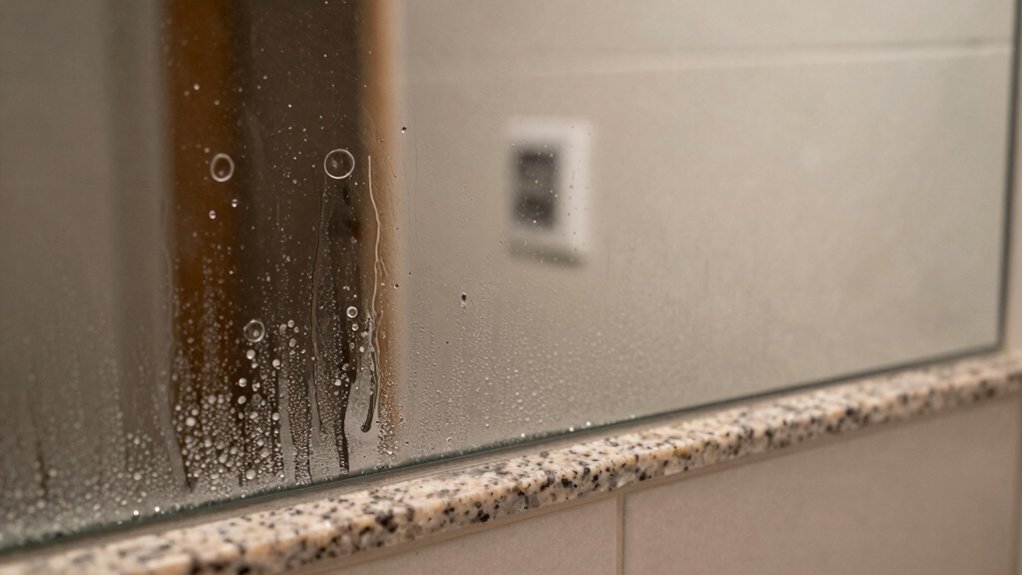
Humidity is the key driver of mold growth: when indoor air holds more water than surfaces can safely absorb, spores germinate and colonies establish themselves quickly. You’ll see relative humidity (RH) thresholds guide risk, with common molds proliferating around 60% RH or higher for extended periods.
At 70% RH and above, microscopic droplets sustain hyphal activity and nutrient access, accelerating colony expansion. Temperature interacts with humidity: warm conditions increase vapor pressure, enabling moisture transfer into materials; cooler surfaces condense that moisture, creating microenvironments favorable to growth.
Substrates rich in starches or cellulose provide nourishment, while airflow stagnation concentrates vapor near walls and windows. Controlling RH below ~50% during occupied hours, improving ventilation, and reducing moisture sources disrupts spore germination and limits colony formation.
Evidence links sustained high humidity to higher mold incidence and faster spread.
Signs That Condensation Is Affecting Your Space
Condensation that actually affects your space shows up in concrete, observable ways. You’ll notice persistent droplets on windows, walls, or pipes, especially after temperature swings. This isn’t mere dampness; it signals excess surface moisture and air stagnation.
You may see water stains or whitish, fuzzy patches that resemble mold, even if mold isn’t yet present. Condensation often coincides with higher humidity readings near 60 percent, and relative humidity may spike during cool mornings or after showers.
You might hear condensation-driven noise, like dripping or condensation on metal surfaces, as evidence of ongoing moisture movement. If you observe fogged glass that lasts, or damp odors without a clear source, treat it as a moisture indicator requiring evaluation of airflow and surface temperatures.
Practical Ways to Reduce Humidity and Improve Airflow
To reduce indoor moisture, you should focus on limiting sources and enhancing air exchange to lower humidity levels and prevent condensation buildup.
Improving ventilation efficiency—through appropriately sized exhausts, fans, and cross-ventilation—can move moist air out and drier air in, improving overall air quality.
Regular monitoring of humidity levels guides adjustments to control indoor moisture, helping to maintain stable conditions.
Control Indoor Moisture
What practical steps reduce indoor moisture and improve airflow effectively? You should monitor indoor humidity with a reliable hygrometer, aiming for 40–60% relative humidity in most spaces. Use dehumidification when readings exceed 60%, especially in damp basements or bathrooms. Fix leaks promptly and seal gaps around windows, doors, and pipes to prevent unseen moisture ingress.
Favor low‑humidity cleaning methods and run exhaust fans during showers, cooking, and laundry; ensure vents exhaust outdoors, not into the attic or crawlspace. Improve airflow with strategically placed fans and unobstructed room layouts, promoting cross‑ventilation when outdoor conditions allow.
Choose moisture‑resistant materials in high‑moisture areas and maintain HVAC filters to sustain air quality. Regular inspections help detect condensation hotspots before mold develops.
Boost Ventilation Efficiency
Boost ventilation efficiency starts with targeted airflow improvements that minimize stagnant zones and move moist air outdoors. You assess existing layouts to identify dead spots where humidity accumulates. Use short, direct paths for supply and exhaust to prevent crossflow that recirculates moist air.
Upgrade to evenly distributed intake vents and balanced exhaust to maintain neutral pressure, reducing indoor moisture buildup. Prioritize exhausts in high-use areas—kitchens, bathrooms, laundry spaces—and ensure range hoods and bathroom fans operate at rated CFM with minimal duct restrictions.
Seal unintended air leaks around windows and doors to prevent inrush of humid outdoor air. Schedule regular maintenance: clean filters, verify fan operation, and inspect ducts for obstructions. These actions yield measurable humidity reductions and more consistent air exchange.
Monitor Humidity Levels
Regularly monitoring indoor humidity lets you verify ventilation efficacy and detect moisture risk before it leads to mold. You should track readings with a reliable hygrometer, aiming for 30–50% relative humidity in living spaces and under 60% in more humid areas.
Use continuous or multi-point sampling to capture temporal fluctuations caused by cooking, bathing, or weather changes. Record daily values and note spikes that coincide with damp odors, condensation on windows, or visible moisture.
Compare measurements against guideline thresholds and adjust airflow, dehumidification, or source controls accordingly. Prioritize consistent monitoring over episodic checks; trends reveal latent issues, such as undersized exhausts or compromised seals.
Link data to actions: improve ventilation rates, seal leaks, and reduce moisture-generating activities to prevent mold growth.
Drying Surfaces Fast to Stop Mold in Its Tracks
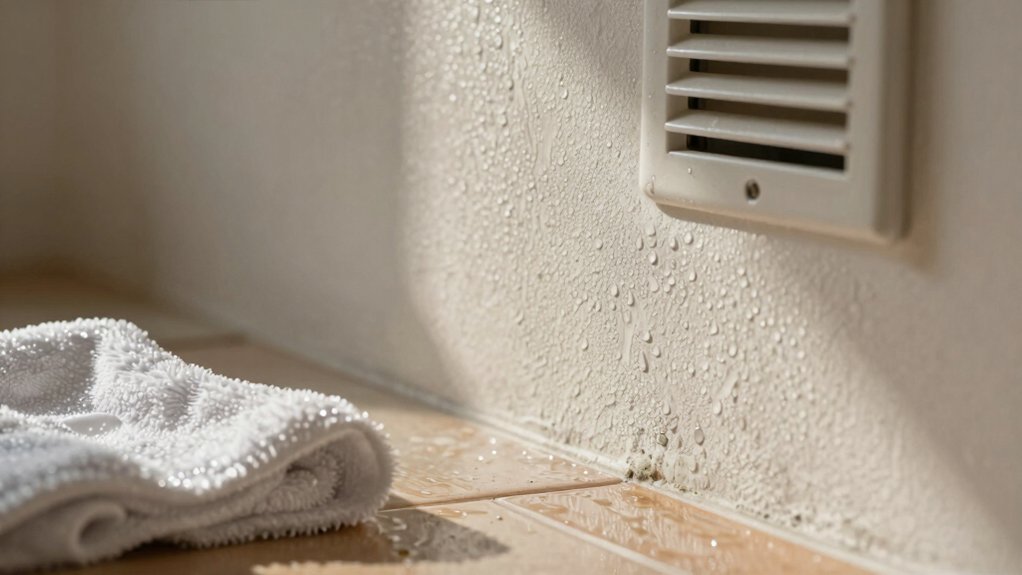
Drying surfaces quickly is essential to interrupt mold growth, because moisture lingering on walls, floors, or fabrics creates favorable conditions for spores to settle and colonize. In practice, you should prioritize rapid moisture removal after any condensation event. Use a surface-appropriate towel or microfiber cloth to remove standing liquid, then employ airflow to accelerate evaporation.
Evidence indicates that relative humidity alone isn’t enough; targeted drying reduces substrate humidity below mold’s growth threshold. Drying requires attention to porous materials; drywall, insulation, and fabrics retain moisture longer and act as reservoirs, potentially sustaining colonies.
Reassess after each cleaning or dehumidification cycle to confirm surface dryness. Consistent, repeated drying events limit sporulation windows and disrupt colonization, supporting overall moisture control without invoking structural interventions.
Long-Term Solutions: Insulation and Ventilation Upgrades
Insulation and ventilation upgrades address the root causes of condensation and mold by reducing heat transfer and ensuring continuous moisture removal, rather than relying on short-term drying. You reduce thermal bridges, stabilize interior surface temperatures, and lower dew point proximity to cold assemblies.
Upgraded insulation improves year-round envelope performance, which minimizes interior condensation on walls, ceilings, and windows. Simultaneously, you implement balanced or continuous mechanical ventilation with heat recovery where feasible, maintaining adequate air exchange without creating drafts.
Properly sized systems manage indoor humidity, particularly in kitchens and bathrooms, and reduce stagnation zones where mold thrives. Evidence supports that combined insulation and controlled ventilation decrease relative humidity fluctuations, interrupt moisture accumulation, and lower mold risk over the long term, provided installation quality and system commissioning meet design specifications.
When to Call a Professional for Mold Concerns
If you notice persistent mold growth, you should consider contacting a professional rather than attempting to DIY every remedy. Ongoing moisture or hidden contamination can require specialized assessment and remediation.
You should seek expert help when visible growth exceeds 10 square feet, or when growth recurs after cleaning, or if occupants have mold-related symptoms.
Professionals identify moisture sources with moisture meters, infrared imaging, and air sampling, providing a written remediation plan aligned with recognized guidelines.
Engage licensed contractors and, if needed, industrial hygienists to verify air quality post-remediation.
Document conditions, photos, and timelines to support insurance or landlord queries.
Don’t delay if you rent and occupants have asthma or allergies; delaying professional input can worsen structural damage and health risks.
Prioritize timely assessment to prevent recurrence.
Conclusion
condensation can fuel mold when it creates persistent dampness. In your home, monitor humidity, fix leaks, and improve airflow to keep surfaces dry and reduce microclimates where mold thrives. Evidence shows mold spores germinate with sustained moisture on porous materials, so timely drying and proper ventilation are essential. Think of your humidity control as a shield against unseen growth—steady, science-backed steps protect your space, health, and investments from mold’s quiet advance.