
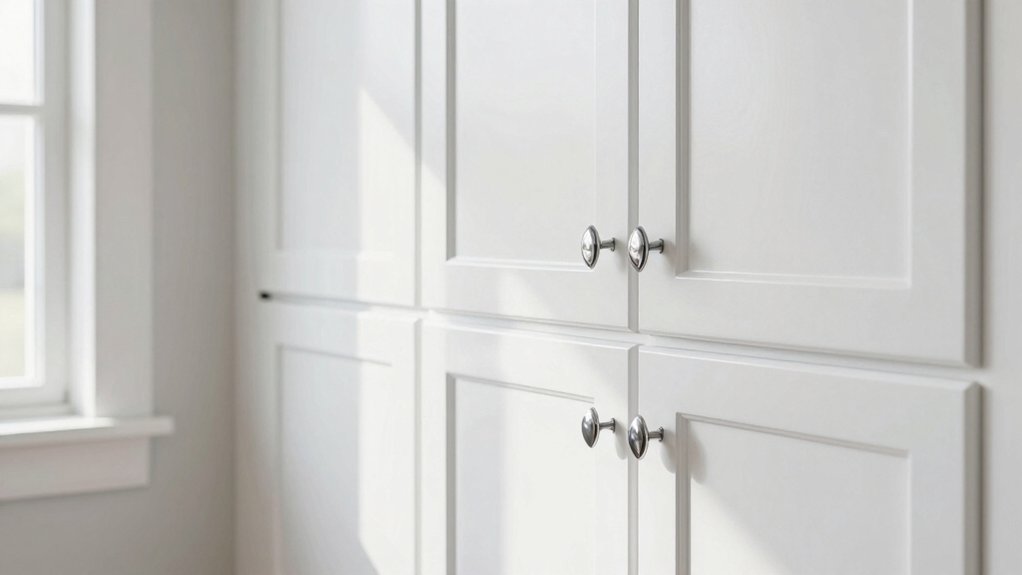
For kitchen cabinets, you’ll want a true white with stable undertones and a durable, wipeable finish. Favor cool or neutral whites with low yellowing potential and test swatches under natural and artificial light to see true undertones across surfaces. Choose a semi-gloss or satin sheen for easy cleaning, and pair a compatible primer with a tough topcoat to minimize watermarking. Pick low-VOC formulas from trusted brands for long-term color stability—and if you keep exploring, you’ll uncover more specifics.
Understanding Warm Vs Cool White Tones
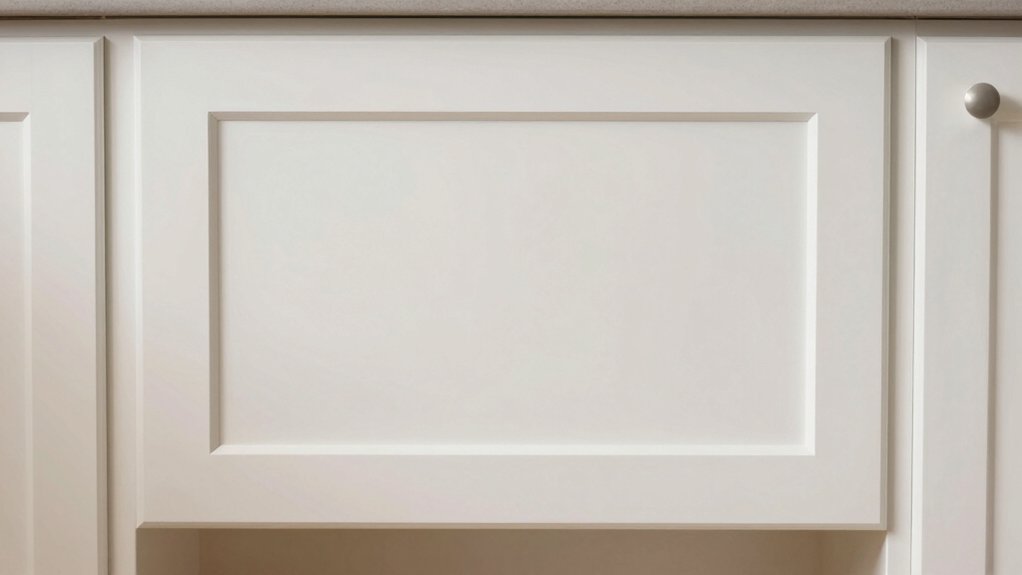
Understanding warm vs cool white tones starts with a clear goal: align the cabinet color with the room’s lighting and existing materials. You assess how ambient light shifts perception, then map this to finish choices.
Warm whites carry yellow or amber undertones, inviting coziness; cool whites lean blue or gray, enhancing contrast and crispness. You’ll quantify color temperature in Kelvin as a practical reference, enabling precise comparisons.
Consider how Color psychology influences mood: warmer hues evoke insulation and comfort, cooler hues communicate cleanliness and efficiency. Historical trends guide your expectations, noting mid-century pale neutrals versus contemporary stark whites.
You measure consistency across boards, lighting scenarios, and adjacent surfaces, documenting any perceptual shifts. Ultimately, you select a white that remains stable under daily use, preserving intent across seasons and tasks.
Undertones That Matter: How to Choose the Right White
You’ll weigh subtle vs warm undertones to match your cabinet vibe without leaning muddy.
Lighting, whether natural or artificial, shifts the apparent undertone and can alter the perceived whiteness. Consider how the room’s light quality will interact with your chosen white to keep cabinets looking true to tone.
Subtle Vs Warm Undertones
Undertones determine how a white reads in your kitchen lighting and against cabinetry: subtle or warm tones shift the mood, impact pairing with other finishes, and influence perceived brightness. Subtle undertones yield a cool, crisp look that emphasizes clean lines and minimal contrast, ideal when you want a modern, architectural feel.
Warm undertones create coziness, depth, and a welcoming glow, softening edges and harmonizing with wood accents. Your choice affects color matching across hardware and countertops, so test swatches in situ before committing.
In practice, consider color temperature and reflectance values to predict appearance under your lighting. For precise results, plan paint application steps meticulously, ensuring even coverage and consistent texture. This approach minimizes surprises and supports durable, predictable outcomes in your cabinet suite.
Lighting’s Impact on White
Lighting shapes how white reads on cabinets, making undertones more or less visible as you test swatches in your kitchen. You’ll notice lighting effects alter perceived warmth, brightness, and contrast across surfaces, so color selection must consider fixture color temperature and shadow density.
In practice, observe swatches at different times and under dedicated task lighting to map real-world shifts. Your paint choice should anticipate how nearby materials—stone, wood, metal—reflect and absorb light, influencing perceived tint. Document the exact lighting conditions you plan to use during final coating to ensure consistency.
When applying paint, follow refined paint application techniques: thin, even coats, proper flow, and prolonged curing to avoid sheens that distort undertones. This method yields stable, true-white results under varied illumination.
Natural Vs Artificial Light
Natural light reveals true undertones, while artificial sources can shift them; understanding the contrast helps you pick a white that remains stable across kitchen cabinets.
You assess undertone behavior by noting daylight, LED, and incandescent effects on swatches. Warm LEDs can intensify creams; cool LEDs can pull toward grays. Natural daylight exposes subtle yellows or pinks, while noon sun emphasizes neutrality or blue undertones.
To ensure color coordination, test samples in both lighting conditions and at cabinet heights where you’ll actually sit and cook.
Consider color psychology: whites with balanced undertones feel fresh and timeless, while extremes can read sterile or dull.
Document reactions, compare against fixtures and backsplashes, and choose a white that harmonizes with overall palette for enduring cabinetwork appearance.
Sheen and Finish: Which Sheen Works Best for Cabinets
Choosing the right sheen sets a cabinet’s balance between look and practicality. You’ll need to weigh matte versus glossy finishes for glare, texture, and depth.
Consider how longevity and cleanability differ between finishes. Glossy finishes resist fingerprints but reveal wear sooner. Conversely, matte finishes hide imperfections but demand more maintenance.
Your decision hinges on room lighting, traffic, and cleanup routines. These factors determine which sheen best fits your kitchen workflow.
Matte Vs Glossy Finish
Matte and glossy finishes each bring distinct behavior to kitchen cabinets, so choosing between them hinges on look, durability, and maintenance. You’ll notice matte finishes subtly diffuse light, yielding a softer visual texture that minimizes fingerprints but may require gentler cleaning to preserve uniform tone.
Glossy finishes reflect more light, highlighting color contrast and enhancing decorative accents, yet they reveal smudges and imperfections more readily and demand consistent wipe-downs. For high-traffic areas, matte reduces glare and feels modern, while gloss adds punch to white palettes, emphasizing crisp lines.
Consider color consistency across panels; matte can better hide surface variability, whereas gloss clarifies edges and joints. Your choice aligns with how you balance decorative accents and long-term upkeep within your kitchen’s overall design.
Sheen Longevity Impacts
Sheen longevity hinges on the balance between pigment stability, coating resilience, and cleaning frequency, so selecting the right finish directly affects cabinet durability.
You’ll evaluate how gloss levels interact with color depth, primer compatibility, and substrate uniformity to predict wear patterns over years of use. Higher sheens resist moisture better but reveal scratches sooner, demanding precise sanding and film thickness control.
Lower sheens hide imperfections yet accumulate micro-scratches under frequent cleaning, potentially dulling color and gloss over time. Consider color coordination across doors and panels to avoid uneven oxidation or tea-stain tendencies in bright whites.
Finally, plan around cabinet hardware, since hardware quality and mounting stress can influence edge wear and cleaning abrasiveness, impacting long-term finish integrity.
Cleaning and Maintenance
Maintaining cabinet finishes hinges on matching the right sheen with your cleaning routine and daily use. Proper maintenance starts with choosing a sheen that resists fingerprints and moisture while staying washable. Semi-gloss and satin finishes offer durable wipeability, but you must tailor cleaning products to the sheen to avoid dulling or haze.
For color psychology, lighter whites can appear warmer under daylight, influencing perceived cleanliness and brightness in your kitchen.
Paint application techniques matter: apply even coats, allow adequate cure, and avoid over-wiping before full cure to prevent streaks. Regular dusting followed by a damp microfiber wipe preserves gloss without abrasion.
Document your routine so future touch-ups align with the original finish. Consistent maintenance minimizes color shifts and extends cabinet life while preserving the intended aesthetic.
Durable, Wipeable Finishes for High-Traffic Kitchens
Durable, wipeable finishes for high-traffic kitchens must withstand frequent contact, spills, and frequent cleaning without compromising color, texture, or gloss. You prioritize finishes with high abrasion resistance and chemical durability, so choose hard-wearing polyurethanes or acrylic enamel systems that cure to a tough, flexible film.
Opt for low-VOC formulations to maintain indoor air quality while sustaining color integrity after repeated wipe-downs. Color matching matters: select shades that resist yellowing and fading under cleaning agents, ensuring uniform appearance across panels and touch surfaces.
Stain resistance is essential, especially near sinks and prep zones, so verify that coatings repel coffee, red wine, and fruit juices without ghosting. For maintenance, pair scuff-resistant primers with compatible topcoats to stabilize gloss and minimize watermarking over time.
Top White Paint Brands for Kitchen Cabinets
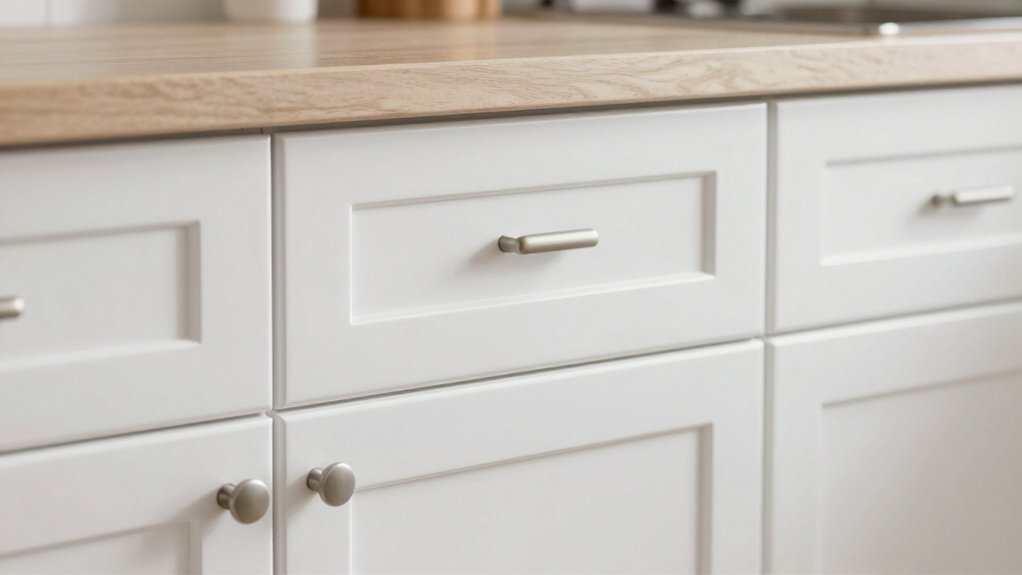
What white paint brands consistently deliver for kitchen cabinets regarding coverage, durability, and color stability? In this landscape, you evaluate performance by three metrics: uniform color rendering, dependable hide, and resistance to scuffing.
Top brands align with long-life credibility, offering premium sheens and low VOC formulations that stay true through repeated cleaning. You’ll notice paint application is smoother with high-grade resins and consistent pigment load, reducing the risk of streaks and inconsistencies across panels.
Color mixing outcomes matter: expect stable off-whites or true whites under varied lighting, with minimal yellowing over time. For your project, prioritize brands that disclose coverage claims per coat and provide durable satin or semi-gloss options optimized for cabinet environments.
Prep, Primer, and Topcoat: Prep Steps for a Flawless Finish
The prep workflow starts with a clean, dust-free surface and ends with a uniform profile ready for primer. You’ll degrease, scuff, and wipe to remove contaminants that compromise adhesion. Mask edges, hardware, and adjacent trim to prevent stray paint.
Evaluate substrate porosity; sand open-pore areas to encourage even primer uptake. Choose a compatible primer and apply in even, cross-direction strokes, maintaining a consistent wet edge. Allow proper cure and lightly sand between coats for a flawless foundation.
When you proceed to topcoat, maintain a controlled environment to minimize dust nibs and spiderwebs. Consider cabinet hardware compatibility, protecting fasteners during painting. Employ precise paint application techniques: consistent pressure, smooth motion, and minimal stop-start pauses.
This workflow yields optimized adhesion, film build, and color uniformity.
Real-World Pros and Cons of Popular White Paints
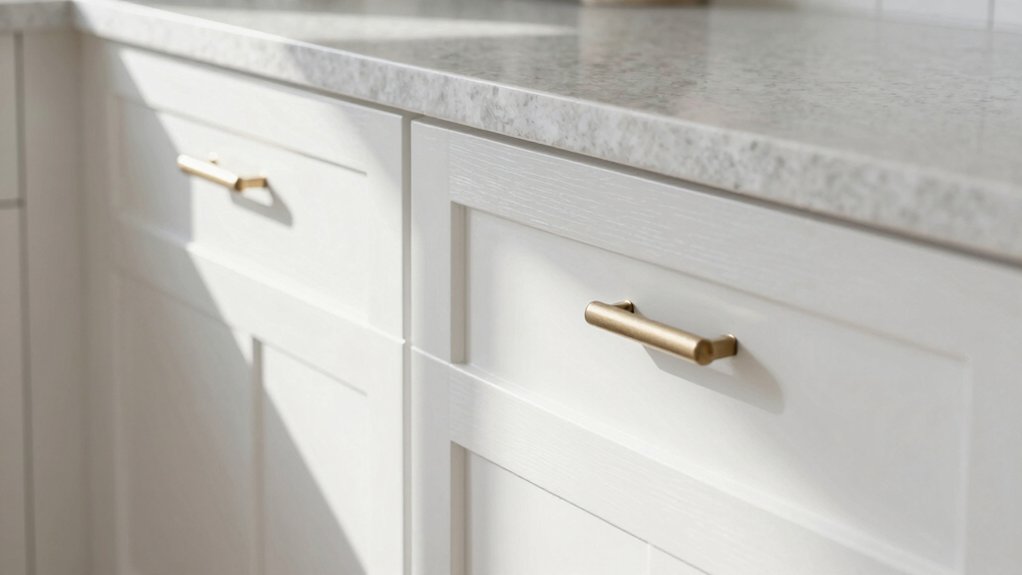
When choosing white paints for kitchen cabinets, you’ll weigh attributes like coverage, finish, and maintenance against evolving pigments and binders that affect appearance over time. Real-world choices reveal distinct pros and cons you’ll observe during color mixing and paint application.
A high-coverage option reduces coats but may emphasize brush marks or roller stipple if not applied with proper technique. Elsewhere, ultra-flat finishes hide imperfections yet show fingerprints and smudges more readily, demanding diligent maintenance.
Satin and semi-gloss balances offer easier wipeability but can reveal inconsistencies in tinting across batches. Durability varies with binder chemistry; some whites yellow with age or react to UV exposure, while others stay crisp.
Plan for touch-ups and color stabilization, ensuring your color mixing results translate consistently in final paint application.
Conclusion
Choosing the right white for your kitchen cabinets is rarely a reckless fling; it’s a careful commitment. Consider warmth, undertones, and finish, then prep relentlessly for a flawless result. If you’re unsure, start small with a test patch and a quiet sheen. With deliberate testing and steady coats, you’ll minimize disappointment and maximize satisfaction. In short, pick wisely, prep thoroughly, and enjoy the kitchen that quietly reflects your impeccable taste.