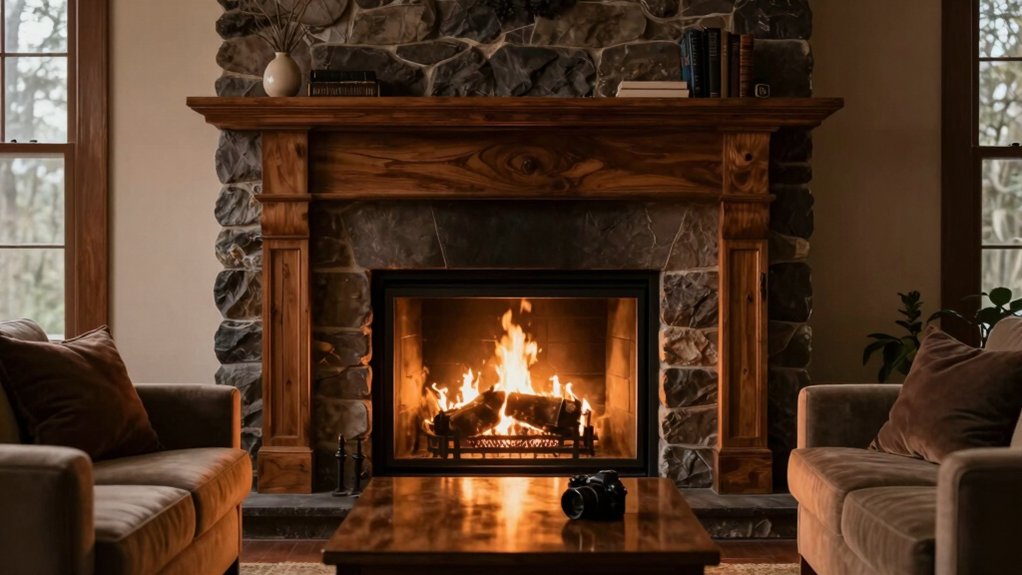
A fireplace anchors your living room, guiding furniture placement, rhythm, and flow. Start with a strong mantel that sets height and scale, then add pieces that echo its warmth without clutter. Balance formal symmetry with varied heights to soften space and expose the wall behind. Arrange seating to face the fire, framing cozy zones with rugs and lighting. Choose textures—stone, wood, textiles—for tactile harmony. If you keep exploring, you’ll uncover more design moves to master the hearth’s impact.
The Mantel as a Focal Point
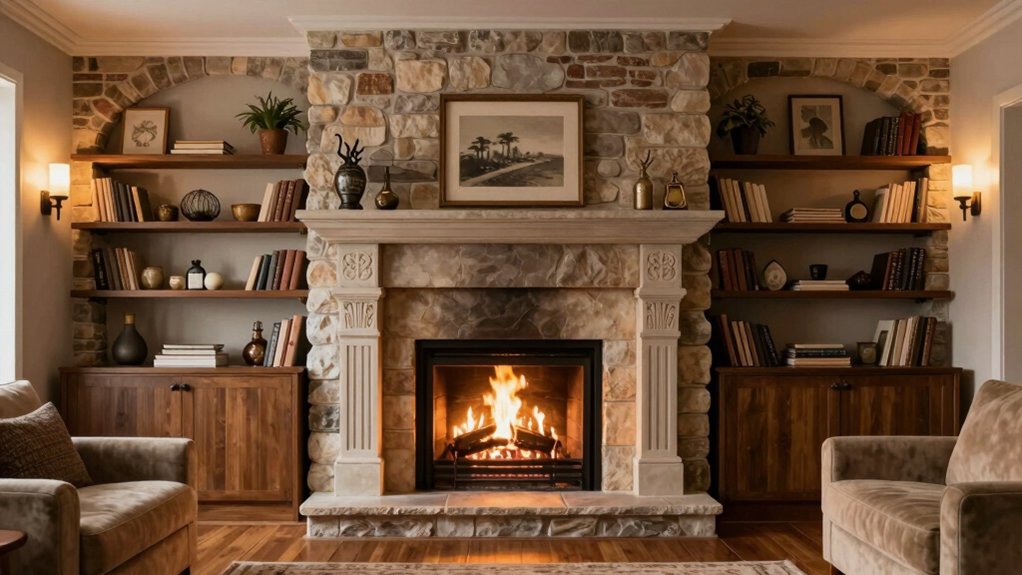
A fireplace mantel isn’t just a decorative shelf—it’s the room’s natural centerpiece. You tune the mantel as a focal point by aligning scale, balance, and rhythm with nearby furniture.
Choose fireplace accessories that reinforce function: a clock, framed art, or a mirror to reflect warmth and light without crowding. Keep mantel decor intentional—avoid clutter; aim for a concise story that speaks to the space’s purpose.
Start with a strong anchor piece, then add supporting elements at eye level to guide sightlines. Consider symmetry for formal rooms or varied heights for casual vibes, ensuring gaps expose the wall behind.
The result should feel cohesive, inviting, and breathable, drawing attention to the fire while supporting adjacent seating and flow.
Fireplace Styles and Room Rhythm
Your mantel height sets the room’s rhythm, guiding how you move through the space and where accents land. Consider how proportions shape flow, so the fireplace reads as a cohesive anchor rather than a separate element.
When you tune height and scale, you create a balanced frame that harmonizes style with function.
Mantel Height Impact
How high should a mantel sit to balance function and form in a room? You measure with intent: eye level when you’re standing, plus room rhythm. A lower mantel reinforces coziness and fuels conversational flow, while a higher one creates a vertical anchor that scales ceilings and furnishings.
Aim for roughly 54 to 60 inches from floor in standard rooms, adjusting for ceiling height, seating distance, and art placement. This height supports visual hierarchy without obstructing sightlines or heat, preserving safety and comfort.
Choose mantel decorating ideas that emphasize balance—slender panels, a single focal piece, or a mirror to bounce light. Remember fireplace safety and proportional framing, ensuring the mantel enhances, not overwhelms, the space.
Proportions and Flow
Proportions and Flow hinge on how a fireplace styles the room and guides rhythm from one zone to another. You shape sightlines and traffic by choosing scale, placement, and nearby furniture that breathe with the fireplace as a focal point.
Aim for a balanced silhouette that anchors without dominating, so paths feel natural and rooms read as a single composition. Consider proportional relationships between mantel height, hearth depth, and surrounding cabinetry or seating to keep a cohesive rhythm.
Functional needs meet aesthetic intent when you plan circulation corridors and seating angles that point toward the flame. Include practical elements like fireplace ventilation and chimney design in your layout so warmth and airflow support comfort, clarity, and quiet visual cohesion.
Heat, Light, and Furniture Placement
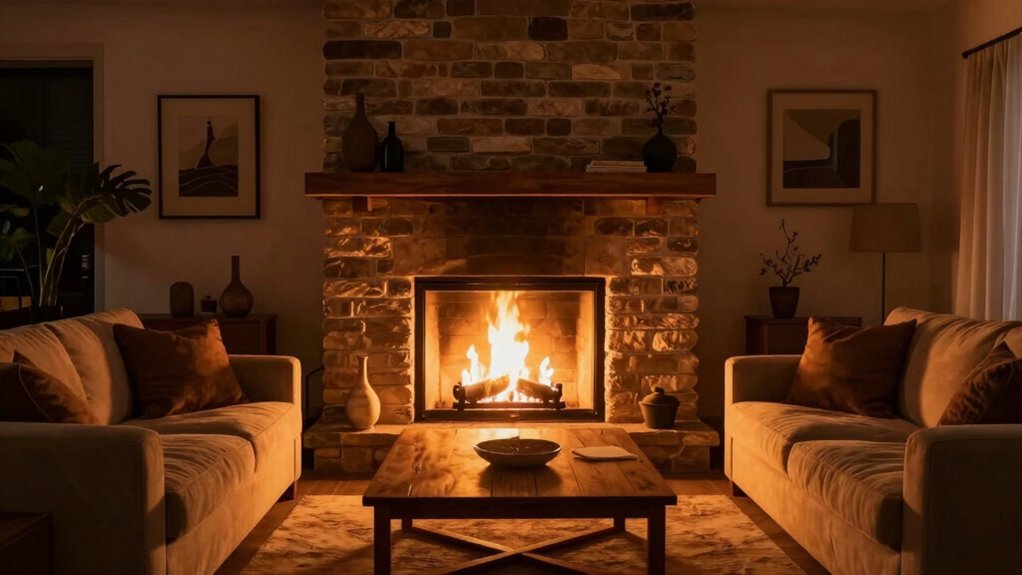
When a fireplace anchors a room, heat, light, and furniture placement must work together to shape flow and mood: warm zones should invite seating, bright patches should highlight focal pieces, and the layout should maintain clear pathways.
You balance warmth with proportions, ensuring chairs and sofas form intimate clusters without crowding the hearth. Place seating to leverage both heat and illumination, avoiding glare on screens or art.
Use rugs and lighting to frame zones, creating visual depth and safe circulation. Incorporate fireplace maintenance into routines, keeping the aperture clean and vents clear for efficiency.
Adhere to safety precautions, such as clear zones around logs and screens. This approach sustains function, aesthetic balance, and spatial clarity.
Textural Harmony Around the Hearth
Textural harmony around the hearth means using tactile contrasts to deepen warmth and define zones. You pair rough and smooth surfaces to cue different functions, from seating to display, without shouting decoration. Start with a durable stone base that grounds the space, then layer textiles—a wool throw, cotton cushions, and a velvet pouf—for inviting variation.
A wood mantel adds grain rhythm, while a metal accessory introduces a cool edge that keeps the focus balanced. In color coordination, keep a restrained palette and let texture carry the energy: one dominant tone with two supporting hues. Use rugs to anchor seating and absorb noise, while wall treatments remain subtle to preserve proportion.
The result is a cohesive, sunken-in feel that respects scale and flow.
Layout Flows: From Ambience to Architecture
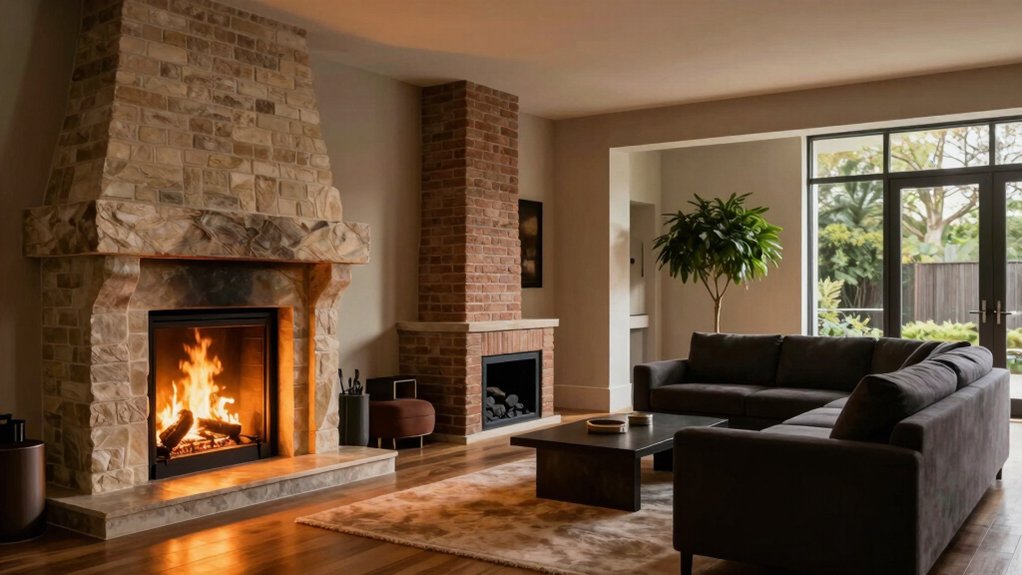
Layout flows chart how ambience translates into architecture: you guide sightlines, traffic, and focal points so the living room feels cohesive from seating to structure. You analyze how the fireplace anchors layouts, creating pathways that prioritize comfort without clutter.
Position seating to frame the hearth, letting warmth radiate through zones while preserving clear circulation. Use deliberate focal points—art, windows, or built-ins—that balance scale and proportion around the fire.
Consider circulation arrows in plans, ensuring screens, furniture, and rugs don’t obstruct movement. Emphasize fireplace safety in every layout decision, from clearance to access.
Plan for energy efficiency by aligning vents, radiators, or inserts with natural flow, reducing heat loss. The result: a purposeful, harmonious space where ambience informs architecture.
Choosing Materials and Proportions for Balance
Choose materials that echo each other across surfaces, so textures and tones read as one steady rhythm.
Keep proportions purposeful: a solid fireplace against lighter walls, or vice versa, to frame the room without shouting.
In service of balance, favor clear edges and restrained details that enhance function and space, not compete with it.
Material Harmony
When you’re selecting materials for a fireplace and living room, aim for a cohesive mix that feels unified from near to far. Material harmony means choosing textures and tones that repeat across surfaces, creating a visual rhythm without shouting for attention. Pair warm stone with wood, then temper with matte plaster or ceramic tile to avoid glare.
Consider scale: larger slabs anchor the fireplace, smaller inserts echo accents elsewhere. Balance durable, easy-clean surfaces with tactile niceties that invite touch. Think acoustics as you finish: subdued materials reduce echo, improving fireplace acoustics in conversation spaces.
Address smoke management early by aligning hearth depth, flue routing, and glass choices to minimize drafts and containment needs. The result is a quiet, cohesive framework that supports function, form, and flow.
Proportion Balance
Proportion balance hinges on pairing material scale with the room’s volume so the fireplace sits as a calm, anchored focal point. You choose surfaces, textures, and tones to echo the room’s silhouette, not compete with it.
Start with the mantle height and hearth width to frame the opening without overpowering sightlines. Select materials that read proportionally: a bold stone balances a delicate surround; wood warms a cool metal with similar mass.
Keep negative space intentional to protect flow, circulation, and views. Prioritize symmetry or deliberate asymmetry to guide the eye.
Consider fireplace safety by avoiding visually heavy, unsafe adornments near heat. For energy efficiency, align insulating materials and glazing details to minimize heat loss while preserving aesthetic balance and functional clarity.
Conclusion
You feel the fireplace guiding your room like a quiet conductor, shaping light, heat, and mood into one harmonious chord. Let the mantel frame your moments, and your furniture listen to its rhythm. The fire’s glow paints textures, accents, and spaces with intention, turning walls into whispers of balance. In this glow, you’ll discover flows and pauses—architecture that feels lived-in, purposeful, and endlessly welcoming. Embrace the hearth, and your living room becomes a living, breathing design.