You might think polished concrete is high-maintenance, but with simple routines you can keep it looking sharp. Start with daily dusting to prevent scratches, and blot spills quickly rather than scrubbing. Use neutral cleaners sparingly, rinse well, and make certain the surface dries before sealing. Watch moisture at joints and humidity, seal when needed, and protect high-traffic areas with mats and pads. Small, steady steps add up—and you’ll see how a few tweaks sustain that shine and resilience.
Daily Dusting and Spill Management
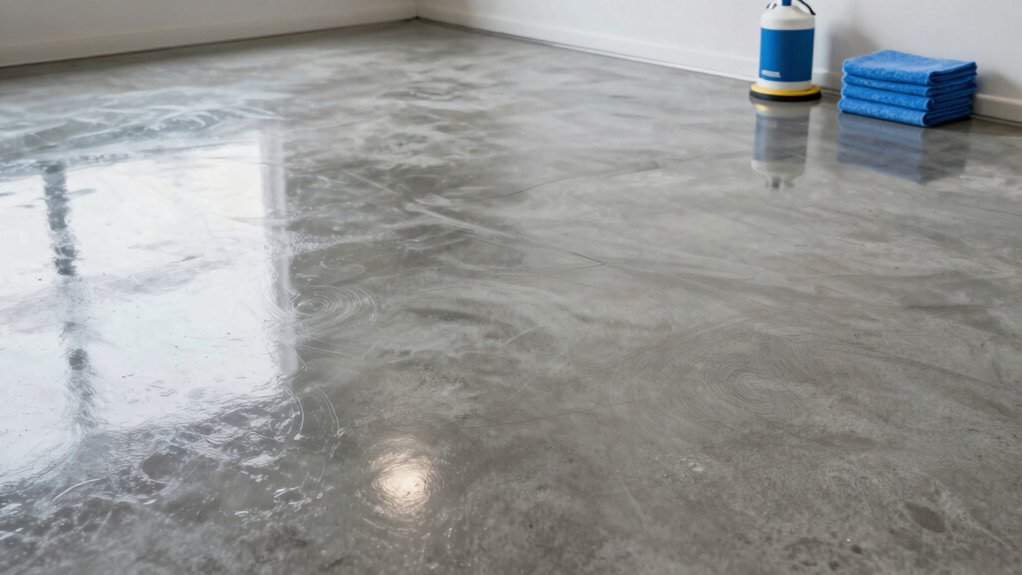
Daily dusting and spill management starts with a simple routine. You dust or sweep daily to remove debris that can grind into the surface. Use a microfiber broom or dry mop, moving in steady, overlapping strokes. Avoid jagged motions that scatter dust.
When spills happen, act fast: blot with a soft cloth to lift liquid, then wipe the area with a damp microfiber pad. Don’t scrub; you’ll push material into tiny pores. For sticky residues, apply a small amount of neutral cleaner, let it sit briefly, and wipe clean.
Dry the spot completely to prevent water spots. Schedule a quick weekly pass with a microfiber mop to maintain shine, and inspect edges for grit buildup.
Consistency protects polish and extends floor life.
Mopping and Cleaning Techniques for Polished Concrete
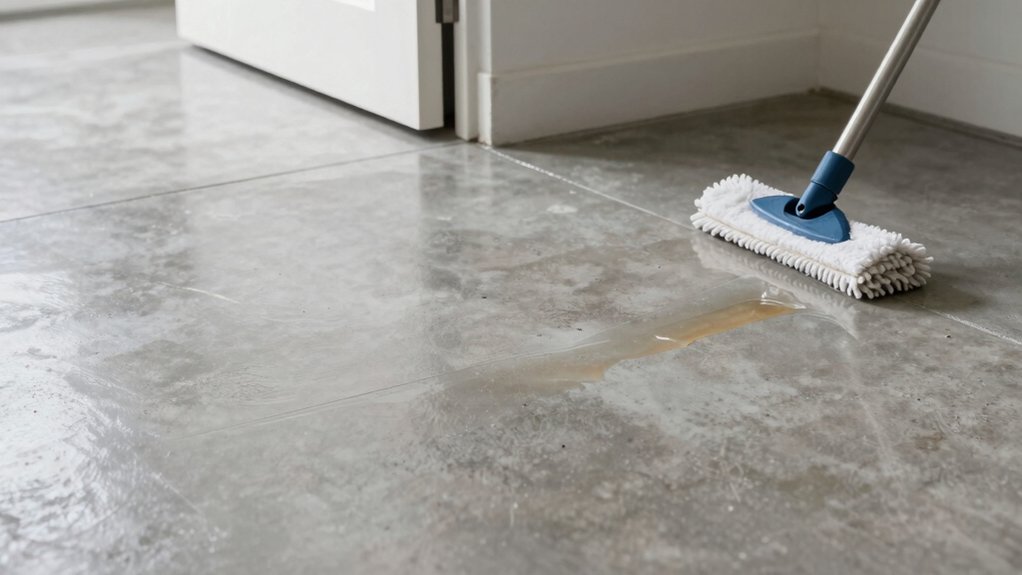
Mopping and cleaning polished concrete is about consistent technique, not brute scrubbing. You’ll keep the surface gleaming by using a damp mop, not a soaking one, and by moving in uniform, overlapping strokes.
Pick a neutral pH cleaner designed for polished floors, and avoid harsh solvents that can dull the shine. Dilute according to the product label, then rinse sections with clear water to prevent residue buildup. Work in small areas to monitor streaks, re-wetting the mop as needed.
Medium-grit pads aren’t needed for routine cleaning; they can dull the polish over time. Dry the floor with a microfiber pad or a soft squeegee to reduce water spots.
Schedule cleaning after spills and high-traffic periods for best results.
Controlling Moisture and Humidity
Controlling moisture and humidity is essential to prevent warping, staining, and lapses in shine on polished concrete floors. You’ll start by sealing exposed edges and joints to deter slow moisture ingress.
Monitor humidity levels with a reliable hygrometer and target a stable range suited to your slab and sealer. Use dehumidification in damp spaces and ensure proper ventilation during and after cleaning.
When applying sealers or densifiers, confirm the concrete is dry to the manufacturer’s spec to avoid trapped moisture. Address leaks promptly and repair any water intrusion sources, such as roofs or plumbing, before finishing or resealing.
Schedule seasonal checks, especially in basements or ground-level areas, to sustain surface density and appearance over time. Maintain consistent temperatures during curing and acclimation to reduce warping risks.
Protecting From Scratches and Surface Damage
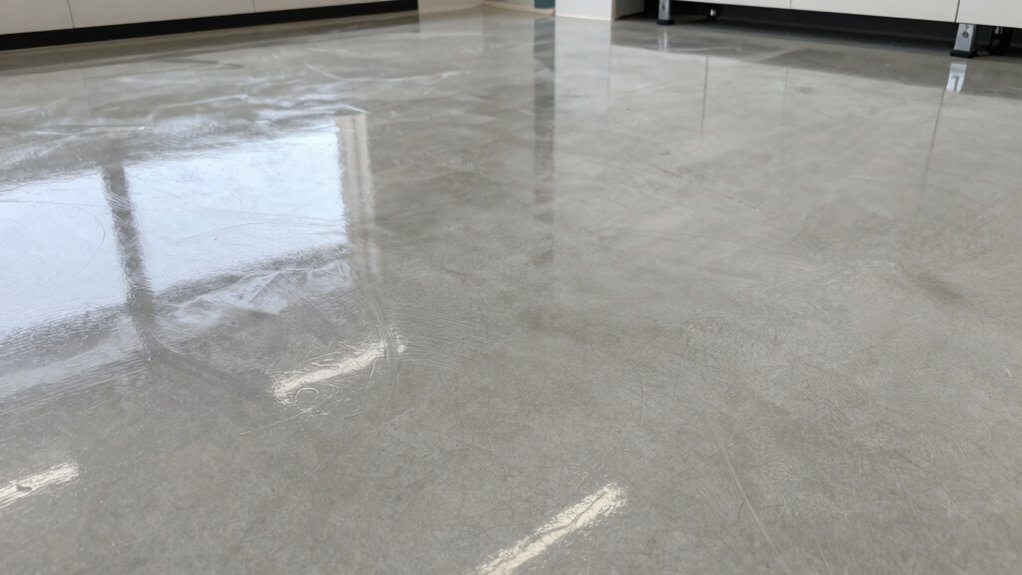
Protecting from scratches and surface damage starts with a clear plan for traffic, tools, and care steps. You map high-traffic zones, mark them, and rotate duties to minimize wear on any single area. Use felt pads on furniture legs and avoid dragging heavy items across the floor. Separate cleaning tools: a soft, damp microfiber mop for routine wipes and a dry dusting method to lift grit before mopping.
Choose pH-neutral cleaners and dilute them according to manufacturer instructions to prevent residue. Place mats at entrances to trap sand and grit before it reaches the polish. When you work, use controlled motions, not harsh scrubbing, and dry the surface after cleaning to prevent streaks and moisture soaking.
Schedule periodic inspection for dull spots or micro-scratches and address promptly.
Stain Prevention and Spot Treatment
Stain prevention starts with a proactive routine: identify likely spill sources, set quick-response steps, and keep the right tools ready. Establish a spill kit with paper towels, microfiber cloths, a neutral cleaner, and a non-acidic degreaser.
Train everyone to blot spills immediately rather than rubbing, which can spread stains. For common culprits like coffee, wine, and oil, apply an absorbent powder, let it sit briefly, then sweep up before cleaning with a mild detergent and water. Rinse and dry to prevent moisture traps.
Use entry mats to reduce grit tracking and place trays under high-risk areas. Test cleaners on a small, inconspicuous area first. For spots that resist, repeat the routine or consult a floor-care guide rather than applying harsh chemicals.
Regular maintenance reduces long-term staining risk.
Periodic Refinishing and Honing
Periodic refinishing and honing keeps polished concrete floors looking uniform and lasting longer. You’ll plan refinishing based on wear patterns, typically every 3–7 years, depending on traffic and use.
Start with a light diamond-pad honing to open the surface, removing embedded contaminants and micro-scratches. Vacuum thoroughly, then assess if a deeper cut is needed to restore a uniform appearance.
Use a clean, damp mop to remove dust before resealing. Apply a compatible densifier or sealer, following product directions for cure times.
When refinishing, choose a polish level that matches existing sheen and traffic needs. Then progressively light-pass with finer diamonds to achieve uniform gloss.
Re-test slip resistance after curing. Maintain managed traffic, promptly address spills, and schedule periodic coatings to preserve density and luster.
Long-Term Maintenance Schedule and Care Tips
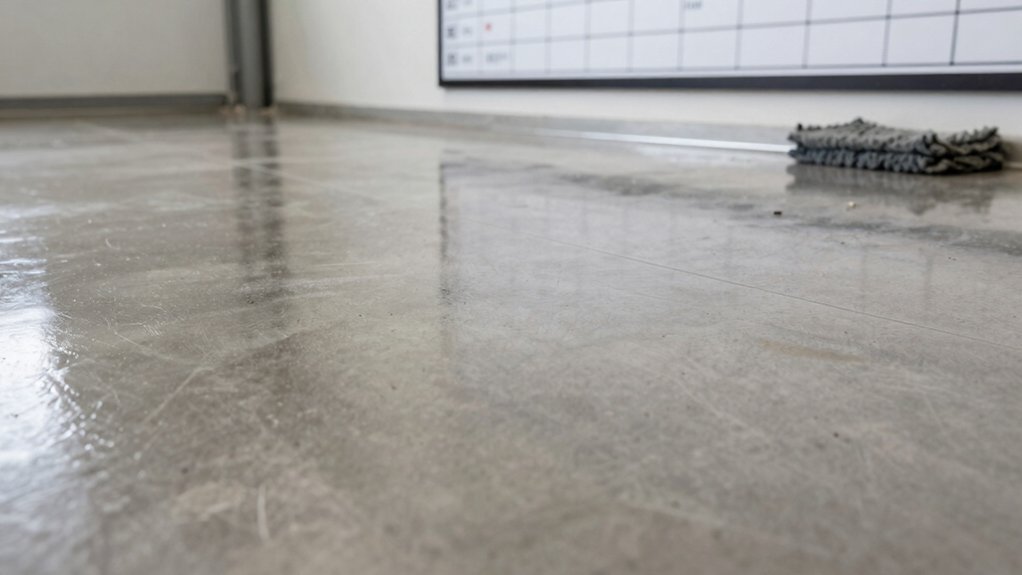
Establish and follow a clear long-term maintenance plan to preserve gloss, density, and slip resistance. Schedule quarterly inspections to spot dullness, micro scratches, or embedded debris, and address them promptly.
Create a simple routine: daily light dusting with a microfiber mop, and wipeups for spills within minutes to prevent staining. Use a pH-neutral cleaner at dilute strength when mopping, and avoid harsh chemicals that can wear the surface.
Periodically reseal high-traffic zones per manufacturer guidance to maintain gloss and density, typically every one to two years, depending on use. Buffing between deep cleanings can restore luster without complete refinishing.
Track results, adjust frequency, and train staff to follow steps consistently. Document products, methods, and outcomes to measure long-term performance.
Frequently Asked Questions
How Long Does a Polished Concrete Floor Last Before Resealing?
A polished concrete floor lasts about 1 to 3 years before resealing, depending on traffic and coatings. Inspect regularly, clean with pH-neutral products, and reapply sealer when you see dullness, wear, or increased staining. Plan resealings accordingly.
Can High-Traffic Areas Be Polished to a Matte Finish?
Yes, you can, but it’s tricky; you’ll need to systematically dull the sheen with controlled abrasion, then apply a matte sealant or penetrating coating, and regularly maintain with lighter passes and proper cleaning to prevent glare.
Do Pets’ Claws Scratch Polished Concrete More Than Shoes?
Yes, pets’ claws scratch polished concrete more than shoes. You’ll reduce damage by keeping nails trimmed, using protective mats, upgrading sealant, and using soft-soled shoes indoors; clean regularly, and avoid dragging heavy objects to minimize scratches. And wow, resilience.
Is There a Safe Polishing Product for Kitchen Spills?
Yes, use a pH-neutral concrete polish or sealer labeled safe for kitchens, apply per product directions, then buff. For spills, wipe immediately, rinse, and reapply a thin protective coat to maintain shine without slipping.
How Often Should You Recalibrate the Grinder for Shine?
You should recalibrate the grinder for shine after every major grit change or noticeable dullness. Check alignment, test on a sample area, adjust speed and pressure, then re-polish until you consistently achieve uniform, high-gloss results.
Conclusion
Maintaining polished concrete is a steady, methodical ritual you can master with discipline. Think of your floor as a well-tuned instrument: daily dusting keeps the surface pristine, gentle blotting saves the shine, and neutral cleaners, used sparingly, prevent residue buildup. Control moisture with care, shield from scratches with mats and felt pads, and address stains promptly. With a routine refinishing plan and consistent care, the surface will stay gleaming, resilient, and quietly speaking of your meticulous craft.