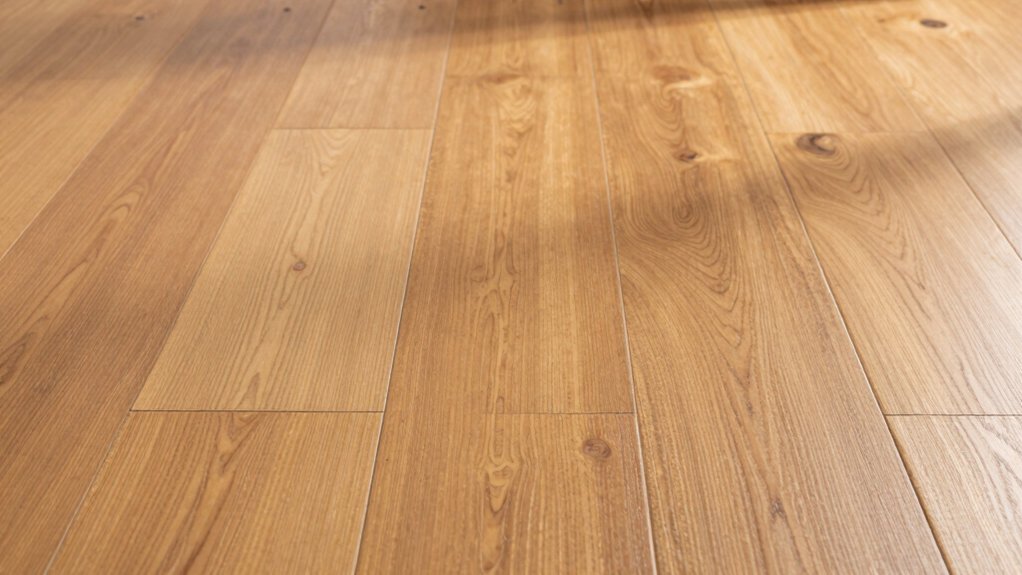
Engineered wood flooring offers layered construction for stability and moisture resistance, giving you a practical alternative to solid wood. You’ll gain easier installation, more design options, and lower upkeep, but the thinner wear layer can limit refinishing and long-term durability. With moisture exposure and improper installation posing risks, you’ll want to weigh where it fits best. The balance of aesthetics and practicality hinges on setup, care, and how you manage the wear over time.
What Is Engineered Wood Flooring?
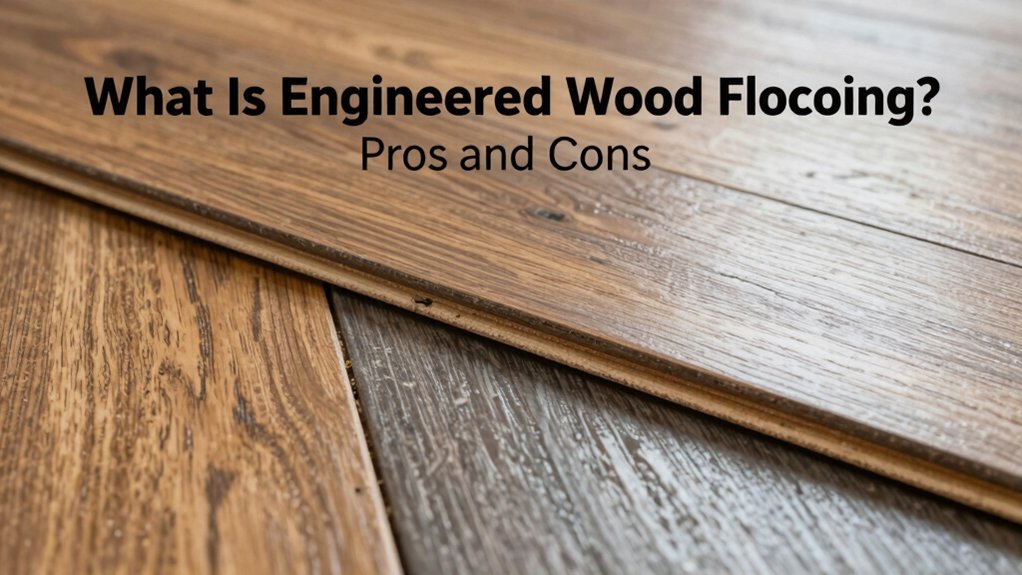
Engineered wood flooring consists of a layered construction that combines a solid or high-quality wood surface with one or more underlying layers of plywood or fiberboard.
You position this product as a composed flooring system designed for dimensional stability and improved performance under varying conditions. The top veneer represents the visible grain and color, while the core provides rigidity and resistance to moisture and temperature fluctuations.
Construction methods include cross-piber or high-density fiberboard cores, bonded with adhesives to assure dimensional integrity. You’ll find thicknesses and species ranges that mimic solid wood aesthetics while offering cost and installation advantages.
Performance characteristics stem from veneer quality, core density, and edge profiling, which influence wear resistance, sanding feasibility, and long-term stability in real-world environments.
Advantages: Stability, Installation, and Maintenance
The engineered construction delivers clear benefits in stability, installation, and ongoing upkeep. You benefit from dimensional stability thanks to a layered core that resists swelling and contraction with humidity changes. This minimizes gaps and deformation in typical indoor climates.
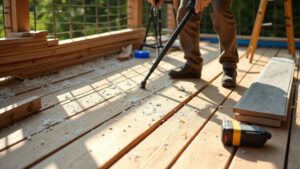
Installation is streamlined by precision milled panels, compatible with multiple subfloors and fast-install methods; you can deploy click-lock or glue-down systems with predictable results.
Maintenance stays straightforward: clean regularly, avoid excess moisture, and refinish per manufacturer guidelines to extend life. You’ll experience a consistent surface appearance due to engineered veneers, which resist surface cracking and wear when matched to traffic needs.
With stable performance, easier installation, and manageable upkeep, you gain a reliable flooring solution for residential or light commercial spaces.
Potential Drawbacks: Wear Layer and Moisture Sensitivity
One key drawback to take into account is wear layer thickness, which determines how quickly surface damage becomes visible. Thinner wear layers pare down refinishing options, while thicker layers extend the life and allow multiple resurfacings.
You must consider wear layer as a limiting factor for restoration, not just initial appearance. In practice, surface scratches, dents, and edge chipping expose a shorter service window on low-thickness profiles.
Moisture sensitivity adds another constraint: engineered planks respond to humidity and spills with dimensional changes, cupping, or warping if subfloor conditions aren’t controlled. Choose boards with appropriate moisture resistance for your climate, and ensure proper acclimation and installation practices.
Regular cleaning won’t compensate for insufficient wear depth or persistent moisture exposure, which erode performance and can void warranties. Prioritize balanced specifications to align with anticipated use and maintenance capabilities.
Durability and Refinability Considerations
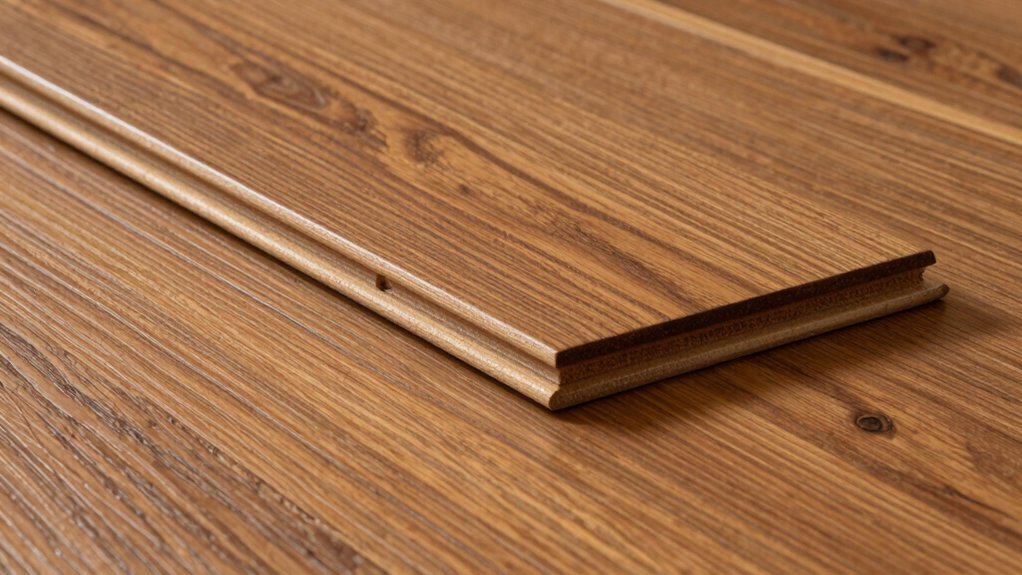
Durability and refinability hinge on balancing wear depth, dimensional stability, and resurfacing options to match your usage and maintenance routine. In engineered wood, wear depth dictates service life; thicker wear layers allow more removals without compromising core integrity.
Dimensional stability matters under moisture changes and temperature swings; engineered cores reduce expansion and contraction relative to solid wood.
Refinability hinges on veneer thickness, adhesion quality, and finishing compatibility, guiding how many refinishing cycles you can perform. Choose plywood or HDF cores with stable veneers to optimize wear-layer performance.
Finishes should resist abrasion and maintain UV stability to minimize graying.
Installation method influences stability; floating systems accommodate seasonal movement better than nailed or glued joints.
For high-traffic areas, specify a robust wear layer and a compatible finish to balance longevity and refinishing practicality.
Best Use Scenarios and Care Tips
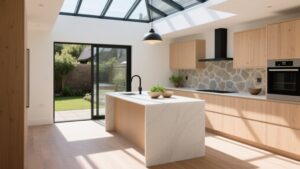
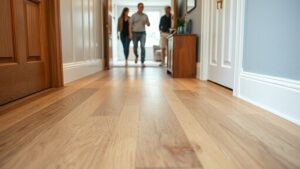
Best use scenarios and care tips help you match engineered wood flooring to activity levels and maintenance routines. You’ll prioritize rooms with moderate traffic, like living areas and bedrooms, where stability and appearance matter most.
For high-traffic spaces, choose thicker veneers and proper underlayment to minimize wear. In kitchens and baths, ensure proper sealing and moisture control, and consider water-resistant finishes or mats at entry points.
Humidity management matters: keep within 30–50% to prevent gaps and cupping. Cleaning stays simple: use a soft, damp mop and avoid excessive water; use manufacturer-approved cleaners.
Preventive care includes rapid spill cleanup, felt pads under furniture, and area rugs in high-traffic zones. Routine inspections catch edge separation early, preserving long-term dimensional integrity and finish performance.
Frequently Asked Questions
What Factors Affect Engineered Wood Vs Solid Wood Cost?
Factors include material price, veneer thickness, decorative grade, core composition, manufacturing, installation method, finishing, and supplier margins; you’ll also weigh wear layer durability, room size, substrates, and warranty terms when comparing engineered to solid wood costs.
Can Engineered Wood Improve Resale Value in Homes?
Engineered wood can improve resale value by offering durable, mistaken-for-solid aesthetics and easier installation; you’ll appeal to buyers seeking stability, moisture resistance, and cost efficiency, while maintaining a premium look that complements modern interiors and fast schedules.
How Does Core Construction Influence Sound Absorption?
Core construction influences sound absorption: thicker cores with porous layers can reduce room reverberation by up to 20%, improving intelligibility. You’ll hear clearer footsteps and voices as you choose materials optimized for damping, frequency performance, and installation.
Are There Eco-Friendly, Low-Voc Engineered Options Available?
Yes. You can choose eco-friendly, low-VOC engineered options by selecting formaldehyde-free cores, certified compliant veneers, and low-emission adhesives; verify VOC metrics, third-party certifications, and lifecycle impact to guarantee durable, healthier indoor air quality.
What Are Common Installation Mistakes to Avoid?
You’ll avoid gaps by acclimating properly, measuring precisely, and preparing subfloors. Don’t ignore moisture, expansion gaps, or tool guidance; missteps crack seals, warp planks, and shorten life. Stay disciplined, follow manufacturer specs, and verify every step.
Conclusion
Engineered wood flooring offers a practical balance of control, cost, and design. It’s dimensionally stable, easier to install, and easier to maintain than solid wood—when you choose the right wear layer and monitor moisture. But remember, the thinner wear layer limits refinishing, and moisture poses risks if installation isn’t perfect. If you match the product to your environment and care routine, you’ll get solid performance. In short, you’ll reap the rewards without overextending your budget. It’s a smart bet. It’s a tight ship.