
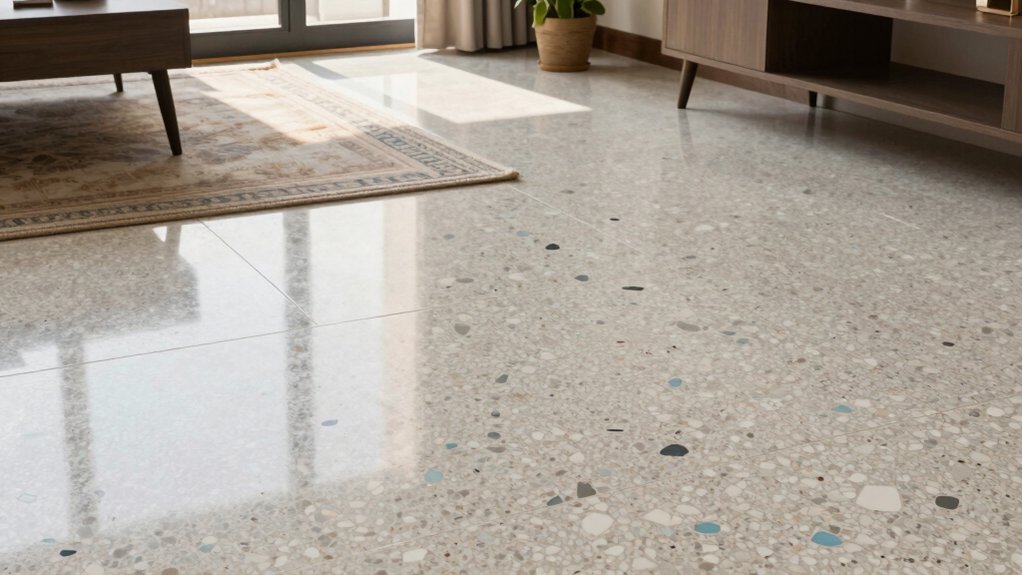
A modern home might feature a terrazzo floor in a sunlit entry, with microchips of glass catching the light as you wipe your shoes. You weight durability against cost, surface upkeep against the polish you crave, and you feel the balance of seamless beauty with everyday practicality. It’s quiet underfoot, low maintenance, and endlessly customizable, but getting the finish right requires skilled hands and a solid plan. So, what fits your space and budget best?
What Is Terrazzo and How It Works at Home
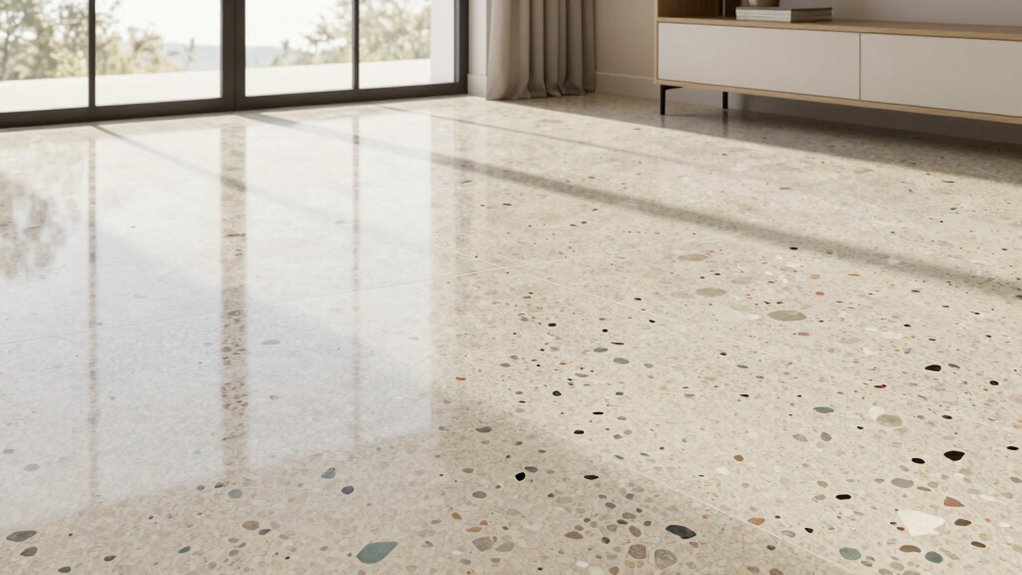
Terrazzo is a monolithic flooring option made from cement or epoxy bound with chips of marble, glass, or quartz. You’ll see a seamless canvas that reads as durable and refined, not busy or fussy.
At home, the process begins with a poured or embedded mix that cures into a hard, smooth surface you can walk on barefoot. In daylight, the chips catch light, delivering micro-sparkle without glare. You’ll notice a tactile, cool surface that anchors rooms while keeping lines clean and uninterrupted.
Maintenance stays straightforward: seal periodically, mop with a mild cleaner, and you’ll preserve color depth. You control the palette—color shards or tonal blends—while the texture stays consistent across the space.
It harmonizes with metals, wood, and glass for a cohesive look.
Pros and Cons of Terrazzo in Residential Spaces
A well-chosen terrazzo floor can elevate a home with durability and a refined, quiet drama, but it comes with trade-offs you’ll want to weigh. You’ll notice a sleek, seamless surface that rewards high-traffic zones, yet it can feel cold underfoot without radiant warmth.
The design freedom is a plus: customize colors, chips, and patterns for a cohesive aesthetic that ages gracefully. Maintenance leans practical: regular sealing protects against stains, while cleaning stays straightforward with damp mops.
It also offers long life, resisting chips and scratches in common areas. Consider installation timing, as complex substrates or large slabs affect downtime and budget.
You gain timeless resale appeal and minimal joints, but you may sacrifice soft acoustics and cost predictability. Overall, it blends longevity with a bold, minimalist statement.
Cost Considerations for Residential Terrazzo Floors
Choosing terrazzo for a home isn’t just about looks—it’s about balancing upfront costs with long-term value, and that starts with knowing the budget drivers: material mix, slab size, and installation complexity.
You’ll feel the impact of material choice on price as you compare cement-based mixes with resin-enhanced blends, each altering color, texture, and durability.
Slab size dictates waste, joints, and handling—larger panels reduce seams but require more specialized equipment and precise spacing.
Installation complexity affects labor time, substrate prep, and curing demands, shaping daily disruptions and finish quality.
Consider hidden costs like prep, sealing, and ongoing maintenance, which influence lifecycle value.
A informed estimate lets you balance tactile elegance with financial clarity, ensuring your terrazzo satisfies both design intent and budget reality.
Design Options: Color, Aggregate, and Finish Choices
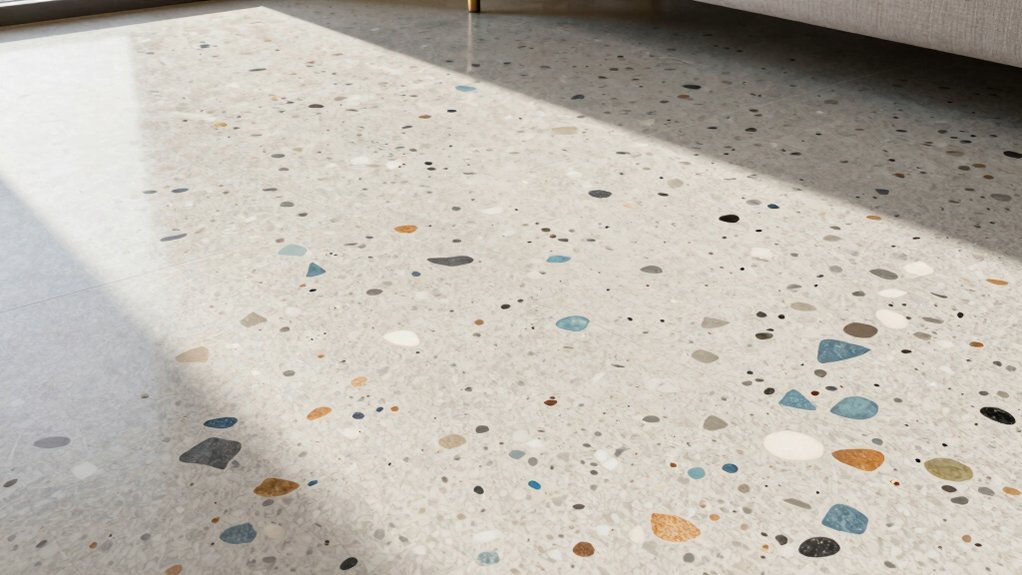
Color, aggregate, and finish choices shape the room’s mood and texture, so start with your preferred palette and movement. You’ll balance bold versus subtle tones, choosing hues that reflect light and create atmosphere.
In terrazzo, aggregate size and color define rhythm—opt for a consistent granule scale for a calm look, or mix fragments for energy. Consider glass, marble, or quartz bits for sparkle, or matte chips for softness.
Finish matters: a high-gloss seal amplifies color, while honed or matte surfaces feel restrained and tactile. Think about grout interaction; light grout widens space, dark grout grounds patterns.
Test samples in natural and artificial light to preview how pigments evolve. Finally, map a cohesive trio—color, aggregate, finish—that anchors your design intent.
Installation Realities: Scheduling, Prep, and Skilled Craftsmanship
Getting terrazzo installed on schedule hinges on solid prep and expert hands: you’ll lock in timing with the installer, prep the subfloor to a pristine, level plane, and set expectations for material lead times, crew traffic, and curing windows.
You’ll assess substrate stiffness, moisture, and cleanliness, because a flawless pour begins with a calm, prepared base.
Communication stays sharp: confirm mix ratios, aggregate size, and finish sheen before any trowel touches concrete.
Scheduling respects curing rhythms, ventilation, and ambient temperatures that affect set times.
Your crew works with precision tools, mapping guide lines, and ensuring edge control for seamless borders.
Attention to detail saves rework, reduces dust, and preserves material integrity, delivering a surface that feels deliberate, durable, and refined from first cut to final reveal.
Maintenance and Longevity: Keeping Terrazzo Beautiful
Maintenance and longevity hinge on proactive care that preserves terrazzo’s luster and strength. You’ll protect its beauty by sealing when needed and addressing micro scratches with a gentle polish that restores glaze without heaviness.
Daily use benefits from clean, residue-free floors; mop with a soft rhythm, avoid harsh solvents, and wipe spills promptly to prevent staining. In high-traffic zones, dust mopping keeps grit from dulling the surface’s sheen.
Periodically, screening and resealing maintain that terrazzo glow. A professional refresh touches embedded aggregates and micro-cracks, preserving structural integrity.
Think of upkeep as design maintenance: consistent, deliberate, and unobtrusive. Choose tools that respect texture and color, and schedule routine checks to catch wear before it becomes visible, sustaining a timeless, museum-worthy finish.
Best Rooms and Applications for Terrazzo in a Home
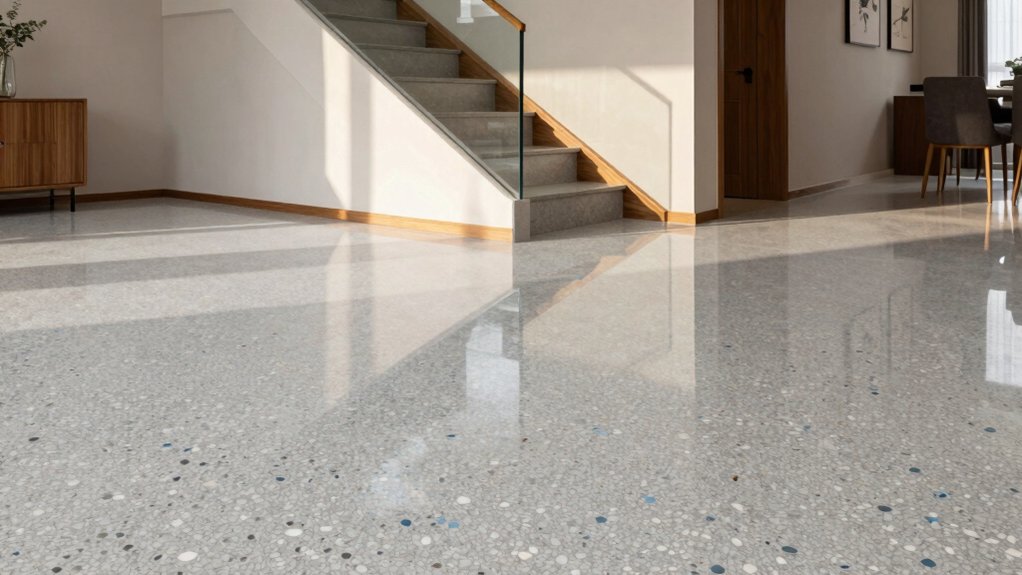
Terrazzo fits almost any room, but its best home is where durability meets daily life: kitchens, entryways, bathrooms, and living areas that invite touch and foot traffic.
You’ll notice its seamless surface promotes flow, while speckled depth adds texture without clutter. In kitchens, choose a resin-rich mix for knife-scar resistance and easy wipe-downs, with a matte finish that hides spills.
Entryways benefit from a bold, durable pattern that kinds of wear fade gracefully, paired with a matte seal to reduce glare.
Bathrooms gain a spa-like stillness; non-slip textures and cooler tones enhance calm.
Living areas invite barefoot strolls, so prefer lighter tones with microchips of color for personality.
Frequently Asked Questions
How Long Does Terrazzo Last in High-Traffic Residential Areas?
Terrazzo lasts decades in high-traffic homes if properly installed and sealed, resisting wear beautifully. You’ll notice long life from polished, durable surfaces that stay cool, create clean lines, and reward routine maintenance with fewer replacements over time.
Can Terrazzo Be Repaired Easily After Cracking or Staining?
Yes, you can repair terrazzo after cracking or staining, using epoxy or cementitious patches and polishing for seamless finish. It’s hands-on but doable, and you’ll restore that smooth, glossy look—knock-on effect, “the big picture” shines through.
Is Terrazzo Sustainable for Eco-Friendly Homes?
Terrazzo can be sustainable for eco-friendly homes when you pick low-emission aggregates, use recycled materials, and maximize durability. You’ll enjoy timeless aesthetics, indoor air clarity, and long lifespan, cutting replacements and maintenance while embracing responsible, design-forward choices.
What Are the Best Moisture-Resistant Terrazzo Options?
You should choose epoxy terrazzo with vinyl or cementitious mixes featuring high-opacity pigments, sealed joints, and moisture-mitigating primers; you’ll feel a sleek, cool surface, hear quiet footsteps, and enjoy long-lasting, water-resistant performance in moisture-prone spaces.
How Does Terrazzo Affect Home Resale Value?
Terrazzo boosts resale value by signaling quality and durability, especially in modern, polished spaces. You’ll attract buyers with custom colorways, seamless floors, and easy maintenance, though upfront costs may temper demand in value-focused markets. Overall, it enhances perceived luxury.
Conclusion
Terrazzo transforms treads and tenements into timeless, tactile treasure. You crave clean, cohesive charm with clever colorways and crystalline specks that shimmer under soft light. Durable, design-forward, and daringly versatile, it withstands spills, scrapes, and seasons with serene ease. Consider curb-appeal craft and custom aggregates for a tailored touch. Schedule skilled seams, savor stunning saturation, and stay spacious with seamless surfaces. Your home’s heart-hub flooring, harmonized and hard-wearing, hails terrazzo as a tasteful, tenacious treasure.