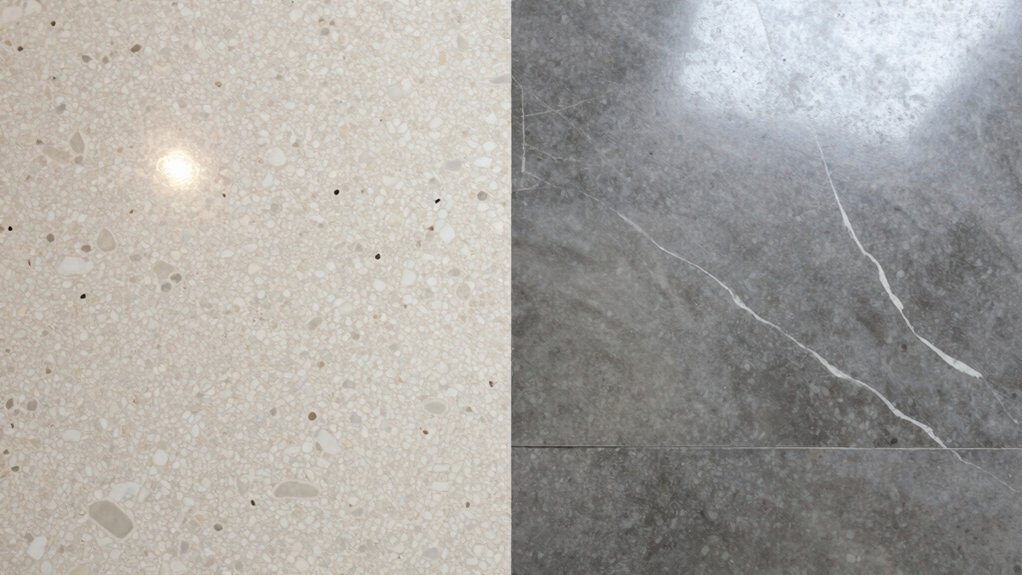
Terrazzo flooring and polished concrete each offer distinct value for high-traffic spaces. You’ll weigh upfront costs, installation timelines, and long-term maintenance against aesthetic goals, durability, and lifecycle impact. Terrazzo delivers customizable, high-contrast patterns with a premium feel, while polished concrete emphasizes a sleek, minimalist look with faster, cheaper setup. The decision hinges on your priorities for design flexibility, upkeep requirements, and total cost of ownership—yet a critical point remains unresolved until you compare specific applications and performance over time.
Cost Comparison Across Applications
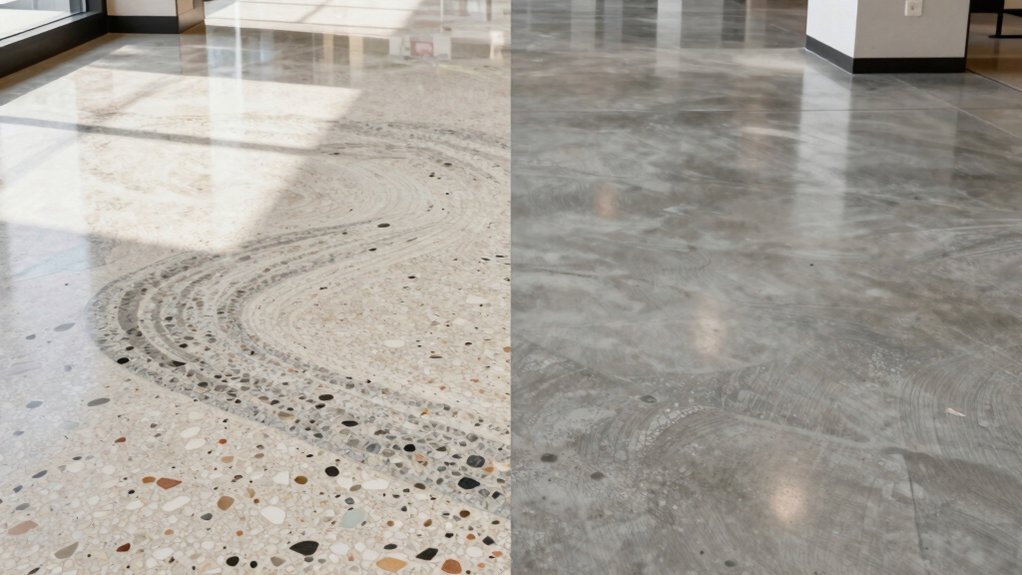
Cost considerations vary by project scope and finish quality, but a clear pattern emerges across terrazzo and polished concrete applications. You assess material costs, labor rates, and equipment needs for each system.
Terrazzo typically incurs higher upfront material costs, due to aggregates, binder, and customization, plus longer setup times.
Polished concrete often shows lower material expenses, leveraging existing substrates, with savings from simplified finishing and faster turnaround.
Labor efficiency differs: terrazzo demands skilled installers and meticulous pouring, curing, and grinding sequences, increasing cycle time.
In polished concrete, you target rapid grinding, honing, and a final polish, shortening downtime and enabling earlier use.
Maintenance and warranty expectations influence long-term cost, as terrazzo may require periodic resealing, whereas polished concrete emphasizes durable surface protection with lower ongoing upkeep.
Aesthetic Differences and Design Options
Terrazzo and polished concrete offer distinct aesthetic trajectories that influence design intent and user experience.
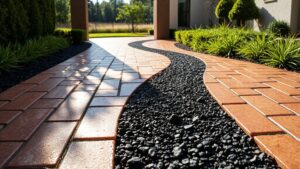
You select terrazzo for high-contrast, engineered colorways and explicit patterning, yielding a dialog between material palette and architectural form. You favor uniform granularity and custom aggregate schemas to achieve brand-like durability of visual texture, with seamless joints and minimal grout exposure.
In polished concrete, you pursue a minimalist, monolithic appearance, leveraging aggregate visibility, color saturation, and surface sheen to control light reflection and perceived space. You balance finishing grades, exposure levels, and sealants to meet performance and ambiance targets without altering core composition.
You evaluate maintenance cadence, slip potential, and color-tint stability as part of the design brief, ensuring the chosen path aligns with project typology and user flow.
Durability and Long-Term Performance
Durability and long-term performance hinge on material composition, installation quality, and maintenance strategy. Terrazzo offers high compressive strength, chemical resistance, and surface hardness when properly proportioned with durable aggregates and a resin binder that resists microcracking under load.
Polished concrete relies on aggregate hardness and cement matrix integrity; performance improves with optimized grind sequences, sealed surfaces, and properly cured mixes. In practice, you’ll notice terrazzo maintains edge integrity and color stability under continuous traffic, while polished concrete excels in wear resistance when densified and sealed correctly.
Long-term performance hinges on proper surface preparation, correct sealer or epoxy choices, and routine maintenance that minimizes microabrasion and staining. You’ll achieve predictable lifecycles by selecting composition aligned to use, controlling joints, and implementing a disciplined maintenance plan.
Installation Process and Timeline
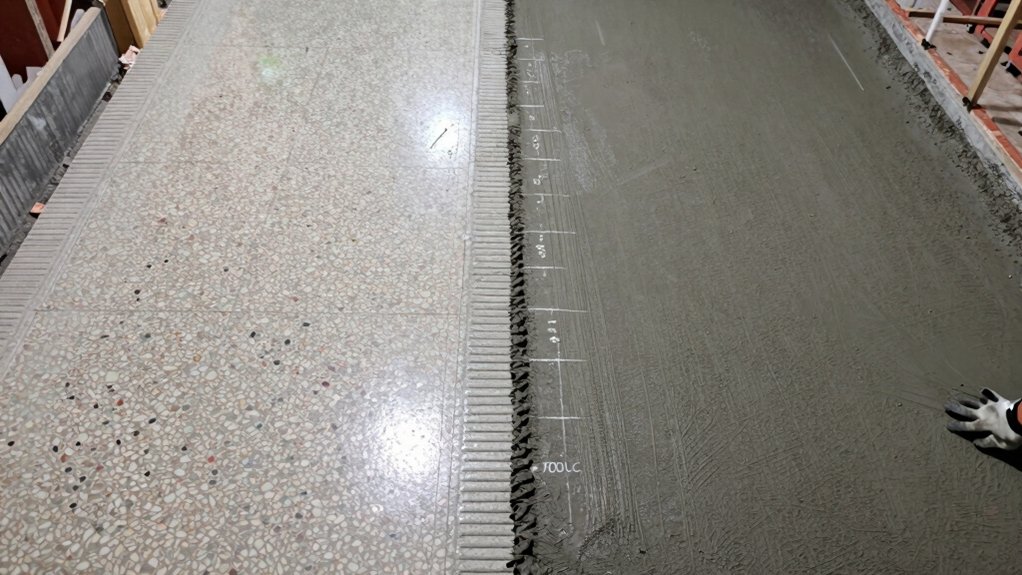
Successful installation hinges on precise planning, meticulous surface prep, and disciplined execution. You begin with substrate evaluation, moisture testing, and substrate repair as needed, because substrate integrity governs cure and adhesion.
Next, you choose the system: terrazzo or polished concrete, then finalize mixes, aggregate sizes, and sealants to meet performance targets. Scheduling aligns with material lead times, framing, and strict temperature and humidity controls to prevent cure variance.
Installation steps proceed in controlled phases: substrate grinding or levelling, bond coat application, decorative pour or topping placement, and controlled curing.
Finishing follows: grinding, polishing, densifier or sealer application, and final topcoat if specified.
Quality checks verify flatness, bond, and slip resistance, then you document cure windows, warranties, and maintenance-free periods to guarantee predictable service life.
Maintenance and Care Requirements
Maintenance and care are essential to preserve performance and appearance over the life of terrazzo or polished concrete floors; regular upkeep minimizes staining, wear, and optical dulling. You should implement a routine cleaning protocol using neutral pH cleaners and dust mopping for daily debris removal. Avoid aggressive scrubbing that could abrade surface waxes or expose aggregate.
Schedule periodic deep cleaning with compact extractors, ensuring adequate rinsing to prevent residue buildup. Protect floors with entry mats to reduce grit ingress and implement controlled traffic patterns during peak used periods. Maintain a consistent polishing or sealing cycle appropriate to the substrate, and document wear indicators to time resealing or regrinding.
Monitor chemical exposure; avoid solvents and acidic cleaners that degrade densified surfaces. Regular inspections ensure micro-scratches are addressed before systemic wear occurs.
Repairability and Refinishability
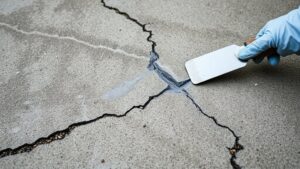
Repairability and refinishability hinge on substrate condition and installation specifics. When damage occurs, you should evaluate the extent of surface damage, substrate integrity, and the feasibility of targeted interventions before committing to full resurfacing.
Terrazzo and polished concrete accept selective repairs, but results hinge on patch color match, aggregate exposure, and wear pattern alignment. Assess tool access, cure times, and potential for dye or stain bleed-through, then determine whether light grinding, honing, or patching suffices or if full resurfacing is warranted.
For terrazzo, topping integrity and matrix bond influence repair longevity. For polished concrete, diamond grinding sequence and sealer compatibility determine durability post-repair.
Document defect dimensions, plan corrective steps, and confirm milling depth, exposure, and sealing strategy to minimize recurrence and optimize aesthetics. End-to-end feasibility guides maintenance horizon and costs.
Environment, Sustainability, and Indoor Air Quality
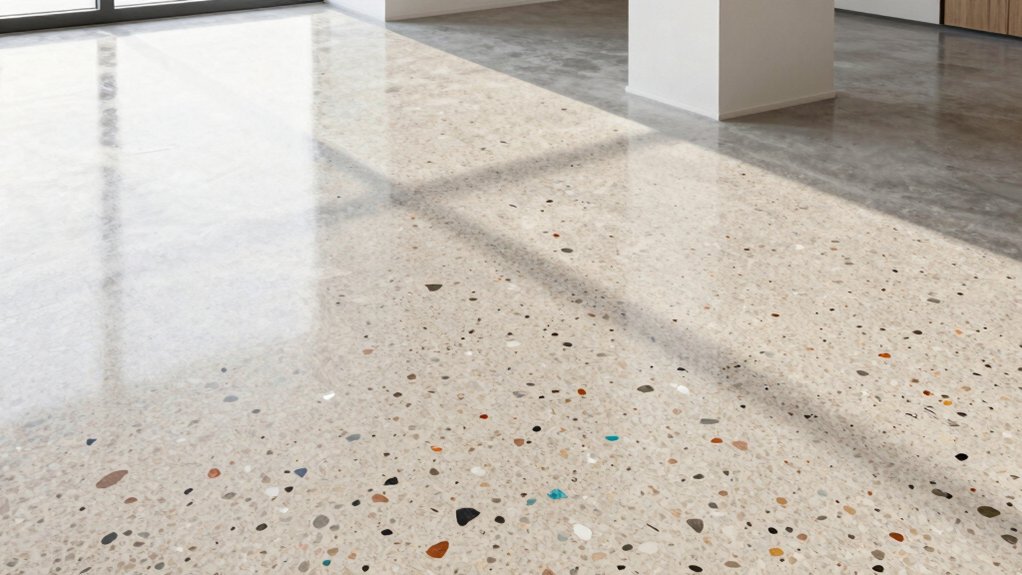
Terrazzo and polished concrete floors influence indoor environments through materials, emissions, and maintenance practices that affect air quality and long-term sustainability.
You evaluate raw material composition, binder types, and aggregate sources to estimate volatile organic compound emissions, dust generation, and lifecycle impacts. You compare embodied energy, recycling potential, and end-of-life options, prioritizing low-emission mixes and minimal maintenance chemicals.
You quantify maintenance durability, resurfacing frequency, and wastewater or solvent waste outcomes to project indoor pollutant loads over time. You align product data with indoor air quality standards, commissioning tests, and filtration requirements to forecast occupant exposure.
You assess thermal mass, humidity tolerance, and surface hardness as they relate to air-driven comfort and energy use. You document conclusions with metrics, ensuring decisions optimize health, sustainability, and operational performance.
Ideal Spaces and Use Cases
Terrazzo floors excel in spaces that require long service life, high foot traffic, and design versatility, with polished concrete offering a comparable performance in similarly demanding environments.
You’ll choose terrazzo for mixed-use lobbies, airports, and healthcare corridors where durable surface resilience and custom patterns reduce maintenance cycles. Its seamless installation suits environments prioritizing hygiene and fast horizontal cleaning, while you can tailor colorways and aggregate sizes for wayfinding and branding.
Polished concrete shines in industrial facilities, warehouses, and modern commercial floors where cost efficiency, rapid turnover, and slip resistance under heavy loads matter. You’ll benefit from low annual upkeep with proper sealants, though plan for professional resurfacing to restore gloss.
Longevity and Value for Money
When evaluating longevity and value for money, both terrazzo and polished concrete deliver durable, long-lasting floors, but total cost over the life cycle can diverge due to installation, maintenance, and performance under load.
You should quantify lifecycle costs, including initial materials, labor, equipment, and potential replacement cycles. Terrazzo typically shows high wear resistance and long service life but incurs higher upfront costs and specialized maintenance. Polished concrete offers lower initial expenditure and simpler upkeep, yet wear patterns and aggregate exposure can influence refinishing frequency.
Evaluate reliability under traffic, spills, and chemical exposure, plus downtime for resurfacing. Consider residual value, tax treatment, and warranty coverage.
In strict terms, long-term value hinges on proper specification, substrate condition, and adherence to maintenance schedules, aligning upfront budgets with projected performance over decades.
Frequently Asked Questions
How Do Terrazzo and Polished Concrete Impact Acoustics in Spaces?
Terrazzo and polished concrete influence acoustics differently: terrazzo reflects high-frequency sounds, elevating glare and reverberation, while polished concrete offers smoother diffusion but retains sharper reflections; optimize with absorptive underlayments or ceiling treatments to achieve target acoustics.
Can Color Options Be Customized in Both Flooring Types?
Color options are customizable in both, with wide palettes and batches. You’ll specify aggregates or pigments, and contractors will guarantee color consistency, durability, and fast curing. Think of a palette map guiding exact shade targets for each room.
Are There Health Risks From Dust During Installation?
Yes, dust during installation poses health risks; you should implement dust containment, use proper PPE, and local exhaust ventilation. Monitor exposure, follow SDS guidance, and enforce containment until completion to minimize respiratory and dermal hazards.
Which Flooring Is Better for Outdoor Applications?
For outdoor use, polished concrete handles weather and traffic better, while terrazzo risks cracking and maintenance. You’ll want durable, slip-resistant, sealed surfaces; choose polished concrete for longevity, minimal upkeep, and consistent performance in exterior conditions.
How Do Repairs Affect Warranty Terms and Coverage?
Repairs typically void or limit warranty coverage if they’re unauthorized, improper, or alter the substrate. You’ll see coverage reduced for rework, crack repair, or resealing, with documentation required and timelines, test results, and compliant materials enforced.
Conclusion
Across terrazzo and polished concrete, choose based on your priorities: terrazzo for high-end aesthetics and design versatility, polished concrete for rapid installation and lower upfront costs. An eye-catching stat: terrazzo can last 50+ years with proper maintenance, often outlasting the initial investment. You’ll weigh up-front vs. lifecycle costs, maintenance needs, and design impact. If you need bespoke patterns and premium branding, terrazzo wins; if you want simplicity, speed, and economy, polished concrete delivers steady value.