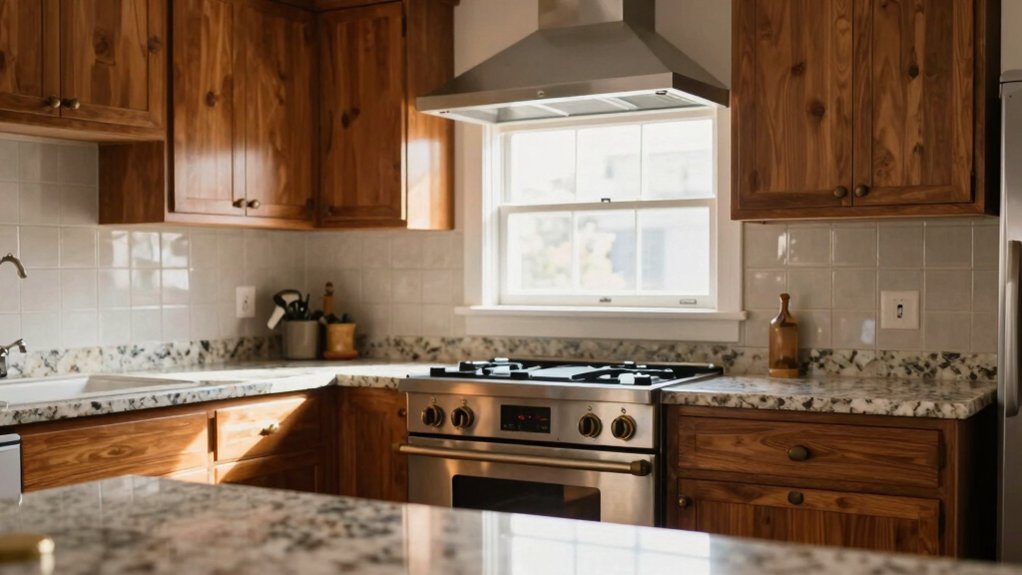
A corner stove can work beautifully if you design for flow and sightlines. Place it where you can see into the room and keep a clear triangle with the sink and fridge to avoid bottlenecks. Maximize counter space by staging a small mise en place nearby and using pull-out corner units or tall pantry towers to free prep surfaces. Layer lighting for task and ambiance, and test the workflow—adjust heights and clearances as you go. If you keep going, you’ll learn more.
Designing a Corner Stove Layout
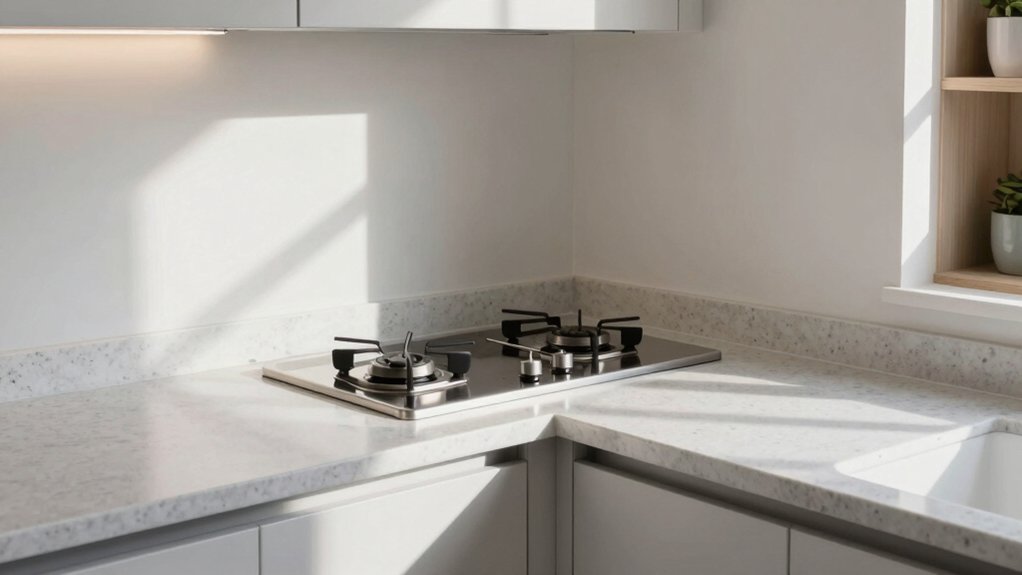
Designing a corner stove layout begins with recognizing how the stove’s position affects workflow. You assess traffic flow, ensure clear access, and keep primary work zones aligned for efficiency.
Place the stove where you can peek into the room, not around tight corners, so you maintain line-of-sight while cooking. Integrate a corner cabinet nearby for essential cookware, maximizing corner space without crowding.
Consider ventilation options that suit a compact layout and minimize odor travel; a hood or inline fan can pair with ducting routed discreetly along the cabinet line.
Maintain balanced triangle relationships among sink, fridge, and stove, avoiding bottlenecks during peak prep.
Choose materials and finishes that resist heat and glare, preserving a calm, functional aesthetic.
Maximizing Counter Space Around the Stove
To maximize counter space around the stove, map the heat zone against open, unobstructed surfaces you can use for prep and plating. You’ll optimize workflow by placing common tools within arm’s reach and designing a small, dedicated area for mise en place.
Prioritize edge access, avoiding overlap with burners, to keep surfaces clear during cooking. Choose appliance placement that minimizes movement and keeps frequently used gadgets nearby but out of the way when not in use.
Integrate lighting strategies that reduce shadows on work zones and highlight prep areas without glare. Use straight-edged, wipeable finishes to support quick cleanup.
Keep a slim rail or magnetic strip for knives and utensils. The result is efficient, balanced, and aesthetically coherent around the stove.
Optimizing Traffic Flow and Work Triangle
Efficient traffic flow hinges on a clear work triangle among the sink, stove, and refrigerator, with each leg short enough to minimize steps while allowing comfortable movement.
In a corner plan, position these three anchors so you can pivot at a single zone without crossing paths. Favor direct, unobstructed routes and avoid routing through high-traffic edges.
Appliance arrangement should emphasize proportional distances: the sink near prep areas, the stove central for cooking, and the fridge reachable but not dominating.
Lighting design matters: illuminate work zones evenly, minimize shadows, and keep glare off stainless surfaces. Use under-cabinet lighting to extend visibility along counters.
Keep surfaces uncluttered to preserve legible sightlines, enabling deliberate decisions. Finalize layout with a concise circulation diagram and test with a live, moving workflow.
Storage Solutions for a Corner Kitchen
In a corner kitchen, smart storage begins with maximizing every inch: pull-out corner units, tall pantry towers, and adjustable shelves keep groceries, cookware, and spices within easy reach without crowding the work zones. You’ll configure corner shelving to create accessible, labeled zones, so you know where everything lives.
Prioritize vertical storage to free counter space, and use clear bins for visibility. Integrate appliance placement by grouping similarly used devices near prep zones, reducing trips across the room.
Use slim, high drawers for lids and utensils, and install magnetic strips for knives or metal tools. Choose soft-close hardware to reduce noise and wear.
Finish with a cohesive color and material palette so storage remains unobtrusive yet efficient.
Practical Tips and Common Pitfalls
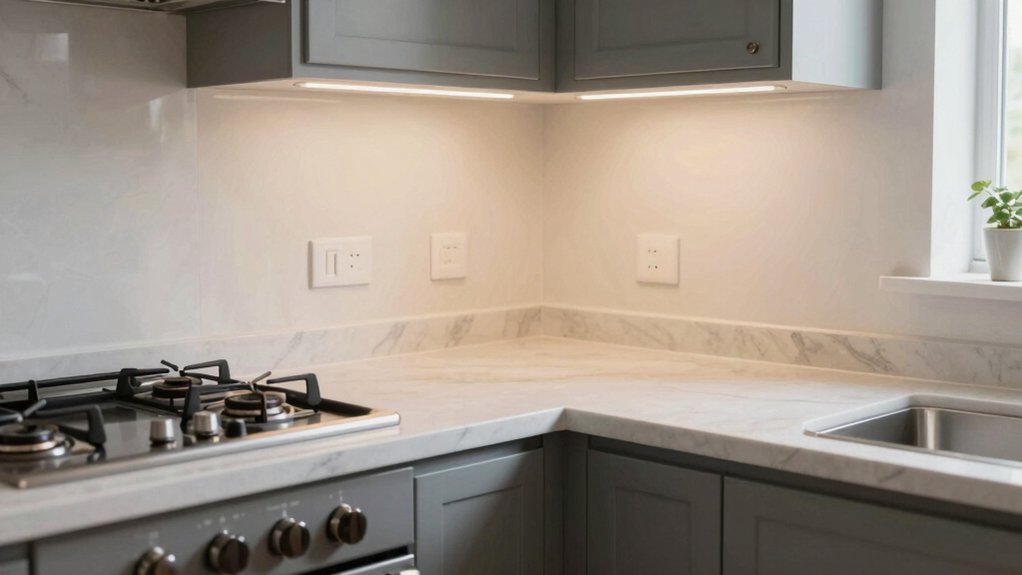
Corner kitchens reward thoughtful practice—set these practical tips up front to keep that storage system humming and spotting pitfalls before they trip you up.
Start with appliance placement: keep the stove or range near primary prep zones, but leave at least a small buffer for doors to swing without crowding counters.
Use vertical storage to reclaim counter real estate, and group frequently used tools within easy reach.
Lighting considerations matter: lean toward layered lighting—under-cabinet for task accuracy and a dimmable ceiling light for ambiance.
Prioritize clear sightlines to the sink and fridge to minimize steps.
Beware traffic jams at the toe-kick zone; ensure comfortable clearance for doors and drawers.
Finally, test workflow in play, adjust heights, and document changes for future tweaks.
Conclusion
In a corner-stove kitchen, you gain efficiency without crowding space. Align counters for smooth prep, keep the work triangle balanced, and store frequently used utensils within arm’s reach. Use vertical storage and under-cabinet lighting to keep surfaces clear. For example, a small urban kitchen reoriented the stove into the corner, added a slim pullout pantry, and cut prep time by 20%. You’ll enjoy a cleaner, calmer workspace that still feels expansive and purposeful.