
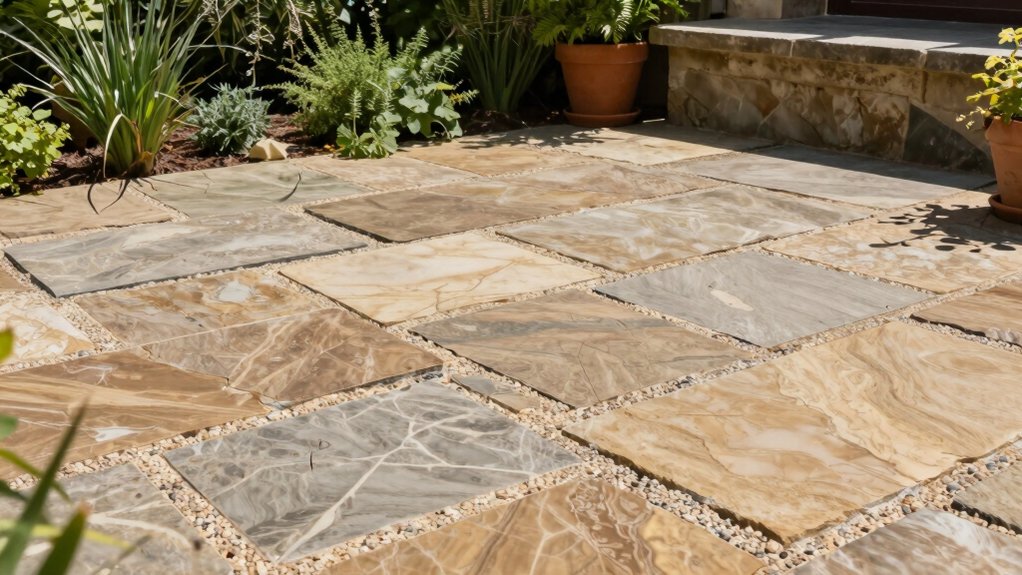
Choosing the right natural stone for your patio starts with climate, foot traffic, and maintenance tolerance, then prioritizes frost resistance, low porosity, and thickness consistency for even loads. Plan color and texture for cohesion, using dominant tones with complementary accents, and pair patterns like herringbone or random ashlar for visual rhythm. Incorporate borders, edging, and proper drainage, and consider durable furnishings and layered lighting to reveal texture at night. Want practical steps to maximize performance and style as you design your space?
Choosing the Right Natural Stone for Your Patio
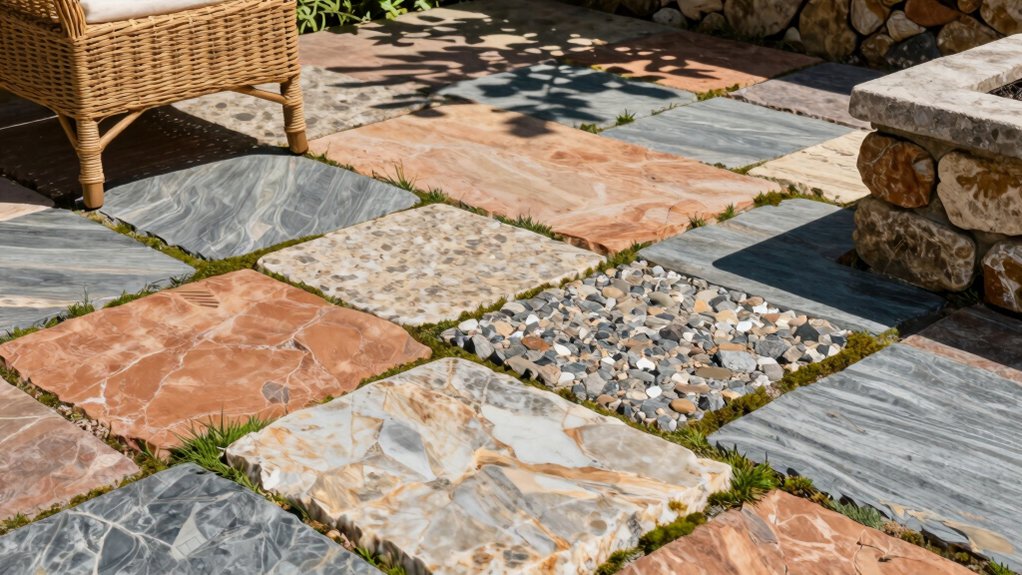
Choosing the right natural stone for your patio starts with context: consider climate, foot traffic, and maintenance tolerance to narrow options quickly. You’ll assess hardness, slip resistance, and jointing needs to determine suitability for outdoor cycles and seasonal exposure.
For garden pathways, prioritize frost resistance, low porosity, and dimensional stability to prevent cracking under freeze-thaw conditions. Choose pavers or slabs with consistent thickness for even load distribution and predictable installation costs.
Surface texture matters: brushed or honed finishes reduce glare while maintaining traction. Color consistency aids long-term maintenance, reducing sealing frequency and cleaning effort.
Consider indoor accents adjacent to the patio to inform edge treatments, alignment, and drainage planning.
Finally, document performance criteria, warranty coverage, and supplier reliability to ensure durable, low-maintenance integration with surrounding landscape elements.
Color and Texture Combinations for a Cohesive Look
Color harmony cues guide you to select stone tones that read as a single family, while subtle contrast accents prevent flat surfaces.
Texture pairing tips emphasize aligning grain, finish, and scale so joints read cleanly and surfaces maintain tactile coherence.
Consider balance ideas that weigh light against dark and pattern against solid, creating a cohesive patio rhythm without visual overload.
Color Harmony Cues
To achieve a cohesive look, align stone colors and textures across the patio with a clear hierarchy: dominant tones establish the base, secondary hues provide contrast, and texture variations add tactile interest without visual clutter.
Color palette decisions must reflect site lighting, stone density, and planned maintenance cycles. Implement hue matching across slabs and trim to maintain continuity, avoiding abrupt shifts.
Begin with a primary stone family that defines overall temperature, then select complementary secondary tones for joints and accents that reinforce depth without overpowering the base.
Texture balance matters: smooth field stones paired with a restrained, lightly textured fringe create subtle rhythm.
Document color readings under typical daylight to validate choices, and guarantee transitions between zones follow a consistent chromatic ladder, reducing perceptual noise while guiding user perception toward a unified outdoor room.
Texture Pairing Tips
Texture pairing hinges on balancing field stones with edging and joints to create a coherent rhythm. Start by assigning a dominant texture to the bulk of the patio and reserve a restrained secondary texture for borders and shifts.
You select a primary surface with uniform, tight grain and low relief to establish legibility, then integrate a complementary edge texture to delineate zones without visual clutter. Prioritize alignment of joint lines and stone scales to reinforce continuity.
Consider textural contrast between wide, flat paving and subtly knapped borders to guide pedestrian flow while preserving tactile variety. Maintain consistent color temperature to avoid competition, and ensure the edge texture remains subordinate in visual weight.
This approach yields a cohesive, precise, durable finish suitable for high-traffic design contexts.
Contrast Balance Ideas
Balancing contrast hinges on selecting color and texture pairs that reinforce legibility while enriching tactile variety. You assess stone grades, finish, and size to establish a readable sequence across zones, avoiding visual noise.
Start with a dominant base palette drawn from your natural stone sourcing, then layer accents that pull forward texture without saturating luminance. Pair smooth, honed surfaces with a lightly beaded or split-face texture to create clear differentiation under varied light.
Maintain a consistent grout tone to unify joints and prevent pattern conflicts. Consider sealant needs; stone sealing choices influence gloss and perceived depth, so test samples under ambient conditions before full application.
Finally, document material transitions and installation sequence to ensure durable, cohesive design outcomes.
Layout and Pattern Ideas: Herringbone, Random Ashlar, and More
You’ll examine Herringbone patterns, noting how interlocking angles control tile edge exposure and visual rhythm.
Random Ashlar layouts emphasize modular alignment and edge consistency, balancing texture with jointing planning.
Consider perimeter framing and jointing strategies to define borders and enhance structural integrity.
Herringbone Patterns
Herringbone patterns bring a dynamic, architectural rhythm to stone patios, balancing visual interest with practical joints and alignment. You implement this layout by configuring rectangular pavers in 45-degree angles to create interlocking V-shaped units, which enhances load distribution and grip under foot traffic.
Precision cutting at corners and consistent lamination thickness are essential to maintain uniform joint widths and avoid shifting over time. When selecting materials, consider long, narrow units that maintain tight tolerances and reduce warping; natural stone sourcing should prioritize stable, low-porosity stones to minimize maintenance and staining.
For paver installation, establish a rigid base with compacted subgrade and geotextile separation to prevent erosion. Evaluate edge restraints early to preserve the pattern integrity across temperature fluctuations and seasonal movement.
Random Ashlar Layouts
Random Ashlar layouts mix rectangular pavers into irregular, yet controlled grids that mimic natural stone mosaics. You’ll align modules with measured joints to achieve a seamless field, while preserving variation in size and orientation for visual texture.
Start with a consistent paver depth, then index stones by edge condition to minimize slip and optimize load transfer. Use staggered seams to reduce linear faults, and introduce subtle shifts in color or finish to enhance perceived randomness without compromising rigidity.
For garden pathways, plan eased variations between spaces with deliberate edge alignment and clear sightlines. Incorporate decorative accents through focal clusters and through-body coloring, ensuring joints remain tight and uniform.
Document grid coordinates for repeatability, and verify drainage slope during installation to sustain long-term performance.
Perimeter and Jointing
Perimeter detailing defines the shift between paving and surrounding surfaces, so use precise edge alignment and consistent jointing to establish a clean boundary. You’ll optimize perimeter design by selecting edge treatments that resist chipping and maintain line integrity over time.
Plan jointing techniques that accommodate stone variability, seasonal movement, and load distribution, ensuring uniform gaps without telegraphing imperfections. When integrating patterns like herringbone or random ashlar, keep perimeter rhythms tight at borders to avoid misalignment and ensure cohesive transitions to adjacent slabs or decking.
Use saw-cut or eased edges where necessary to reduce trip risk and enhance durability. Document joint widths, edge profiles, and substrate tolerances for reproducible assembly, inspection, and long-term maintenance.
Precision in perimeter and jointing supports enduring aesthetics and predictable performance.
Incorporating Stone Borders, Steps, and Edging
Borders, steps, and edging define the structure and flow of a natural stone patio, guiding movement and defining zones with precise alignment and material continuity. You select edged borders to create clean sightlines, then match stone thickness and finish to minimize trip hazards and guarantee load transfer‑through joints.
Plan step heights to coincide with typical walking gait, favoring consistent rise and run, while tolerating minor tolerances within tolerances, not gaps. Install edging with metal pins or recessed sleepers to resist displacement under foot traffic and freeze–thaw cycles.
For garden pathways, position borders to funnel circulation toward focal points, maintaining uniform joint lines for legibility. Use decorative accents—inlays, bezels, or contrasting trim—to highlight entry, landing, or transition zones without overpowering the primary stone texture and layout.
Mixing Stone Types for Visual Interest
Mixing stone types adds depth and texture to a natural stone patio while preserving cohesion. You design progressions between pavers, flagstones, and cobbles to achieve a unified palette and deliberate rhythm. Begin with a core stone type and introduce complementary textures at controlled intervals, ensuring joint patterns align to a consistent grid.
Prioritize color blending by selecting hues that share undertones, then vary scale to create visual interest without distraction. Use stone layering to build subtle elevation changes—a shallow stepped plane or a lowest layer beneath a raised strip—to guide movement and define zones.
Maintain proportion by capping bold textures with smoother surfaces, preventing visual overload. Document ratios, alignment plans, and edge treatments for repeatable results and clean, durable integration.
Weather-Resistant Maintenance and Sealing Tips
Weather-resilient maintenance starts with a disciplined sealing plan that protects stone surfaces from moisture, freeze-thaw cycles, and staining while preserving color and texture. You implement a systematic sealing protocol aligned to stone porosity and exposure, selecting compatible sealers and reapplication intervals to minimize efflorescence and surface haze.
Prepare surfaces with thorough cleaning and targeted soil preparation to prevent contaminant ingress, then verify substrate dryness before sealing. Apply uniform coats using controlled techniques to avoid pooling and ensure even penetration.
Incorporate drainage solutions in the design to prevent standing water that compromises performance. Schedule inspections after seasonal cycles, log sealant life, and recoat as needed to maintain slip resistance and color fidelity.
Pair maintenance with routine drainage checks and substrate stabilization for enduring, weather-ready aesthetics.
Outdoor Furniture and Accessory Pairings With Stone
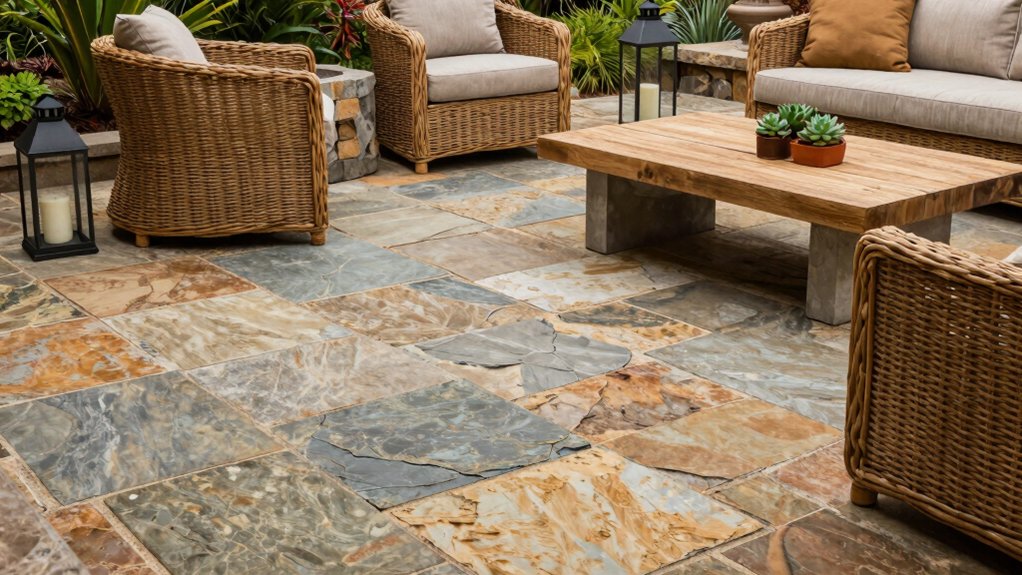
Outdoor furniture and accessory pairings with stone should prioritize proportional scale, durable materials, and color/texture harmony to sustain long-term performance. You select garden furniture crafted from weather‑resistant materials—teak, powder-coated aluminum, or synthetic wicker—that withstand exposure while preserving composition.
Match stone’s tonal value with seating frames and tabletops to reduce visual noise; avoid high-contrast blends that interrupt the material language. Choose cushions in fade‑resistant fabrics with dense weaves and inert dyes to minimize staining and pilling.
Decorative accents should echo stone’s texture—granite, limestone, or slate—through planters, trays, and sculptures that respect scale and rhythm. Consider integrated ottomans or minimalist side tables to maintain circulation and accessibility.
Enduring patios rely on precise proportions, durable textures, and purposeful detailing that complements stone without competing with it.
Lighting and Landscaping to Complement Natural Stone Patios
Lighting and landscaping should reinforce the stone’s geometry and palette while guiding evening circulation and soft passages to garden spaces. To achieve this, position garden lighting with low-glare fixtures along pathways, matching color temperature to stone tones for cohesive material reading.
Use warm, discrete uplights to emphasize datum lines—treads, edges, and joints—without washing texture. Integrate plant landscaping that complements hematite and limestone hues, selecting species with fine texture and seasonal structure to avoid visual clutter.
Implement shadow play by balancing overhead and ground-level lighting, preventing hot spots on patio surfaces. Incorporate low-maintenance greenery, irrigation zoning, and drainage considerations to sustain long-term stability.
Schedule focal points, such as a sculpture or water feature, to anchor nighttime composition.
Conclusion
You’ve lined up the fundamentals—stone choice, color harmony, and panel patterns—to craft a durable, timeless patio. Precision matters: consistent joint widths, proper slope for drainage, and sealing schedules extend life and reduce maintenance. One striking stat: properly installed natural stone patios can retain aesthetic value up to 35% longer than concrete overlays during sun exposure and freeze–thaw cycles. Pair your layout with weather-ready textiles and low-profile lighting to maximize usability and minimize upkeep.