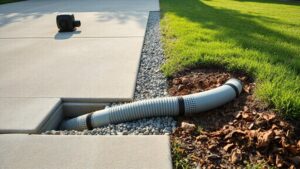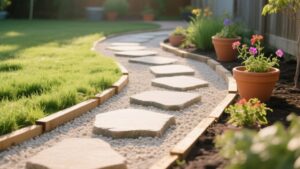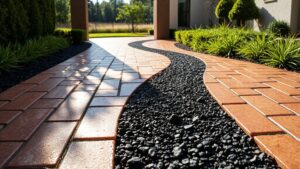
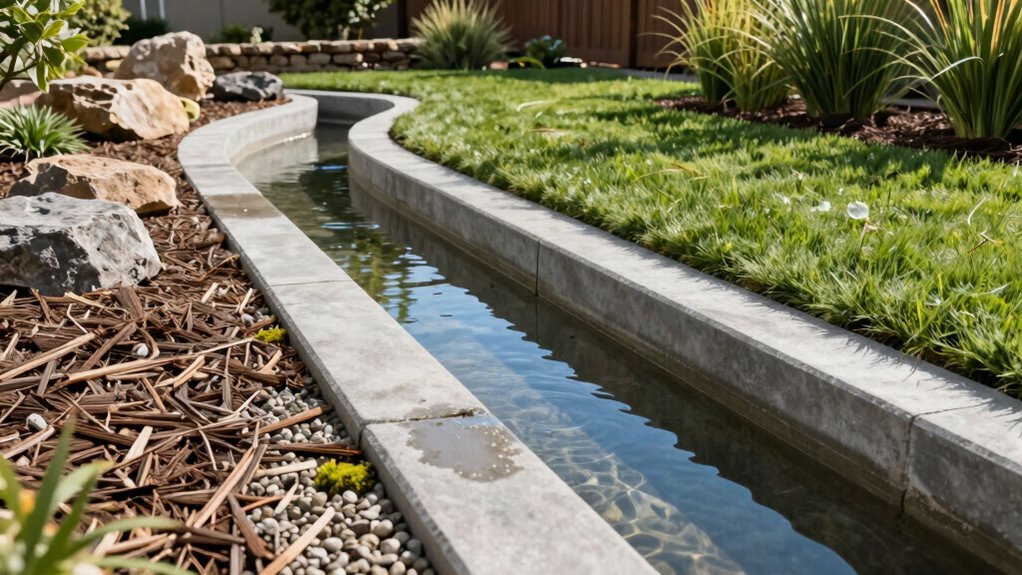
Swales are your first move: a shallow, elongated ditch aligned with the slope to guide runoff and promote infiltration. Pair them with terraces or stepped channels to handle steeper ground without erosion. Add a French drain where groundwater pools near foundations, using a perforated pipe, gravel, and a filter fabric. For aesthetics and function, try decorative rock channels or permeable paving to reduce compaction. Regular maintenance keeps flow predictable, and more options await if you keep exploring.
Swale Designs for Effective Water Management
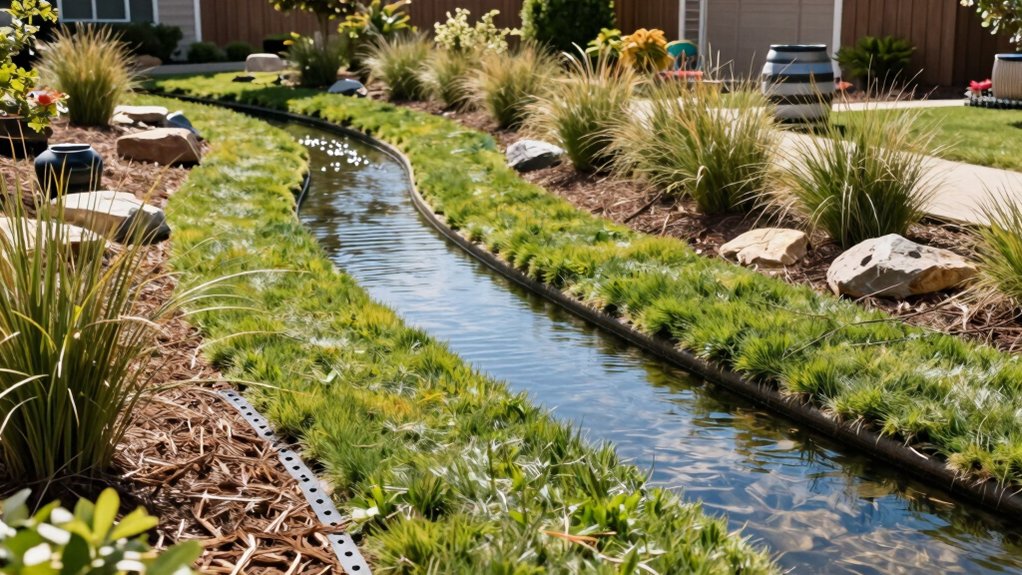
Swale designs are a practical tool for directing and slowing runoff to protect your yard. You’ll choose gentle, elongated depressions aligned with slope and flow direction, creating a predictable path for water. Measure grade and soil type to estimate infiltration rates, then size the swale to match projected flow.
Construct with compacted sides and a gentle bottom to minimize erosion, while allowing periodic maintenance access. Use rainwater harvesting concepts by positioning outlets to capture overflow for storage or reuse, reducing irrigation demand.
For erosion control, line the lower edge with grass or ground cover that establishes quickly and stabilizes the soil. Maintain a regular inspection routine after storms, clearing debris and reestablishing vegetation to sustain performance.
Tailor spacing and depth to your yard’s unique drainage pattern.
French Drain Systems: When and How They Shine
When should you rely on a French drain, and how does it work most effectively? You use it where groundwater or surface runoff consistently pools near foundations, low spots, or sloped yards.
Its effectiveness hinges on proper subsurface drainage and continuous slope toward a discharge point. Start with a trench, install a permeable, crushed gravel bed, and place a perforated pipe in the gravel so water enters through the holes. Cover with more gravel and a filter fabric to prevent soil clogging, then bury with soil to blend in.
Key steps include planning pipe installation depth and ensuring grade directs water away from structures. Maintain with occasional flushing to clear debris. This approach prioritizes reliability, minimizes erosion, and integrates discreet, long-term drainage.
Decorative Rock Channels for Style and Drainage
Material and texture influence both aesthetics and flow, so you’ll want rocks that resist weathering while presenting a clean, varied surface.
Consider how surface roughness affects sediment buildup and ease of maintenance, choosing textures that balance grip with easy cleaning.
Plan for flow dynamics and texture on the same page to ensure reliable drainage without sacrificing style.
Material and Texture
Decorative rock channels combine both function and appearance by selecting texture and size that promote efficient flow while complementing the landscape. Material and texture choices influence sediment capture, erosion resistance, and long-term maintenance.
You’ll prioritize surface hardness and angularity to trap debris yet avoid sharp edges that can snag printer-grade or foot traffic. Consider a range of stone textures to balance grip and smooth passage for water; smoother faces reduce friction, while rougher textures improve stability in slope transitions.
Gravel finishes offer a natural look and easy replacement, but confirm proper compaction and sub-base support. Test color and scale against surrounding hardscape to maintain visual coherence.
Finally, document installation tolerances, noting that texture consistency affects hydraulic performance in varied weather.
Flow and Maintenance
Flow and maintenance paths define how decorative rock channels perform year after year. You design for consistent flow, predictable maintenance, and clear inspection points to minimize surprises after storms.
Use a simple grading plan to ensure water velocity remains within the channel’s capacity, preventing scour and sediment buildup. Schedule seasonal checks for rock displacement, raveling, and clogging from debris; straighten joints and verify liner integrity if used.
Regularly remove organic buildup near inlets to sustain flow efficiency. Incorporate stormwater harvesting connections where possible to reduce peak loads while preserving aesthetics.
Track erosion control performance with a brief log, noting sediment depth, flow interruptions, and corrective actions. Keep maintenance tasks small, actionable, and time-bound to preserve long-term drainage and visual appeal.
Grass and Groundcover Solutions to Move Water
Grass and groundcovers can channel surface water away from your yard while stabilizing soil. You’ll evaluate steep slopes, soil texture, and drainage paths to select effective options.
Prioritize dense, shallow-rooted groundcovers that resist erosion and tolerate moisture extremes; these form a temporary conduit, reducing runoff velocity before it reaches your ditch. Consider grass alternatives that spread laterally, creating a permeable mat rather than a hard barrier.
Plan placement along runoff corridors to intercept flow, not merely decorate edges. For installation, prepare firm, weed-free seedbeds or mats, then stagger planting to ensure quick cover.
Maintain consistency with routine pruning and moss or mulch management to prevent thatch buildup. Use groundcover planting strategically to complement, not replace, mechanical drainage components.
Rain Gardens: A Beautiful Water-Absorbing Feature
Rain gardens capture runoff where it’s most needed, converting it into a deliberate, planted basin that slows, soaks, and cleans water before it leaves the yard. You design this feature to match local soil, slope, and rainfall patterns, ensuring reliable performance.
Choose a shallow depression that drains within 12 to 24 hours and avoid compaction around the plant zone. Select rain garden plants that tolerate both wet and dry periods, providing year-round structure and habitat. Use a layered mix of natives and well-behaved perennials to maximize water absorption and resilience.
Install a perimeter berm or edging to keep soil in place and guide overflow. Monitor for erosion after storms, adjust plantings as needed, and maintain by removing debris and dividing congested clumps. Rain garden plants optimize water absorption.
Permeable Paving Options to Quietly Channel Runoff
Permeable surfaces offer a practical way to slow and route runoff without increasing surface height. You’ll weigh different paving material options and how each affects infiltration, durability, and maintenance.
We’ll focus on quiet water channeling, balancing permeability with load needs and landscape aesthetics.
Permeable Surfaces Use
Permeable paving options offer a practical way to channel runoff quietly by letting water infiltrate the surface rather than funneling it into drains. You’ll assess surface selection by considering infiltration rate, compaction, and maintenance needs.
Permeable pavement, for example, combines structural stability with void spaces that capture and store moisture, reducing surface pooling. You should estimate load requirements and choose materials that tolerate traffic while supporting filtration.
Gravel pathways deliver simplicity and cost efficiency, offering immediate infiltration and easy repair, though sustainability depends on base preparation and you keeping sediment out of joints. Evaluate performance under freeze-thaw cycles and seasonal saturation to prevent clogging.
Document zoning, installation steps, and long-term care, ensuring that design aligns with drainage goals without compromising durability or accessibility.
Quiet Water Channeling
To quietly channel runoff, choose permeable paving options that balance infiltration with structural support, minimizing surface noise and puddling. You assess material compaction, porosity, and load tolerance, prioritizing systems that store water beneath the surface while allowing safe traffic.
Evaluate surface roughness to reduce splash and wake noise during storms, and ensure edge containment guides flow without creating abrupt changes. Consider sub-base layers that promote natural filtration, capturing sediments before water enters the subsurface.
Align your design with existing drainage grades, using gradual slopes to maintain quiet conveyance rather than sharp concentrates. This approach supports wildlife habitat and preserves nearby vegetation, while maintaining accessibility.
Document expected infiltration rates, maintenance needs, and seasonal performance to validate long-term quiet channeling efficiency.
Paving Material Options
When choosing permeable paving options to quietly channel runoff, evaluate how each material balances infiltration, load capacity, and surface noise. You’ll compare pervious concrete, porous asphalt, permeable pavers, and reinforced grass systems for compacted gravel bases.
Consider infiltration rate under typical loads, seasonal freeze-thaw resilience, and maintenance needs to sustain stormwater management goals. Porous asphalt offers good noise reduction but may require tighter compaction controls to maintain permeability.
Permeable pavers raise installation flexibility and surface aesthetics, yet joint material and sub-base quality drive erosion control effectiveness. Perforated edging and underdrains help manage overflow without pooling, while vegetated or gravel-filled options dampen sound and absorb surge.
Choose systems that tolerate local soil conditions, traffic, and slope, ensuring long-term, low-maintenance performance.
Terrace and Lip Drainage to Protect Slopes
Terrace and lip drainage creates a stepped, durable path for water to leave slopes without destabilizing soil. You design shallow, step-like benches that slow runoff, promote infiltration, and reduce slope length. Build with compacted fill and a durable lip to guide flow, while preserving natural soil structure.
In practice, install angled sectional drains at each terrace to capture subsurface moisture and transfer it downslope, minimizing erosion potential. Pair terraces with contour-rows of vegetation to reinforce stability, support soil stabilization, and dampen peak flows.
Guarantee proper grading so water exits at a controlled outlet, not pooling mid-slope. Use geotextile beneath fill where soil is highly erodible, and maintain clear drainage paths. This approach emphasizes erosion control, structural integrity, and predictable, long-term performance.
Maintenance Tips to Keep Ditches Flowing Smoothly
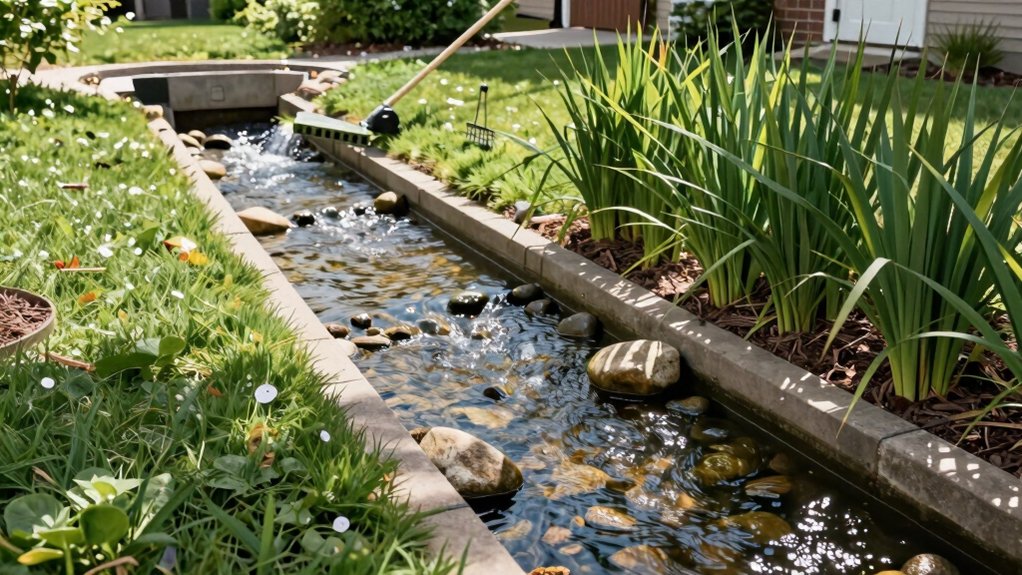
Maintenance is essential to keep drainage ditches functioning as designed; regular checks, timely clearing, and simple upgrades prevent blockages and erosion. You should inspect the ditch after heavy rain, looking for sediment buildup, standing water, or vegetation encroachment that slows flow.
Remove debris carefully, using gloves and proper tools, and avoid displacing bank soil. Implement small, targeted improvements such as grading low spots, widening critical sections, or adding a shallow riparian buffer to encourage infiltration.
Schedule periodic cleaning and record findings to track trends over seasons. Prioritize stormwater management by routing inlets to avoid cross-connections and ensure outlet stability.
Use erosion control measures like stone envelopes or temporary trench mats where flow concentrates. Regular maintenance minimizes sediment transport, maintains capacity, and protects surrounding land.
Conclusion
To maximize your yard’s drainage, pick a proven mix of swales, French drains, and gravel channels, then tailor setbacks to your slope and soil. Install permeable surfaces where runoff concentrates, and seed or mulch to stabilize edges. Schedule annual cleanouts and inspect after heavy rain—let nature do the heavy lifting, not guesswork. Channel water with intention, and you’ll avoid erosion and puddles. Bonus: imagine a 1980s arcade backdrop as you design—retro focus keeps your plan sharp.