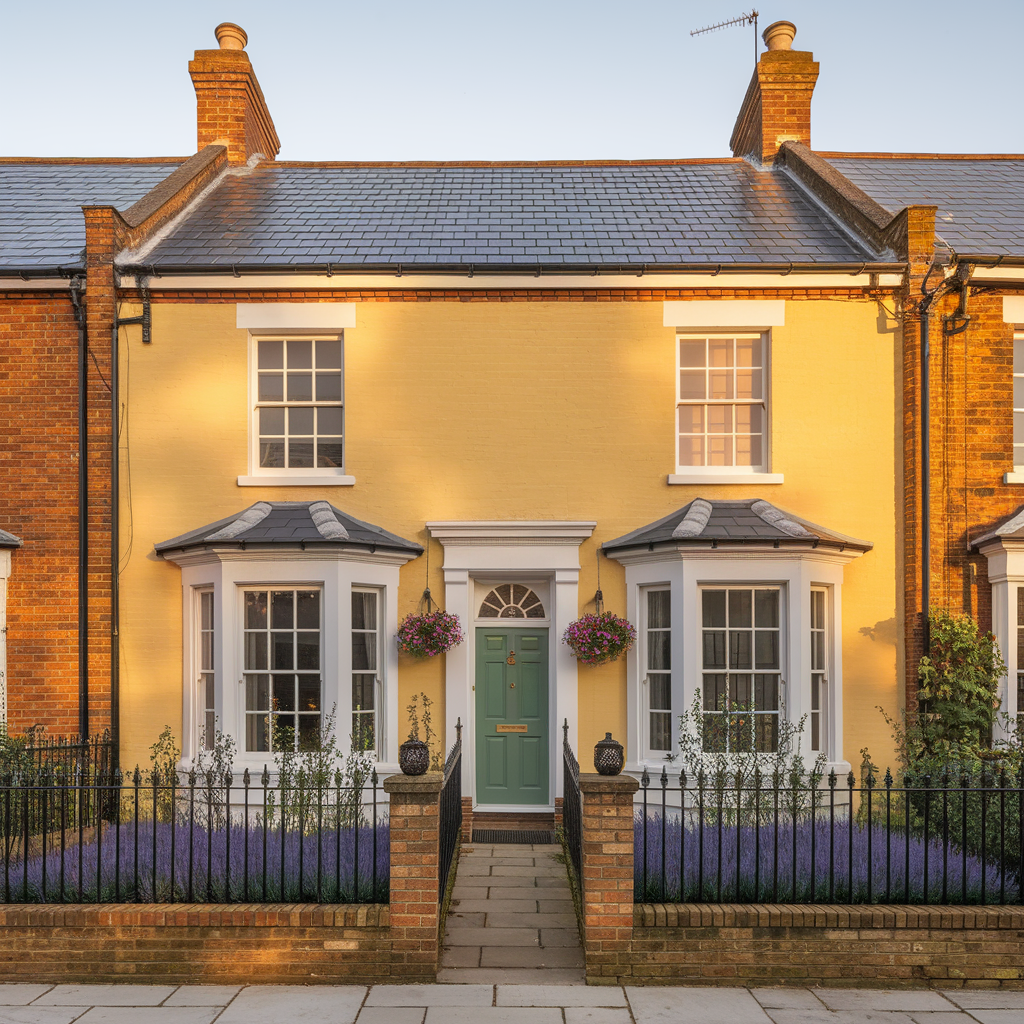
Popularity and desirability are related but distinct concepts in London’s property market. The most desirable boroughs — Richmond, Islington, Kensington — are places buyers aspire to. The most popular boroughs are the places where the greatest volume of transactions actually happen: where buyers across a range of budgets, life stages, and priorities are consistently choosing to put down roots.
Popularity in this sense is a meaningful signal. High transaction volumes reflect broad, sustained demand across multiple buyer profiles rather than a narrow premium market. Popular boroughs tend to be liquid — properties sell relatively quickly and hold their value through market fluctuations — and they tend to offer a combination of factors (transport, schools, amenity, price accessibility) that appeals across income brackets rather than only to the wealthy.
This guide covers the most popular London boroughs to buy property in 2026, with a focus on what drives sustained buyer demand in each area, the price ranges buyers can expect, and which types of purchaser each borough suits best.
What Drives Popularity in the London Property Market?
Before looking at individual boroughs, it’s worth understanding what actually generates sustained transaction volumes in London’s property market — because it isn’t simply proximity to central London or the presence of a Tube station.
Price accessibility is the dominant factor. The boroughs where the most transactions happen are not the most expensive — they’re the ones where buyers across a range of budgets can find something that works. Boroughs with a wide spread of property types (Victorian terraces, purpose-built flats, new-build apartments, period conversions) generate more activity than those where stock is homogeneous and expensive.
Transport variety matters as much as transport quality. Boroughs served by multiple lines and modes — Tube, Overground, National Rail, Elizabeth line — attract buyers from a wider employment base and therefore generate more diverse demand. A borough with one Tube line is more dependent on the employment centres that line serves.
School quality at multiple levels sustains family buyer demand through property cycles. A borough with outstanding primary schools, good secondary provision, and competitive grammar or selective options retains family buyers who might otherwise leave for cheaper areas outside the M25.
Neighbourhood variety — the presence of genuinely distinct sub-areas within a borough, each with their own character and price point — allows buyers to enter a borough at an accessible level and upgrade within it over time. This creates a loyal, repeat buyer base that drives consistent transaction volumes.
With those factors in mind, here are London’s most consistently popular boroughs for property purchases.
Wandsworth: South London’s Most Consistently Active Market
Wandsworth is the borough that appears most consistently at or near the top of London transaction volume data, and it has done so for the better part of two decades. The reasons are structural rather than fashionable: it offers excellent transport connectivity, strong schools, a wide range of property types across a broad price spectrum, and a collection of neighbourhoods — Clapham, Battersea, Balham, Tooting, Putney, Earlsfield — that each sustain their own distinct buyer demand.
Clapham attracts younger professionals and couples buying their first or second home, drawn by the Northern line, the Common, and one of south London’s most established social scenes. Battersea draws buyers who want river frontage and the glamour of the Power Station regeneration, with the Northern line extension adding direct Tube access where none previously existed. Balham and Tooting attract family buyers who want more space, strong schools, and a lower entry price point than Clapham without sacrificing transport or amenity. Putney appeals to professionals seeking a village feel with good River Thames access.
Average prices range from around £500,000 for a one-bedroom flat in Tooting to £1.5 million or more for a family terraced house in Clapham or Battersea — a price range broad enough to serve buyers at multiple life stages within a single borough, which is one of the primary drivers of its sustained popularity.
Average prices (2026):
- One-bedroom flat: £450,000–£600,000
- Two-bedroom flat: £600,000–£850,000
- Three-bedroom house: £850,000–£1,500,000+
Most active sub-markets: Clapham, Balham, Tooting, Battersea, Putney
Bromley: Southeast London’s Favourite for Families
Bromley is consistently one of the highest transaction volume boroughs in London, driven almost entirely by family buyer demand. It is the largest London borough by area, which means more stock, more variety, and more buyers in the market at any given time — but its popularity also reflects genuine substance behind the numbers.
The borough offers some of the strongest state school provision in outer south London, including several Ofsted Outstanding primaries and well-regarded secondaries. Property types range from Victorian and Edwardian terraced and semi-detached houses to larger detached homes on quiet residential roads — the kind of family-sized stock that is genuinely scarce in inner London. Green space is exceptional: Crystal Palace Park, Kelsey Park, Jubilee Country Park, and the North Downs all sit within or adjacent to the borough.
Transport is primarily National Rail from Bromley South and Bromley North into Victoria (20 minutes) and London Bridge (25–30 minutes), supplemented by the Overground and Tramlink at Crystal Palace on the borough boundary. The absence of Tube provision in most of the borough is what keeps prices meaningfully lower than equivalent family-oriented boroughs in south west London.
Average prices (2026):
- Two-bedroom flat: £350,000–£500,000
- Three-bedroom semi-detached: £550,000–£750,000
- Four-bedroom detached: £750,000–£1,200,000
Most active sub-markets: Bromley town centre, Beckenham, Penge, Crystal Palace, Orpington
Southwark: Central South London’s Perennial Favourite
Southwark generates consistently high transaction volumes because it contains more genuine variety per square mile than almost any other London borough. Its northern reaches — Bermondsey, Borough, London Bridge — are among the most intensely urban and well-connected locations in the city. Its southern reaches — East Dulwich, Herne Hill, Dulwich Village, Nunhead — are among the most sought-after family destinations in south London. Between them sit Peckham and Camberwell, both of which have evolved significantly in character and buyer profile over the past decade.
This internal variety is the key to Southwark’s sustained popularity. First-time buyers enter at Peckham or Nunhead. Young families move to East Dulwich or Herne Hill. Established professionals buy in Dulwich Village or Bermondsey. The borough has an internal escalator — buyers can move up the value chain within it, which creates a loyal and active buyer base.
Transport is excellent throughout: London Bridge is one of the most important rail hubs in the country, the Jubilee line and Northern line provide Tube access in the north, and National Rail from Herne Hill, East Dulwich, and Peckham Rye gives the south of the borough multiple routes into the centre.
Average prices (2026):
- One-bedroom flat: £400,000–£550,000
- Two-bedroom flat: £550,000–£750,000
- Three-bedroom house: £700,000–£1,200,000+
Most active sub-markets: Bermondsey, East Dulwich, Herne Hill, Peckham, Nunhead
Ealing: West London’s Most Active Borough
Ealing has become one of west London’s most active property markets, a trend that accelerated significantly following the full opening of the Elizabeth line. The ability to reach the City in 25–30 minutes and Canary Wharf in under 40 minutes has brought Ealing into serious consideration for buyers who previously focused exclusively on Chiswick, Hammersmith, or Kew — all of which command significantly higher prices.
The borough offers a broad range of stock: Victorian terraces, Edwardian semis, substantial detached houses in Ealing’s quieter residential roads, and a growing supply of new-build apartments around Ealing Broadway and Southall. Schools are improving, particularly at primary level, and the borough has a genuine high street offer centred on Ealing Broadway and the increasingly vibrant Pitshanger Lane village area.
Buyers locked out of W4 and W6 by prices have found that Ealing delivers comparable transport quality with a measurably lower price tag — and that calculation drives consistent buyer demand. Average prices for a three-bedroom Victorian terrace in Ealing Broadway or Hanwell run £650,000–£850,000 against £900,000–£1.2 million for equivalent stock in Chiswick.
Average prices (2026):
- One-bedroom flat: £350,000–£500,000
- Two-bedroom flat: £480,000–£650,000
- Three-bedroom house: £650,000–£900,000
Most active sub-markets: Ealing Broadway, Hanwell, Northfields, South Ealing, Pitshanger
Newham: East London’s Highest Volume Market
Newham consistently records some of the highest raw transaction volumes in London — a function of both its large population and the significant volume of new-build development that has transformed the borough since the 2012 Olympics. Stratford in particular has seen the construction of thousands of new residential units across multiple large-scale schemes, generating a constant supply of properties entering the market and sustaining buyer activity.
Beyond raw volume, Newham’s popularity reflects a genuine underlying shift in buyer sentiment. The Elizabeth line, the Jubilee line, multiple Overground routes, and National Rail services make Stratford one of the best-connected locations in outer east London. Canary Wharf is seven minutes by Jubilee line. Liverpool Street is reachable in under 15 minutes. These commuting credentials, combined with prices that remain meaningful below the inner London average, attract first-time buyers, investors, and buyers relocating from more expensive areas in growing numbers.
The developing cultural infrastructure — V&A East, the London Stadium, Westfield, and the expanding Queen Elizabeth Olympic Park — continues to add amenity that supports long-term demand. For buyers who are comfortable buying slightly ahead of the curve, Newham remains one of the strongest volume and value propositions in the London market.
Average prices (2026):
- One-bedroom flat: £300,000–£420,000
- Two-bedroom flat: £400,000–£550,000
- Three-bedroom house: £500,000–£700,000
Most active sub-markets: Stratford, Forest Gate, West Ham, Canning Town, Plaistow
Hackney: Inner East London’s Most Sought-After Address
Hackney’s transformation over the past two decades from one of London’s most deprived boroughs to one of its most fashionable is now well-established — but buyer demand has not softened with that maturation. Transaction volumes remain consistently high, driven by a steady flow of young professionals, creative sector workers, and families attracted by Hackney’s distinctive neighbourhood culture, excellent Overground connectivity, and proximity to the City.
The borough’s internal variety sustains broad demand. Stoke Newington attracts families with its villagey high street and improving schools. Dalston and Hackney Central attract younger buyers drawn by the nightlife, independent food scene, and Overground access. London Fields appeals to those who want both green space and urban energy. Clapton has emerged as one of east London’s most talked-about residential neighbourhoods, with Victorian terraces attracting buyers priced out of Hackney’s more established streets.
Prices have risen significantly over the past decade but remain below comparable inner south and north west London boroughs. A two-bedroom Victorian flat in Hackney or Stoke Newington typically costs £550,000–£750,000, while family houses in the most sought-after streets reach £1 million–£1.5 million.
Average prices (2026):
- One-bedroom flat: £420,000–£580,000
- Two-bedroom flat: £550,000–£750,000
- Three-bedroom house: £800,000–£1,300,000
Most active sub-markets: Stoke Newington, Dalston, London Fields, Clapton, Hackney Central
Barnet: North London’s Family Property Hub
Barnet is consistently one of the highest transaction volume boroughs in north London — and has been for years. It is a large borough with a large population, outstanding schools (including several of London’s most competitive selective state schools), and a range of property types from purpose-built flats in New Barnet to substantial detached family homes in East Barnet and Totteridge.
The borough is served by the Northern line (High Barnet and Totteridge branches), the Overground, and National Rail, providing access to the City, West End, and north London employment areas. Journey times from stations like East Finchley, Finchley Central, and Woodside Park to the West End run 20–35 minutes, which is highly competitive for Zone 4.
The school offer is genuinely exceptional — Barnet has one of the highest concentrations of Ofsted Outstanding schools in London, and the selective grammar schools (Queen Elizabeth’s Boys’ School is among the most competitive in the country) attract families specifically for education. This school-driven demand sustains buyer activity through property market cycles in a way that purely amenity-driven boroughs sometimes don’t.
Average prices (2026):
- One-bedroom flat: £350,000–£500,000
- Two-bedroom flat: £480,000–£650,000
- Three-bedroom semi-detached: £650,000–£950,000
- Four-bedroom detached: £900,000–£1,500,000+
Most active sub-markets: East Finchley, Finchley Central, New Barnet, Whetstone, Totteridge
Tower Hamlets: Inner East London’s Investment and First-Time Buyer Hotspot
Tower Hamlets covers some of the most economically dynamic real estate in London — Canary Wharf, Bethnal Green, Bow, Whitechapel, Stepney Green, and the emerging creative cluster around Shoreditch and Bethnal Green on the City fringe. It generates consistently high transaction volumes across two distinct buyer profiles: investors attracted by the strong rental yields in the Canary Wharf and Whitechapel new-build market, and first-time and second-time buyers drawn by the exceptional transport connectivity and the energy of east London at price points that remain accessible.
The Elizabeth line at Whitechapel — directly connecting to Heathrow in one direction and the City and West End in the other — has reinforced the borough’s transport credentials significantly. Canary Wharf remains one of the most concentrated employment hubs in Europe, generating constant rental and purchase demand from finance and professional services workers.
Bethnal Green and Bow appeal to buyers seeking inner east London character at prices below Hackney. Victoria Park — one of east London’s finest green spaces — anchors significant demand in its surrounding streets.
Average prices (2026):
- One-bedroom flat: £400,000–£550,000
- Two-bedroom flat: £530,000–£730,000
- Three-bedroom house: £700,000–£1,100,000
Most active sub-markets: Canary Wharf, Whitechapel, Bethnal Green, Bow, Stepney Green
Greenwich: Southeast London’s Regeneration Magnet
Greenwich has sustained high buyer demand across multiple property market cycles — a reflection of its genuinely broad appeal across buyer profiles. The heritage offer (Greenwich Park, the Royal Observatory, the Old Royal Naval College), the riverside location, the DLR and Elizabeth line connections, and a price point significantly below inner south east London have combined to make it one of the most consistently active markets south of the Thames.
The Woolwich arsenal area — directly served by the Elizabeth line — has attracted substantial regeneration investment and generated significant buyer interest from those seeking well-connected new-build and period properties at prices below Canary Wharf-adjacent alternatives. Blackheath sits at the premium end of the borough and attracts established family buyers. Greenwich town centre and Charlton serve the middle market effectively.
Average prices (2026):
- One-bedroom flat: £320,000–£450,000
- Two-bedroom flat: £430,000–£600,000
- Three-bedroom house: £600,000–£900,000
Most active sub-markets: Greenwich town centre, Blackheath, Woolwich, Charlton, Eltham
How to Use Popularity Data When Buying in London
Understanding which boroughs are most popular is useful — but popularity should inform your decision, not determine it. Here’s how to apply this data sensibly.
High popularity means higher liquidity. Buying in a popular borough means your property will be easier to sell when the time comes. This matters most for buyers who may need to move within a relatively short horizon — three to seven years — and who need confidence that their property can be sold at a fair price without extended marketing.
Popular boroughs hold value through downturns. London’s property market is cyclical, and prices do fall in corrections. Popular boroughs — those with diverse, sustained buyer demand — have consistently recovered faster and more fully from market downturns than niche or less liquid areas. If long-term value preservation matters to you, buying where demand is broad and consistent is a sound strategy.
Don’t confuse popularity with value. Some of London’s most popular boroughs are also its most expensive. High transaction volumes in Wandsworth and Hackney reflect genuine demand, but they also reflect high prices. For buyers on tighter budgets, the peripheral popular boroughs — Bromley, Newham, Greenwich — offer the benefits of broad market demand at meaningfully more accessible price points.
Use popularity as a tiebreaker. If you’re choosing between two boroughs that meet your fundamental requirements equally well, the one with higher, more consistent transaction volumes is the safer long-term bet. All else being equal, buy where other buyers consistently want to be.