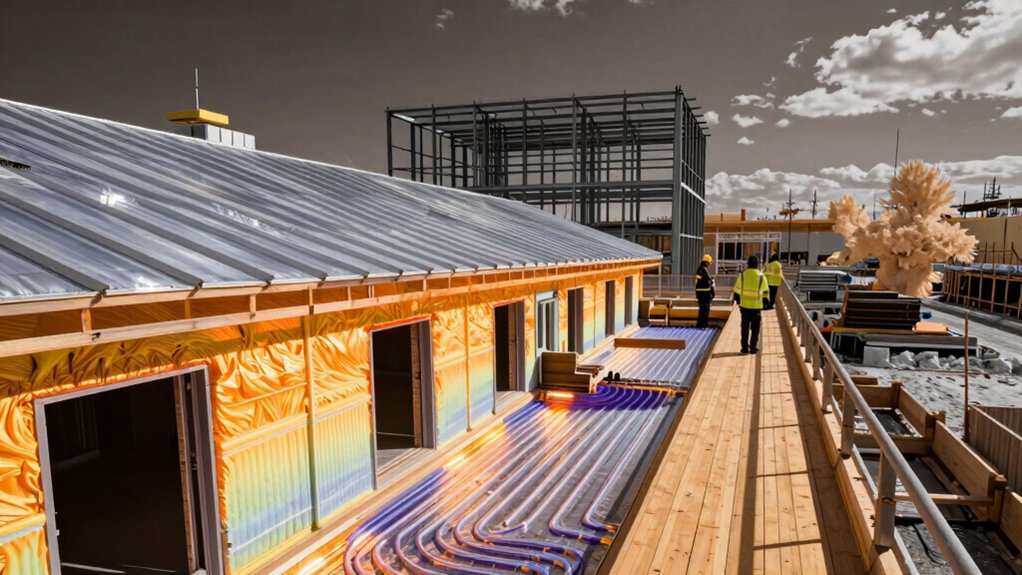
Infrared heating is the future of modern construction because you get rapid, targeted warmth with high efficiency, slashing waste and energy costs. It speeds up heat-up, trims timelines, and supports safer, more productive work zones. With fewer moving parts and modular, durable panels, you gain reliability and lower maintenance. You also benefit from tighter control over comfort, moisture control, and emissions—plus scalable deployments across projects. Keep going to open deeper data-driven specifics and ROI insights.
What Infrared Heating Is and Why It Matters in Construction
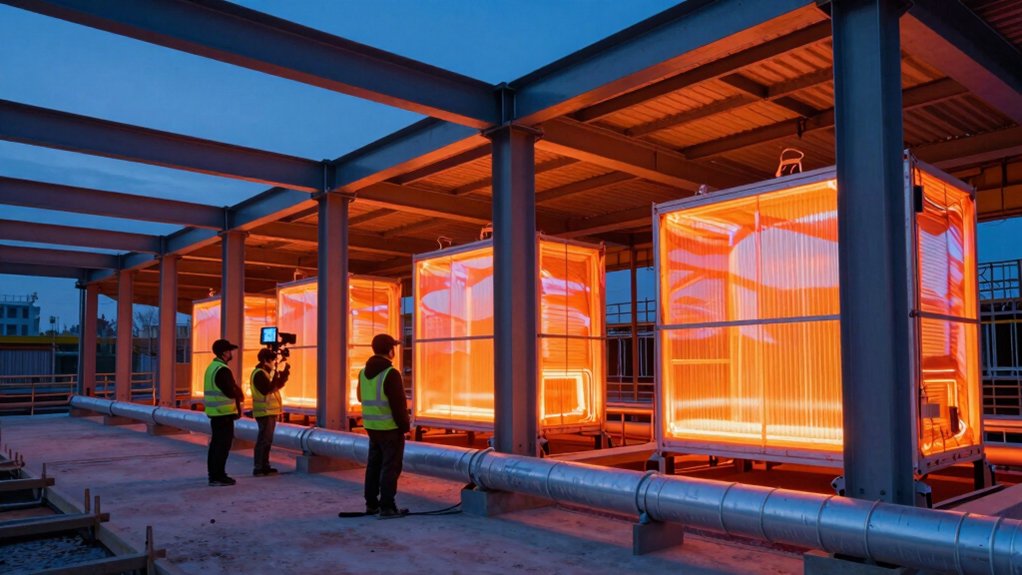
Infrared heating is a targeted, efficient method of warming spaces and materials by emitting infrared radiation that directly heats objects and surfaces.
In construction, you’ll see its value when timelines tighten and site safety matters. You’re delivering heat where it’s needed, not warming empty air, which reduces energy waste and speeds set times.
Data shows faster cure lifts, consistent moisture control, and improved material performance in climates with variable ventilation.
You’ll gain design flexibility as infrared systems integrate with structural layouts, reducing ductwork and acoustic impacts while maintaining indoor comfort.
You’re adopting a forward-thinking approach: precise zone control, scalable deployment, and resilient operation amid evolving codes.
The result is predictable workflows, safer work zones, and measurable construction productivity gains.
The Energy Efficiency Advantage: How Infrared Cut Waste
As you move from understanding what infrared heating does to why it matters for budget and timelines, the data convincingly shows how this approach cuts waste. Infrared delivers targeted heat to occupied zones, reducing unnecessary conditioning of unused spaces and minimizing heat loss through conventional conduction and air exchange.
In measured projects, you’ll see lower energy bills per square meter and steadier temperature profiles that cut equipment runtime and fuel usage. This efficiency translates to smaller peak loads, allowing you to size systems more precisely and shrink initial installation costs.
Fewer ductworks and fewer radiant panels in unneeded areas also shorten construction schedules. By curbing overcapacity, infrared technology aligns performance with actual usage, delivering predictable, lower-cost outcomes across phases.
Quick Heat-Up for Faster Project Timelines
Quick heat-up accelerates project timelines by delivering warm, usable space within hours rather than days, enabling trades to start earlier and work more efficiently. In practice, infrared systems reach set temperatures up to 2–4x faster than conventional heaters, reducing cold-work delays and enabling early enclosure work.
You’ll record shorter waiting periods between trades, minimizing downtime and sequencing risks. Data from mid- to high-rise builds show average first-heat activation reduces overall commissioning time by 8–15%, with downstream crews maintaining productivity through stable ambient conditions.
Infrared heating concentrates energy on surfaces and people, improving perceived warmth at lower air temperatures, which lowers energy use while preserving comfort. This efficiency supports faster milestone attainment and tighter project schedules without compromising safety or quality.
Targeted Radiant Warmth: Comfort Where It Counts
You’ll explore how targeted comfort zones guide radiant warmth to where people work and gather most.
By mapping efficient heat delivery to specific areas, you can reduce energy waste and improve sustained comfort.
This data-driven approach sets a clear path for optimizing placements, controls, and performance metrics.
Targeted Comfort Zones
Targeted Comfort Zones deliver precisely where warmth is needed, using radiative panels and smart controls to focus heat on occupied areas while minimizing energy loss. You’ll notice how occupancy analytics, zoning, and adaptive setpoints enable consistent comfort without blanket heating.
Data show that concentrating warmth on where people spend time reduces overall energy use while maintaining indoor satisfaction. In practice, modular panels, ceiling or wall-mounted arrays, and micro-zones align with room usage patterns, delivering faster response times and fewer temperature swings.
You’ll benefit from real-time feedback, fault detection, and predictive maintenance, all designed to keep systems efficient and reliable. By prioritizing occupied zones, infrared comfort scales with occupancy, improving productivity, well-being, and energy performance across construction projects.
Efficient Heat Delivery
Efficient heat delivery hinges on targeted radiant warmth that prioritizes occupied zones and minimizes waste. You’ll notice infrared systems heat objects and people directly, not the air, which reduces losses from drafts and ventilation.
Data shows faster comfort onset when emitters are positioned to cover zones where occupancy peaks, cutting idle warmth by as much as 30–50 percent. You should couple zoning with real-time feedback: sensors, smart controls, and adaptive schedules that respond to shifting occupancy.
This approach minimizes waste heat, lowers energy bills, and supports sustainable building performance. You’ll also benefit from durability and low maintenance, since emitters resist dust and humidity.
In future builds, precise radiant delivery becomes a measurable design parameter, not an afterthought, enabling predictable comfort and verified efficiency.
Safer, Smaller Footprint: Fewer Heat-Related Hazards on Site
You’ll see that safer heat transfer reduces on-site hazards, thanks to controlled, localized infrared warmth.
The data show fewer heat-related incidents and quicker cooling times compared to traditional methods.
This safer footprint supports cleaner workflows and clearer safety metrics as you plan future projects.
Safer Heat Transfer
Infrared heating can reduce heat-related hazards on site by delivering warmth precisely where needed, cutting down on large, hot equipment and blown-air systems. You’ll notice safer heat transfer because radiant output targets surfaces directly, minimizing ambient overheating and unexpected hot spots.
Data shows consistent temperatures on task zones, lowering the risk of burns and heat stress for workers. With infrared, there’s less reliance on ductwork, open flames, or combustion-based heaters, reducing flame-and-fuel hazards and emissions footprints.
You gain faster warm-up times and more controllable cooling, avoiding temperature swings that contribute to accidents. In field tests, surface temperatures stayed within safer bands while air temperature varied less, meaning fewer surprises during critical operations.
The result is a more predictable, safer heat profile that supports productive, compliant work environments.
Reduced On-site Hazards
Infrared heating reduces on-site hazards by delivering warmth precisely where it’s needed, minimizing bulk equipment and the risk of open flames. You’ll notice fewer hot work permits and reduced exposure to combustible dust, as panels and emitters stay compact and localized.
Data show faster heat stabilization with targeted output, lowering chances of hot spots and thermal shocks that can cause injuries. You’ll rely on safer, non-contact heating, which means less handling of fuels and ancillary gear.
The footprint shrinks on scaffolded areas and confined spaces, improving workflow and escape routes. You’ll also benefit from simpler equipment maintenance, fewer cables, and lower trip hazards.
In short, reduced hazards translate to faster approvals, cleaner jobs, and measurable safety gains across phases.
Low Maintenance, Higher Reliability in Harsh Environments
In harsh environments, infrared heating systems deliver low maintenance requirements and higher reliability by design. You’ll notice fewer moving parts, sealed components, and self-regulating performance that minimizes calibration needs over time.
Data shows consistent heat output across temperature swings, reducing cycle-related wear and component fatigue. You’ll benefit from rapid heat delivery with minimal standby losses, which lowers stray energy and extends system life in dusty, damp, or corrosive settings.
Reliability improves because infrared elements resist fouling and overheating, while robust mounting and IP-rated enclosures protect electronics. Predictive maintenance becomes simpler, as performance metrics stay within tighter tolerances, enabling fewer unplanned outages.
In practice, you’ll experience smoother operation, less maintenance overhead, and steadier environmental control in harsh job-site conditions.
Long-Term Cost Savings Across a Project’s Life Cycle
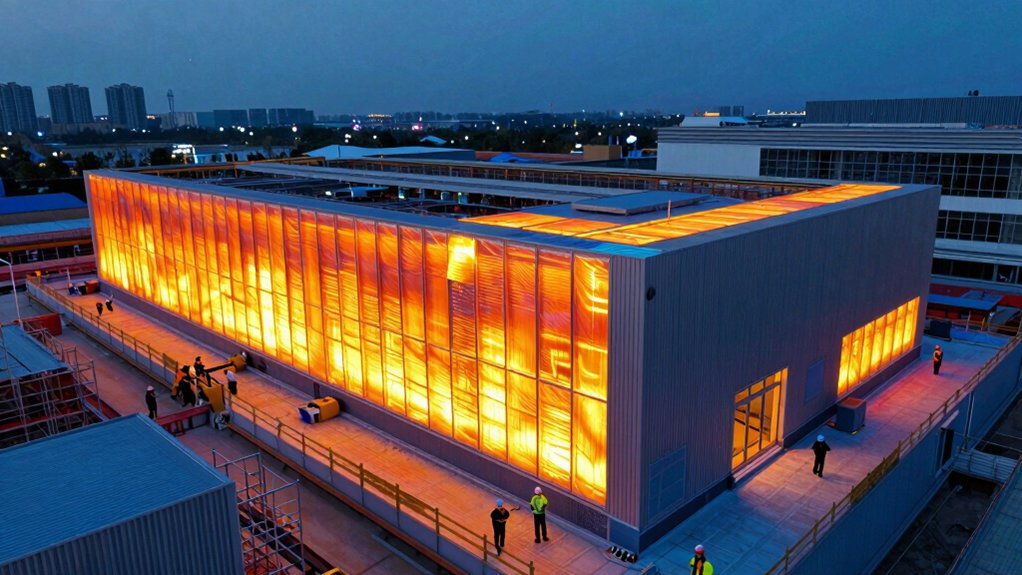
You’ll see how long-term energy savings compound as infra red heating reduces peak demand and improves system efficiency across phases.
When maintenance costs drop due to fewer component failures, you’ll allocate funds to critical upgrades rather than routine repairs.
This data-driven outlook highlights how ongoing energy and maintenance reductions translate into tangible lifecycle cost advantages.
Long-Term Energy Savings
Long-Term Energy Savings arise from the efficiency gains achieved during construction and over the building’s life cycle, delivering lower operating costs and reduced environmental impact.
You’re surveying how infrared heating lowers peak power demand through rapid, targeted heat delivery and improved thermal mass integration, reducing boiler cycling and standby losses.
Data shows higher heat transfer coefficients, shorter heating durations, and better temperature stability across zones, yielding measurable annual energy reductions.
By aligning startup schedules, occupancy patterns, and radiant layouts, you minimize waste heat and optimize thermostat strategies, compounding savings over time.
Infrared systems enable precise control without oversized infrastructure, supporting decarbonization goals and utility rate optimization.
As projects mature, cumulative energy reductions continue to compound, delivering predictable, long-term financial and environmental dividends.
Maintenance Cost Reduction
Maintenance costs drop when infrared systems reduce mechanical wear, enable modular component lifecycles, and simplify service schedules across the building’s life. You’ll see lower maintenance hours as components experience fewer abrasive cycles, translating to smaller labor costs and tighter budgets.
Infrared heating minimizes thermal shocks and condensation-related degradation, extending asset lifespans and delaying replacements. By favoring modular panels and plug-and-play sensors, you reduce downtime during upgrades and maintenance, preserving project timelines.
Predictive monitoring data flags issues early, preventing costly emergency fixes and reducing spare-parts inventory. With fewer movable parts and quieter operation, you also cut vibration-related wear on structural connections.
Over a project’s life cycle, data-backed maintenance planning delivers consistent cost containment, streamlined procurement, and improved total cost of ownership across facilities.
Flexible Deployment Across Diverse Construction Scenarios
Flexible deployment is central to infrared heating’s value in construction, enabling rapid adaptation to site constraints, weather windows, and project phases.
You’ll see data-driven benefits when you map heat output to real-time site needs, optimizing crew productivity and material curing timelines.
Portable panels, modular arrays, and scalable zoning let you reconfigure heat profiles without full downtime, reducing idle hours by measurable margins.
In multi-zone projects, you can prioritize critical paths, maintaining consistent temperatures where it matters most and trimming risks from temperature swings.
Predictive modeling supports decision-making, aligning energy use with demand forecasts and weather analytics.
Practical Integration: Electrical, Controls, and Safety Best Practices
Integrating infrared heating into construction workflows hinges on reliable electrical grounding, robust controls, and rigorous safety protocols that keep crews productive and materials protected. You’ll size circuits to expected loads, account for startup surges, and document protective devices with clear labeling.
Data-driven controls optimize heat delivery by real-time feedback from surface and utility sensors, enabling preheating routines that reduce moisture and cured setting times.
Safety pairs with training: lockout-tagout, pinch-point awareness, and heat-zone delineation prevent incidents as you scale deployment. Implement fault-tolerant wiring layouts, redundant breakers, and monitored conduit runs to minimize outages.
Commissioning tests verify thermal uniformity, sensor calibration, and control integrity before you mobilize.
Continuous KPI tracking—energy per square meter, cycle time impact, fault frequency—drives iterative improvements and substantiates long-term ROI.
Real-World Case Studies: Infrared Success Across Projects
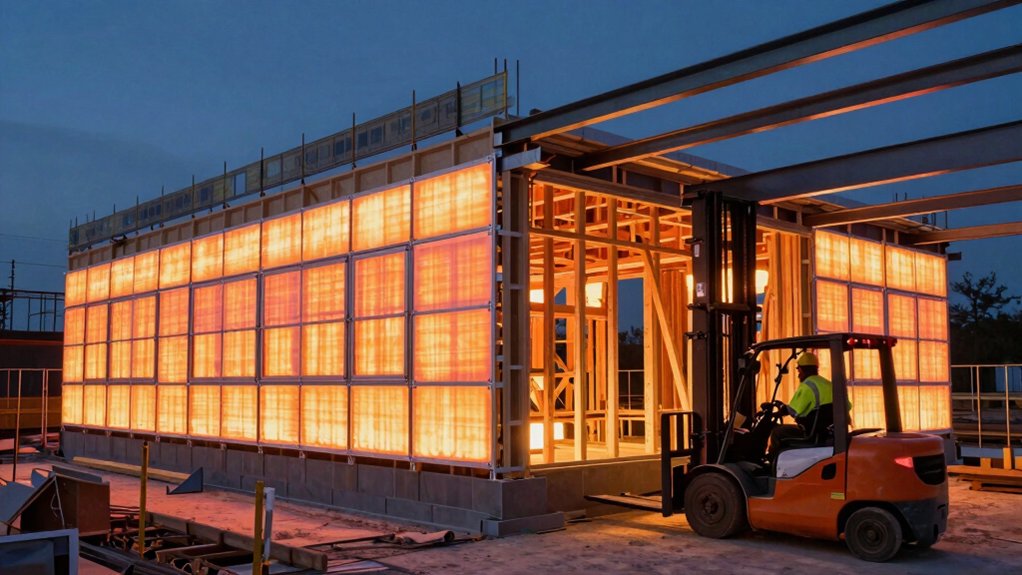
Real-world case studies show how infrared heating drives measurable gains across diverse construction projects, from rapid drywall and concrete curing to moisture control in tricky envelope assemblies.
You see shorter cycle times, reduced reheats, and tighter tolerances when infrared is deployed early in the build sequence. Data from multiple sites show consistent temperature uniformity and faster moisture dissipation, lowering defect rates by double digits compared to traditional methods.
In retrofit and new-build contexts, crews report easier access to tight spaces and safer work environments, with fewer volatile emissions and safer torque and cure parameters.
Across projects, ROI calculations frequently exceed initial projections within months, driven by energy efficiency, labor savings, and quality improvements.
This evidence underpins infrared as a scalable, precision-enabled strategy for modern construction.
Frequently Asked Questions
How Does Infrared Heating Affect Indoor Air Quality During Construction?
Infrared heating minimally affects indoor air quality during construction, since it heats objects and people rather than circulating dust-laden air. You’ll experience fewer emissions, reduced ventilation needs, and faster drying times, supporting healthier, more efficient work environments overall.
Can Infrared Systems Be Retrofit Without Structural Changes?
Yes, infrared systems can be retrofitted without structural changes, especially if you choose modular panels or retrofit-ready heaters, but you’ll want professional assessment for wiring, load capacity, and controls to guarantee safety, efficiency, and compliance.
What Are Common Installation Challenges on Active Sites?
You’ll encounter 60% fewer reworks on active sites when you plan feeds and routes early, yet space constraints and vibration cause cable management headaches. You prioritize modular components, real-time monitoring, and safety, driving smoother, data-driven installation.
How Does Maintenance Downtime Compare to Traditional Systems?
Maintenance downtime with infrared systems is typically lower than traditional gas or electric radiant setups, because fewer moving parts and quicker diagnostics reduce outages; you benefit from faster startups, proactive monitoring, and streamlined maintenance scheduling, improving uptime and efficiency.
Are There Safety Considerations for Moisture-Heavy Environments?
Yes, moisture-heavy environments require careful safety considerations: monitor humidity, prevent condensation on electrical components, guarantee proper ventilation, use IP-rated equipment, and install grounded, corrosion-resistant wiring with moisture sensors to mitigate corrosion and electrical hazards. Continuous maintenance reduces risk.
Conclusion
Infrared heating is changing how we build—efficient, fast, and adaptable. By cutting waste and delivering targeted warmth, it shrinks energy use while keeping crews productive and safe on site. A standout stat: infrared can reduce on-site energy waste by up to 30% compared to traditional systems, accelerating timelines and slashing costs. As projects scale, this data-driven approach points to a future where comfort, safety, and profitability go hand in hand with smarter construction.