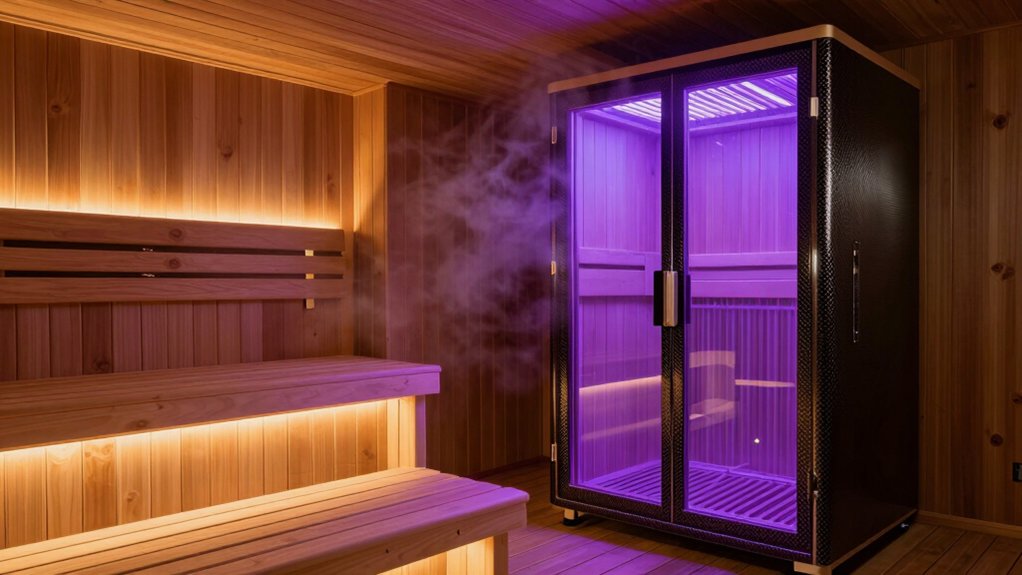
Infrared saunas heat your body directly with infrared radiation, so you feel warmth at lower ambient temps (often 110–150°F) and sweat more gradually. Traditional saunas heat the surrounding air to much higher temps (150–195°F) with steam or humidity, leading to faster sweating. Both boost circulation and relaxation, but infrared tends to be gentler on air temperature while traditional offers a social, steamier experience. If you want deeper specifics, you’ll find more details below.
What Is an Infrared Sauna and How It Heats
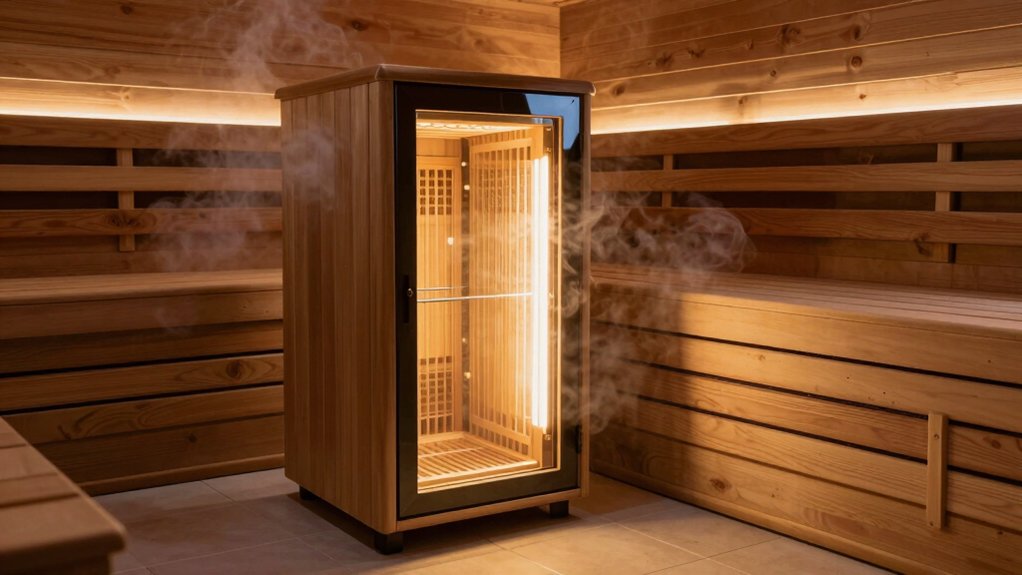
Infrared saunas heat primarily by emitting infrared radiation from heating elements, rather than warming the surrounding air. You’ll notice heat that goes directly into your body’s tissues, which can feel different from conventional steam or dry-heat systems.
In typical designs, elements operate at safe temperatures and emit wavelengths categorized as near-, mid-, or far-infrared, each with varying tissue penetration. Manufacturers cite benefits like comfort at lower ambient temperatures and targeted warmth.
Independent studies present mixed results; some show increased heart rate and perspiration comparable to traditional saunas at lower air temperatures, while others find modest or inconsistent effects on comfort or pain relief.
Use varies by model, session length, and individual health. Always follow device guidelines and consult a professional if you have medical conditions.
How a Traditional Sauna Heats the Air
In a traditional sauna, you’ll feel air heat up mainly through convection from the hot walls and furnace. Heated surfaces transfer energy to the surrounding air. The air temperature rises as hot air moves and circulates, creating a more uniform warmth that you experience as you breathe and move.
This process hinges on air temperature transfer and the conduction from solid surfaces to the air, shaping how you perceive the heat.
Air Temperature Transfer
Traditional saunas heat the air primarily through radiant and convective mechanisms: hot rocks or a heater transfer energy to the surrounding air and surfaces, which then circulates to raise the room temperature. You experience warming as heat radiates from surfaces and as air moves via convection currents created by the heater and occupant movement.
In practice, the air temperature rises relatively quickly when the heater is on and the door remains closed, but it also stabilizes as heat distributes and humidity changes with moisture added by sweating.
Compared with infrared systems, traditional setups rely more on air heating than direct radiant transfer to the body. The resulting air temperature profile supports a rapid initial rise, followed by gradual thermal equilibration across the volume.
Heat Conduction Mechanisms
Heat conduction in a traditional sauna occurs when the heating elements or hot rocks transfer energy directly to surrounding surfaces and air, creating a thermal gradient that drives heat flow toward cooler regions.
You feel heat transfer primarily by contact with benches, panels, and air that’s warmed by radiant and conductive processes. The hot surfaces radiate, warming nearby air and objects, while conduction occurs through solid materials connected to the heater.
Air itself also gains energy from these heated surfaces, but convection moves the warmed air upward and mixed layers distribute heat unevenly.
Materials with high thermal mass store and release energy, smoothing short-term fluctuations.
How You Sweat: Infrared vs Traditional
Sweating patterns differ between infrared and traditional saunas due to temperature sources and how heat is delivered. In infrared rooms, you tend to sweat at lower ambient air temperatures because infrared rays heat your body directly, triggering moisture loss through the skin as your core temperature rises.
Traditional saunas, by contrast, raise the room’s air temperature and rely on convection and radiant heat, prompting faster sweating once you acclimate to the chill of the higher heat. You may notice a slower onset with infrared but a longer, steadier sweat as you continue sessions.
Hydration needs align with duration and perceived intensity across both types. Overall, sweating reflects distinct heat transfer mechanisms, not a single superior method for detoxification or comfort.
Health Benefits: Quick Overview
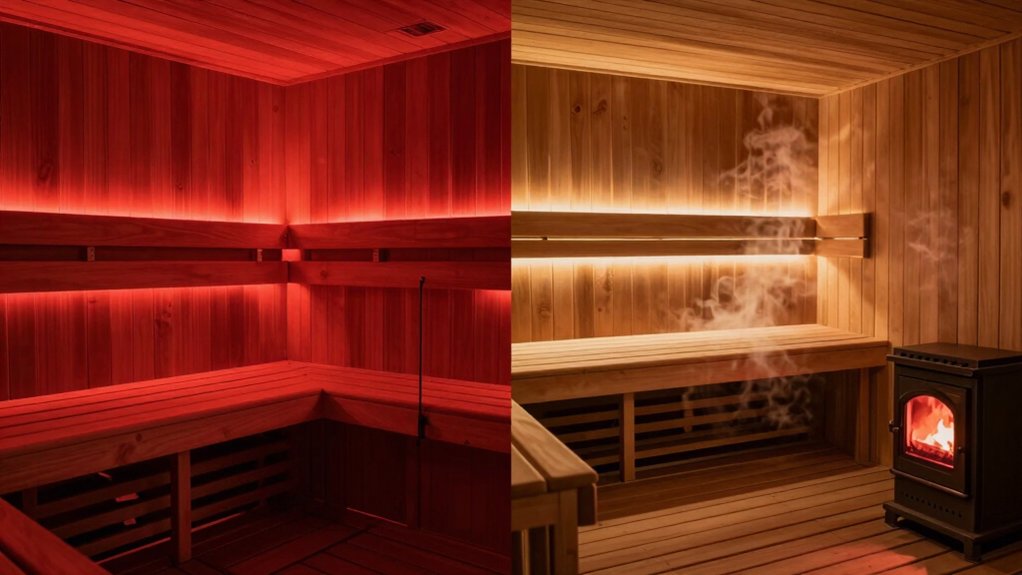
Infrared and traditional saunas offer overlapping health benefits, though the emphasis and mechanism can differ. Regular heat exposure may promote cardiovascular responses, such as improved blood flow and modest reductions in resting blood pressure for some individuals.
You may experience muscle relaxation and reduced joint stiffness after sessions, aided by heat and improved circulation. Sweat-induced detoxification remains debated, with studies showing variable, often small effects.
Evidence suggests potential mood and stress-reduction benefits, attributed to heat exposure and endorphin release, though results vary by protocol. Some research indicates transient improvements in insulin sensitivity and inflammatory markers, yet findings aren’t consistent across populations.
Comfort and Session Experience: Temperature and Humidity
Temperature control and humidity levels shape how you perceive comfort during a sauna session. Infrared units often feature lower ambient temperatures with higher perceived warmth.
Traditional saunas rely on higher heat with adjustable steam and humidity.
You’ll notice these differences influence longer-term comfort, session duration, and how your body responds to heat and moisture.
Temperature Control Variations
Temperature control is a key differentiator in user experience between infrared and traditional saunas. Infrared models let you adjust temperature with precise, gradual increments, typically ranging from about 110°F to 150°F, which supports shorter, milder sessions.
Traditional saunas reach higher temperatures, commonly 150°F to 195°F, with control focused on heat source intensity and air flow rather than fine-tuned setpoints.
In infrared rooms, radiant panels deliver steady heat with less room-wide convection, producing a more uniform yet lower ambient intensity.
Traditional setups rely on heaters creating a hot air bath, leading to rapid, steeper changes in perceived warmth.
Both formats offer timer-based controls, but infrared units often prioritize shorter sessions and lower starting temperatures, while traditional saunas emphasize sustained, higher-heat exposure.
Humidity and Comfort Levels
Humidity and comfort levels differ meaningfully between infrared and traditional saunas. Infrared saunas typically operate at lower ambient humidity, often around 20–40%, which can feel drier despite higher temperatures. Traditional saunas use steam or dry heat with adjustable moisture, producing higher humidity that ranges widely based on water splash and room design.
You may notice that infrared heat penetrates muscles directly, yielding a more tolerable sensation for some users, while the wetter environment of a traditional sauna can feel more intense and prompting quicker cooling needs. Comfort also relates to proximity, ventilation, and session duration.
Evidence suggests similar subjective relaxation and cardiovascular responses, though individual tolerance varies. Overall, humidity differences influence perceived comfort and session experience, shaping your preferred sauna type.
Cost to Buy: Infrared vs Traditional
Infrared saunas generally cost less upfront than traditional saunas, though the gap varies by size, features, and brand. Across market segments, compact infrared models often run a few hundred to a couple thousand dollars, while larger units with higher-grade components can reach several thousand.
Traditional wood-paneled units, especially barrel or room-sized designs, tend to start higher and rise with heater count, materials, and construction quality. Compared to traditional steam or electric stoves, infrared heaters are typically cheaper to install and ship, with fewer framing or electrical upgrades required.
Financing options and seasonal sales also influence advertised prices. When evaluating cost, consider warranty terms and included features, since these can affect long-term value beyond sticker price. Overall, infrared generally offers lower upfront expenditure.
Operating Costs and Longevity
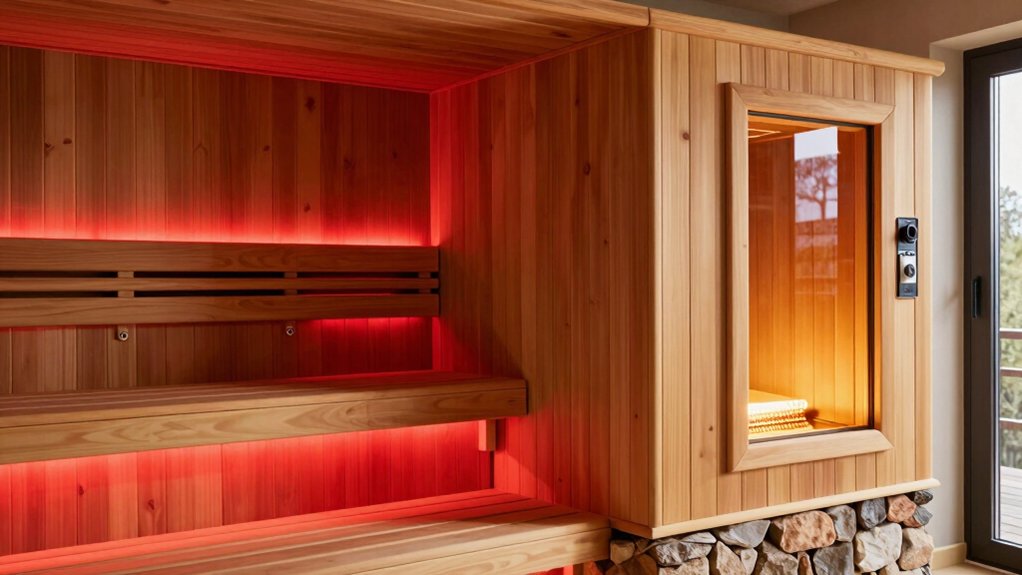
While upfront costs differ, operating costs and longevity are key factors that influence long-term value between infrared and traditional saunas. You’ll typically see lower energy use with infrared targets, since infrared panels heat occupants directly rather than the entire cabin.
Traditional saunas often consume more energy due to heater heating the air and the surrounding space.
Maintenance needs differ: infrared units usually have longer bulb lifespans but rely on electrical components common to many appliances; traditional saunas require regular heater element checks and wood upkeep in some models.
Longevity evidence varies by build quality, usage frequency, and maintenance practices. Overall, infrared models may offer lower annual operating costs, while traditional saunas can retain value with durable materials and robust heaters when properly cared for.
Space and Installation Considerations
Choosing an appropriate space for your sauna depends on layout, ventilation, and local building codes. Infrared and traditional models each have distinct installation needs.
Infrared units are typically compact, can fit in bathrooms, bedrooms, or dedicated wellness corners, and often require minimal electrical work beyond a dedicated outlet.
Traditional saunas usually demand more space for heater placement, seating, and proper clearance, plus robust ventilation and flooring to handle humidity and heat loss.
Electrical requirements vary: infrared may use 120V or 240V circuits; traditional models commonly need 240V with higher amperage.
Site preparation should consider heat insulation, moisture barriers, and safe proximity to water sources.
Installation may involve professional wiring, panels, and clearances.
Finally, verify local codes, permits, and warranty implications before committing to a specific layout.
Maintenance and Cleaning Differences
Maintenance and cleaning differ in how often you perform routines and what you clean. Infrared units typically require simpler wipe-downs and fewer chemical cleaners.
Traditional saunas may need more frequent surface care and vent cleaning.
Consider cleaning routine variances and maintenance access considerations to plan for consistent upkeep and safe operation.
Cleaning Routine Variances
Cleaning routine variances between infrared and traditional saunas mainly hinge on how each system handles heat exposure, humidity, and surface materials. In infrared units, you’ll typically target heater panels and interior surfaces with mild, non-abrasive cleaners, avoiding harsh solvents that could degrade coatings. Wiping down after sessions helps reduce fingerprinting and dust buildup from longer warm periods, while humidity exposure is minimal, so mold risk stays lower if you dry surfaces promptly.
Traditional saunas require ventilation-aware cleaning: resinous bench wood and metal components benefit from damp, not soaking, wipes and quarterly sealing checks to prevent cracking or warping. Both types benefit from routine deodorizing to address mineral residues and sweat byproducts. Establish a simple post-use wipe schedule to maintain finish integrity and user safety.
Maintenance Access Considerations
Access to components differs between infrared and traditional saunas, shaping how you perform routine maintenance and cleaning. Infrared panels and wiring are typically mounted behind backing boards, offering targeted access but requiring careful panel removal to reach electrical connections.
Regular cleaning focuses on the heater surfaces and airflow channels; you’ll wipe approved panels with non-abrasive cleaners and inspect for signs of coating wear or hot spots.
Traditional saunas emphasize access to wooden benches, heating elements, and stone heaters, with frequent checks for loose fasteners and stone integrity.
In both types, you should follow manufacturer guidelines for service intervals, use non-corrosive cleaners, and avoid moisture on electrical components.
Document maintenance, schedule professional inspections where recommended, and prioritize safety during any disassembly or sensor inspection.
Safety, Health Considerations, and Contraindications
Saunas, whether infrared or traditional, generally pose low risk for healthy adults when used as advised, but safety considerations vary. In evaluating safety, you should follow manufacturer guidelines, monitor duration, and stay hydrated.
Common risks include dehydration, heat discomfort, and faintness from rapid temperature changes. People with cardiovascular issues, pregnancy, diabetes, or skin conditions should consult a clinician before use.
Infrared saunas operate at lower ambient temperatures but can produce equal or higher localized heat exposure; traditional saunas rely on ambient heat and humidity.
Contraindications commonly cited include recent surgery, fever, alcohol use, and impaired thermoregulation.
Regardless of type, avoid prolonged exposure, heed warning signs like dizziness, and use in a well-ventilated, supervised setting.
Evidence supports cautious, individualized use with contraindications respected.
Who Should Choose Infrared: Use-Case Scenarios
Infrared saunas may suit you if you value radiation-based comfort and shorter session times for practical limits like busy schedules.
You’d also consider their targeted heat benefits when specific muscle relief or localized warming could complement your routines.
Radiation-Based Comfort
For users prioritizing targeted heat delivery, infrared saunas can offer a different comfort profile because infrared wavelengths heat the body directly rather than heating the surrounding air. This radiation-based mechanism may feel less oppressive to some individuals, especially those sensitive to high air temperatures.
You’ll still experience overall body warmth, but at lower ambient temperatures compared with traditional saunas. Evidence suggests comfort varies with skin exposure and insulation; portable styles can feel cooler in the air while delivering similar perceived warmth to deeper tissues.
Use cases favoring gradual warming, shorter sessions, or exclusions for high heat tolerance may benefit from infrared devices. Consider personal comfort, room layout, and health considerations when evaluating radiation-driven heat delivery versus other sauna approaches.
Targeted Heat Benefits
If you’re seeking heat that targets tissues directly without elevating ambient air temperatures, infrared devices can offer specific advantages for certain use cases. You may benefit when aiming for localized relief, such as muscle soreness or joint stiffness, since infrared energy penetrates beneath the skin to reach deeper layers.
In practice, this can support warm-up routines without triggering broad sweating, which some users prefer. People with sensitive air temperatures or claustrophobic discomfort around high ambient heat may find infrared sessions easier to tolerate.
For those focused on detox perceptions or circulation boosts, evidence remains mixed, so results vary. Infrared therapy is typically prescribed for shorter durations with careful monitoring, especially for photosensitivity, metabolic conditions, or recent injuries.
Always consider device type, wavelength, and professional guidance to align with your goals.
Who Should Choose Traditional: Use-Case Scenarios
Traditional saunas are well suited for individuals who prioritize high heat and short, intense sessions, often accompanied by the sensory experience of steam and a dry heat environment. If you seek rapid body warming and brisk relaxation, a traditional setup may meet that need more efficiently than longer, cooler sessions.
Use-case scenarios include athletes requiring post-exercise heat recovery, where brief sessions can complement cooling-down routines. Individuals with metal or metal-hiber related sensitivities should consider ventilation quality and humidity levels, since these can affect comfort.
Those pursuing cultural or ritual aspects may value the traditional ambiance and social dimensions of sauna use. People aiming for deeper sweat and short duration workouts might favor traditional heat, while persistent temperature control or targeted infrared benefits aren’t aligned with this format.
A Quick Comparison Table: Infrared vs Traditional
Infrared and traditional saunas offer distinct heat delivery and user experiences, and a quick table helps compare their key features side by side.
You’ll notice infrared heaters warm the body more directly with lower ambient temperatures, typically around 120–140°F (49–60°C). Traditional saunas heat the air to higher temperatures, often 150–195°F (65–90°C), with heat transferring through convection and radiant waves.
Session durations commonly differ: infrared sessions run 20–45 minutes, while traditional sessions range 15–30 minutes. Humidity levels vary: infrared is dry heat, traditional saunas may incorporate water to create moist heat.
Efficiency and energy use also differ; infrared generally consumes less power per hour. User experience factors include perceived comfort, mental relaxation, and potential cardiovascular responses.
Choose based on your heat preference, tolerance, and convenience.
Choosing Based on Space, Budget, and Goals
When you’re selecting a sauna setup, start by evaluating how much space you can dedicate, your budget, and the outcomes you’re aiming for. Infrared units are typically more compact and affordable upfront, while traditional saunas require more room and higher initial cost but may offer longer-term durability.
Space constraints influence installation options: infrared panels fit smaller rooms or enclosures, whereas traditional saunas need proper ventilation, benches, and heating stoves.
Budget considerations include upfront purchase price, installation, and ongoing energy use. Infrared tends to be cheaper initially, while traditional models may incur higher costs but deliver longer service life.
Align goals with performance: infrared delivers rapid heat at lower temperatures, traditional saunas emphasize larger heat exposure and a social, authentic feel.
Choose based on practical fit and desired experience.
Tips for Maximizing Benefits in Either Type
If you’re optimizing whatever sauna type you choose, start by focusing on practical routines and consistent use. Both infrared and traditional saunas benefit from regular schedules, gradual acclimation, and clear hydration goals.
Begin with moderate sessions, 15–20 minutes, a few times weekly, then adjust as your tolerance grows. Monitor water intake and electrolyte balance to support sweating.
Listen to your body; cool-down periods and rest days prevent overstress. Choose temperatures that feel tolerable rather than extreme, and avoid pairing intense heat with alcohol or large meals.
For recovery-minded benefits, combine sauna time with gentle stretching or light movement, ensuring ventilation and safety.
Track subjective responses and, if needed, consult a clinician for persistent discomfort or health concerns. Tailor routines to your preferences while maintaining consistency.
Common Myths and Misconceptions About Saunas
While many sauna claims circulate online, several common myths are unsupported by evidence and can mislead users. You’ll often hear that saunas detox the body or cure illnesses, but research shows benefits mainly relate to relaxation, circulation, and temporary heart-rate increases.
You won’t see universal, immediate weight loss or sweat-alone outcomes; hydration and overall lifestyle matter more. Misconceptions about safety persist for certain groups, yet most healthy adults tolerate heat well when used properly and for recommended durations.
Between infrared and traditional models, temperatures and humidity differ, but neither guarantees superior health results. Claims about “all-natural” or “maintenance-free” saunas oversimplify care, as regular cleaning and safe use are essential.
Rely on peer‑reviewed guidance and individual health considerations to inform usage.
Frequently Asked Questions
Do Infrared Saunas Cause More Dehydration Than Traditional?
Infrared saunas don’t inherently cause more dehydration than traditional saunas. Both induce fluid loss through sweating; staying hydrated, monitoring urine color, and limiting sessions to recommended durations reduces dehydration risk for either type. Individual factors vary.
Which Sauna Type Is Quicker to Heat Up?
You’ll find infrared heaters heat up faster, often reaching usable temps within 10–20 minutes, versus traditional saunas that may take 15–30 minutes to preheat. Evidence suggests quicker warm-up supports shorter sessions and consistent comfort.
Are Infrared Wavelengths Safe for Long-Term Use?
Yes, infrared wavelengths are generally considered safe for long-term use when you follow guidelines, avoid overexposure, and monitor your body’s responses; evidence supports modest heat exposure, though individual sensitivity varies and consulting healthcare providers is prudent.
Can You Use Essential Oils in Infrared Vs Traditional Saunas?
Yes, you can use essential oils in both, but use sparingly and consider ventilation, skin sensitivity, and device guidelines; in infrared saunas, diffusers may be safer than direct oil exposure, whereas traditional saunas tolerate misting carefully.
How Do Start-Up Costs Compare Across Models and Sizes?
Start-up costs vary by model and size, with entry-level infrared units typically cheaper and larger traditional installations costing more upfront due to room build-out and electrical requirements. Smaller units limit expenses, while custom setups raise total investments.
Conclusion
Infrared and traditional saunas each offer distinct heat mechanisms, with infrared warming your body directly and traditional saunas heating the air. Evidence suggests both can improve relaxation, circulation, and perceived recovery, though effects vary by session and individual. Choose based on space, budget, and goals, not hype. As the saying goes, “different strokes for different folks”—pick the sauna that fits you best, then use it consistently for measurable benefits.