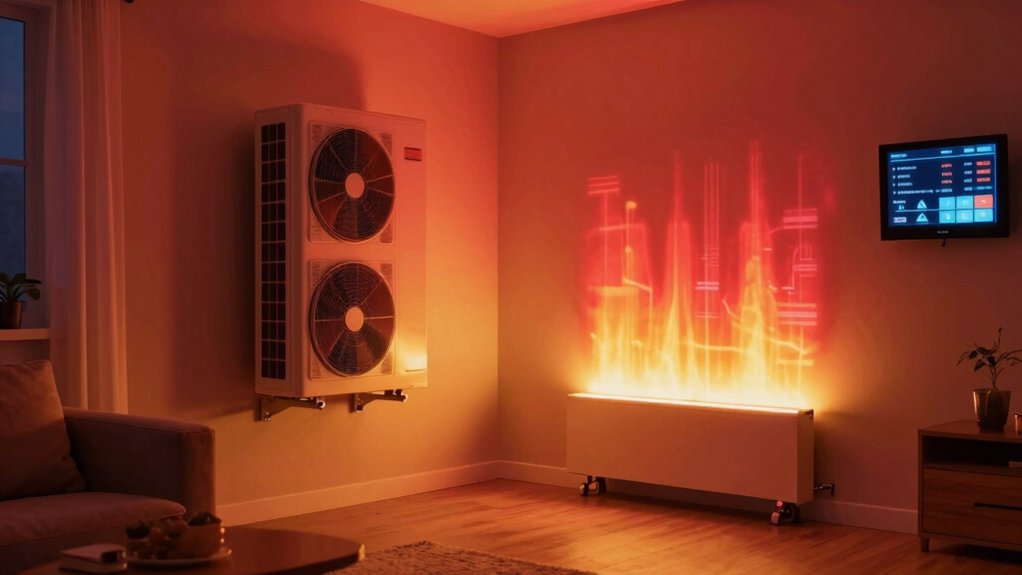
Infrared heating delivers rapid surface warmth with low standby losses, while heat pumps move ambient energy with COPs around 3.5–4.0 and SCOP variations across climates. In practice, infrared costs spike with longer runtimes and high insulation challenges, whereas heat pumps shine in whole‑home heating and milder climates, thanks to steadier annual energy use. Maintenance differs: infrared panels last 10–15 years; heat pumps require regular refrigerant checks and coil care. If you want the full picture, you’ll uncover more specifics and scenarios.
How Infrared Heating Works and What It Costs to Run
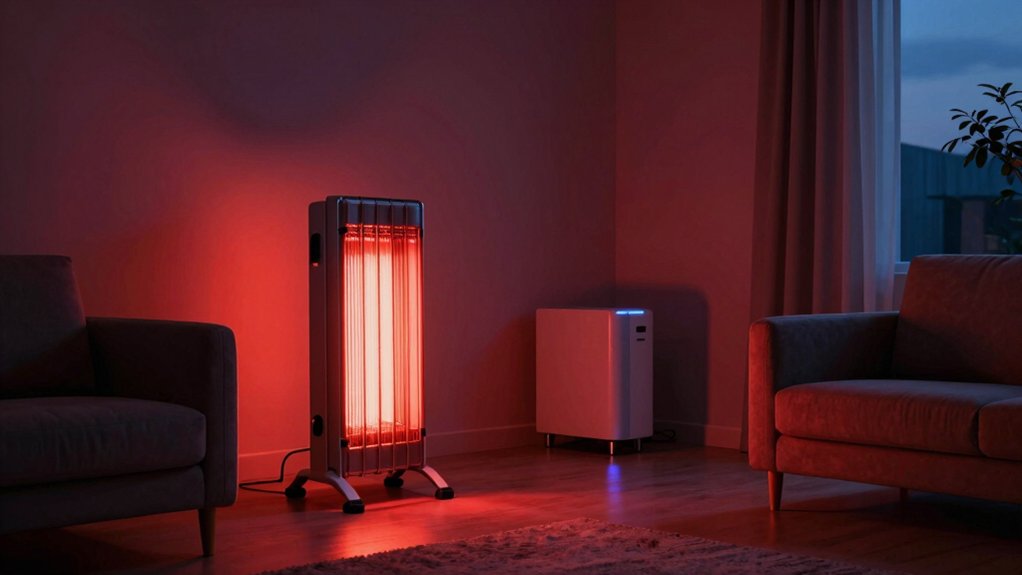
When infrared heating is on, you feel warmth directly from radiant panels or heaters, not from heated air circulating around the room. You measure performance by surface heat transfer rate and radiation efficiency, not just ambient temperature.
In practice, radiant output is rated in watts per square meter, with typical compact panels delivering 100–250 W/m² for targeted zones.
Operating costs hinge on electricity price, duty cycle, and insulation, yielding cost per hour estimates often shown as cents per hour and per season.
Data show faster temperature feel with lower air movement, reducing boiler or furnace reliance in zones with good insulation.
Policy-wise, efficiency standards favor low standby losses, accurate labeling, and transparent tariffs, enabling you to compare infrared against alternative heat sources using consistent metrics.
How Heat Pumps Convert Energy and Where the Savings Start
You’ll see that heat pumps convert electricity into heat with a coefficient of performance above 1, so your input energy can yield 2–4 units of warmth depending on conditions.
As outdoor temps fall, you’ll measure savings through the COP and seasonal energy use per unit of comfort, not just sticker prices.
This is where the data gets practical: quantify incremental savings from better efficiencies, then compare to alternative heating options using real-world performance metrics.
How Heat Pumps Work
Heat pumps don’t create heat; they move it. You’re watching a system that uses electricity to transfer existing ambient energy from outside to inside, via a refrigerant cycle.
In practical terms, COP figures quantify efficiency: a COP of 4 means 1 kW of input electricity yields about 4 kW of heat.
Seasonal performance is tracked with SCOP, reflecting weather-driven variation.
Power consumption hinges on load, climate, and device design, not just nominal capacity.
You’ll see heat-pump outputs vary by mode: space heating, hot-water, and combined systems.
Real-world metrics matter: annual energy use, peak demand, and grid impact.
Policy-relevant considerations include efficiency standards, refrigerant global warming potential, and lifecycle costs.
The core takeaway: savings arise from transfer efficiency, not heat generation.
Energy Savings Start
Because heat pumps don’t generate heat, the savings start as soon as the system begins moving ambient energy from outdoors to indoors, quantified by how effectively the refrigerant cycle transfers energy rather than how much fuel is burned.
You measure efficiency with COP and SEER, then translate that into annual energy-use reductions. In heating mode, a COP of 3.5 to 4.0 typically yields 3.5–4.0 kWh of heat per 1 kWh electricity, while cooling SEER values indicate similar energy-displacement during summer.
Real-world performance varies with outdoor temperature, inverter sizing, and airflow. Policies encouraging electrification, weatherization, and controlled usage windows improve realized savings.
Track metric trends quarterly, compare with baseline infrared systems, and factor electricity tariffs, maintenance intervals, and refrigerant integrity to compare total cost of ownership accurately.
Comparing Running Costs: Infrared vs Heat Pumps in Everyday Use
When evaluating running costs, infrared heating and heat pumps differ in how energy translates to warmth and how efficiency is measured.
In everyday use, you’ll see infrared bills reflect emitted radiant energy per square meter, with contiguous surface temperatures shaping perceived warmth.
Heat pumps, by contrast, show coefficients of performance (COP) and seasonal performance factors (SPF) that integrate climate and usage patterns.
Across typical rooms, infrared systems deliver rapid comfort with lower standby losses, but costs scale with surface exposure and insulation.
Heat pumps center on high coefficient of performance in moderate conditions, yet performance drops in extreme cold.
Policy metrics favor heat pumps for annualized cost stability, while infrared can outperform in short-term comfort when heating is intermittent.
Impact of Climate and Seasonal Changes on Bills
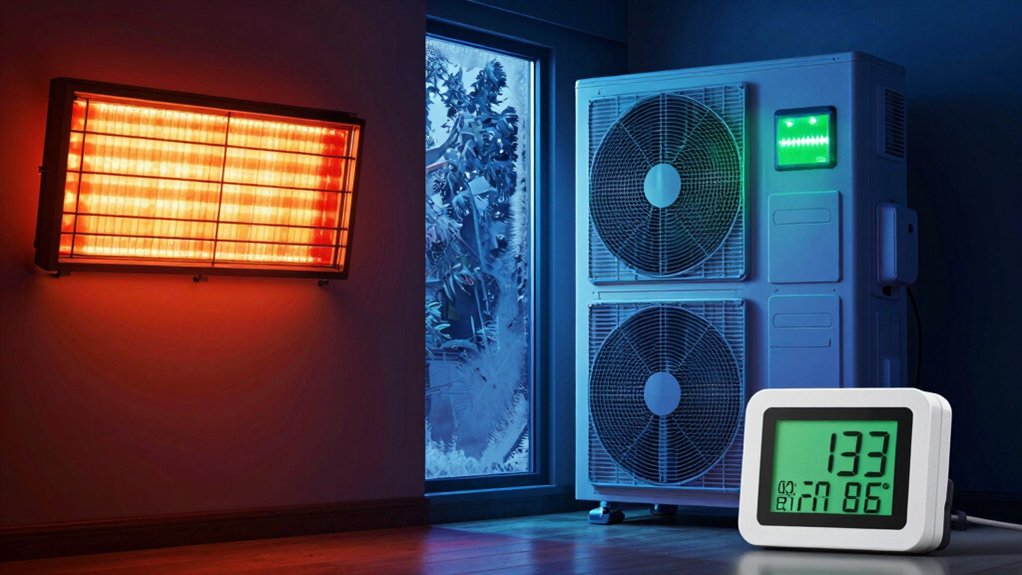
Seasonal conditions act as a primary driver of bill variation for both infrared and heat-pump systems. You can expect higher winter usage and longer heating hours to push infrared electric heat bills upward, while heat pumps earn efficiency from milder days but may spike during cold snaps due to auxiliary support.
Data shows variability by region: colder climates magnify differences between technologies, with infrared’s constant surface efficiency yielding steadier per-hour costs, yet total energy use rising with ambient drop.
In shoulder seasons, both techs benefit from moderate temperatures, reducing bills, but maintenance and defrost cycles for heat pumps introduce intermittent cost points.
Policy implications focus on building standards, weather-normalized pricing, and incentives that reward energy productivity during peak demand periods.
Align choices with climate, insulation, and expected seasonal patterns to optimize annual costs.
Power Consumption: Watts, Kilowatts, and Real-World Rates
Power consumption is best understood through three linked metrics: watts, kilowatts, and real-world rates. You’ll compare infrared heaters and heat pumps by their nominal wattage, then translate that into kilowatts for budgeting and grid impact.
Real-world rates reflect duty cycles, standby power, and seasonal usage, so measurements must account for thermostat settings, outdoor temperatures, and occupancy. A 1 kW device running steadily for an hour uses 1 kWh, while a 2 kW unit may consume more during peak hours unless it cycles efficiently.
Policy-aware analysis requires standardizing test conditions, clearly labeling intermittent versus continuous draw, and presenting cost implications with local tariffs. Present transparent benchmarks for typical rooms, including high-demand scenarios and energy-saving operating modes, to inform decisions without hidden assumptions.
Maintenance and Longevity: How They Affect Yearly Costs
Maintenance schedules and component lifespans drive annual costs for infrared systems and heat pumps. You’ll compare maintenance frequency, expected longevity, and replacement costs to quantify total ownership, using metrics like service intervals, mean time between failures, and price ranges.
This analysis informs policy-aware budgeting decisions and equipment selection based on reliability and long-term cash flow.
Maintenance Frequency Differences
Maintenance frequency matters because infrared heating systems and heat pumps require different service cadences that translate into yearly costs.
You’ll see infrared units typically demand less frequent professional checkups, with emphasis on surface integrity and electrical connections, translating to lower annual service spend.
In contrast, heat pumps require more regular compressor and refrigerant-cycle inspections, plus filter and coil cleanings, driving higher maintenance budgets across comparable operation hours.
Quantitatively, a mid-size infrared system may average 1–2 service visits per year, while a heat pump often schedules 2–4 visits, depending on climate and usage.
Policy-wise, standardizing preventive maintenance intervals reduces unexpected downtime and repair surcharges.
This cadence gap directly shapes total cost of ownership, informing procurement and budgeting decisions for your installation.
Component Longevity Insights
Component lifespans drive annual cost profiles just as maintenance cadence does. You’ll compare mean time between failures, scheduled service windows, and failure rates across infrared heaters and heat pumps.
In infrared arrays, expect longer diode or panel life if operated within rated temps, but surface wear or cabling exposure can create hotspot risks that spike maintenance needs.
For heat pumps, compressor and refrigerant line longevity hinge on duty cycles, outdoor unit protection, and refrigerant integrity; failed seals and leaks often drive replacement-leaning costs rather than routine service alone.
Track uptime percentages, mean repair costs per incident, and total annualized maintenance spend.
Policy-aware budgeting favors proactive design margins, robust warranties, and preventive checks timed to seasonal usage, reducing unexpected outages and stabilizing year-over-year capital and operating expenses.
Replacement Cost Implications
Replacement costs hinge on distinct failure modes and replacement timelines for infrared versus heat pumps. You’ll compare typical component lifespans, service intervals, and part pricing to gauge year-to-year impact.
Infrared panels usually require fewer moving parts, but lamp replacements or panel refurbishments can occur on 10–15 year cycles, with costs ranging from moderate to high depending on model.
Heat pumps rely on compressors, fans, and refrigerants; reputable units often endure 12–15 years, yet refrigerant top-ups and compressor fixes drive variable expenses.
Maintenance planning matters: annual inspection fees, filter changes, and potential emergency repairs.
Net present value analyses show infrared costs trend lower upfront but spike with panel replacement, while heat pumps exhibit steadier, periodic maintenance with predictable capex, influencing policy-focused budgeting and cost-effectiveness assessments.
When Infrared Is Cost-Effective: and When It Isn’t
Infrared heating is cost-effective when its demand profile aligns with short, high-heat bursts, the space has minimal thermal mass, and operational hours are limited. You’ll see the clearest value in zones with rapid, spot heating needs, quick recovery requirements, or intermittent occupancy where uniform warmth isn’t essential.
Relative to consumption, infrared units deliver high instantaneous output with lower standby losses, yielding favorable short-cycle performance metrics. However, you’ll pay more per kilowatt-hour for peak demand periods, and spaces with high insulation or large thermal inertia dampen the benefits, increasing payback risk.
Policy-aware budgeting favors infrared when you can curtail overall run-time and schedule heating around brief events. To conclude, cost-effectiveness hinges on controlled usage patterns, precise temperature targets, and aligning load duration with device response times.
When a Heat Pump Pays Back: Payback Periods and Budgeting
A heat pump pays back when its total lifecycle costs—initial investment plus operating expenses—are lower than the equivalent fossil-fuel or electric-resistance option over a defined budget window.
In practice, you compare upfront capex, annual energy use, maintenance, and any incentives or tariffs. Compute the payback period by dividing the net incremental cost by annual savings, noting that efficiency, climate, and usage patterns shift outcomes.
Track sensitivity to electricity price trajectories, heat demand, and system sizing. Budget planning should include a scenario range: base, optimistic, and pessimistic.
Consider total cost of ownership over 10–15 years to align with typical warranties. Policy factors—rebates, grid tariffs, and carbon pricing—can shorten payback.
Document assumptions, monitor real-time performance, and revisit the projection if usage or prices change markedly.
Quick Decision Framework: Choosing Based on Your Home and Usage
Making a quick, data-driven call on whether to choose infrared heating or a heat pump starts with your home’s specifics and how you use space. Gather key metrics: insulation quality, heat loss rate, and floor area.
If your margins are tight, prioritize efficiency and upfront cost, using payback and operating cost projections.
Infrared shines in targeted zones, favoring rooms used intermittently or with favorable solar gain; note higher operating costs for continuous zones.
A heat pump excels in whole-home scenarios, particularly in well-insulated layouts, with lower running costs over time and climate-adapted performance curves.
Build a decision table: room-by-room usage, set-points, and peak demand.
Consider local incentives, electricity costs, and maintenance expectations, then choose the option delivering lowest total cost of ownership.
Frequently Asked Questions
How Do Infrared Panels Affect Energy Bills in Multifloor Homes?
IR panels can cut bills by heating zones efficiently, but overall impact depends on insulation, usage patterns, and electricity rates; you’ll likely see variable savings across floors, with higher efficiency when coupled with smart zoning and reduced standby losses.
Do Heat Pumps Work Reliably in Very Cold Climates?
Yes, heat pumps work, but performance drops as outdoor temps plunge; expect COP declines and backup heating. In very cold climates, guarantee a higher-efficiency model, proper building envelope, and staged controls to maintain reliability and run cost predictability.
Can Hybrid Systems Combine Infrared and Heat Pumps Effectively?
Yes, hybrid systems can effectively pair infrared and heat pumps, boosting resilience and efficiency; you’ll typically see 15–25% fuel savings, improved peak-shift performance, and policy-aligned compliance with efficiency standards, though upfront costs require careful lifecycle analysis.
Are There Tax Incentives or Subsidies for Infrared Heating?
Sure—tax incentives exist in many regions, but eligibility varies; you’ll want to check local programs, qualification criteria, and caps. You could save, for example, 10–30% upfront, plus potential rebates, grants, or low-interest loans. That’s the bottom line.
How Does Installation Quality Impact Long-Term Running Costs?
Installation quality directly impacts long-term running costs: poor setup increases energy use by up to 15–30%, raises maintenance needs, and reduces system life. You should invest in certified installers, commissioning, and load-matching to optimize efficiency.
Conclusion
Infrared heating suns warmth directly, but heat pumps deliver higher efficiency—often 2–4x, depending on climate and insulation. In cold-season tests, heat pumps may cut running costs by 30–60% versus electric infrared, with payback timelines lengthening as temperatures drop. An eye-catching stat: heat pumps’ coefficient of performance (COP) can exceed 3.0 in moderate conditions, meaning one unit of electricity yields over three units of heat. Your choice hinges on climate, insulation, and usage patterns; model the annualized costs to decide.