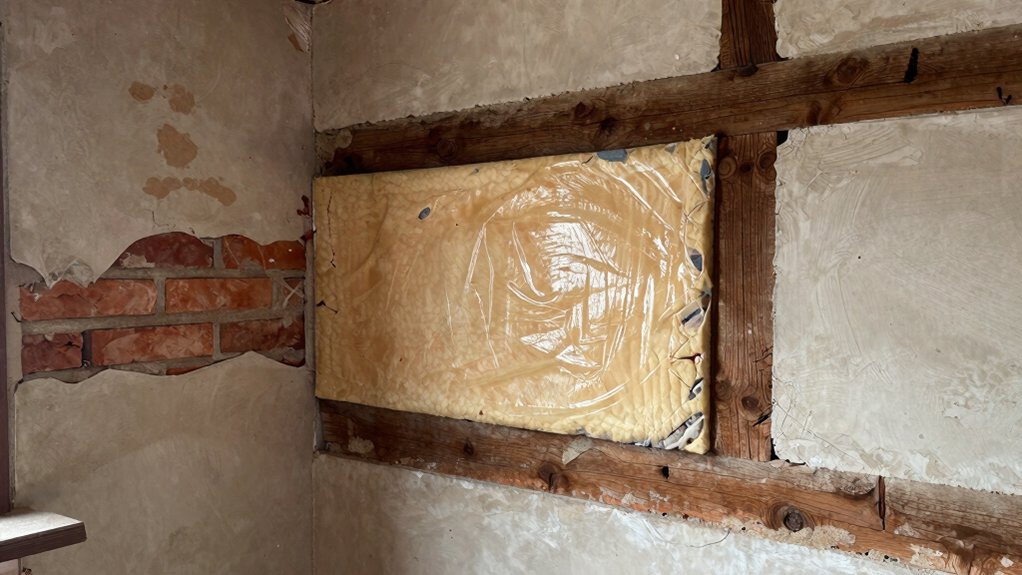
A hypothetical 19th-century terrace shows wall insulation can cut heat loss by a third, but you’ll face moisture risks and fabric compatibility challenges. You weigh energy savings against potential mold, damp, and structural strain if not installed correctly. The decision hinges on evaluating existing walls, climate, and ventilation, then selecting a method that respects historic materials. Intricate details follow: how to evaluate suitability, moisture pathways, and long-term performance before committing.
Understanding Older Homes: Historical Context and Building Envelope
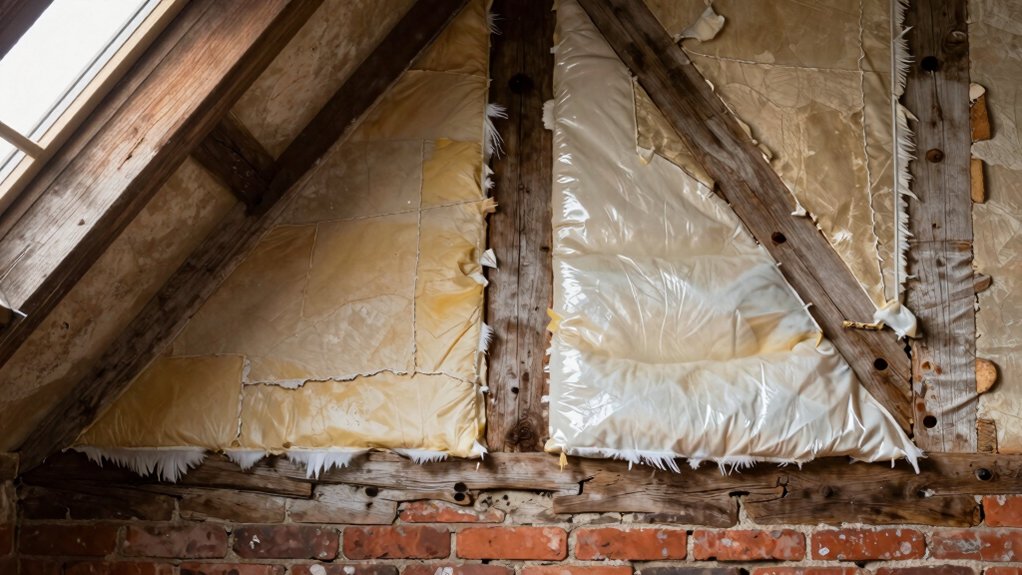
Understanding older homes begins with the historical context that shaped their construction and envelope. You approach these structures with a pragmatic mindset, targeting the specific envelope features that influence performance.
Trade-offs between material choices, techniques, and available technologies defined their resistance to weather, moisture, and drafts. You’ll note that historic builders prioritized gravity and mass, often using solid masonry, timber framing, or thick plaster, which affects insulation strategy today.
Modern insulation and Building codes influence retrofit decisions, but you assess compatibility with original assemblies first. You identify layers, gaps, and penetrations that contribute to heat loss, then determine feasible upgrade points without compromising structural or cultural value.
Your aim is to preserve integrity while planning targeted, code-consistent improvements aligned with practical realities.
Energy Efficiency Benefits of Wall Insulation
You’ll notice that wall insulation improves thermal comfort by stabilizing indoor temperatures and reducing drafts.
By lowering heat loss through the building envelope, you’ll save energy and cut heating bills, especially in colder seasons.
This section starts with the key takeaway: better insulation means less energy spent to maintain comfortable conditions and more consistent indoor climate.
Thermal Comfort Gains
Wall insulation in older properties improves thermal comfort by reducing heat loss in winter and heat gain in summer, creating more stable indoor temperatures with fewer drafts. You’ll notice fewer cold spots near external walls and reduced temperature swings between rooms, which supports a consistent living environment.
When insulation efficiency is high, the system slows heat transfer without adding bulk or reducing room usability. This yields better perceived comfort during both high and low external temperatures, since edges and mid-wall areas stay closer to the desired setpoint.
The result is a quieter, more predictable environment with less reliance on auxiliary heating or cooling. By optimizing installation quality and material performance, you maximize thermal comfort while maintaining overall energy performance.
Heat Loss Reduction
Even with older walls, proper insulation reduces heat loss by limiting where heat escapes to the outside and where cold penetrates from outside.
In this section, you’ll see how wall insulation directly curbs heat transfer through conduction, convection, and minor gaps. The effect depends on continuous coverage, appropriate density, and minimizing thermal bridging at junctions.
You’ll benefit from selecting insulation materials that balance thermal resistance with moisture control and compatibility with existing substrates. Practical performance improves when installation techniques prioritize airtightness, controlled ventilation, and seamless edge detailing at corners and outlets.
Expect measurable decreases in heating demand and more stable interior temperatures across seasons. Documented gains rely on correct retrofit sequencing, surface preparation, and verifying access to cavities to ensure uniform layer thickness and reliable long‑term integrity.
Potential Risks to Historic Materials and Fabric
You’ll need to contemplate moisture-trapped risks, as poor venting can push damp into historic substrates and encourage decay.
Thermal expansion stresses from insulation layers can create cracking or delamination in fragile fabrics if tolerances aren’t respected.
Prioritizing historic fabric safety means balancing moisture control, temperature stability, and compatible materials to protect irreplaceable features.
Moisture Trapped Risks
Moisture trapped within older wall assemblies poses a serious risk to historic materials and fabric. When insulation limits drying, moisture buildup can accumulate in timbers, lath, plaster, and masonry, leading to accelerated decay and weakened fabric.
You’ll observe damp staining, efflorescence, and increased salt migration, which compromise surface finishes and substrate integrity. Inadequate ventilation worsens conditions, promoting mold growth on organic components and within concealed cavities.
Condensation cycles can induce freeze-thaw damage in porous stones and bricks, amplifying cracks and spalling. You must assess existing vapor dynamics, moisture sources, and breathable barriers before retrofit—ensuring that any added insulation maintains breathable paths or controlled drying.
Prioritize diagnostic monitoring, targeted dehumidification, and conservative detailing to mitigate risks without trapping moisture in historic assemblies.
Thermal Expansion Stress
Thermal expansion can create significant stresses at boundaries between old materials and new insulation, especially where different coefficients of thermal expansion meet. When you install insulation, temperature swings cause layers to expand or contract at different rates, leading to localized bending, gaps, or cracking in historic fabric.
These movements may propagate through plaster, brick, or timber joints, risking paint loss, mortar failure, or delamination of finishes. You’ll want to assess compatibility, choosing materials with closer expansion behavior or incorporating flexible interfaces.
Detail-oriented installation reduces abrupt changeovers, using movement joints and careful detailing around openings. Monitor seasonal cycles, and watch for new cracks or misalignments after temperature shifts.
For risk reduction, plan early, document existing material behavior, and pursue proactive stress mitigation strategies.
Historic Fabric Safety
Historic fabric safety hinges on anticipating how interventions interact with aged materials. You assess risks before installing insulation, focusing on moisture pathways, salt efflorescence, and decoupling effects that can stress timbers or plaster.
You verify material compatibility to avoid reactions that degrade historic fabric, opting for breathable, reversible solutions where possible. You monitor for condensation traps behind walls, especially in unvented cavities, and you consider interior temperature shifts that cause dynamic movement in joints and masonry.
You document performance expectations with stakeholders to support Historic preservation goals, ensuring any temporary protective measures don’t trap dampness. You prioritize proper detailing at junctions, air barriers, and penetrations, preventing hidden degradation and facilitating future access for repairs while maintaining historical integrity.
Moisture and Condensation Considerations
Even though older homes often feel drafty, uncontrolled moisture and condensation can undermine insulation and promote decay. In practical terms, you’ll want to assess air leakage paths first, since infiltration brings in humid air that raises surface humidity inside walls.
Keep humidity levels moderate to curb driving condensation on cold framing. Use a continuous vapor barrier only where appropriate, and verify it doesn’t trap moisture behind existing finishes.
Prioritize moisture control by sealing gaps around ducts, electrical penetrations, and doors, then address any signs of dampness, staining, or mold promptly.
Implement condensation prevention measures through effective ventilation, especially in kitchens and bathrooms, and during seasonal transitions.
Regular inspections help confirm wall assemblies stay dry and perform as intended.
Types of Wall Insulation Suitable for Older Properties
You’ll need to contemplate Historic Wall Materials and how they interact with Retrofit Insulation Options to preserve structure and performance.
This discussion focuses on practical, compatible approaches that minimize risks to historic fabrics while improving thermal performance.
We’ll compare common retrofit methods, their compatibility with older wall assemblies, and the implications for moisture control and airtightness.
Historic Wall Materials
Older properties require wall materials that balance insulation with breathability and historic integrity. When you assess historic wall materials, you prioritize breathable substrates that resist moisture buildup while supporting gradual drying. Lime-based plasters and lime-wash finishes are common, offering vapor permeability and compatibility with traditional masonry.
You’ll find hemp-lime or flax-lime composites for retrofit layers, providing bulk without trapping dampness. Clay plaster, earth renders, and lime-based renders also deliver diffusion efficiency and low embodied energy, aligning with historic aesthetics.
For insulation compatibility, consider lightweight, breathable boards or aerated lime products that don’t create bridging or damp traps behind masonry. Avoid impermeable foams that impair moisture movement.
Balance performance with historic appearance, ensuring detailing, joints, and coatings reflect original character.
Retrofit Insulation Options
What retrofit insulation options honor both performance and historic fabric in older properties? You’ll consider compact, high-R solutions that minimize disruption to plaster, brick, and timber.
Exterior options like insulated render systems preserve internal volumes but require facade compatibility checks and historic approvals.
Interior approaches include rigid foam boards or mineral wool between studs, applied with air barriers and careful fire detailing, minimizing framing disruption while preserving room dimensions.
Hybrid builds blend seamless, breathable barriers with selective cavity fills to reduce thermal bridging.
Consider spray foams only where vapor control and compatibility with historical materials are confirmed.
For historic preservation, prioritize materials with low odor, off-gassing, and long-term stability.
Always verify insulation materials compatibility with existing assemblies and seek professional assessment for moisture risk and condensation control.
External Vs Internal Insulation: Pros and Cons
External insulation and internal insulation each affect a property’s thermal performance, moisture risk, and practicality in distinct ways. External insulation reduces heat loss without reducing internal room area, but it can alter building aesthetics and risk moisture bridging at finishes.
Internal insulation preserves exterior appearance and can be installed progressively, yet it may shrink usable space and complicate existing moisture control.
Fire safety and acoustic performance emerge as critical considerations for either approach: external systems can improve overall envelope resistance when designed correctly, while internal methods must account for potential dew points and detailing near finishes.
Cost, disruption, and compatibility with historic features drive choice alongside ventilation needs.
In older properties, evaluate moisture pathways, detailing, and long-term maintenance to balance energy gains with risks.
Installation Challenges in Timber-Framed Walls
Timber-framed walls pose specific installation challenges for insulation and linings, largely due to cavity dynamics, moisture management, and complex detailing around studs and joists. You’ll contend with variable wall cavities that can trap air gaps or moisture if not properly sealed.
Choose materials compatible with timber movement and potential timber decay, and plan for drainage and vapor control behind linings. Access is often restricted, so you’ll rely on thoughtful sequence planning, precise cutting, and careful stud spacing awareness.
Guarantee gaps around penetrations are sealed to avoid thermal bridges. Use breathable, yet moisture-permeable products where appropriate to reduce condensation risk.
Confirm compatibility with timber frame substrates and fastener performance. Detail junctions, sill heights, and corner fittings to maintain continuous insulation and predictable performance.
Impact on Building Regulations and Permits
Do you know how insulation work in older properties intersects with local building regulations and permit requirements? In practice, you’ll check that retrofit methods align with Building codes and energy performance standards for your jurisdiction.
Expect assessments to cover insulation type, thickness limits, fire safety, vapor barriers, and ventilation impacts. You’ll often need documentation from installers, including material compliance certificates and installation manuals.
Permit requirements may require a formal plan review, structural considerations, and witnesses for work on load-bearing walls or historic facades. Some areas offer exemptions or reduced inspections for minor upgrades, while others demand airtightness testing or U-value calculations.
Coordinate with a building authority early, so you avoid delays and ensure the project satisfies regulatory expectations without compromising performance.
Costs and Financial Considerations
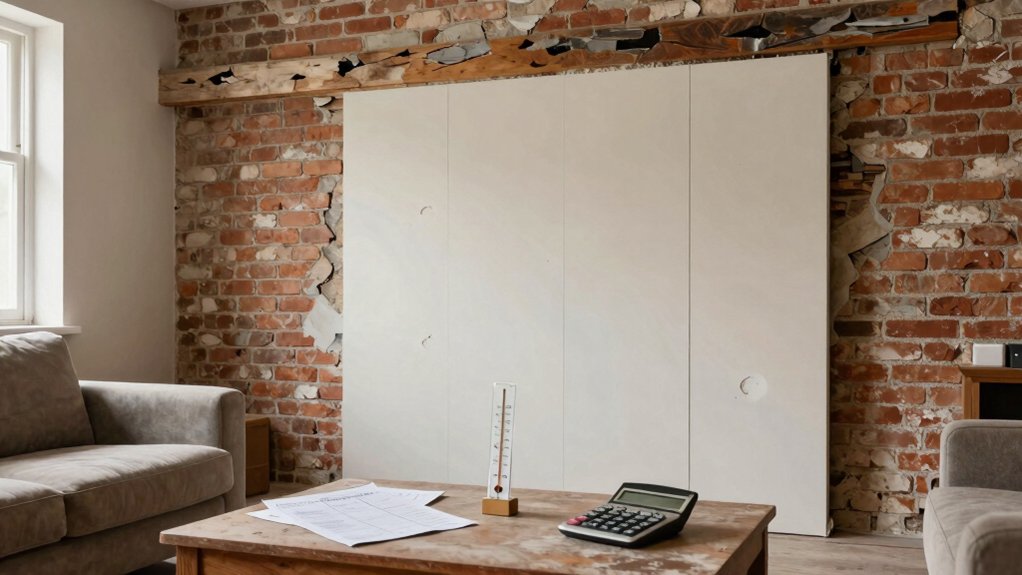
Investing in wall insulation for older properties requires a clear cost picture, from material and labor to potential energy savings and incentives. You’ll weigh upfront costs against long-term benefits, noting that material choices differ in R-value, thickness, and compatibility with existing walls.
Labor can vary with wall type, accessibility, and disruption, so obtain multiple quotes and confirm warranty terms. Consider cost implications beyond purchase—survey fees, air sealing, and any necessary structural or moisture remediation.
Grants, tax relief, and utility rebates can shorten payback periods, but eligibility hinges on your location and project scope. For financial planning, model annual energy savings, maintenance costs, and loan or financing options.
Align decisions with your cash flow, payback horizon, and risk tolerance to achieve a transparent, data-driven plan.
Impact on Aesthetics and Property Value
Aesthetics and property value are shaped by how wall insulation interacts with your building’s exterior and interior character, as well as by tradeoffs between comfort and curb appeal. You assess the visual impact of insulation approach, thickness, and finish compatibility with existing materials, avoiding abrupt contrasts.
Aesthetic integration matters: choose claddings and veneers that harmonize with original lines, textures, and color palettes, while preserving architectural intention. You should also consider window reveals, cornices, and rooflines, since subtle changes can affect perceived value.
From a Property valuation perspective, reliable performance data—U-values, air tightness, and thermal bridging reductions—supports appraisal confidence. Documentation of installed methods and future upgrade options reinforces market credibility, reducing perceived risk for buyers.
Balance efficiency gains with appearance to maximize overall asset desirability.
Maintenance and Long-Term Performance
Maintenance and long-term performance hinge on predictable, routine care and proactive monitoring that preserve insulation effectiveness over time. You’ll keep performance strong by scheduling regular inspections of exterior walls and interior junctions, checking for cracks, moisture intrusion, and unexpected draft paths.
Track seasonal shifts in heat loss and compare with baseline measurements to spot deviations early. Address failures promptly with targeted repairs rather than wholesale replacement, preserving existing systems where possible.
Renewal strategies should prioritize maintaining airtightness, minimizing thermal bridging, and ensuring compatible materials to avoid condensate issues. Monitor ventilation balance and humidity to prevent fungal growth that undermines insulation efficacy.
Prioritize preserving structural integrity through stable wall interfaces and secure fastenings, so performance remains durable across decades.
Practical Steps to Assess Suitability and Plan Options
To determine whether wall insulation is suitable for an older property, start with a focused assessment of the building envelope and interior junctions, identifying existing insulation levels, moisture sites, and potential thermal bridges.
Next, map structural constraints, retrofit opportunities, and service routing to prioritize options.
Inspect exterior walls for plaster failures, damp indicators, and air leakage pathways; evaluate interior cavities for voids and moisture accumulation.
Measure surface temperatures and conduct a targeted condensation risk review to guide material choices.
Develop a phased plan that prioritizes damp prevention and energy gains while minimizing disruption.
Choose between retrofit-in-place or cavity-fill approaches, considering compatible air sealing strategies and balancing with ventilation needs.
Finalize a cost–benefit, timeline, and monitoring plan to verify performance.
Frequently Asked Questions
How Does Insulation Affect Original Plaster and Lath?
Insulation can affect original plaster and lath by adding moisture risk and potential shrinkage cracks, so you should assess historic preservation needs and monitor structural integrity, ensuring vapor control and compatible materials to protect timber framing and fabric.
Can Insulation Cause Chimney or Void Draughts?
Yes, it can. Picture a case where poor void insulation around a chimney causes draughts; you seal the chimney and insulate the void, reducing convection and preventing cold air spill. This improves performance and avoids chimney sealing issues.
Are There Risks to Era-Specific Wall Materials From Moisture?
Yes, moisture can threaten era-specific wall materials, causing moisture buildup and wall deterioration. You should monitor humidity, guarantee proper ventilation, and use breathable insulation strategies to protect structural integrity while avoiding trapping dampness that accelerates decay.
What Maintenance Is Required After Retrofit in Old Walls?
After retrofit, you must inspect for moisture and re-seal joints, ensuring thermal bridging is minimized and vapor barriers remain intact; monitor for condensation, and reseal or replace seals promptly to maintain performance and prevent deterioration.
Do Insurers Require Special Documentation for Historic Homes?
Yes, insurers often require insurance documentation for historic home compliance. Approximately 60% of carriers request it before policy approval. You should gather permits, surveys, and preservation certificates to satisfy criteria and avoid coverage delays.
Conclusion
You should weigh energy savings against risks to historic fabrics, because retrofit success hinges on careful assessment, correct material choice, and expert installation. In older homes, moisture management and detailing matter as much as insulation depth. Start with a thorough survey, test for damp, and plan ventilation alongside insulation. The payoff is real if you proceed prudently: slow and steady wins the race—but only if built on solid measurement and sound detailing.