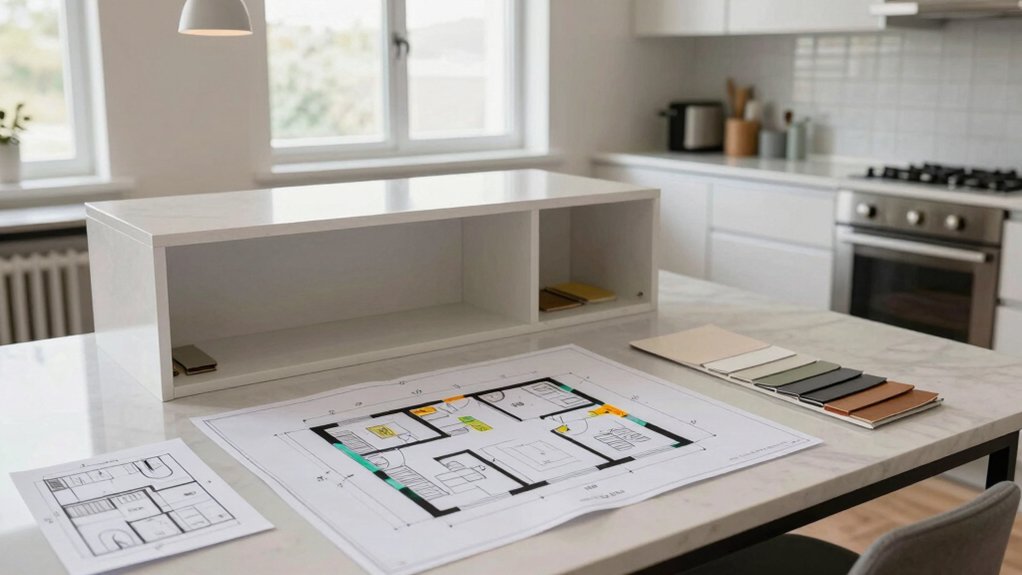
In a small kitchen, you design around a tight work triangle and compact, built-in solutions that keep movement smooth and clutter minimal. Think through layout first, favoring open shelving and integrated appliances to preserve flow. Choose timeless finishes in light tones to visually expand the space, and plan storage that hides clutter yet stays reachable. Prioritize multi-functional elements and efficient lighting to reveal every inch, then refine your choices to avoid fatigue. The next step will reveal how to balance form and function.
Small Kitchen Design Principles
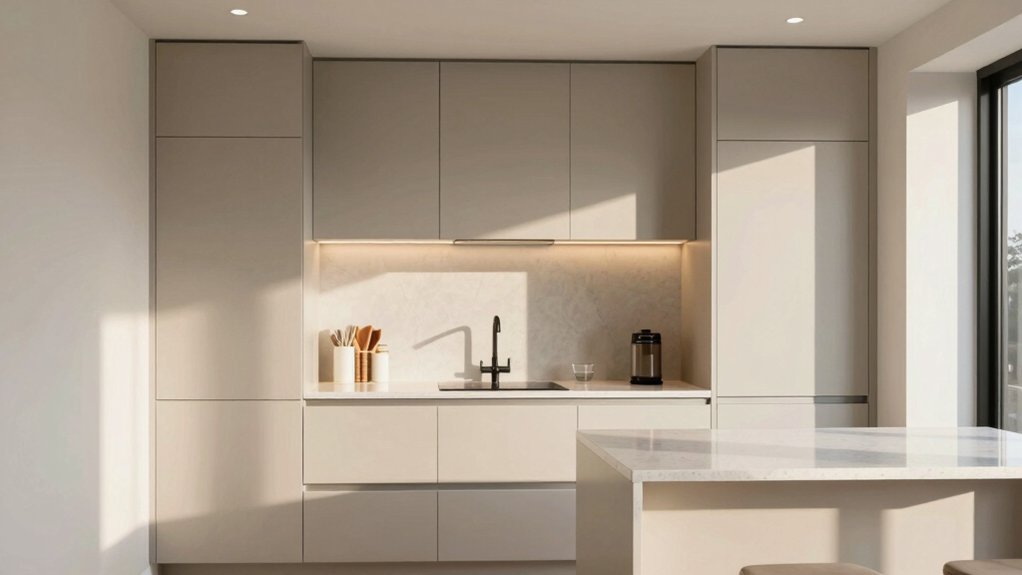
Small kitchens demand a clear, efficient layout that minimizes steps and maximizes every inch. You’ll apply small kitchen design principles by establishing a compact work triangle with short distances, typically under 8 feet, to boost efficiency.
Use neutral palettes and classic materials like white marble or oak to keep the space cohesive and timeless. Open shelving and clever storage solutions open sightlines and reduce clutter, so you feel more room to move.
Incorporate multi-functional elements, such as islands with built-in storage or prep surfaces, to maximize space without sacrificing flow. Thoughtful layout and material choices, including smaller appliances and strategic fixture placement, enhance both function and aesthetics.
Your base cabinet choices anchor storage, while a cutting board integrates ready prep space within reach.
Optimizing Layout and Workflow
To optimize layout and workflow in a small kitchen, place the work triangle so the fridge, sink, and stove form efficient, short paths—ideally with each leg between 4 and 9 feet and overall distances staying under 8 feet where possible.
You’ll gain efficiency by positioning a dedicated prep area between storage and cooking zones, reducing steps during assembly and cleanup. Shorter distances between key work zones streamline movement and boost function in limited space.
Strategic appliance and cabinet placement minimizes clutter, letting you move smoothly from washing to chopping to plating. Leverage multi-functional surfaces, such as an island with integrated workspace, to improve layout flow without expanding footprints.
This approach elevates workflow while keeping your small kitchen organized and aesthetically cohesive.
Smart, Space-Saving Appliances
Smart, space-saving appliances are the backbone of a functional small kitchen. You’ll maximize utility with compact, multi-functional options like 5-in-1 ovens, which save counter space while broadening your cooking repertoire.
Slimline dishwashers and narrow refrigerators (around 24-30 inches wide) keep essential functions without crowding your layout. Integrated appliances blend into cabinetry, delivering a clean, uncluttered look that complements a tight footprint.
Opt for smaller-than-standard versions, such as a 24-inch range, to optimize available space without compromising performance. Smart appliances with Wi-Fi connectivity let you monitor and control remotely, reducing gadgets and clutter.
Make sure you weigh installation compatibility and energy use, ensuring every device aligns with your workflow, aesthetics, and future-remodel plans.
Storage Solutions and Open Shelving
Open shelving in a small kitchen can expand perceived space by keeping essentials within arm’s reach and reducing bulky cabinetry. You’ll gain quick access to frequently used items while preserving a clean, open look.
Display dishware, glassware, and decorative accents on the shelves to add personality and reduce clutter—curated pieces read as intentional design, not chaos. If you remove or paint upper cabinet doors to reveal open shelving, the visual flow improves and the space feels larger.
Add brass rails underneath for garlic, onions, and utensils to free up counter space and enhance function. Use affordable materials like paint and tile to style the shelves, balancing practicality with subtle texture and color.
Plan, group by use, and maintain a cohesive, light aesthetic.
Finishes, Materials, and Timeless Style
Finishes and materials set the tone for a small kitchen’s lasting appeal. You’ll choose classic, durable elements like white marble countertops and white oak cabinetry to guarantee timelessness.
Pair neutral palettes—soft grays, beiges, and whites—to create a versatile, enduring backdrop. Opt for simple, clean lines with minimal ornamentation so the space remains sleek and timeless.
Establish cohesion by matching countertop and island materials, such as same marble surfaces, for understated sophistication. Favor matte or satin finishes, which resist trends and preserve a refined look over time.
Prioritize tactile, visual harmony: consistency in texture and tone reinforces a calm, organized environment. With these choices, your kitchen sustains beauty through changing styles and daily use.
Conclusion
You’ll love how compact things feel spacious—until you realize the tiny fridge isn’t the bottleneck, it’s your restraint. Embrace the work triangle, carve out open shelving, and tuck storage into every island nook. Yes, you can have white marble, neutral calm, and built-in efficiency without turning your kitchen into an obstacle course. Irony: the more you optimize, the more room you discover to breathe, cook, and actually live in the space you quietly brag about.